Kate's Club gives metro Atlanta's young adults who have lost parent a healthy way to grieve

Losing a loved one can change someone's mental health in ways that are not always visible.
One Atlanta man says it took years before he realized his grief had turned into something much more serious.
To find his way back, he turned to Kate's Club, a local organization that helps children and families who have lost parents.
RJ Alonwonle, a 32-year-old former competitive track runner, lost his father to an unexpected heart attack while he was overseas running a track meet at the age of 25.
He told CBS News Atlanta he kept running, kept smiling, and kept telling everyone he was fine.
"I kind of just tried to put my head down and do as much as I could to get by," said Alonwonle. "As the years went on, and I continued to do that, like, I would use all of my energy to externally look like I was all right, but I was kind of slowly dying inside."
What he said started as grief eventually turned into something more.
"It was just like a slow decline internally where it started as probably like grief, sadness, went into depression, and ultimately came to like suicidal thoughts," he said.
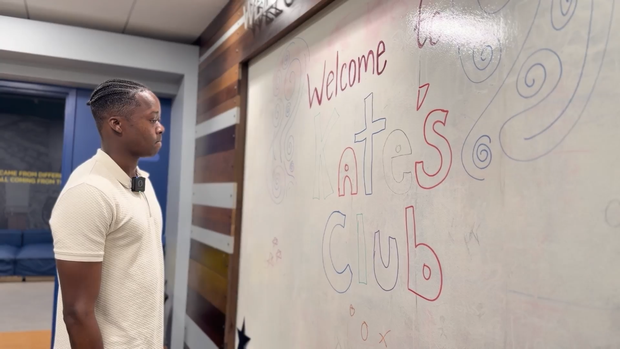
It's a reality Kate's Club says too many young adults face after losing someone they love.
The organization offers programs for young adults by creating a space where they can talk openly about both loss and their mental health.
"If you can take yourself out of that isolated place and put yourself into a community with others, who, I think of it as other young people who get it, they can learn to grieve together in a healthy way. That leads to a much better outcome," said Kate's Club Executive Director Lisa Aman.
Alowonle said he joined Kate's Club after promising his sister he would find help. For him, community did not end when the meetings were over.
"I now have a group chat with about five people from Kate's Club. It's called The Healing Hive," said Alowonle.
When Alowonle reached one of his lowest points, he said he did something he had never done before.
He asked for help.
"I generally don't reach out to anyone, and I just was like, 'Hey guys, I'm not doing great right now,' and they were just really there for me," he said.
Seven years after his father's passing, he is no longer fighting through his grief alone.
He said he enjoys Kate's Club outings and tries to see his Healing Hive friends once a month for dinner or another group activity.
"The community that I've built and the resources that I've been able to find through Kate's Club has probably actually saved my life," said Alowonle.
Kate's Club's young adult program, called LoKate, offers continuous grief and mental health support in addition to community connection for young adults aged 18-30.


