Georgia Archives documents give multifaceted look at America's story during country's 250th birthday
Inside a high-security vault at the Georgia Archives, approximately 65,000 cubic feet of records preserve the history of Georgia and its people.
For collections manager Hendry Miller, even a single box can hold a remarkable story.
"I love doing what I do because I grew up a history nerd," Miller said. "History and social studies were my favorite classes in school."
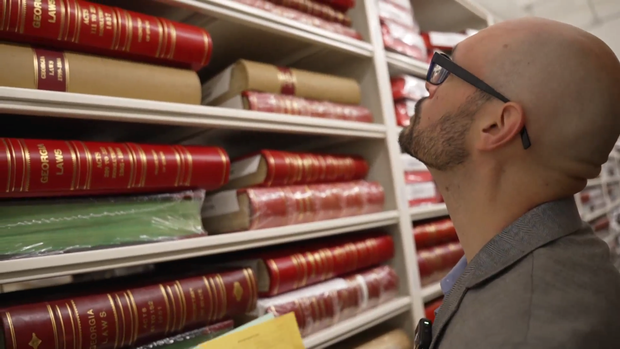
Among the records Miller helps protect are two documents from the nation's earliest years, connected by the idea of freedom.
The first is Georgia's official recorded copy of the Declaration of Independence.
It is not the original parchment signed in 1776. Instead, it is a handwritten version that entered into Georgia's official records in 1777 after the Continental Congress sent authenticated copies to the states.
A professional scribe copied the document by hand.
"When they said they needed to record a copy of a record, they had to actually handwrite it out," Miller said. "The scribe who did this — he's got very neat handwriting. He's pretty good at his job."
The paper has aged, and the ink has faded, but its best-known words remain clear: "We hold these truths to be self-evident, that all men are created equal."
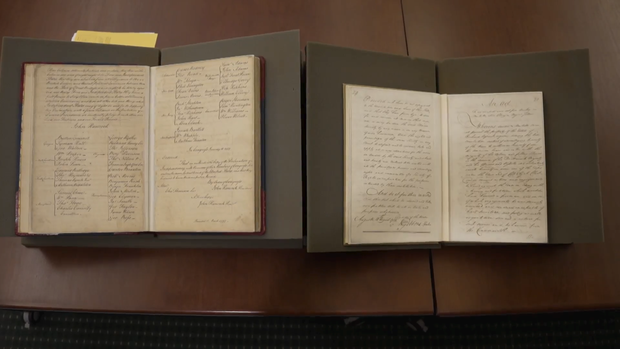
A second document preserved nearby tells a different story about how that promise was experienced in early America.
It is the official act emancipating Austin Dabney, an enslaved Black man who served with Patriot forces during the Revolutionary War.
Miller said Dabney was born in North Carolina, was brought to Georgia during the 1770s, and later served under Col. Elijah Clarke. The act says he fought with "bravery and fortitude."
Dabney entered the war enslaved and was wounded while fighting for a country's freedom before he had his own.
After the war, Georgia provided funds for his emancipation. Dabney later received a land grant and lived as a free man in Georgia.
"He's the only African-American person to be emancipated in Georgia during the Revolution, for service during the Revolution," Miller said.
Although much of Dabney's life remains unknown, the surviving records reveal more about him than is known about many people from the 18th and 19th centuries.
"In the grand scheme of things, we don't know a lot about Austin Dabney and who he was," Miller said. "But compared to other people in the 18th and 19th century, we actually do know a whole lot more."
Placed together, the Declaration and Dabney's emancipation act preserve two parts of the same American story: the promise declared in one document and the freedom formally recognized in another.
The public will have an opportunity to see Georgia's recorded copy of the Declaration of Independence on Friday, July 10, at the Georgia Archives in Morrow.
"These records need to be preserved because they tell the story of the state of Georgia, the people of Georgia, and the early United States," Miller said.


