Nonprofit clinics offer crucial lifeline to Georgians living without health insurance

An estimated 1.2 million Georgians are living without health insurance, according to the Georgia Charitable Care Network — a gap that nonprofit clinics across the state say they are working to fill.
For Clayton County resident Kimberly Brown, that gap became painfully clear after a sudden health crisis.
Two years ago, Brown says severe pain made it difficult to even walk down the stairs in her home. After days in bed, she went to an urgent care clinic where doctors discovered her blood pressure was dangerously high.
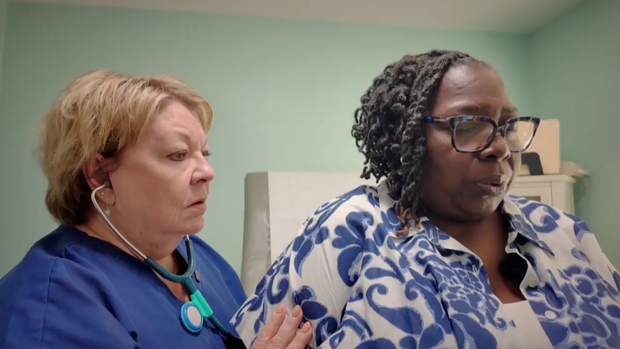
"When I got there, my blood pressure was so high," Brown said. "The doctor did an X-ray and said you have arthritis throughout your entire body, in every joint."
Brown eventually spent nearly a week in the emergency room. But once she was discharged, she faced a difficult reality: she had no insurance and no primary doctor for follow-up care.
That's when she discovered Good Shepherd Clinic in Clayton County, a nonprofit clinic that provides free medical services to uninsured patients.
"I happened upon this clinic," Brown said. "I had not seen a doctor in years. I was healthy until I had that incident where I had to have emergency care."
Brown says she is far from alone.
"It's a lot of people out there that fall into my category," she said. "You either can't afford what's out there, or you don't qualify for Medicaid."
Health advocates often refer to this situation as the coverage gap — when people earn too much to qualify for Medicaid but not enough to afford private insurance.
The Georgia Charitable Care Network works to connect those residents with free and low-cost clinics across the state.
Susan Whatley, a nurse practitioner and founder of the Urban Clinic and Good Shepherd Clinic, says these services are critical for uninsured patients who often have few options.
"These patients, if they don't have healthcare, don't have anywhere to go," Whatley said.
The clinic offers services similar to what patients would receive at a traditional primary care office, including medications, lab work and specialty care. The clinic even helps patients overcome barriers such as transportation.
"If patients have trouble getting here, we'll pay for an Uber ride to get them here," Whatley said.
According to Whatley, the financial impact of the clinic's services is significant.
Last year alone, she says the care provided by the two clinics would have cost patients about $7 million if billed through traditional healthcare systems.
"That's what it would have cost patients — healthcare, insurance, everything else — but it was zero dollars to patients," Whatley said.
Brown says the clinic has been life-changing.
"Good Shepherd is a good shepherd," she said. "They've been a good shepherd to me."
The Georgia Charitable Care Network recently launched its "Compassion Heals" campaign, which aims to raise funding to support the more than 1.2 million uninsured people in Georgia.
Advocates say the campaign will help sustain clinics like Good Shepherd, which continue to expand services. The Clayton County clinic recently added dental care and regularly hosts visiting specialists to serve patients with complex needs.
For people like Brown, those services mean access to care that once felt out of reach.


