Emory preserves legendary photographer's collection of Black life in Atlanta

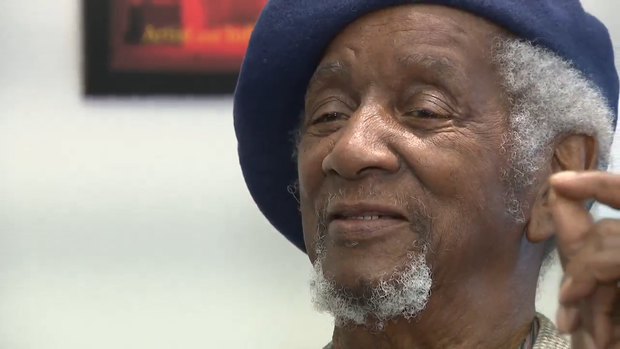
Documentary photographer Jim Alexander has captured the icons and the everyday of Black life, art, music, and social justice for nearly seven decades.
"I call myself a participant observer," Alexander said.
Now 90 years old, Alexander has taught photography since 1968. He ran a Black arts program at Yale University in the early 70s. An assignment in Washington, D.C., is what brought him to the South to stay.
"Maynard Jackson walked by, and he was standing there watching us," Alexander said. "He said to me, 'You look like you know what you're doing with that camera.'
"He said, 'Well, you need to come to Atlanta.' That wasn't a request; that was an order," Alexander continued.
Jackson, the first Black mayor of Atlanta and of any major city in the South, made a commitment to the arts during his campaign. He created the Neighborhood Arts Center to showcase Black artistic expression in the city. It was the predecessor to today's publicly funded community art centers. Alexander eventually became the photographer in residence there.
"I'm in the process of putting an exhibit together of the photographs that I documented of the Neighborhood Arts Center and the artists there," Alexander said.
He developed close friendships with renowned artists and poets, including Sonia Sanchez, Nikki Giovanni, and pioneering photographer Gordon Parks.
"When Dr. King was assassinated, I said to Gordon, 'They're talking about us free at last, I said I'm going to just document us for 10 years.' Gordon says, 'Well, Jim, sounds like you have a plan, but your ass is going to starve.' He said 'No one is going to pay you to just run around and shoot whatever you're going to shoot.'"
Parks was wrong about that. Alexander's photography has been deemed so valuable to Atlanta and American history that Emory University's Rose Library received a $280,000 grant from the Getty Foundation to process his collection.
"When I started my role as curator of African American Collections, so many people, donors, and my colleagues told me that I needed to meet Mr. Alexander," said N'Kosi Oates.
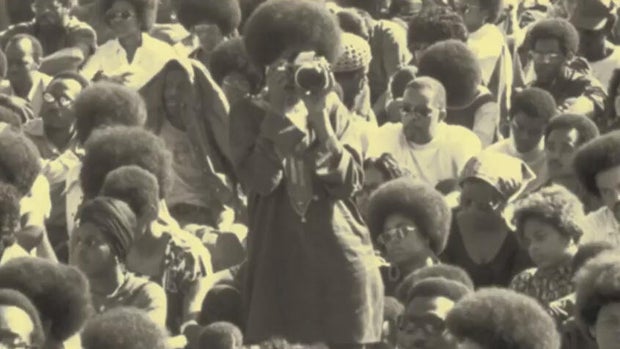
The grant includes an oral history interview with Alexander and makes it easier for the public to access and explore his work.
"Since he has been here for over 50 years, he has documented the life, the breath, and the richness of Black Atlanta," Oates said.
Alexander hopes young people will take pride in the work he's done.
You can learn more about Emory's collection of Alexander's photographs here