VLADIMIR DUTHIERS:
00:02:46
Karoline Leavitt says she rejects the reporting. She didn't deny that Secretary Hegseth said, quote, "kill everybody," which would have been the direct order to Admiral Bradley. So we'll see how that plays out over the next couple of hours because as you know, Olivia, both Republican and Democrats are having serious questions about the secretary's leadership. Let's talk about this cabinet meeting that the president is convening today. What's going on there? Well, it's going to be his ninth cabinet meeting so far of this administration. We are just about almost one year in, 11 months into this administration. They'll be convening with his top brass. We'll probably hear from Secretary of Defense Pete Hegseth, Secretary of State Marco Rubio, as there are many questions about Venezuela and what their goals are there. So these cabinet meetings tend to go on for a long time, Vlad. We will be here at the White House watching to see what happens. And when they go around the horn and every cabinet secretary has something to say, we'll be listening.
VLADIMIR DUTHIERS:
00:03:44
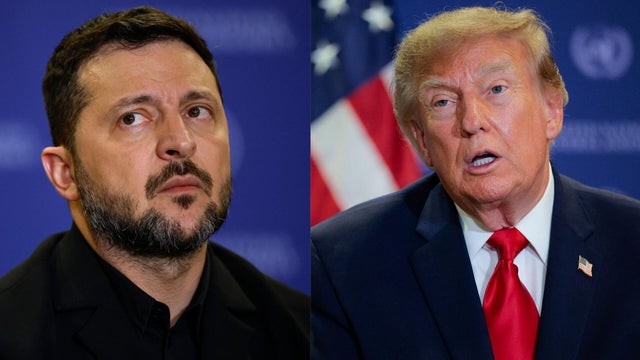
We know you will. Olivia Rinaldi reporting from the White House for us this morning. Olivia, thank you very much. All right, CBS News National Correspondent Lilia Luciano is joining us now from Colombia. So, Lilia, let's talk about the reaction to all of this information where you are, specifically about that first strike on that suspected drug boat where it has now been confirmed by the White House that there was what is known as a double tap. In other words, once the boat was initially blown up, the naval commander gave a second order, upon seeing that some people on that boat had survived the first strike, to take them out with the second strike. What are people telling you? Well, Vlad, I have several reactions, one from the president of Colombia who feels validated. You might remember when I interviewed him last month, he told me-- he accused the United States of committing war crimes. Now he's been communicating and he's been giving speeches and talking about how even the United States and lawmakers in the US are kind of following that lead and inspecting this further to see whether or not this constitutes a war crime. This is something he's been saying all along. He also said that he will be assigning his attorney or asked his personal attorney to represent the family of Alejandro Carranza. Alejandro Carranza was not killed on that first strike but on the second strike in mid-September. I've spoken to the family of Carranza, who told me they don't have any answers from the Colombian government, from the US government. They have doubts about how, exactly, his name came about. I have asked the minister of defense and the defense ministry here in Colombia whether it was the Colombian armada, their naval forces, that went and retrieved the body. Where is that body? There are so many questions around these strikes. And mind you, this is one of the very few names that we have come to know. And we know it because it is a Colombian national, and the president of Colombia was the one to first make that name public. We're still not getting answers about how they know that name. On Venezuela, over in Venezuela, the president there and the National Assembly have said that-- or the leader, Maduro, and the National Assembly have said that they're going to launch their own investigation into the strikes. But, of course, this is a small part of the amount of tension that has been happening in Venezuela following that conversation between Trump and Maduro, Vlad. One thing that came out today that I thought was very interesting-- keep in mind, Trump had posted on Truth Social that on Friday-- or Saturday morning that the airspace over and surrounding Venezuela should be considered closed. Maduro responded. Trump admitted that he had spoken with Maduro. We have not confirmed this reporting yet, but Reuters has been publishing some bits of what that call might have been all about. They said it happened over 15 minutes, that Maduro had asked for full legal amnesty, the lifting of sanctions, especially on some of his close allies, that he would be willing to leave, but that that would have required, on his end, the transfer of leadership to his vice president. Trump denied all this. But today, Maduro is saying that the US requested that Venezuela receive those repatriation flights from Venezuelan migrants that the US is deporting back to Venezuela. We don't know what this means, whether after that meeting between Trump and his national security team, there might have been some kind of communication with Venezuela. But at least Venezuela is saying that they will admit the repatriation flights. All right, Lilia Luciano with some really important and crucial level of reporting there for us that you're not going to find anywhere else. Lilia, thank you very much. Appreciate you reporting from Colombia.