VLAD:
00:01:09
Not sure what that is. Sorry. All right, so back in April, our client filed a disclosure with the intelligence community Inspector General. It took some time for the decision to be made as to whether or not it would be urgent or credible for immediate dissemination to Capitol Hill. But that's irrelevant, because our client, once they were notified by the intelligence community IG that a decision was made that they could not determine the credibility of the disclosure because somebody refused to cooperate with the initial investigation, but if taken to be true that it would be urgent. We requested, our client requested, to have this transmitted to Capitol Hill. That is the law. That is what Tulsi Gabbard should have done. That's what everybody is talking about right now. But really, what's at play is the underlying complaint, the underlying disclosure that's been withheld from the Hill involves, the subject is Tulsi Gabbard.
VLAD:
00:02:01
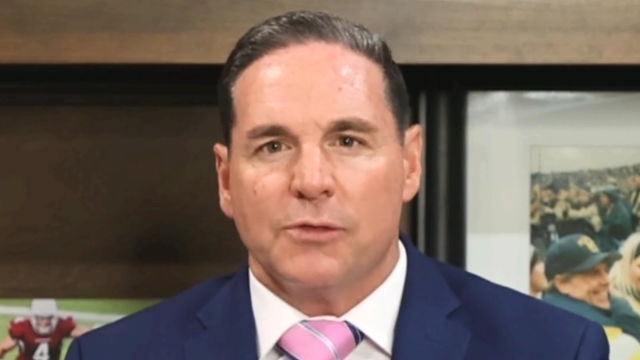
And we don't know the nature of that complaint. Is that right? Well, we don't know the specific nature of the complaint. I have not seen the complaint because it's so highly sensitive. Now, the Director of National Intelligence in our office is saying because it is so highly classified that it's challenging to figure out how to get this to Congress. But frankly, if it's that sensitive and only limited members can see it, that makes it easier as to identifying-- who to identify as to who to send this to. So that's one thing. The other thing that is new to me is that this statement that this somehow involves executive privilege, which I find to be fascinating, because then the question becomes, why is that? I mean, The Wall Street Journal reported that the intelligence community IG said that executive privilege would obviously involve something involving communications with the President or confidential and private discussions involving the President. So the question is, what is there? Why is that privilege being asserted? But again, that should have no bearing. These are red herrings. This should have no bearing on getting this to the Hill. As a colleague once said, sometimes you find yourself in a tricky situation, trying to figure out what the right thing to do is. You want to find the elegant solution. The elegant solution is here. It's in the law. Tulsi Gabbard is required to get this to Congress. So the Inspector General, as you know, is generally required to assess the complaint and share it with Congress if it is credible, and they should do that within three weeks of receiving it. So why do you think it's taking so long? So the thing is that they couldn't make a credibility determination because the initial 14 day period, that initial two week period to make that determination, is not about whether or not the underlying issues have been proven to be true or false. There has to be an investigation. It's merely a determination as to whether or not it must immediately go to Congress. If they can't make that determination, they can go to the whistleblower and ask, do you want this to go to the Hill? And our client said, yes, I do. And that was back in June of last year. So why is this being held up for eight months? Look, when I handled the Ukraine whistleblower matter back in 2019, the time between the whistleblower filing the disclosure on August 12 of 2019 and it getting to the Hill was about a month. This is taking over eight months. And the question is, why? And the other issue is this is about-- the underlying complaint is about the DNI's actions. And now the DNI herself is blocking transmittal of this matter to the Hill. And that should raise some serious questions. So very quickly before we wrap up, the complaint also reportedly implicates another federal agency. And so what is that agency and where do we go from here? I can't say what that agency is right now, but it does involve the intelligence community. And the thing is that where we go from here is this needs to go to the appropriate members on the Hill. This is supposed to go to the House and Senate intelligence committees. If this is so sensitive that only specific members, such as the chair and ranking member are supposed to see it, get it to them. And by the way, if this was challenging initially to get to members of Congress, all that had to be done was somebody picking up the phone, alerting the Hill that, hey, we got something that's coming your way. We're trying to figure out how to get it to you because of some complexities, but the process can move. It does move. It does not take eight months to get something like this to the Hill.
VLAD:
00:05:42
All right, Andrew Bakaj, thank you very much for sharing this really crucial information for us. We appreciate it.