LINDSEY REISER:
00:01:10
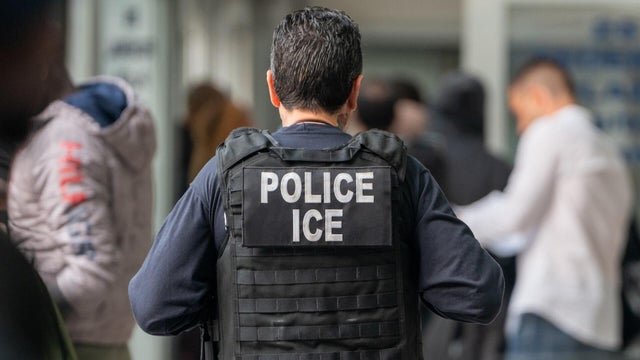
Top officials with the Trump administration, including Homeland Security Secretary Kristi Noem and Vice President JD Vance, are standing by their claims that Good was intentionally trying to run over ICE agents with her car.
KRISTI NOEM:
00:01:22
These individuals had followed our officers all day, had harassed them, had blocked them in. They were impeding our law enforcement operations, which is against the law. And when they demanded and commanded her to get out of her vehicle several times, she did not. The group of left wing radicals have been working tirelessly, sometimes using domestic terror techniques to try to make it impossible for the President of the United States to do what the American people elected him to do, which is enforce our immigration laws.
LINDSEY REISER:
00:01:52
CBS News Correspondent Ash-Har Quraishi is on the ground in Minneapolis. What is the mood there tonight? Good evening, Lindsey. Well, as you can imagine, anger, frustration, but also mourning. We have been here at the site of this shooting, just a few hundred feet from where her car was crashed after those shots were fired, all day. It has been extremely peaceful. There has been vigil that has been held. People have been singing songs. There have been people from all walks of life, young people, children, families coming out here to pay their respects to Renee Good. And we haven't seen a police presence. What's been interesting here is that this whole area has been blocked off with barricades that have been put up by residents, by people in the area, to try and protect the area around where Renee Good crashed her car, so that people could come here, they can visit, and they can pay their respects. So right now, very somber in the particular area we are. It is getting colder, the rain is starting to come down, but we have not seen those crowds behind us dissipate at this point.
LINDSEY REISER:
00:02:59
What more are we learning about Renee Good? Well, our Tony Dokoupil spoke to her father via phone today. Her father remembers his daughter as someone who was warm and witty and deeply caring about others. We're told that she grew up in the Colorado Springs area. She was one of five children surrounded by a close-knit family and community. He also said that she was a good mother, a mother of three, two children from a first marriage and one from a second. And after the sudden death of her husband, she moved to the Minneapolis area to restart her life. Her father says she was working as a substitute teacher, and said she was finally getting back on her feet after years of loss. And he also noted that now her six-year-old child is dealing with unimaginable loss, Lindsey.
LINDSEY REISER:
00:03:47
Ash-Har Quraishi, thank you. Anna Schecter joins us now. She's a senior coordinating producer for our Crime and Public Safety Unit. What do we know about the ICE officer who shot Renee Good? Well, we've learned that he's actually been in Minneapolis since 2017 working as a federal agent. So he has quite a bit of experience as an ICE agent, even in the last year, carrying out the Trump administration's immigration crackdown. And in fact, just six months ago, in June, he was involved in an incident where he had actually put his arm-- his right arm through a broken window in a vehicle of someone they were trying to apprehend. This was someone who had a history of violent crime in this country, according to officials. And he was dragged and needed multiple stitches, was really injured.
LINDSEY REISER:
00:04:36
This is photo we're looking at right now.
ANNA SCHECTER:
00:04:36
This is the photo. He was in the hospital. And this is all included in the charging documents, charging the individual who was driving the vehicle, trying to get away and flee, with assaulting a federal agent. So a little bit of history helps put together a picture of what this person has been experiencing over the last six months. And we know now is that, according to federal officials like Kristi Noem, she says he's at home with his family.
LINDSEY REISER:
00:05:04
State officials say the federal government is shutting them out of the investigation. What does that mean and how extraordinary is that?
ANNA SCHECTER:
00:05:11
Very rare to have an agency like a State Criminal Apprehension Bureau, like what we have in Minnesota, outwardly put out a statement that the FBI has blocked them from obtaining crucial information as they are trying to conduct their investigation in tandem with the FBI. Highly unusual. And this creates a breakdown in trust, where you could have all of these people working together to try to pin down exactly what happened and to try to chart the appropriate path forward. But this has become so politicized, and you have state leaders and the mayor essentially telling ICE to get out of here. So the breakdown of trust had already happened. And it's just not a good situation.
LINDSEY REISER:
00:05:57
What is the standard for the use of force? And who determines if that standard is met? This is a great question. The standard for use of force is always, whether it's federal, state, or local law enforcement, was it a reasonable response to a threat. And that can be colored by what a reasonable response to a perceived threat. But generally, that question really comes into play when we're talking about discipline and accountability. So would a local district attorney be able to bring a charge when the DOJ clearly is standing by this ICE officer? And I think it's highly unlikely that they would bring a charge. What happens next? We could see lawyers for her family filing civil suits. A lot is up in the air right now. And this could be a very messy legal process because it's ultimately a court that makes that decision.
LINDSEY REISER:
00:06:50
Anna Schecter, thank you. Later this hour, I'll speak with former acting Homeland Security Secretary Chad Wolf about the shooting and where the investigation goes from here. CBS News Senior White House and Political Correspondent Ed O'Keefe joins us now. Ed, the Trump administration has been front and center responding to the shooting. Vice President Vance defended the agent's actions in today's briefing. Here's more of what he said.
JD VANCE:
00:07:15
I can believe that her death is a tragedy, while also recognizing that it's a tragedy of her own making and a tragedy of the far left, who has marshaled an entire movement, a lunatic fringe, against our law enforcement officers. A tragedy of her own making. I mean, we are hearing some of who disagree with the administration's take that this could have been a tragedy of the ICE agent's own making. But what else are we hearing from the White House? Well, the president-- or the vice president today, really quite aggressively coming out swinging, defending the ICE agent, as you said, suggesting that left wing radicals have organized to obstruct and impede federal immigration activities from being conducted, and used his appearance in the briefing room, a rare one for him, to essentially admonish and lecture reporters on his perceived bias of the situation, suggesting that we're out to already fault this ICE officer and not paying enough scrutiny to the woman who was killed. He also tried to associate her with these movements or with protesters, when in fact, reporting there on the ground has suggested that she had just dropped her son off at school, that she was on her way home, that her family, at least so far, has said they have no known protest activity in her background. She wasn't an activist like the vice president, the president, and others have suggested. But more broadly, he was making the point, too, that Minnesota now-- and we've talked about this, Lindsey-- is the subject of great federal scrutiny for all the ways that it takes federal dollars and puts them toward social programs. He announced that the Justice Department is appointing a new inspector general or assistant attorney general to look into the allegations in that state. The Justice Department is already investigating to some extent there, but also in other states, part of an ongoing White House push to look at how potential cases of fraud across the country, tied to federal funding for social services, is playing out, an election year focus for them as they raise questions about that federal funding, especially in Democratic controlled states.
LINDSEY REISER:
00:09:17
What is the significance that Vance was out there to begin with? I mean, he's been called Trump's attack dog for many months now. Does it tell you the administration felt that they needed to get out ahead of this? That, and that he wanted to get back in the headlines. We've gone through a period here of several days focused on the Secretary of State, who, at least in political circles, is seen as someone who could potentially run for President in 2028, when the vice president, of course, is making preparations to do so. So this, in some ways, was a reminder that the vice president is the vice president, is a top advisor to the president, is involved in all this, and also is seizing on an issue not related to foreign affairs, which, of course, has dominated much of the last several days, and exerting his influence over that, and sort of reminding the Republican base and anyone else concerned about law enforcement in this country and immigration policy, that it's an issue of importance to this administration and to him. And you asked him that today. You had asked him what his role was in all of this, and he said he was leading an essentially every-other-day meeting with the cabinet about next steps moving forward. What can you tell us about that and also the administration's response to this War Powers Resolution in Congress? Right, well, he was clearly eager to talk about Minnesota and the allegations of fraud and the situation that unfolded yesterday. I asked, "What's your involvement specifically with Venezuela?" He ultimately told us that he's apparently chairing some kind of principles meeting every other day. Tried asking about the plans, for example, for tomorrow, for the president to meet with top oil executives about what the oil industry and other companies that work on rigging and whatnot might be willing to do in Venezuela in the coming months, as the US tries to seize more control of that country's oil reserves. He wouldn't get into that. As for the War Powers Resolution Act that was passed, it was a procedural vote in the Senate today, which means there'll be a final vote on it next week. What's notable is how many Republicans voted for it. And the president called them out in a Truth Social post saying that Susan Collins of Maine, Lisa Murkowski of Alaska, Rand Paul of Kentucky, Josh Hawley of Missouri, and Todd Young of Indiana, quote, "should never be elected to office again." This vote greatly hampers American self-defense and national security, impeding the president's authority as commander in chief. He did point out that a, quote, "more important Senate vote" will be taking place next week on this very subject, in essence, final passage. It's believed there are a handful of other Republicans who might also agree to vote with Democrats on this. We'll see. But the fact that he calls out, especially Susan Collins, who faces a tough reelection this year, and suggests she shouldn't be reelected again, is going to cause some concern for congressional Republicans. And it's a reminder why so often they vote with him, no matter whether they agree with him or not.
LINDSEY REISER:
00:11:55
And Josh Hawley, he's been such a staunch supporter of President Trump.
ED O'KEEFE:
00:11:59
And he actually came at this from the other side, apparently saying that his concern is that the president is ruling out the use of ground forces in Venezuela. He'd like to ensure that that option isn't taken off the table. So that's a principled reason to at least engage in this debate, which is what the Senate's going to do, but coming at it, in essence, from the other end, which is don't rule any of that kind of option out. Ed O'Keefe, thank you.