Watch CBS News

Hegseth's fiery news conference: What to know

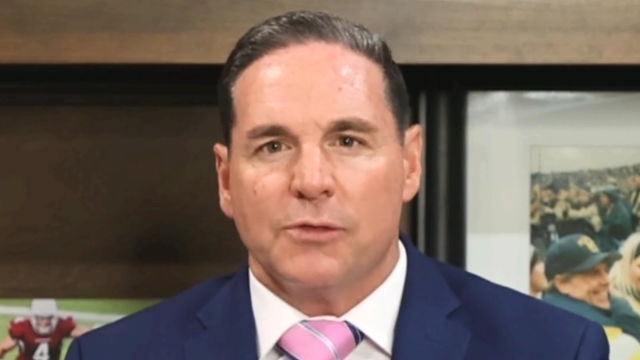
Defense Secretary Pete Hegseth and other Pentagon officials held a news conference Thursday to defend the success of last weekend's U.S. strikes on Iranian nuclear facilities. CBS News' Charlie D'Agata and Olivia Rinaldi have more.
Jun 26, 2025 (10:09)

TRANSCRIPT FOR: “WHAT TO KNOW ABOUT HEGSETH'S FIERY NEWS CONFERENCE OVER STRIKES AGAINST IRAN, TRUMP'S REACTION”

MUGO ODIGWE:
00:00:00

A lot of focus, though, right now on the aftermath of the US strikes on Iran's nuclear facilities. Iran's supreme leader warned against any more attacks in his first public comments since a ceasefire was reached with Israel. And Defense Secretary Pete Hegseth is on the defensive today. He held a news conference about the scale of the strikes and seemed frustrated about a leaked early assessment, which estimated that Iran's nuclear program was set back by only a matter of months. That is in direct conflict with the president's claim that three key Iranian nuclear facilities were obliterated. Hegseth spent most of that news conference slamming the media for its reporting. He and the chairman of the Joint Chiefs of Staff stuck to the claim that the US strikes on Iran destroyed their nuclear ambitions. Here's part of what he had to say. President Trump directed the most complex and secretive military operation in history. And it was a resounding success, resulting in a ceasefire agreement and the end of the 12 Day War. There's been a lot of discussion about what happened and what didn't happen. Step back for a second. Because of decisive military action, President Trump created the conditions to end the war. Decimating, now choose your word, obliterating, destroying Iran's nuclear capabilities. When you leak a portion of an intelligence assessment, but just a little portion, just a little portion that makes it seem like maybe the strike wasn't effective, then you start a news cycle, whether it's The WashingtonPost or FOX News or CNN or MSNBC. You start a news cycle that starts to call into question the efficacy. No, that's why. So you bring the chairman here, who's not involved in politics. He doesn't do politics. That's my lane to understand and translate and talk about those types of things. So I can use the word "obliterated." He could use "defeat," "destroy," "assess," all of those things. But ultimately, we're here to clarify what these weapons are capable of, which anyone with two eyes, some ears, and a brain can recognize that kind of firepower with that specificity at that location and others, is going to have a devastating effect. We have team coverage of Hegseth's comments with CBS News White House reporter, Olivia Rinaldi. But first, let's get to CBS News Chief Senior National Correspondent Charlie D'Agata at the Pentagon for us. Charlie, I know you were at that news conference. Hegseth there seemed very annoyed, a very fiery news conference. What stood out to you? Hey, Mugo. Well, first of all, that was the Defense secretary on offense. He spent the first 10 minutes tearing into the media for what he called our hate for President Trump and for intentionally undermining the administration's line that the strikes "obliterated," that's his word, that's President Trump's word, the Iranian nuclear sites. And I have to repeat, those initial assessments, which we've been reporting, they come from here. And they have already warned that those are preliminary and low confidence and came from the secretary's own Defense Department. So he then listed a number of various assessments from other areas, the IAEA notably, the Israelis, and the CIA, citing credible evidence. When I push him a little further on what that means or what it looks like or when we might get it, this is what he had to say. I was reading from the CIA director's statement, which came out last night. CIA, again, they do the BDA, they do the assessment. CIA can confirm that a body of credible intelligence indicates, it also goes on to say, new intelligence from historically reliable and accurate sources and methods. Now, you can imagine-- What is that?

PETE HEGSETH:
00:03:36

You can imagine the CIA director is going to be very careful about how he articulates things of that sensitivity-- classified, secret, top secret, compartmentalized. He's going to know things that you're not going to know, that the press isn't going to know. And he's reflecting that the sources he's seeing are highly credible. I just wanted to know when we were going to know. But as he quoted, the CIA Director John Ratcliffe said the strikes had severely damaged Iran's nuclear sites, the strikes had damaged the sites. And that initial report by the Defense Intelligence Agency was based on preliminary assessments and has since been outdated. I'll read that statement for you again. It reads, in part, "CIA can confirm that a body of credible evidence indicates Iran's nuclear program has been severely damaged by the recent targeted strikes. This includes new intelligence from a historically reliable, accurate source method," et cetera, et cetera, et cetera. The reason we repeat that is because that's as close as we have to a summation of the damage of what's gone on in Iran. It was also put to the secretary, and he didn't answer it, that why when the Joint Chiefs of Staff, General Caine, presented that initial report, which was on Sunday, which is the day after, he said, it's going to take a few days. And that first report that we saw, that initial assessment, that came within about maybe 24 hours of then. And we have been reporting it, CNN, "New York Times," et cetera. We've all reported that out. But it is a preliminary report, which means we need to get more intelligence. And if the CIA and others have got that intelligence, even if I understand that there are going to be operational security issues around that, they're going to keep some of that classified, but give us some broad strokes. Give us an idea of the level of the destruction, how certain we can be. It's worth pointing out, by the way, that General Caine, he gave us a TikTok of the B-2s delivering their weaponry. The first one in both of the attacks, because there were 12, took off, blasted the cement caps off. 1, 2, 3, 4, 5 went down the shafts. They all deployed, as was expected. And they know that. That is gettable data and evidence. And then they put a sixth one in. It's called a flex bomb, just in case any of the other ones didn't work. And all of those delivered. They reached their target. And they detonated in the exact place that they should have. So we know what happened. We just don't know the damage caused by it. And really, Charlie, that's part of my next question, because we know the secretary took the time to hold this news conference today. So did we learn anything new or substantial about the strikes? Or was it really just a chance for him to go on the offensive here? I think it was a chance for him to vent. I kind of get the impression that he needed to address this, which is why it was a scramble to get this together. We had heard rumors that we might get a briefing today. It's only the second one we've had, so this is a rare occasion. So he obviously had a message to share. But in terms of any actual evidence, no. We got two satellite images of the penetration points, which we kind of already had. But General Caine walked us through what we were looking at. But we didn't see any level of destruction. We didn't see what you and I have seen sometimes, you see that cockpit camera. When a bomb is delivered or an airstrike is delivered, you sometimes see the crosshairs. Now, I know that the B-2s are inherently secretive. Obviously, it's a classified weapons platform. It's a classified bomber. So there are all kinds of reasons that they might be sensitive about that. But yes, the press wants to know, the American people want to know, what was the level of destruction in Iran? And we still don't have any clues or answers closer to answering that question. We'll see if we ever get clues or answers on that one. Charlie D'Agata at the Pentagon for us. Thank you so much for your time today. Now, let's bring in Olivia Rinaldi. She is here with us today, once again, this afternoon at this time in New York City. Olivia, thank you for your time. How is the president responding to the news conference at the Pentagon earlier today? I'm sure he was happy to see Hegseth really just tell reporters and correspondents out there that they were wrong. Yeah, Mugo, we know the president was watching this press conference very closely. Shortly after it finished, he fired off a Truth Social where he called it one of the greatest, most professional, and most, quote, "confirming" news conferences the president has ever seen. Also in that Truth Social, saying that people in the fake news should be, quote, "fired" for being involved in this, quote, "witch hunt." So we know the president watching it very closely. And this is the type of thing he likes. He likes someone who's going to be a strong fighter for his agenda. That's certainly what we saw from the secretary of Defense today when he came out very strong against reporters, as Charlie just expertly laid out for you there.

MUGO ODIGWE:
00:08:32

Yeah. And so I want to pivot to a different question here, because we know that in just a few hours, the president is hosting an event at the White House. It's being called the One Big, Beautiful Event, which obviously plays off of the One Big, Beautiful Bill. What are we watching for from that event? Well, this is going to be an event touting the One Big, Beautiful Bill, as the Senate is really working through the crux and the issues that they have with this big bill. The president wants it signed by July 4. That's in eight days. Washington, things can move fast. They don't move that fast. So this is kind of an event that's twofold, really. One, it's to celebrate what this bill is supposed to do, which the president says it's going to provide tax cuts for Americans. There's no tax on tips, no tax on overtime, things that he campaigned on. So one, it's going to celebrate that. But two, it's going to apply pressure to those GOP holdouts. I'm looking at Senator Thom Tillis of North Carolina, Senator Josh Hawley of Missouri, several other Republican senators who are worried about Medicaid cuts, how this would impact rural hospitals. So the bottom line is this event that's going to happen today is really serving as kind of a twofold for this White House. One, look how great this Big, Beautiful Bill is. And two, to our friends in Congress, you better get it passed soon so the president can sign it. So that's kind of where we're at today for this event that's going to happen at the White House later on. Yeah. Certainly seems like the president has a clear message for that one. Olivia Rinaldi in Washington DC for us today. Thank you so much for your time.

View CBS News In
CBS News App Open
Chrome Safari Continue