Watch CBS News

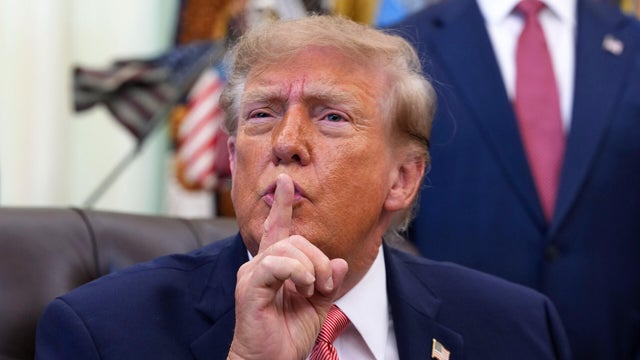
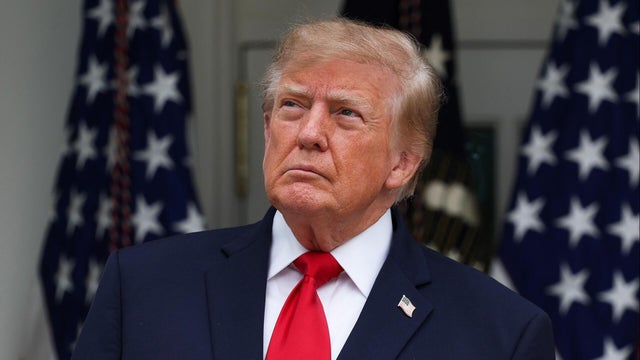
Watch: Trump delivers Memorial Day remarks

President Trump delivered remarks on Memorial Day at Arlington National Cemetery after paying his respects at the Tomb of the Unknown Soldier. CBS News' Nikole Killion reports.
May 25 (25:36)

TRANSCRIPT FOR: “WATCH: TRUMP DELIVERS MEMORIAL DAY REMARKS AT ARLINGTON NATIONAL CEMETERY”

SHANELLE KAUL:
00:00:01

All right. Happening right now, President Trump is giving remarks at the Arlington National Cemetery. Let's watch. Well, thank you very much, everybody. What a beautiful day, as it turns out. It's just perfect. We'd rather have this than the heat. It's just beautiful. It's always beautiful being here. My fifth time, and it never changes. Vice President Vance, Secretary Hegseth, Chairman Kaine, members of the cabinet, members of the United States Armed forces, veterans, and fellow citizens, today here at Arlington, a very special place that hallowed burial grounds and battlefields across the country. And around the world, we unite in solemn observance. With reverent hearts, we honor those who fell so that our republic might stand, those who died so that our nation could live, those who gave up their sacred light on Earth so that the sublime light of American freedom would shine for ever and ever. This Memorial Day, we salute them, we exalt them, and we thank them for all that we have and for all that they gave. They gave everything. God bless our fallen heroes. We're joined today by some of those they left behind, our incredible gold star families, incredible people. To every person here and across America who holds tight to the memory of a warrior taken from them, we will never, ever forget the ones you loved. Gold-star family members, please stand. Receive our thanks, please. Thank you. [APPLAUSE] Thank you very much. Thank you very much. My honor. Less than six weeks from now, our nation will reach a historic milestone, 250 years of majestic American independence. Something. [APPLAUSE] But it's only right that, first, we remember the immense sacrifice that has been brought to us and this momentous anniversary year. That's what it is. It's a momentous year. Before we hail the founding, we honor the fallen. Before we celebrate the triumph, we pay the tribute. Before we crown the victory, we count the cost. Today we are reminded that there could be no 4th of July without America's armed forces. And there could be no Independence Day without Memorial Day. We owe our liberty, our self-government, the glories of our history, and our very nation itself to the generations who paid for it with everything they had, the ultimate sacrifice. The first Americans to give their lives in battle fell on April 1775, when eight Patriots were cut down by redcoats. Those guns. They were shot on Lexington Green. They had answered the call to muster against a force five times their strength. They said at the time, the greatest in the world, in defense of their cherished rights and their cherished liberty. As the British approached, the Massachusetts militiamen summoned, destiny itself, saying if they mean to have a war, let it begin right here.

AUDIENCE:
00:04:21

Yeah. [CHEERS] Caleb Harrington was 23 years old when he accompanied his father to the Green that day. Torn apart from each other in the chaos of combat, that American son died trying to fight his way back to his father. He wanted to get back to Dad. Caleb's cousin, Jonathan, was struck down at age 31, shot within the site of his home and his young wife and child, who awaited his return. Jonathan crawled, bleeding back to them to die on his own doorstep for a final, terrible, but beautiful farewell. His widow and orphan were, perhaps, the very first gold-star family in a long, unbroken chain that reaches up through the ages to us right here today. When our founding fathers put the ideas of the Declaration of Independence to paper in Philadelphia, they signed and sealed an oath that had already been written in blood by patriots at Lexington, Concord and Bunker Hill. Their sacrifice birthed the most incredible and exceptional nation in all of history. And our nation is doing better today than it's ever done before. [CHEERS] Right. That's Right. The cause of independence exploded from that part of the American soul that will not be tamed, that will never be conquered, that will rather face death than to live as slaves to the arbitrary will of another. This is the unyielding spirit that has always set Americans apart and driven generations of American warriors into battle, their chests beating with the cry that says, we will govern ourselves. We will control our destiny. We will bow to no one, but the righteous God who made us and who gave us our rights and blessed this land of free and the bravest of the brave. 10 days into the legendary Battle of the Bulge, in World War II Lieutenant Colonel Keith Ware led 11 men and a tank against entrenched German positions, the toughest positions anywhere in the world. Half the patrol, including Ware himself, were soon wounded, yet still, he killed five enemy riflemen, demolished three German machine gun nests, forced a fourth to surrender, and captured the Hill. For his heroism, he received the Congressional Medal of Honor. Unlike most drafted soldiers Ware stayed in the Army and rose to the rank of general, a highly respected general, in Vietnam as commander of the 1st Infantry, the Big Red One, they called it.

AUDIENCE:
00:07:42

Yeah! Whew! That's very nice. He led from the front, and in 1968, that's where he was shot down, surveying enemy positions for the famous assault on Hill 222. Known as, "The Fighting General," he's buried here in Arlington, and with us is his grandson and namesake, Staff Sergeant Keith Ware, an Air Force veteran. Keith? Where are you, Keith? Where are you, Keith? Hi, Keith. Thank you very much. Great honor. We're also honored to be joined by a man who, like General Ware, is a veteran of the largest battle in US Army history, the Battle of the Bulge. At 15, Harry Miller lied about his age to enlist and was soon fighting to stop the SS Panzer divisions as part of the famed 740th Tank Battalion, the "Daredevils," they were called, of which he is among the last surviving members at 97 years old. Within six months after the Battle, Harry's unit lost 42 comrades. He's remembering them today. Sergeant Miller, it is a true honor to have you with us. Sergeant Miller. [APPLAUSE] And he looks great. Thank you. Many of the greatest men of that generation followed a long and epic path from World War II to Korea and to Vietnam. Major Charles Kelly was the father of aggressive dust off helicopter flying that made Army medical evacuation pilots among the most fearless, in Vietnam, the greatest helicopter pilots they say, that ever lived. Like Sergeant Miller, Charles enlisted to serve in World War II at age 15. He was wounded at the Battle of Aachen and went on to fight in Korea. But flying helicopter ambulances in Vietnam is what etched his name into history. Since I have been here, he wrote in 1964, we have evacuated 1,800 casualties. And in the last three months, we've flown 242 hours at night. No other unit can match this. And they flew the most dangerous routes, probably in the history of warfare. Two weeks later, under brutal enemy fire, Kelly refused to withdraw until he had loaded the wounded aboard. As he prepared for takeoff, an enemy bullet pierced his heart. Yet Charles Kelly's heroic, life-saving style lived on. His comrades and command passed on to Captain Patrick Henry Brady, and four years later, Brady piloted three damaged helicopters in turn to evacuate an incredible 51 wounded warriors under intense fire, fire like no one has seen up until that point. For this, he received, also, the Congressional Medal of Honor. General Brady is with us at 89 years old, as we salute his fallen mentor, Charles Kelly. Thank you very much. Thank you for being here. Thank you very much. Sergeant First Class Matthew McClintock enlisted in the Army in 2006 and became a very special Green Beret. In 2016, he found himself in an hours long firefight with Afghan terrorists. When a comrade was severely wounded, Matthew wanted to find a landing zone for a medevac rescue. Very dangerous. Horrible way to be flying. He was reminded of the dangers, but Matthew replied, we have to save him. We have to do it. Running out in the face of mortars and rocket-propelled grenades, he went to work, but was soon gravely wounded. He was hit from every possible angle. Matthew fell that day, but the soldier he gave his life to save survived and thrived, and Matthew was awarded the Silver Star. We're deeply honored to be joined by Matthew's mother, Joyce, his widow, Allie, and his precious young son, Declan. Here to remember Matthew at his grave in Section 60 10 years later, so Joyce and Allie and Declan, we salute Sergeant Matthew McClintock as an American hero, please. Thank you. [APPLAUSE] These are tremendous people. These are brave, brave people. In two wars recently, we've lost a total of 13 service members in Venezuela, which was a complete and total victory, where we're working very closely with the Venezuelan government right now. We took that over in one day, and we lost no one. In Operation Epic Fury, we lost 13 wonderful souls, wonderful, special people. These incredible men and women gave their lives to ensure that the world's number one state sponsor of terror will never have a nuclear weapon. Oh, and they won't. They will never have a nuclear weapon. I'm sure you know that. [CHEERS] One of them was Major Ariana Savino, Linse, and we're joined by her great family-- Omayra, Darren, Zevin, and Wick. Stand up, please. Please. There he is. There he is. Thank you very much. Thank you, Vic. Thank you very much. To all of you, Ariana's selfless gift will not be in vain. Our debt to you is everlasting, and it's always going to end in victory. We're having victories all over the place, more than we've had in many, many decades. Scripture tells us precious is the sight of the Lord is the death of his faithful servants. 400,000 souls rest on these grounds, these beautiful grounds, in the sacred soil, which is first consecrated in the hours of America's greatest division, to be eternal symbol of national unity. It cannot be by chance alone that the very first service member laid to rest here, in this place of supreme sacrifice, was a Union soldier by the name of Private Christman, Private William Henry Christman, of Pennsylvania, who died, as 19 years old. He was a great young man, they say. Beside him are more than 18,000 other young men named William, over 20,000 named John, over 13,000 named James joined over time by Isaac, Elijah, Earls, Hanks, Helens, Juans, Margarets, Marys, Donalds-- not too many-- and others whose names tell the true story of American greatness and greatness, it is. Here, beneath arching trees and white stones, so beautiful, these many are made one again united forever as brothers and sisters in arms and children of our fathers in heaven. From Coast to Coast, from proud cities to humble towns and from heartland fields, from every race and religion, they came because they could not bear the thought that the nation they loved so much might ask for heroes and hear no answer. But they answered, and they answered very, very loudly. At Ticonderoga and San Juan Hill, at Manila Bay and Midway, at Pointe du Hoc and Busan, the courage of the American warrior has forged a path through every sea and every place that sparked a trail to every corner on the Earth. In 250 years, America's heroes have saved more lives, reed more captives, accomplished more good, and spread more hope than any other people at any time in the history of the world. Whole nations know liberty today. Entire generations know freedom. Billions and billions of people have been delivered from poverty, tyranny, and oppression because of the sacrifices we honor this day. That's why from Brittany to Sicily, from Panama City to Saipan, from the Netherlands to North Africa to New Zealand, this whole planet is adorned with memorials to America's fallen and to America's greatness. To their courage carved in marble and engraved in the hearts of all of mankind, we will never forget you. From 1776 to 2026, America has always stood as a great and moral cause. Our warriors are no mere mercenaries. They are guardian angels who stride across the battlefields of history and stand watch over the highest and most beautiful planes the human spirit has ever seen, holding the line between liberty and tyranny, between civilization and barbarism, between good and evil. Wherever the American soldier walks, wherever he fights, wherever he fails, and wherever he falls, he does it for the destiny of a nation like no other. There's never been anybody like you. And for the fate of freedom on this Earth, we salute you like nobody has ever been saluted before. [APPLAUSE] Right. By their deaths, those who have gone before us in battle have redeemed the promise of our founding for each future generation. They've not just made the ultimate sacrifice, they've offered the ultimate proof that we Americans do, indeed, love liberty. We do cherish the self-government given to us by our forefathers. We do believe with all our souls in the mission that God has given to America, and we do intend, with all our strength and heart to hold high the torch our heroes handed to us, and we will never, ever let it fall. Thank you very much. You are special, special people. We love you all. God bless the families of the fallen. God bless the men and women who serve. And God bless the United States of America. Thank you very much, everybody. [APPLAUSE] Good afternoon, everyone. I'm Reed Cowan. You're watching CBS News 24/7, as President Donald Trump wraps up his speech at Arlington National Cemetery for Memorial Day, the president honoring the brave men and women who lost their lives serving our nation. We're also mindful today of the 13 soldiers killed in the war with Iran. President Trump says a deal with Iran to end that nearly three-month long war is largely negotiated, but Tehran says there's no imminent deal. Secretary of State Marco Rubio updated reporters Sunday on negotiations. I mean, when you get down to some of these things, you gotta hear back, and it takes the Iranian system a little while longer to get back. So look, the president's not going to make a bad deal. He's just not. This issue, no one has done more, and no one has been more serious about the threat of a nuclear Iran than President Trump has been. And so I'm very confident and we should all be very confident that we're either going to have a good agreement or we're going to have to deal with it another way. We'd prefer to have a good agreement. So let's go live now to CBS News correspondent, Nikole Killion. Nikole, good to have you with us today. So Mr. Rubio says a good agreement or having to deal with this another way. How does the White House define a good agreement? Yeah. Well, I would just flag that the President, obviously, in wrapping those remarks there at Arlington on this Memorial Day, he did briefly mention the war in Iran, acknowledging those 13 service members who have been killed as part of Operation Epic Fury, noting that these were men and women who gave their lives to make sure that Iran wouldn't have a nuclear weapon, the President reiterating after that statement, "and they won't." So that really, is the crux and main objective of the President and the Trump administration's approach to these ongoing negotiations in a potential deal with Iran that must be at the center of it. What we know about this emerging deal is that, initially, the US is calling on Iran to reopen the Strait of Hormuz. In exchange, the US would then lift its blockade on Iranian ports. Of course, that has really tied up the global economy, particularly the global oil markets, for some time now. So that would be the first step. Then we would see the US and Iran enter into a period of negotiations over Iran's nuclear stockpile. Now, US officials said, or seemed to indicate that Iran was willing or potentially open to giving up or disposing of its enriched uranium, although Iranian officials have pushed back against this a bit, saying that they're not at a point where they're ready to talk about nuclear options yet, although a foreign ministry spokesperson did acknowledge that there is some consensus just around some of the broader parameters of this memorandum of understanding or agreement, which, again, has yet to be officially agreed to. So still, a lot of back and forth going there, but certainly, on the part of the President, he continues to push for some type of deal sooner rather than later. Nikole, we know you're at the White House, but we also know and honor the fact that you have deep contacts in Congress. What are you hearing from lawmakers there? Well, look, some lawmakers, as the details of this potential agreement emerged over the weekend, express some skepticism, including some members of the President's own party from Senator Lindsey Graham of South Carolina, who really emphasized the need to get this right, to senators like Ted Cruz, who said that he was concerned about what he was hearing, to Senator Roger Wicker, who is chair of the Armed Services Committee, who expressed some concerns about this arrangement and potential deal as well, warning it could be a disaster, potentially, if this nuclear issue wasn't necessarily resolved. And then, of course, we also saw from the President's own former Secretary of State, Mike Pompeo, who posted on X, that this is not remotely America first. Now, the President has pushed back a number of times on Truth Social against his critics, both Democrats and Republicans, noting that, this deal isn't even fully negotiated yet, that they don't know what's in it, even going so far as to call some of them, quote, "losers." Reed. All right. Nikole Killion, thank you so much for that update.

Videos
View CBS News In
CBS News App Open
Chrome Safari Continue