Watch CBS News

U.S., Iran push to extend ceasefire

U.S. and Iranian negotiators are working to extend their current ceasefire and begin negotiations on a long-term agreement, but neither President Trump nor Iranian leaders have given final approval on a deal. CBS News chief foreign affairs correspondent Margaret Brennan has more.

May 28 (05:14)

TRANSCRIPT FOR: “U.S. NEGOTIATORS AWAITING RESPONSE FROM IRAN ON CEASEFIRE EXTENSION PROPOSAL”

LINDSEY REISER:
00:00:55

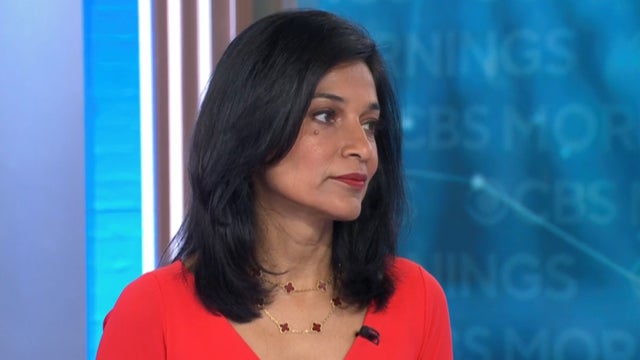
CBS News Chief, Foreign Affairs Correspondent and Face the Nation Moderator Margaret Brennan joins us now. It is a privilege to have you on The Daily Report. What are you hearing about the state of negotiations? Well, what we know is that at this hour, they're all waiting for a response from Tehran on this latest memorandum of understanding, which is really more of a truce. It's a promise for a 60-day pause in the fighting, with basically an outline of terms for what would be discussed in direct talks. So those thorny issues in regard to, for example, frozen Iranian funds, or its nuclear program, and some of the details of reopening the strait, that's being put aside to continue negotiating. A memorandum of understanding for the moment would give 60 days for a pause in fighting to do some of that. But at this hour, we don't have a response to the latest US proposal.

LINDSEY REISER:
00:01:48

How are you describing where we are at in this position, in this situation? I wouldn't describe it as a diplomatic deal. I'd say this is at best a truce. The memorandum of understanding is kind of like a business term. It's really more of a framework for agreeing about what we would talk about in the first place. So I think back to the negotiations that happened during the Obama administration with Iran. They were more complex because there were more players at the table. But it took two years to get from a memorandum of understanding, the JPOA as they called it, to the full agreement, the JCPOA, which had all the complicated nuclear elements in it. So those issues that are being outlined here for discussion later aren't going to be quickly solved. So right now we're really just looking at an extension of the ceasefire, and we're still waiting. President Trump has threatened to Oman if it tries to gain control of the Strait of Hormuz. Let's listen. Nobody's going to control it. We're going to watch over it. We'll watch over it, but nobody's going to control it. That's part of the negotiation that we have. They would like to control it. Nobody's going to control it. It's international waters, and Oman will behave just like everybody else, or we'll have to blow them up. Is that kind of rhetoric working? No. It was pretty stunning for, certainly, the Omanis who, like Switzerland, maintain a position of neutrality. That may be frustrating to the president here. But what we know Oman and Iran were talking about was passage through Omani waterways and into the strait, and an arrangement where vessels would have to pay a fee. The president and the White House are opposed to a toll. Those two things slightly different, but that may be just a bit of spin there. The long and short of it is the US doesn't want to create a precedent where waterways can be essentially held for ransom or control over one country. Oman says they were just trying to open the strait, and that they are now going to be in the role of having to take on a financial burden of dealing with traffickers, and smugglers and the like. And so they were looking to charge a fee around that. But at this point, it was really stunning to hear the president say that about this very small Gulf Emirate that has been a partner to the US for so long. They've helped, for example, get Americans out of detention in Iran. They actually were the location for the Secret back channel talks that started the negotiations between the US and Iran way back in 2013. And they were holding the talks with Steve Witkoff, and Jared Kushner and JD Vance just three months ago. So that's a pretty quick turn of events to go from being at the White House, negotiating a way to avoid conflict, to now being threatened by the United States of America for potential bombing or even sanctions. But at the moment, Omani diplomats are remaining very tight-lipped. They don't want to escalate this further. It really does, though, bring to the public eye something we've been hearing behind the scenes, which is, even America's partners and allies in the region are getting frustrated with how long this war is going on, the lack of clarity on how to end it, and the fact that they are living in a neighborhood that continues to be stuck in this back and forth between the US, Iran and Israel.

LINDSEY REISER:
00:05:11

Margaret Brennan, thank you.

Videos
View CBS News In
CBS News App Open
Chrome Safari Continue