Watch CBS News

U.S. launches new strikes against Iran

The U.S. military launched a new round of strikes against Iran on Wednesday. It's the second straight day of what CENTCOM calls defensive strikes against Iranian targets. CBS News' Eleanor Watson, Natalie Brand and Sam Vinograd have more.
Jun 10 (11:10)

TRANSCRIPT FOR: “U.S. LAUNCHES NEW STRIKES AGAINST IRAN”

DONALD TRUMP:
00:00:19

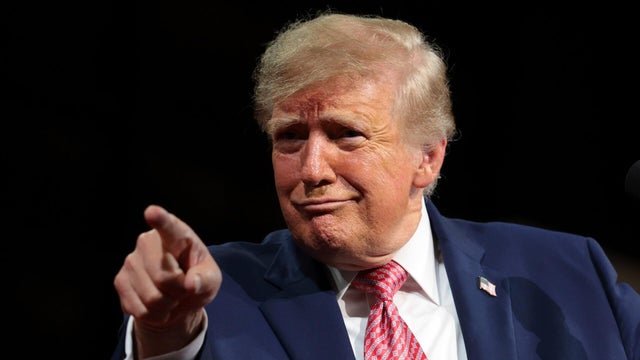
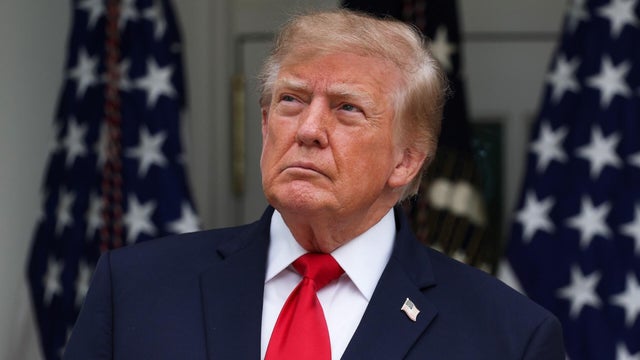
We hit them hard yesterday, and we're going to hit them again, hard today. In case you missed it, in case you don't turn on your television set, we were really close to a deal, but they keep tapping us along. They keep playing us for suckers.

LINDSEY REISER:
00:00:32

Defense Secretary Pete Hegseth later reiterated that Iran was taking too long to negotiate with the US.

PETE HEGSETH:
00:00:38

As President Trump said, they've been tap, tap tapping. You can see when someone is trying to tap, tap, tap on a deal. Instead, they're going to have tap, tap, tap bombs dropping on key facilities in Iran from the United States of America.

LINDSEY REISER:
00:00:50

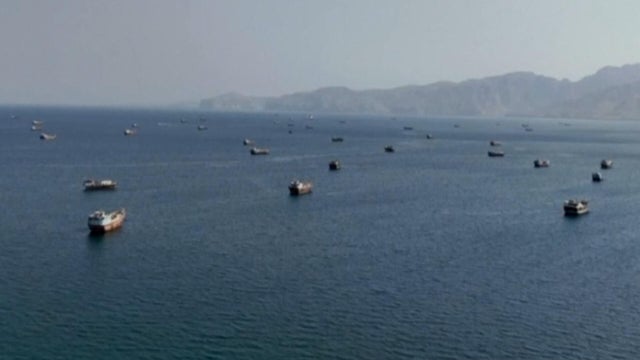
The president today also revealed the US military has been quietly helping commercial vessels pass through the Strait of Hormuz. The key shipping lane, of course, has been effectively shut down for weeks due to Iranian threats to attack any ship that tries to send oil through the strait. CBS News Pentagon reporter Eleanor Watson joins us now. Ellie, good to see you. What can you tell us about these newest strikes? Where is the US attacking? Well, US Central Command, in a tweet tonight, announced that they've begun launching additional self-defense strikes around 5:15 Eastern tonight against multiple targets in Iran at the direction of the commander-in-chief. This comes after President Trump teased this earlier today, saying that the US would again hit Iran hard. And after Defense Secretary Hegseth said there would be strikes tonight, would be, quote, "strong and clear." And if they had to take strikes tomorrow, those strikes would also be strong and clear. He framed it as putting the US in a position to push forward some sort of diplomatic deal. This does not appear to be the same type of tit for tat strikes we've seen over the past two months during the ceasefire, in part because the language from the president has changed dramatically today. Today, in the soundbite played, Lindsey, he said that the US has been treated as suckers by Iran. Iran has been trying to treat the US as suckers. That's a change from a few days ago, when he's been saying that Iran wants a deal and that they were on the brink of one in maybe two to three days. Now, he has said that this downing of the Apache helicopter justified a response. They're taking too long to negotiate. And they will, quote, "pay the price."

LINDSEY REISER:
00:02:28

So it is your understanding that this is less about retaliation for the downing of the Apache and more with-- I guess we would call it the impatience of the administration that a deal has not yet been struck. Based on what the president said today, he still wants a deal. He said that Iran should make a deal within the next few days. It's on the table. But what's clear from his language is that he is frustrated that they have not been able to push it through. And this downing of the Apache helicopter has a justified reason to respond, not only last night, but again tonight.

LINDSEY REISER:
00:03:04

OK, so what else do we know about this secret mission to transport oil through the Strait of Hormuz? Well, the president today said he was announcing this for the first time, kind of saying that for the past month or since last month, he's directed the US military to help coordinate ships that have still been bottled up in the strait to get through. That has resulted, according to him, in over 100 million barrels of oil being able to transit through. It does appear that the Apache helicopter that was taken down on Monday was a part of this effort of coordinating with ships to get through when it was knocked down. The effort has been able to get 100 million barrels through. But to put that in perspective, Lindsey, before the war, about 20 million barrels per day were able to get through the strait.

LINDSEY REISER:
00:03:53

Important figures. Eleanor Watson, thank you. CBS News correspondent Natalie Brand joins us now from the White House. So, Natalie, what is it that we know that the president here is trying to accomplish? What was telling, Lindsey, is ahead of these strikes, the defense secretary, when he was speaking to reporters in Florida, he said that the goal of tonight's strikes are to advance military interests by the US, but also enhance the diplomatic position-- again, reiterating what we've heard from the president and other administration officials that the US still wants to make a deal. But what we've seen over the past 24 hours now is the president really signaling that his patience is wearing thin. And of course, the downing of a US Apache helicopter was also kind of a game-changer here. Now, over on Capitol Hill, he has Republican allies who are urging him to take an even stronger stance given that escalation. Whereas Democrats are questioning, is this ceasefire still in place? But at this hour, from what we've heard, the president made clear that he was going to, quote, "hit Iran hard again today." But at the same time, there is this door that remains cracked open for a potential deal. That was really emphasized and reiterated by the Defense Secretary ahead of these strikes, saying that Iran really needs to take the next steps or else, in his words, the Department of Defense can negotiate with bombs.

LINDSEY REISER:
00:05:27

What is the risk the White House takes with this sort of action? Is it leaving allies in the region vulnerable to Iranian attacks? Yeah, I mean, that's a concern that we've seen over the past couple of weeks as we've seen some strikes and what the US has called these defensive strikes, what the US has called Iranian aggression in the Strait of Hormuz and around the Strait of Hormuz, as that operation that Ellie was describing has been continuing the US naval blockade. What we do, which is interesting, is that the countries who have had a role in mediating are still trying to bring the parties to the table. And in fact, CBS News had confirmed today that Qatari officials are in Tehran again, trying to help mediate a peace deal. So that backchannel communication and attempts to keep this deal on track have not stopped even though, again, this incident that happened late Monday evening with the helicopter certainly changed the nature of how things were progressing when earlier this week, the president thought that a deal he said could be within reach in just 2 to 3 days.

LINDSEY REISER:
00:06:46

OK, Natalie Brand, thank you. CBS News national security contributor Sam Vinograd joins us now. Sam, what is your read on where the conflict stands, and how close are we to the ceasefire falling apart? I think it's hard to call the new normal a ceasefire at this point. Certainly, there's less fire than there was before the agreement that was forged a few weeks ago, but we have daily military activities by one party in this conflict or another, whether it's the United States, Iran, or Israel. Certainly, the United States is turning back to military pressure to try to get around to negotiate in a more expedited fashion. Now, if history is a guide, it is worth noting that the Iranians have not changed course during prolonged conflicts, including with the Iraqis several decades ago. So military pressure alone is unlikely to push the regime to negotiate with more momentum. Economic starvation has proven to be a successful tactic before in terms of bringing Iran to the negotiating table, but that takes time, Lindsey. And the president's statements earlier on in this war, that it would be wrapped up in a few weeks, and that he would get a deal to those of us that have been working on Iran policy for several years. That certainly did not seem that it would be true, and it certainly hasn't played out that way.

LINDSEY REISER:
00:08:04

So, Sam, with the economic starvation, I mean, that would be the US naval blockade. The president said, they're choking off their ability to export oil and take in money. But when you say aggression alone is not enough to get them to the table, certainly the United States intelligence community is communicating that to the White House. So why would they? I don't know that we can assume that, Lindsey. I think that in my day, the US intelligence community was one of the first voices in the room with the president when he made key national security decisions. The US intelligence community would weigh in on how another party would react to a particular tactic. In this case, certainly, we do have reporting that DNI Gabbard was not playing as heavy as a role in those briefings. We also know that the new acting director of national intelligence has been asked to continue with Gabbard's tactic of really decimating the US intelligence community as we know it. So it's very unclear whether that intelligence is making its way to the White House in any way. And further, the president is listening to it. So we just don't know that Intel is guiding any of these decisions at all.

LINDSEY REISER:
00:09:12

Before we let you go, I do want to ask you about the president saying the US has been secretly helping commercial ships pass through the strait, resulting in 100 million barrels of oil leaving the area. But according to the US Energy Information Administration, that's enough for the globe for one day. So what's your reaction to that? My reaction to that is that is a drop in the bucket in terms of what the global economy needs just to tread water, let alone to see enhanced growth. So we are entering a significant economic downturn. We see that across economic indicators. And the only way that we're going to get ourselves out of this situation, analytically speaking, is for the blockade to be lifted and for ships not just to leave the Strait of Hormuz, but importantly for straits to enter the Strait of Hormuz and for those flows to continue to go both ways for a prolonged period of time.

LINDSEY REISER:
00:10:02

What are you going to be watching for in the next few hours, in terms of what we hear from Iranian politicians and trying to read what their response will be? Well, first and foremost, I'm going to be watching to see whether the Iranians respond to these, quote-unquote, "self-defensive strikes." We did see a security alert come out of US embassy Baghdad, urging American citizens to exercise increased caution. If the United States continues to strike Iranian targets, ostensibly the Iranians are going to feel a need to respond to that. That's the tit for tat escalatory cycle that we fear. So I am certainly hoping and praying that US citizens in the region are not impacted, that we don't see casualties or fatalities. But if that does occur, certainly the US administration will feel a need to respond with even more force. So that's what I'm watching for in the next few hours. I place less credence in what the Iranian officials are saying publicly. There's oftentimes a lot of rhetoric on both sides, instead paying attention to what actually happens on the ground. And certainly, if we come any closer to an interim agreement to lift the blockade.

LINDSEY REISER:
00:11:07

Sam Vinograd, thank you so much. Thanks.

View CBS News In
CBS News App Open
Chrome Safari Continue