Watch CBS News

U.S. and Israel launch strikes against Iran

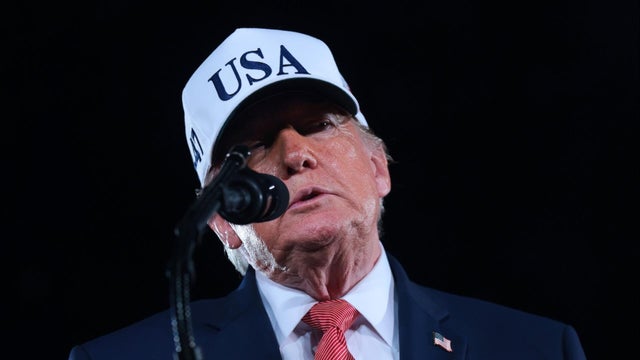
The U.S. and Israel carried out military strikes on targets in Iran early Saturday after President Trump threatened the Iranian regime for weeks to make a new deal to rein in its nuclear program, and before that, threatened it over its violent crackdown on protesters in January. Carissa Lawson anchors CBS News' special report.

Feb 28 (42:01)

TRANSCRIPT FOR: “U.S. AND ISRAEL LAUNCH STRIKES AGAINST IRAN | SPECIAL REPORT”

OLIVIA GAZIS:
00:16:37

Absolutely Carissa. So here's what we know tonight about the diplomatic signals and the embassy movements, steps that have often preceded a deteriorating security environment and can often indicate potential military activity that everybody was on the alert for. We had seen some visible measures to move US personnel out of harm's way, but not on the scale of past large scale drawdowns, and nothing that would have clearly signaled a sweeping or sustained campaign. Usually, embassy departures are accompanied by public warnings issued because the US government is required to share security information with private American citizens when that information is provided to embassy personnel. So early Friday, the US embassy in Jerusalem authorized the departure of non-emergency staff and family members, citing unspecified safety risks, and advised private Americans in Israel to consider leaving on commercial flights while those options were available. Moments ago, the US ambassador to Israel, Mike Huckabee, also urged Americans in the country to stay close to shelters. We've also seen the US embassy in Qatar issue a shelter and place advisory for all US government personnel and American citizens there. As Charlie mentioned, Doha hosts the largest US military installation in the Middle East, which is a significant and potentially symbolic retaliatory target for Iran. But otherwise, throughout the day on Friday, US officials had strongly denied reports of additional personnel movements in Bahrain, in Kuwait, in Iraq. And we are still awaiting confirmation on whether there will be any similar drawdowns or alerts in those areas. Also, as Charlie mentioned and you've discussed, it was announced today that Marco Rubio intends to travel to Israel to meet with Benjamin Netanyahu to discuss Iran, US officials said Lebanon and other regional issues. We have already asked whether that trip is still on track and haven't received confirmation. Very notably, at this critical moment, and in a break from precedent, Rubio was not planning to travel with a press corps. And yes, all of this is happening as diplomatic appeals to the last minute continued. Margaret Brennan spoke today with Oman's foreign minister, whose country has served as a key intermediary in the nuclear negotiations that had taken place to this point. He urged time for more talks, citing what he described as substantial progress toward a potential agreement over Iran's nuclear program and warning that military strikes would not resolve the underlying issues. Technical talks had been scheduled to resume on Monday in Vienna and include the IAEA, the nuclear watchdog there. Obviously all very much in question now that these strikes are underway. Well, Olivia, we're hearing from President Trump now. He has issued this statement here. He's confirming the US involvement in the strikes in Iran, saying, quote, "a short time ago, the United States military began major combat operations in Iran. Our objective is to defend the American people by eliminating imminent threats from the Iranian regime, a vicious group of very hard, terrible people." Olivia, what do you make of that statement from the president?

OLIVIA GAZIS:
00:19:56

Well, clearly a continuing indication that the president had been deeply dissatisfied with the course of negotiations that had taken place to this point. Most recently, his envoy, Jared Kushner, and Steve Witkoff had met with the Iranians in Geneva. There was word that they were disappointed with what the Iranians had put on the table over the course of those talks. And you can recall also the broader context here. This is coming in the aftermath of massive protests in Iran that began in early February amid really broad economic unrest that people didn't have enough to subsist on. The regime issued a tremendous crackdown on those protesters, resulting in the minimum thousands of deaths. The president recently put the figure at 32,000 people who may have been injured or killed in the course of that crackdown. So he had urged that killing to stop. He indicated some satisfaction in mid-February that the regime had suspended executions and been satisfied that the crackdown on the Iranian people had been subsided. But in signaling that he needed to hear from the Iranians that the nuclear portfolio was going to be closed, that enrichment was off the table, that Iran would never pursue a nuclear weapon. He kept insisting that those were words he needed to hear. And even though Iranian officials were saying publicly that they were not in pursuit of a nuclear weapon, unsatisfactory to the president, clearly, the talks on Thursday didn't get as far as it needed to go. And here the president is obviously undertaking this decision to jointly engage in these strikes with Israel. All right, Olivia, we're going to go back to Charlie D'Agata now. Charlie, we have a question for you. There you are. So let's talk a second about the strikes that the US hit against Iran last year, and let's talk about what was accomplished then at that time. Yeah, so it was an attack against Iran's nuclear facilities or suspected nuclear facilities. And they hit three different sites. And what we saw was a number, five or six of B-2, these are the most advanced stealth bombers in the world, the most advanced bombers in the world. And those came from the United States. When we're on the ground here, we try to predict what's going to happen, as we were discussing earlier. Well, what has the US military sent and what does that mean? What does that look like? So that came from left field. Not here, came from the United States. A number of these B-2 stealth freedom bombers, as they were brought in, keeping in mind the Israeli military had already severely degraded Iranian air defenses, but as they came in, they were flanked by F-22 stealth fighter jets, the same that are here now and F-35s. I keep repeating the stealth, really important. So you got a stealth bomber going in, you have the escort from the F-22s and F-35s and they dropped, excuse me, deep penetrating bombs into these two areas, two nuclear facilities where they were going after the centrifuges. Now, at the same time, there was a sub that was part of the coast, and it fired 24 tomahawk cruise missiles at another facility. So this wasn't necessarily going deep underground. Cruise missiles can hit, but they can't penetrate the same way that the B-2 bombers that were firing what's called MOABs, that had deeply penetrated, especially Fordow and Natanz, those are the two facilities that the Americans were really trying to knock out. We were trying to get an after battle damage assessment. We didn't get as much as we had hoped for. We were told several times that was classified, but they were trying to get to the centrifuges. And they believe some of that damage was done. I mean, they went beyond that. President Trump and others used the word obliterated. Obliterated Iran's nuclear programs, essentially said they couldn't rebuild a bomb even if they wanted to. Now, what was the question that the IAEA, the UN nuclear watchdog, had already been monitoring was the amount of uranium. Excuse me. Hundreds of kilograms, 460 kilograms of uranium that the Iranians are thought to have moved around. So now when the conversations are taking place between the United States and Iran about Iran's nuclear weapons programs, at issue is, first of all, where's the uranium? There are questions about maybe getting that uranium out, how much the Iranians are going to do in cooperating with that. Again, they continue to say that this is for peaceful means. They're not producing a weapon. They're going to want to have access to that, possibly American inspectors to verify that, certainly UN IAEA inspectors to verify that, and a complete cessation of trying to attain or-- excuse me, to enrich their nuclear material. That was all part of what was going on in those discussions, as far as we're aware, are still going on. But that was the initial wave, the initial strike on Iran's nuclear facilities, and that happened back in June. It was something called Operation Midnight Hammer, led by these B-2 stealth bombers flanked by F-35s and F-22s. And we might see a return to that. The assets are certainly in place. Charlie, we're going to break away from you for just a second because we now have a video statement from President Trump's Truth Social account. So we're going to listen in. A short time ago, the United States military began major combat operations in Iran. Our objective is to defend the American people by eliminating imminent threats from the Iranian regime, a vicious group of very hard, terrible people. It's menacing activities directly endanger the United States, our troops, our bases overseas, and our allies throughout the world. For 47 years, the Iranian regime has chanted death to America and waged an unending campaign of bloodshed and mass murder, targeting the United States, our troops and the innocent people in many, many countries. Among the regime's very first acts was to back a violent takeover of the US embassy in Tehran, holding dozens of American hostages for 444 days. In 1983, Iran's proxies carried out the marine barracks bombing in Beirut that killed 241 American military personnel. In 2000, they knew and were probably involved with the attack on the USS Cole. Many died. Iranian forces killed and maimed hundreds of American service members in Iraq. The regime's proxies have continued to launch countless attacks against American forces stationed in the Middle East in recent years, as well as US Naval and commercial vessels in international shipping lanes. It's been mass terror, and we're not going to put up with it any longer. From Lebanon to Yemen and Syria to Iraq, the regime has armed, trained and funded terrorist militias that have soaked the earth with blood and guts. And it was Iran's proxy, Hamas-- We just heard from President Trump. That was a statement he made on his Truth Social account in his video statement laying out quote, "mass terror" from Iran that led to this. And Charlie D'Agata, we're going to go to you. What do you make of what you just heard from the president? Yeah, well, he sort of laid out a litany of attacks against US forces here in the region, actually, which began with the takeover of the US embassy in Tehran. We are talking about decades ago. But he reminded in that message that Iran's troops or proxies have attacked the United States or US interests in this region for decades, going back to not only the war in Iraq, where Iranian weaponry and Iranian proxies were attacking and killing US troops. He recalled the attack on the marines barracks in Beirut that killed almost 300 people. The USS Cole, if you remember, in Yemen, that was one of the first attacks. And he said hundreds of attacks against US forces throughout Iraq. And this is about eliminating he said, in his words, those Iranian threats that Iran continues to attack in places through their proxies in places like Lebanon, Syria, Iraq. And here, I believe he was just about to mention by backing Hamas after the attacks of October 7, the worst atrocities that Israel has seen on its soil. So putting Iran as a sort of patron to all of those attacks against US forces, US allies as a way of justifying it. What we don't know yet is whether this is the beginning of a long campaign, whether this is a messaging to get around essentially to lay down its weapons, to not fight back, to find some sort of peaceful arrangement or face much more force from the United States and Israel, for that matter, going ahead. And obviously, this is something that would be classified, even if we had that information as to what's going to go forward, but just to remind our viewers, we were awoken to air raid sirens this morning at about 8:20, and that wasn't because there was incoming, that was to alert the people of Israel from the IDF, Israeli Defense Forces, that an attack was underway-- a joint attack between the United States and Israel hitting targets we know in Tehran, from our folks on the ground, and in four other cities inside Iran. As far as we know, the Iranians hadn't tried a retaliation. There has only been one air raid siren, but the Iranians said that they would and they can. They have the capacity to do so with their missiles that can reach here in Israel and to US forces in this region. So that's where we stand now. And that was what President Trump laid out, that this is kind of like an opening salvo to what we may see in the days and weeks ahead. All right, Charlie, thank you. Olivia Gazis has been with us on this breaking news story in these overnight hours. Olivia, what do you make of what the president said in that statement?

OLIVIA GAZIS:
00:31:06

He clearly reaching back over many decades of history to make clear that this is a longstanding foe, and it is his intention to settle the matter once and for all. His message didn't actually focus on the nuclear program, which had been at the forefront of the talks that had been taking place. And that was also amid concerns that the talks weren't solving for the broader issue of some of the threats that he had cited. There had been elements of the administration that had been pushing for a broader negotiated deal with Iran that would have addressed not just the nuclear program insofar as it was being reconstituted, but Iran's vast stockpile of missiles, its funding of regional proxies, Hezbollah, the Houthis, Hamas. Secretary Rubio had said publicly that in order for talks to be quote, "meaningful," they needed to address all of those things, not just the nuclear program, but also its missiles and its support for regional proxies. But indications that we got publicly were that the talks that had been taking place had the nuclear issue as its central focus, with missiles and proxy behavior as sort of ancillary things to address. And that may have put things over the finish line, as it were, that there wasn't enough headway being made on the nuclear question. And the other outstanding issues were just too large for the administration to be satisfied in terms of the threat that Iran poses to the region, and as the president said there, to Americans in the region. Part of what he said, we are going to destroy their missiles and raise their missile industry to the ground. It will be totally again obliterated. We're going to annihilate their navy. Some pretty harsh words that he's going all in on this. Doesn't it sound that way, Olivia?

OLIVIA GAZIS:
00:33:01

It does. And it's hard to say at this very early stage whether that is an achievable objective. I'll defer to Charlie and the military experts who know what the US and Israel are positioned to do, but those are ambitious targets for the US to want to pursue all at once. Obviously, the regime is going to want to retaliate. I think we've gotten an indication of that from Iranian officials in the region. And unless there is a sound decapitation of its leadership from the supreme leader on down senior officials in the IRGC and the Basij, this is a regime that has dug in before, and this is a regime that has made clear that its primary goal is survival, and that is the reason that it has for a long time sought to portray itself as a threshold nuclear state to stockpile as many missiles and build as many missile launchers as possible. But there's a very real known shortage of interceptors at the moment. So the likelihood that this campaign can be sustained beyond 8 to 10 days, according to officials we've been speaking with, is pretty low. So it remains to be seen just how big and how sweeping the campaign that the US and Israel appear to be engaging in right now together can go in further stages. Yeah, he says, we will ensure that Iran does not obtain a nuclear weapon. To the members of the Islamic Revolutionary Guard, the armed forces and all of the police, I say tonight that you must lay down your weapons and have complete immunity, or in the alternative, face certain death. So lay down your arms. You will be treated fairly with total immunity, or you will face certain death. He says that again. Now this escalation, it just seems like, could this make it harder or impossible, maybe to reach any kind of agreement at this point? What happens after this?

OLIVIA GAZIS:
00:35:05

There's any room for diplomacy, if you're taking the president at his word and you see what accompanying military efforts he unleashes alongside Israel. As we had mentioned, there were supposed to have been technical talks taking place in Vienna involving the nuclear watchdog there. We were waiting for confirmation whether the US was planning to participate. Iranian negotiators were there to continue discussing the nuclear portfolio amid signals from the mediators, the Omanis and others, that there was a real appetite to continue trying to find a peaceful solution and using the argument that absent diplomacy, the multi-pronged issues here are not going to be resolved. It is far from clear whether those Monday talks continue, to see if there can be a curtailment of the military campaign underway here. That was the word that we had as of late Friday. All very much an open question now as the attack has gotten underway. Olivia, I'm going to go to Charlie in a second, but let me ask you really quickly. Let's talk about the global ramifications of a strike like this. The possibility perhaps, of Russia or China getting involved. Can you touch on that a little bit for folks at home who may be concerned that this may turn into something much bigger?

OLIVIA GAZIS:
00:36:23

Well, we do know that the Iranians had been engaging the Russians and the Chinese, soliciting their support militarily, diplomatically. It's unclear whether either power is going to lean in in support because of exactly what you cite, which is a much broader global conflagration. I don't know that we are on the precipice of that now. There had been uneasiness on the part of US allies in the region. The UK had apparently declined to let the US use its bases to stage air power in the region. Gulf states were reluctant to allow US overflights and use of their airspace for any offensive activity, so the US was very much going it alone with Israel to begin with, notionally before this actually got underway, and it is very much unclear if there are casualties, whether US allies are going to come robustly to the US defense. That's an open question, these are early stages. And just how broadly this goes depends now on how the Iranians respond and what the tit for tat looks like from there. All right. You mentioned casualties. For this next question, I'm going to go back to Charlie. President Trump acknowledges the possibility of American casualties, Charlie. He says the lives of courageous American heroes may be lost and we may have casualties that often happens in war. But we're doing this not for now, but for the future, and it is a noble mission. That's what the president is saying. Charlie. I hear sirens in the background as well, Charlie. We're just having another siren. Yeah, it's OK for now. We have to go in? We're all right. We'll hold. All right. Sorry about that. Just give me a minute. Yeah, so I wasn't able to listen to everything that President Trump was saying there. It's a pretty exhaustive explanation about what's going to happen. He sets out a prolonged conflict with Iran. He's urging the Iranian military to lay down their arms, that they would be giving some sort of amnesty to not fight back, otherwise, they're going to face certain death. In addition to that, after he's told the people of Iran to get into a safe place, wait essentially for the dust to settle, because he's laying the groundwork for what sounds to be a prolonged bombing campaign in Iran, and then to come out and overthrow the government. So these are the strongest words that we would have heard. This is not a sort of symbolic first strike. It may be sending a message. Again, you just heard the sirens going off, which doesn't necessarily indicate that we have incoming, because we'll hear the air raid sirens as well, and they tend to be very specific and localized, but they have to expect that Iran is going to retaliate. But yes, this level of reaching out not a message just to the people of the United States, but to the people of Iran, too, and obviously to the people of Israel. Now, when you talk about US forces, he would have been given a list of the counterattacks and the capabilities of Iran's forces and proxies within this region. Proxies have been severely denigrated over the past two years, partly with the help of Israel taking out the larger groups like Hezbollah. But there are also Iranian-backed proxies throughout the Middle East, some known, some covert, that have frequently targeted US forces in the past. But if Iran is to launch, their capacity and capability of the missiles, they have missiles within easy reach of US forces, and not all of them can be intercepted. So I think this is just a sort of reality check that if this is going to be a prolonged war, that President Trump is warning Americans that they will be in the line of fire and they will be attacked. And this is the cost of war. So all of those statements that I just made are a surprise and laying out because we had been anticipating, is it going to be limited strikes? Is it going to be regime change? And it sounds from the language that President Trump is using that this is all-in, telling the military to just lay down their arms, don't fight back, you'll face certain death, telling the people of Iran to get low and when it's over, come and overthrow the government. This is regime change and it's going to take a lot, and that's why when we talk about how much has been brought into this in terms of the military assets into this region, there's a lot. Mostly, and I keep underlining this fact, are the aerial assets, the fighter jets, the cruise missiles, these are offensive weapons, but there also will be defensive weapons in order to protect US forces at bases here and also the extraordinary amount of Naval assets at sea. Charlie D'Agata for us in Israel. Thank you so much for that. We also need to thank Olivia Gazis, who's been with us on this breaking news story from the Middle East, the US and Israel launching what they're calling a preemptive strike against Iran. We understand once again, this is a joint US and Israeli strike which hit in Iran's capital of Tehran, near the offices of Iran's supreme leader. It is being reported that Iran's supreme leader was not in Tehran at the time, was transferred to a secure location. Our coverage will continue on CBS News 24/7, your local news, and CBS Saturday Morning. This has been a CBS News' special report. I'm Carissa Lawson in New York. [MUSIC PLAYING]

View CBS News In
CBS News App Open
Chrome Safari Continue