VLAD DUTHIERS:
00:00:00
For more on the developing situation with Iran, let's bring in retired US Navy Vice Admiral Robert Merritt, who is currently a professor at Syracuse University. Admiral, always great to talk with you. What's your assessment of the renewed engagement between the US and Iran, even before the president's suggestion that Tehran is going to pay the price? And what do you make of the fact that it was a Apache helicopter, in other words, not a Naval asset that was actually shot down? What does that tell you about what is potentially happening in that theater of war? Yeah, Vlad, a great question. I think to step back just a little bit, we're in the midst of a ceasefire with a very big asterisk after it, kind of a middling between a ceasefire and open hostilities, just based on, as you know, all that's happened since April 8, when the ceasefire began. In terms of the helicopter that's taken down, the Apache, I don't think there's anything particularly remarkable. It's a key element that we use for patrolling the Straits of Hormuz, fairly easy to take down with a UAV, just because all you have to really do is get in the way of a rotor of a helicopter to bring it down, and the drone, of course, is expendable. And it's just terrific that we were able to rescue the two crew members with a unmanned surface vessel. That's the first time that that's happened. So from a maritime standpoint, it was useful. And the statements we had last night, I would just say, in closing, Vlad, were considered proportional in terms of the strikes that we did in Iran, notwithstanding what the president said this morning in terms of some additional threats for additional military action.
ADRIANA DIAZ:
00:01:35
Admiral, can you explain to us how we are technically in a ceasefire if both sides are firing openly against each other? Yeah, Adriana, we're somewhere in between. We're not in a full ceasefire. And we really haven't been since it started at the beginning of April. We've had so many engagements take place. Just yesterday, they launched attacks on Bahrain, Jordan, and Kuwait. At the same time, there's a linkage that the Iranians have, as you know, for things that are happening in Lebanon. Israel launched more attacks on Lebanon this morning, today. And of course, just this week, we had some direct Iranian attacks on the Israelis as well. Now, that does not comprise a ceasefire. I think the reason people are still using that term is that both sides want to be able to have military action in parallel diplomatic efforts. They don't want to have ceasefire violations that are so significant that they will completely derail the diplomatic negotiations that are ongoing just about every day.
VLAD DUTHIERS:
00:02:37
You've previously warned, Admiral, about the expanding scope of this conflict. And overnight, we saw Tehran retaliate in response to US strikes with new attacks on other nations like Bahrain. What do you make of that in the fact that they're saying that these are supposedly defensive strikes? Yeah, they-- again, I think the Iranians would characterize these, Vlad, as proportional. They're a little bit more than that. They did go after three places where the United States has significant bases in the region. And I think that is probably noteworthy. I think both sides are calibrating what they're doing in terms of military force and diplomatic action. And the final comment I would make on that, Vlad, is the pronouncements that you see from both sides, the United States and Iran, for that matter, the Israelis and other regional actors, like our partners in the Gulf states and beyond, there's public statements that have to do with diplomacy. And then there's the real things that matter in terms of the private engagement that we're having with the Iranians right now. And I think it's important to draw a distinction between statements that are made for domestic audiences on either side and what's actually the substance that's happening in terms of the negotiations, which are continuing.
ADRIANA DIAZ:
00:03:46
And, Admiral, as a retired Naval Vice Admiral, what was your reaction to that news that these two pilots that were downed when the Apache helicopter was hit was they were rescued by a drone, a sea drone? Like a drone boat, just so people can understand and so they can picture it in their mind. Yeah it's an unmanned surface vessel. It's called a Corsair. That's the name of the unmanned vessel. It's about a 24-foot long surface vessel. It was used to pick up the helicopter pilots and then the two crew members and then they were taken to a different location, which was probably more secure, where they were lifted out of it by another helicopter and taken back for medical checkups, which we're happy to say, it looks like they have no life-threatening injuries. So that's a huge success story. This is the wave of the future. It's the first time this has happened. But unmanned surface aircraft, unmanned aircraft, unmanned subsurface aircraft, are from a Maritime standpoint, very much the wave of the future and the kind of things we expect to see used more frequently. And this is probably a good case study in how useful they can be and how they can affect rescue such as this in ways that are safer for the personnel that are involved, and at the same time, very happy to say, successful.
VLAD DUTHIERS:
00:05:00
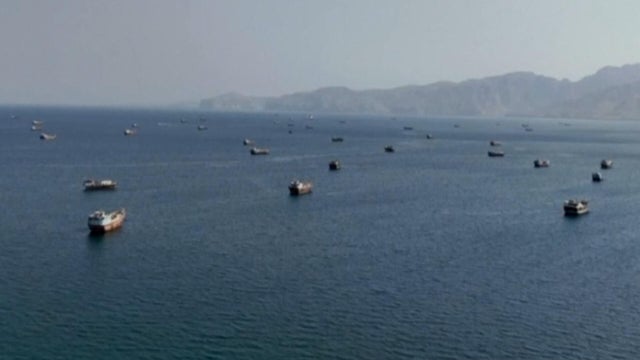
Admiral, before you go, very quickly, the fact that a drone reportedly shot down this Apache helicopter, does that give you pause about the changing face or the changing nature of war? Because we, the United States, we talk about how powerful our military is, how much money we spend on our military. But if the war-- if future wars are going to be fought using these drones, where we talk about destroying Iran's ballistic missile capability, but does that even matter if anybody-- and I'm presuming it doesn't take a lot of training to launch one of these drones-- can shoot down a high tech piece of weaponry like an Apache or perhaps an F-35 or an F-18? I'm just thinking about how the Stinger missile changed the face of the Afghan war. Essentially, the Soviet Union lost that war because the United States provided these Stinger missiles to the mujahideen. That was seen as game changing. Are we looking at something similar here? Yeah, Vlad, we certainly are. And this is just a further development of the asymmetry, the asymmetric warfare, which is so much a part of where we are today, as we're seeing in Ukraine, as we're seeing in the Middle East and other dust fires around the world in which you can have very low cost, not that difficult to manufacture or deploy, which, as you and I have discussed before, you can manufacture them in garages and basements and hold it has much higher cost platforms. And just I would say, helicopters are a pretty soft target, far more vulnerable. F-35s and F-18s and other aircraft are far more difficult to engage with. But Iran is going to continue to take advantage of asymmetric warfare. And certainly, they can hold the Straits of Hormuz at risk with very low cost platforms in ways that will be significant enough that, as we've talked about before, insurance carriers will not insure the ships going through there. And that's going to be a major inflection point, where we can finally start getting some of those 1,500 plus ships out of the Straits of Hormuz, hopefully sooner rather than later, although it's going to take at least a month or two for all that to happen just to get them through.