Watch CBS News

Trump set to tout economy in Pennsylvania

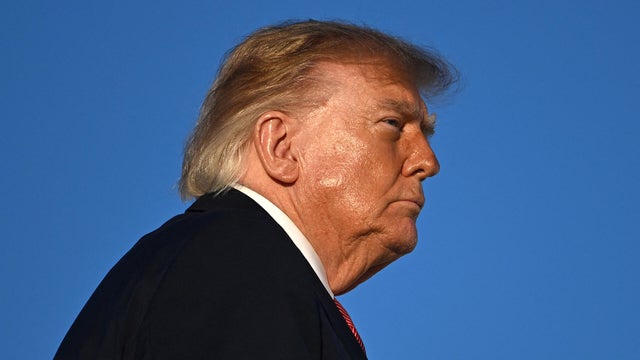
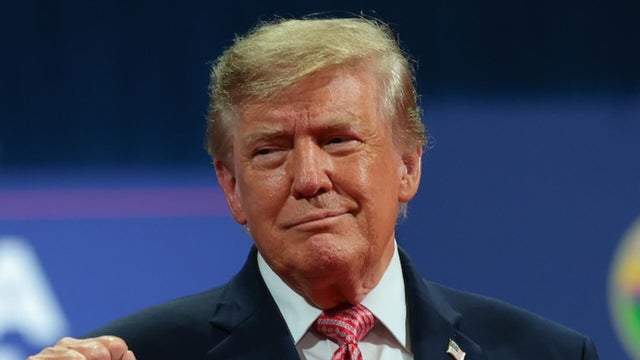
President Trump is set to deliver remarks on the economy Tuesday in Pennsylvania amid the White House's recent $12 billion farm aid announcement. CBS News' Ed O'Keefe and Lana Zak have more.
Dec 9, 2025 (09:31)

TRANSCRIPT FOR: “TRUMP SET TO TOUT ECONOMY IN PENNSYLVANIA AFTER $12 BILLION FARM AID PACKAGE ANNOUNCEMENT”

INTERVIEWER:
00:03:27

Would you consider more carveouts on other goods that Americans find too expensive? Well, some carveouts. You mean from tariffs? From tariffs. Yeah, like coffee, like bananas. Sure. And I've done that already with coffee. So again, if the economy is doing well, if affordability, the issue at the heart of many people's minds right now, in the holiday season is a Democrat hoax, why is the president saying this? Because there's an understanding that there are certain goods, and services, and crops that the United States doesn't grow, that if you put a tariff on them, it's going to drive up the cost. And so that's why you saw, last month, an easing of restrictions on things like banana and coffees from Latin America coming into the United States, key grocery staples that the president understood had to be rolled back in order to keep the price from getting out of control, especially as we hit the holiday season. So what you see him saying there is there may be other such goods from other corners of the world that are imported into the United States that are going to have to see a change in tariff policy. But the other thing he's watching for and he's warning about on his social media account is the forthcoming Supreme Court decision on whether he can even implement these tariffs at all on his own without congressional involvement, suggesting overnight that dark and sinister forces might be trying to roll back his tariff policies. That's a direct hit at the Supreme Court, which could rule any day now on whether or not the president himself has the power to do that or whether it has to be done by Congress. Vlad. Yeah. All right, lots to watch for. Ed O'Keefe, thank you very much, my friend. Appreciate it. All right, so as we just mentioned with Ed, the administration is doling out $12 billion to struggling US farmers. And the president says this long-awaited aid package is coming from revenue raised from US tariffs. These are the same tariffs that sparked the US-China trade war and led to the soybean boycott. The White House is also praising the package that some lawmakers say doesn't even scratch the surface of what farmers actually need.

DONALD TRUMP:
00:05:19

This relief will provide much-needed certainty to farmers as they get this year's harvest to market and look ahead to next year's crops. And it will help them continue their efforts to lower food prices for American families. A one-time payment for farmers is cold comfort for all the headache, and anxiety, and losses they've endured because of Donald Trump's trade war. CBS News national correspondent Lana Zak has been following this story for us for months. And she joins us now from Iowa City. So, Lana, you've done a ton of reporting on this. And we know that farmers have been waiting for this aid. This aid is finally coming. Is it enough? And what are they saying about it? Yeah, as far as it being enough, Vlad, it is not going to cover all the losses especially soybean farmers have experienced. It's interesting in the two bits of lawmakers sound that you played because both are true. In President Trump's case, it is absolutely true that this is coming at a vital time. Many farmers were worried and talking to their banks about the loans that they are struggling to pay off. The Senate Minority leader, Chuck Schumer, who you heard there, is also right in saying that it is not enough. So I want to read a little bit of what we heard from the Iowa Farm Bureau. They put out a statement saying, "Farm income is at its lowest point in 15 years. And farmers are facing severe financial stress, driven by high input costs and declining crop prices compounded by a lack of global trade opportunities." As the president noted during the announcement, farmers don't want aid. They want a level playing field. And this package provides critical support while broader trade discussions continue. It doesn't solve the underlying problem. Still, many farmers who are struggling are grateful for any aid that they can receive. Take a listen.

STEVE SWENKA:
00:07:13

This is the time of year where having a reliable source of income is pretty important for most producers. So anything the Trump administration can do right now to get us through this time of year will be invaluable. So it helps to offset some of the losses. But still, soy prices are at its lowest point. And even if farmers receive the maximum amount that they can under this aid package-- that amounts to $155,000 for many of the farmers I'm speaking with-- that simply isn't enough to offset the losses. And in terms of long-term stability, they like to point out the fact that there is still no comprehensive farm bill. That is three years overdue.

VLAD DUTHIERS:
00:07:58

Yeah, and we've been speaking to a lot of farmers. Obviously, you're in Iowa. But it's not just the Midwest farmers that are struggling. We're hearing this from other parts of the country as well. That's right. And this does set aside, in the $12 billion, $1 billion for other farmers that are not crop farmers. There's a lot of uncertainty about how that will be doled out. It's a much smaller percentage. But I want to play a little bit of sound from a farmer in California who is also a crop farmer as well. Take a listen.

RAY YEUNG:
00:08:34

It's the worst ever. It's the worst ever because we're getting the same prices as my dad got in the 1970s. And at that point, my dad was paying $0.50 a gallon for diesel, was paying $2 for wages. Everything was just less expensive back then.

LANA ZAK:
00:08:54

So that really captures the problem there, Vlad. So many farmers talking about the parallels to what they saw from their parents time in the '70s and in the '80s. And you'll remember, at that point, there was a major farm crisis in America. Farmers that I'm speaking with are hoping that this will help to offset some of those problems, but it simply, they're saying, is not enough.

VLAD DUTHIERS:
00:09:16

Yeah, it's a drop in a bucket. I recall that brutal period that you referenced, Lana. Hoping that this does offer some relief, but it sounds like it perhaps will not. Lana Zak reporting from Iowa for us this morning. Lana, always appreciate it. Thank you.

View CBS News In
CBS News App Open
Chrome Safari Continue