Watch CBS News

Details on Trump's Iran ceasefire announcement

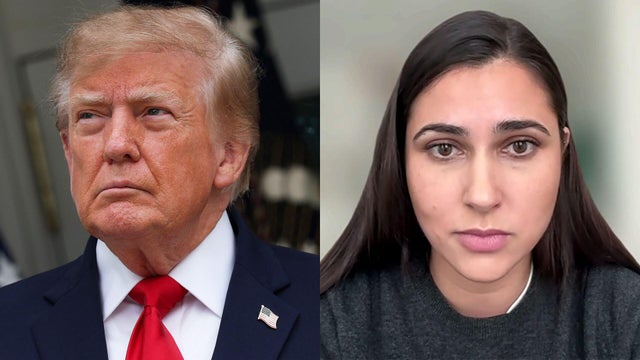
President Trump announced a two-week ceasefire in Iran on Tuesday evening, delaying a large-scale bombing campaign. CBS News' Aaron MacLean, Courtney Kealy, and Dallas Morning News business editor Javier David join with analysis.
Apr 7 (12:23)

TRANSCRIPT FOR: “TRUMP SAYS IRAN CEASEFIRE IS SUBJECT TO "COMPLETE, IMMEDIATE, AND SAFE OPENING" OF STRAIT OF HORMUZ”

LINDSEY REISER:
00:01:13

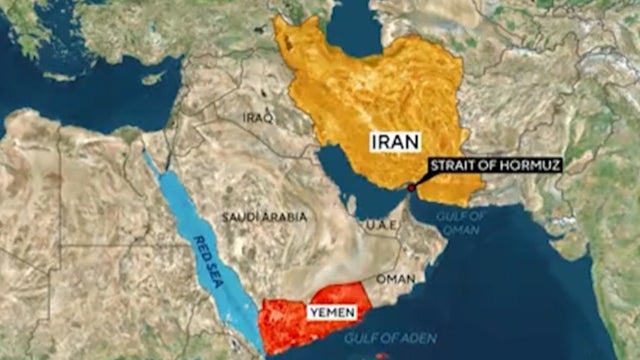
And their own ships are going through Iran, ships are going through and other ships-- the countries of which are coordinating with Iran are going through. So does this mean that ships can go through the strait, but they have to hug that Northern Iranian coast and follow that channel? I would not consider that the strait being open. The strait being open is those international channels in the middle are free for passage and you see traffic starting to go through them. Again, that's a big question here for the hours and days to come.

LINDSEY REISER:
00:01:37

Why was this the most appealing item on his menu of choices? Well, gosh, you can tell the President didn't want to pull the trigger on going after these big-scale economic targets because he kept delaying it. He started this war back on February the 28th identifying five military objectives. They were ambitious, but they were limited in the sense that he actually explicitly said he didn't need regime change in Iran to consider this war to be a success. He talked of Iran's missiles, its nuclear program, its navy, and its support for terror proxies. However, Iran then played this card of closing the Strait of Hormuz in return-- essentially, as we were talking about earlier, took the global economy hostage by doing so. This left the President with relatively few options. He didn't want to do the protracted campaign of convoy operations through the strait. The Iranians, for some time there, we'll see where we stand as the night plays out, the Iranians were not willing to open it back up in response to his diplomatic overtures. So he got to this point where essentially threatening to force state collapse in Iran through military means was his only remaining option. But this, of course, would allow for substantial retaliation from the Iranians on economic targets throughout the Gulf, and not necessarily provide any short-term fixes to the economic problems that the closure of the strait is causing.

LINDSEY REISER:
00:02:56

Let's stay on the strait for a second because one of the complicating factors of the closure is the fact that we don't know if there are mines in the water. What does the reopening look like with that threat just under the dark waters? Yeah, no, so there are reports that there are mines in the strait. The number seems to be relatively few. Of course, all it takes if it's your boat is one. So there's going to need to be a process to ensure that those mines are not in those channels, and the US Navy and other navies--

LINDSEY REISER:
00:03:31

Ensure with an E or insure with an I?

AARON MACLEAN:
00:03:34

Both. You're going to want to make sure that there are no mines in those waters, and there are special vessels and units who are capable of doing that. But yes, the insurance question is big, and that's another-- I'm glad you mentioned that because that's another important aspect of all this. Let's say, in the hours to come, the Iranians say, fine, the strait's reopen. Let's even say that it's actually in good faith, which I'm a little skeptical of, but they're in good faith. They say, yeah, do what you want.

LINDSEY REISER:
00:03:57

What company is going to want to be the first one to be like, let's go!

AARON MACLEAN:
00:04:00

So the damage to global commerce is already pretty severe. We've had about a month of stoppage already. So getting the process of getting those ships through again, providing them insurance, security, comfort that actually this is going to be OK, especially when there's a ticking clock-- it's a two-week window, so you have these negotiations on this broader settlement running concurrently. It's still a very fluid, dangerous atmosphere even with this recent rush of what appears to be positive news.

LINDSEY REISER:
00:04:27

What do you make of Pakistan being the mediator here? It's a very interesting detail to all of this. Pakistan, of course, is quite close to China, so one question that I have is, what is their role in all of this? The Pakistani assertion clearly is being met with open arms by the Trump administration. The Iranians appear to be talking to them as well. One country that I'm quite confident is not super pleased with this turn of events is India, which, of course, has long-running tensions with Pakistan, the tense standoff on the border between those two nations for many, many decades now. I don't think India looks at Pakistan playing a regionally important role and is super happy about it. Aaron MacLean, thank you so much. Let's go now to CBS News Business Contributor Javier David. He's also a Business Editor for the Dallas Morning News. Take us through what we saw today in the markets and what this two-week ceasefire now could mean. Yeah, look, the most salient economic impact right now is energy spikes act as a consumption tax, and that's what you're seeing in the markets. Everyone wants this conflict to end because it is making inflation hit consumers even more anxious and miserable than they already are in this affordability crisis era we're living through. Coincidentally, I was just in South Florida. I borrowed my sister's car. I filled the gas tank up, what's usually a roughly $50 purchase, ended up costing nearly $70. And it kind of just goes to show you how surging gas prices act as this stealth tax on all sorts of goods and services up and down the economic supply chain. So when consumers get sticker shock that way on a daily or weekly basis, it just forces them to make all these sorts of trade-offs, and just to be able to afford the basics. So you have this crisis in Hormuz. It's created the biggest energy shock in history. It's taking millions of barrels a day off the market. Just today, David Brent, which is a benchmark for oil prices, hit its highest ever above 144. So amidst all this talk about ceasefire fires, even if the strait reopens, energy prices are more than likely to remain high for months, if not years. And so also, we know that about every dollar's worth of oil translates into a move higher of at least $0.02 in gas prices. So you're sitting now above $4 per gallon in over 23 states, that could easily be $5 even though we have the ceasefire on the table. Javier David, thank you, as always. CBS News Middle East Contributor Courtney Kealy joins us now. You have been monitoring all of the latest. What do you make of this? So what I heard earlier was the Pakistani Prime Minister was heavily involved in these conversations, and they were having the conversations with the Vice President JD Vance. And who was really also involved was the Deputy Prime Minister and what's called a field marshal, which is our equivalent of the Joint Chiefs of Staff And the Field Marshal Munir, he has met Trump, he has been to the White House. The Pakistanis were very eager to show that they had this diplomatic juice, really, to make this happen because they have a very unusual and interesting-- they have a relationship with the US, but they also have a very good relationship with the Iranians, and that was the key point here. So what I'm hearing from the Iranian side is they were eager also for this ceasefire to happen. It's going to be-- start for two weeks, but an Iranian expert that I also just spoke to a few minutes ago said this two weeks could just end the war, technically. And it's likely to because the Iranian regime is likely to go just back, OK, we're good. We'll stop all the firing. Who's going to talk to the Israelis? Because the Pakistanis don't recognize Israel as a country or a state, but that's where Turkey and Egypt come in. So Pakistan, Iran, and the US really came forward and all agreed on this. Pakistan, the Deputy Prime Minister, and the Field Marshal, the Joint Chiefs of Staff-equivalent, were the ones that really got down into the details with JD Vance. I've been hearing about the Strait of Hormuz. Will it open? Will it close? It's a big body of water and a very shallow body of water. The real point, the chokehold, is this area that's about 4 to 5 miles wide, and that's the Iranian territorial waters that they want to make sure they don't put a toll booth in or say nobody can come in and out. So that is part of the deal where they have to say, don't put your toll booth in. Don't block it and charge people entry and exit through the narrowest part, which are technically your territorial waters. Not the bigger part of the water, it's just that little bit, that narrow part. So that's an easy fix if you just don't-- or the Iranians just don't put their people out there and stop the boats. And it's a-- but it's slow-moving and it's narrow. So that can be done diplomatically. That's going to be on top of it. The things that might not happen that the Iranians really wanted, they wanted Israel out of Southern Lebanon, and they wanted a ceasefire with Hezbollah. They're probably not going to get that because the Israelis aren't really directly involved, again, because the Pakistanis don't talk to them. So this is two weeks. This is the big push in the effort was diplomatic through Pakistan, who have great relations with the Iranians. The Iranians seem to want it. Now, people that I speak to, the Iranian people, and people that I've spoken to that have family and friends there, said this is going to be a relief, but worry. They're going to be relieved that there are no airstrikes, but they're also going to be worried about what's going to happen next. And we're not going to get to nuclear talks today. We're not going to get ballistic missile talks today. We're not even going to get to sanctions. This is stop the bombings, move forward, see what kind of mediators, whether it's the Pakistanis on that Iranian border, or if Turkey and Egypt can get involved to work with the Israelis also on a ceasefire. You mentioned this could be the end of the war, but this also, call me a cynic, but could evaporate if the Iranians don't, in fact, agree to reopening the strait in a meaningful way. Right, and everybody's very dubious about-- but if the Iranians didn't want to do that, they wouldn't. And we're talking about the Iranian regime. We're talking about the Speaker of Parliament, who's really now the power player right now, Speaker of Parliament Ghalibaf. And the National Security Council staying power. Some other people. So when they've wiped out a top of the regime and Hatami, and then his son really isn't physically able to rule because we're not physically seeing him in any point of-- on a video camera--

LINDSEY REISER:
00:11:10

--Khamenei.

COURTNEY KEALY:
00:11:10

Yes, Mojtaba Khamenei. So it's really the Speaker of Parliament is in charge, and really, the National Security Council. And they're worried about staying in power, they're not worried about whether they keep the Strait of Hormuz-- that was just the stick to beat the US with.

LINDSEY REISER:
00:11:24

What are you going to be watching for in the next few hours and days?

COURTNEY KEALY:
00:11:28

Whether-- I'm going to watch the Iranian Foreign Minister in any public statements. The Iranians have made it clear to many people that they are pushing out that they want this, too. The Pakistanis will be also speaking a lot about what kind of points they can agree on. So I'll be watching-- stopping of bombings by the US and Iran. What is Israel doing next in terms of their airstrikes, and who's going to negotiate for Israel? And then while everyone is focused on the Strait of Hormuz, how the Iranians are doing, because all through this, the regime has still carried out executions and fake trials, and is putting people in jail, and people are still scared to go on the streets.

LINDSEY REISER:
00:12:10

Courtney Kealy, we so appreciate you. Thank you. And thank you for joining us on this breaking News. Again, President Trump posted on Truth Social a two-week ceasefire. He will hold off on dropping the strikes that he was planning to.

View CBS News In
CBS News App Open
Chrome Safari Continue