LINDSEY REISER:
00:01:07
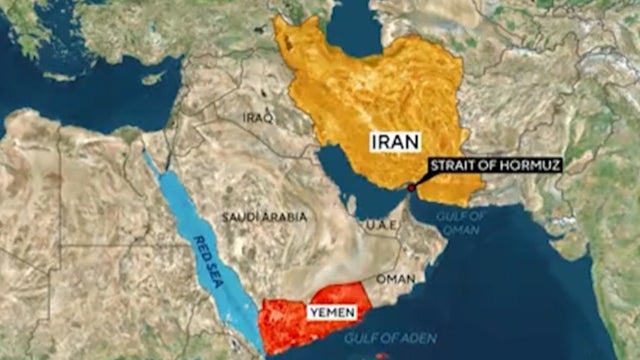
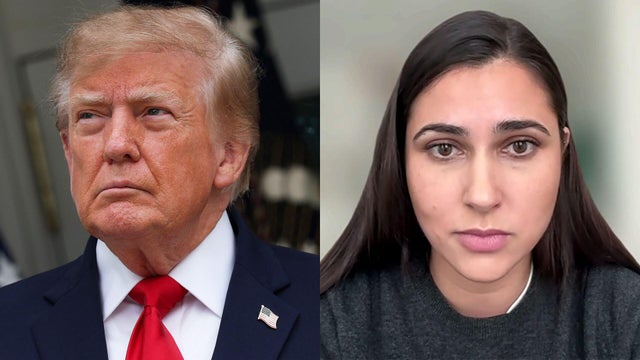
I want to bring in CBS News Chief White House correspondent Nancy Cordes. Nancy, President Trump and his administration went from saying the conflict would only last a few weeks to repeatedly declining to give an end date to the war. Today, his goalposts moved again. What more did he say? Right. Now, it appears, Lindsey, that he believes that this war is going to last nine months, at least. That's if you count the months from the start of the war in February to after the midterm elections, which is when he now says that the war will end and oil and gas prices will come tumbling down. The problem is that he has been predicting that oil prices would come tumbling down since the very start of this conflict. And he has repeatedly said that it would happen any day now. However, today, in an effort to reset expectations, because this is on the minds of voters as they prepare to cast their ballots in the midterm elections, he's basically saying, they are going to come down but not until after the elections. The question is whether voters are going to buy it, frankly, because they have now heard it so many times before. The promise of $2 gas, for instance, even though President Trump has said repeatedly that, earlier in his presidency, he got gas down to that level-- actually, gas prices have not gone below $2 a gallon except for brief periods of time during COVID when people weren't driving, back during the financial meltdowns. But, in general, a lot of American drivers would be happy just to get back to the $3 a gallon gas they were experiencing before this war.
LINDSEY REISER:
00:02:43
What's the latest with Canada? So the president is responding to Canada's retaliation, new tariffs they imposed yesterday, with new measures of his own. This time, he's not upping tariffs. He's simply imposing a flat out ban on some Canadian products, including a lot of Canadian alcohol, Canadian dairy, motorcycles, saying they cannot be sold here in the United States after September 29. And this is the kind of cycle that a lot of people are worried about, where you have two major trading partners basically punishing one another in a spiral that never ends-- both sides trying to push each other back to the bargaining table, trying to get the upper hand in these negotiations. The question is, will all of this retaliation leave them with such bad feelings that they're not able to come back and sit down and talk? And consumers caught in the middle. As the nation prepares to mark 25 years since the September 11 attacks, President Trump is being criticized for saying he was rescued by firefighters near a building they thought was going to collapse, but didn't. Let's listen. I'll never forget two firemen-- we thought it was coming down on top of us, and two firemen-- big, strong guys. And I'm not the smallest guy in the world. They grabbed me under the arms, got to get out of here, and they literally lifted me up. This is not easy to do. I'm big. They lifted me up, and they started running with me. I said, fellas, I can run myself. But they were amazing.
LINDSEY REISER:
00:04:13
A White House spokesperson told CBS News the president was relaying his experience of a city reeling immediately after and in the days and weeks after the horrific attacks. Trump later clarified in a social media post that he wasn't at the World Trade Center on the same day as the collapse, but shortly thereafter. What's been the reaction? Well, President Trump's stories about what he did and when he went to ground zero have changed a lot over the past 25 years. He's told varying versions of this story. He has claimed that he brought hundreds of workers down to ground zero. There are no records of that. New York Magazinecalled his latest assertion a, quote, "weird lie." President Trump didn't like that at all. He lashed out at New York Magazine. The White House responded to all of this. You showed part of their statement. They also attacked reporters for asking about this, saying that it's a disgrace, essentially, when you're talking about a hallowed day like 9/11. People have such personal memories about what happened there. And they insist that President Trump was a private citizen at the time, so there are not great records that are kept about exactly what he did and didn't do in the days after 9/11. 1 Cordes, thank you.