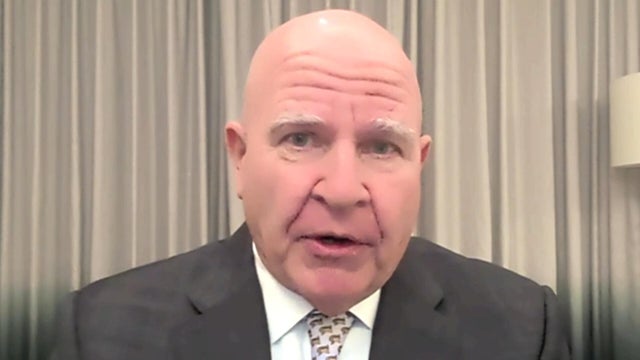
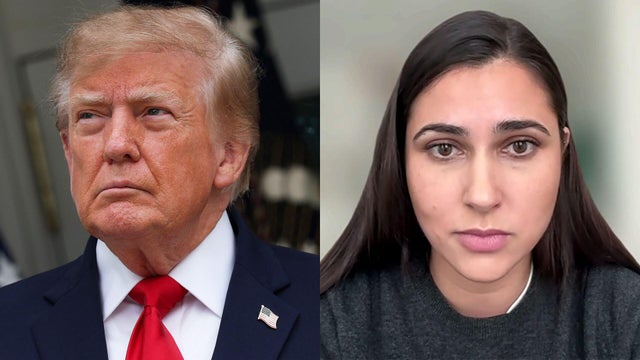
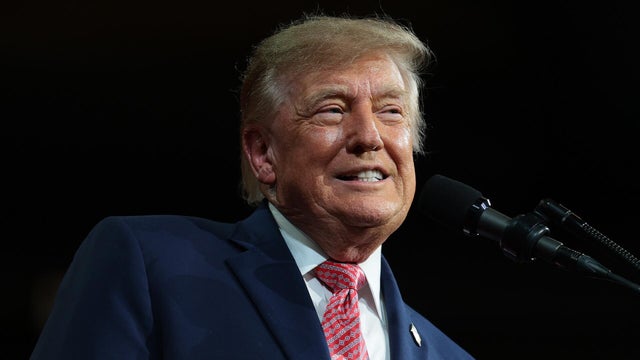
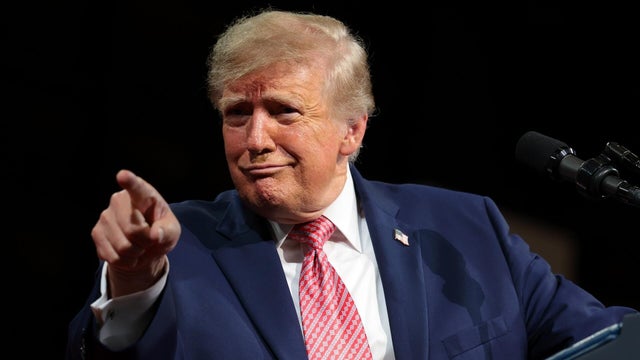
TOM HOMAN:
00:00:20
Yes, I said it, draw down the number of people here because we have the efficiency and safety of the jails and the prison. Matter of fact, I have staff from CBP and from ICE working on a drawdown plan. What does that look like based on the cooperation? What does that look like based on how many targets we have left to find? Anxiety among Twin City residents has spread to area schools. CBS News national correspondent Lilia Luciano spoke with one principal, who said the threat of detention and deportation has deeply affected the community after a five-year-old student found himself in the national spotlight.
LILIA LUCIANO:
00:01:01
People are not going to work. No. They're not leaving the house to buy groceries. Correct. So that's where this is all headed.
PRINCIPAL:
00:01:08
Yep, yep.
LILIA LUCIANO:
00:01:09
At Columbia Heights Public School in Minnesota, staff are working second shifts to deliver. How much of this need that you are supplying with this food has to do with the ICE operations? A majority of it. Just last Friday, I delivered food, and they followed me around out of the trailer park that I was delivering to. And so we've had discussions with our chief of police to say, are we putting a target on our families? And he goes, well-- By going and delivering. Yes. But he goes, it's probably safer for you to go in and deliver food than for them to go out.
LILIA LUCIANO:
00:01:40
In an elementary school of about 574 students, administrators say some 24 families have had parents detained under Operation Metro Surge. But it was this image of one of their pre-K students, five-year-old Liam Conejo Ramos, that went viral. He and his father, Adrian, were detained in their driveway last week and later transferred to a detention center in Dilley, Texas. Wednesday, Texas Congressman Joaquin Castro visited them and called us afterwards. Could you give us an update? That is so amazing. His dad did say that he's been depressed and hasn't been eating especially well. But you know, I was very firm about demanding his release. And so we'll keep pushing. Knowing that he has an advocate down there, too. So thank you.
JOAQUIN CASTRO:
00:02:29
Absolutely.
LILIA LUCIANO:
00:02:30
Though Liam was asleep, his dad promised to pass along a message his teacher and classmates sent him.
CHILDREN:
00:02:37
We love you, Liam.
LILIA LUCIANO:
00:02:40
A show of strength as they save Liam's place. And to see the cubby here-- Yeah.
LILIA LUCIANO:
00:02:45
And another hat with the ears. I'm just looking at it.
PRINCIPAL:
00:02:48
Yep. And like I said, his stuff's not going anywhere.
LILIA LUCIANO:
00:02:50
What would you tell people who are watching this from somewhere else and thinking ICE is doing its job? Open your eyes. Believe your eyes. Believe what you see. He's not a criminal. It's not politic. It's about treating people like humans. The principal told me that the school was relieved to hear that a judge banned the deportation of Liam and his dad, at least temporarily. DHS says that the agents went to arrest his father as, quote, "an illegal alien who was released into the country by the Biden administration." Their attorneys say he has no criminal record, nothing of that nature. The ICE agents say that they kept Liam with his dad following his wishes for them to stay together because the mother was not coming outside when they were trying to get her to come out and grab Liam. The principal tells us, as other school staff have repeated, that there were adults there that offered to keep him, and the agents refused that offer.
FEMALE ANCHOR:
00:03:50
Yeah, Lilia, it is important context. And also just, you know, to see those images, see how the kids were reacting in the school. Really appreciate you bringing us that story. Do want to ask you, you know, what else did we hear from Tom Homan this morning? It was very important to hear from Tom Homan. He was sent here to, in a way, and in his own words, somewhat fix a lot of what was going on. He mentioned that there's going to be-- apparently, and we have to still check with the other side-- some cooperation that hadn't been happening yet. And this cooperation doesn't come from the Department of Corrections, but from the jails, from the county. What he's saying is that from now on, according to his conversations with state and local leaders, that people who are released from jails are allegedly going to be turned over to ICE. So that is the cooperation that was lacking. That cooperation is what the Trump administration has been talking about when they talk about sanctuary cities, where people who are charged with a crime, released from jail on bond or other ways, are not given directly to ICE. We can get into the details of that, but this is something that, in multiple jurisdictions across the country, doesn't happen. And that's what the Trump administration has been saying justifies all of these agents coming here. There are political reasons, there are a lot of reasons that have been cited by the administration of why the large amount of agents has been on the ground. What he said is the number of agents is going to start coming down. That is important. We're going to continue reporting on these agreements after these conversations between the Trump administration via Tom Homan and the governor, the city of Minneapolis, via the mayor and the attorney general. The other thing that he was asked about was the video of the killing of Alex Pretti his take on the killing of Alex Pretti, which is, of course, on everybody's mind. Is he here because of that, because everything has backfired on the administration politically after the two killings of two American citizens? This is what he said.
TOM HOMAN:
00:05:57
I'm not going to come out and make any comments do I think it's right, wrong. Do I have an opinion? Yeah, my personal opinion, but I'm not going to share that with you. I'm going to tell you, let the investigation play out and see where it goes. But again, I-- the president, one of the words he said to me when I came up here, he said he didn't want to see anybody die. The less interference, the less rhetoric, the less-- you know, I have buried Border Patrol agents and I've buried ICE agents throughout my career. And the saddest thing I've ever done is hand a folded flag to a wife or a child. I don't want to see anybody die, even the people we're looking for. For the people that are saying we're here to surrender our authority and the mission of enforcing immigration law, you are wrong. We're going to do targeted enforcement operations, and we're going to prioritize the public safety threats and national security threats. That is what we're here to do. Look, a very important thing that he also stressed is that he all along, from the beginning, said we have to see this investigation play out. Very different from what we heard from Kristi Noem, from Kash Patel, from Bovino, Greg Bovino, who was here handling this whole operation. So it seems like there is a change in tune there, recognizing-- he's saying, you know, they-- he didn't say this in his own words, they jumped the gun, but this is what is implied, that conclusions were made about the killing of Alex Pretti too soon before we learned about the investigation. The other thing he talked about is the targeted-- that this operation is going to be targeted, that they're going to be looking for people specifically. And Lana Zak, my colleague, was there and asked him, pressed him about that. Are you saying that you are going to go after criminals, or are you considering the people who are being targeted, the criminals, people who are criminals because they crossed the border? And very interestingly, while he said we're going to prioritize people who have committed crimes, that does not mean that we're not going to find people to deport. So what we have to do-- and basically, he said, if we send that message, then people are just going to come, thinking that they can come to the United States and we're not going to go after them if they haven't committed a serious crime. What we are going to keep our eye on now is the reduction of ICE agents and whether the operations are actually going to be scaled down to targeted, meaning you have a warrant for somebody's deportation, you're going to go after them. Not checkpoints, not racial profiling, as it has been claimed, and other means that have been happening here.
VLAD DUTHIERS:
00:08:37
All right. Lilia reporting from Minneapolis for us. Lilia, thank you very much for that breakdown. Appreciate it.
FEMALE ANCHOR:
00:08:42
For more on this, let's bring in Senior White House correspondent Weijia Jiang. So I want to ask you about President Trump's upcoming cabinet meeting. Homeland Security Secretary Kristi Noem has been facing bipartisan scrutiny in light of the shooting in Minneapolis. Can we expect any tension today at today's meeting? Well, I think, you know, from a public perception point of view, the chief of staff, Susie Wiles, here runs a very tight ship. So even though we know that there has been a lot of scrutiny on Noem inside the administration, even frustration from President Trump and some of his advisors about how she has run the operation in Minneapolis, I think publicly, we are not going to see that unless it comes organically in an unexpected way, which could very well happen because these cabinet meetings tend to run for hours, plural, and the president often takes many, many questions. And you never know what he is going to say. He is certainly someone who is extremely honest most of the time. And sometimes that exposes things that are not exactly what you'd expect. So we have to wait and see. It certainly is something we'll be monitoring, because not only will Secretary Noem be in that room, but probably Stephen Miller, who is the president's right-hand man when it comes to all things immigration and policy. And we know that there has been friction there, with Miller publicly blaming DHS for some of the language that he used and came under fire for. So all that to say we don't really know what is going to happen until it happens, but certainly there is a possibility that we could see some of that play out, even though that is not the plan.
VLAD DUTHIERS:
00:10:32
So Weijia, CBS News has learned that lawmakers are also making progress towards a deal to avert a government shutdown, but that the White House is actually running point for Republicans. So how likely is it that we will see some common ground between the president and Senate Minority Leader Chuck Schumer? So the one thing that is clear, I think, is that they're both standing on the same place, which is they don't want a government shutdown. This is not like the last one that both of you helped cover just about three months ago that ended up being the longest government shutdown in history. There is no appetite for that here at the White House, or from Democrats or from Republicans. And they are not dug in in the same way that they were back then. So we do know that progress is being made. And it seems like they'll be able to come to some sort of agreement. Of course, we won't know until they do. But here's a really important thing to keep in mind, guys, which is even if Democrats don't pass this new funding for DHS, that doesn't impact current ICE operations, or at least won't for quite some time, because after Congress passed the one big beautiful bill, there were billions dedicated to immigration enforcement. So they're already covered. But it would be largely symbolic, sending a message that they do not approve of the direction DHS is going. But again, it seems like we won't get to that point because nobody wants the federal government to close again.
VLAD DUTHIERS:
00:12:03
Hm.
FEMALE ANCHOR:
00:12:04
All right. Weijia, thank you. Sure.