Watch CBS News

California police reform faces uphill battle

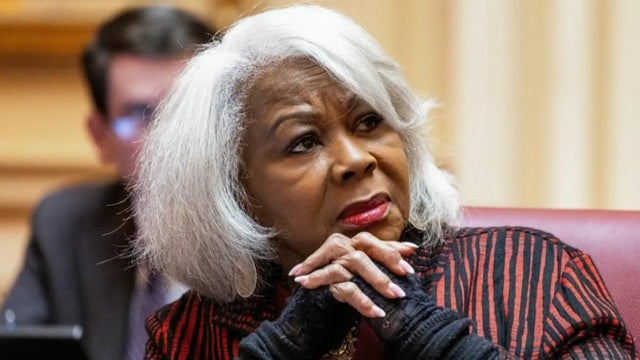
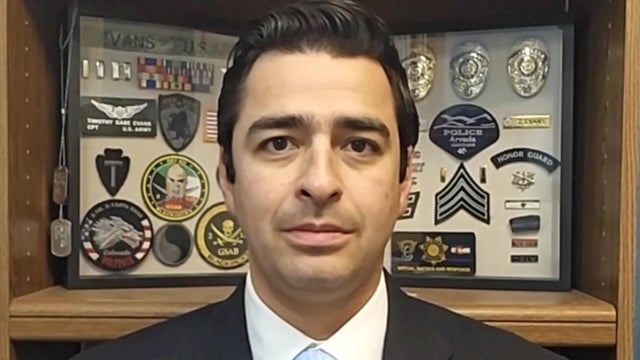
The national movement for police reform has opened the door for lawmakers to propose changes in states such as California, where members of the state's Black Caucus last month outlined several bills that would radically changing policing in the state. Former police officer and Assemblyman Mike Gipson joined CBSN to discuss some of those proposals.

May 11, 2021 (07:56)

TRANSCRIPT FOR: “CALIFORNIA STATE LEGISLATORS INTRODUCE POLICE REFORM BILLS”

VLADIMIR DUTHIERS:
00:00:00

The national movement for police reform has opened the door for lawmakers in states like California to make some changes. Powerful police unions in the state have often blocked legislation aimed at curbing abuse of power by law enforcement. Last month on the day the guilty verdict came down in the Derek Chauvin murder trial, members of the California Black Caucus outlined several bills in the hopes of radically changing policing in their state. One of those legislators, who's also a former police officer, Assembly Member Mike Gipson joins us now to discuss some of those proposed reforms. Thank you, sir.

MIKE GIPSON:
00:00:32

Thank you very much for having me.

VLADIMIR DUTHIERS:
00:00:34

So as a former police officer, you've been on both sides of the argument for reform. You recently introduced a bill that bans officers from forming cliques within the department. Tell us more about this bill and why specifically cliques-- what is so detrimental to the cohesiveness of the police force and perhaps to the community.

MIKE GIPSON:
00:00:55

Well, first of all, thank you very much for having the interest in this story. Assembly Bill 958 will ban police cliques-- in other words, police gangs-- in the department. And so this bill came out of a revealing of a situation in one of the cities in which I represent, the city of Compton, where that was existing in that particular department. You have police officers who go through this ritual who is nothing but a gang in itself. And they brag about the use of force that they have used on an individual in the community. And so one deputy sheriff was bullied, ridiculed, and not supported for five years as he was being placed in harm's way but also being pressured to be part of this clique. And if you're not part of this clique, it's a way for you to be ostracized, and again, receive the bullying tactics that this officer or deputy went through. And my bill will ban all those cliques, these rituals, these police officer gangs in the state of California. And if it's not good enough for us to have street gangs, it's not good for us to have legal gangs in the department, especially when a department should be serving and protecting the community. ANNE-MARIE GREEN: You also introduced legislation banning certain police holds that create a greater risk of positional asphyxia, chokeholds. And this follows the death of Mario Gonzalez. He died after being restrained by police in Alameda, California. So law enforcement agencies, some of them, are pushing back, saying that this ban is too vague or that it's unnecessary because a lot of departments have already outlawed this practice. I do think of Eric Garner when I hear about this because the chokehold was not part of policy for the NYPD when he was killed. His words, I can't breathe, were the first of that phrase to go viral. And ultimately, his lawyer argued that it wasn't a chokehold, that if it turned out to be a chokehold, it was inadvertent or not deliberate, just for a moment. And so it was not a violation of police policy. So I want to ask you, what sort of difference do you think it would make, then, to have a broader piece of legislation banning chokeholds when, at least on paper, many police departments have already taken that step?

MIKE GIPSON:
00:03:32

Well, here in California, after the George Floyd murder, the communities here in California was in uproar. They demanded that California take action even though the George Floyd murder did not take place in California. So I authored a similar bill, 1196, banning the carotid artery restraint, which was the technique that was used to kill George Floyd with the knee on the neck, that cuts and restricts the oxygen flow to the brain. So we banned, again, the carotid artery restraints and chokeholds. And Los Angeles Police Department had banned that over 30 years ago. The city council banned that because they had a racist police chief who said that when that method was applied to Black people, people only died because they were Black, and their necks was too thin. And so we did that piece of legislation, but there was still work that needed to be done. And so I wrote the bill, Assembly Bill 490, that banned positional ashpyxiation, which that simply means any position that you restrict or stop someone's oxygen from flowing through their body, this technique is being banned. And so yes, police officers are thinking that there's a tool that's being taken out their toolbox. You can still restrain someone. You can still make an arrest. We're saying you just cannot cut someone's oxygen off and stop them from breathing. George Floyd had an officer place a knee on his neck for 9 minutes and 29 seconds. The gentleman you see behind me, Angelo Quinto, was killed in the same manner. The officer placed his knee on his neck for five minutes. Angel Quinto said, I can't breathe. George Floyd said 28 times, I can't breathe. Assembly Bill 490 will prohibit police officers from cutting someone's oxygen off so they can't breathe. And if you can't breathe, you die. And we want to make sure that these techniques are not being used to kill, people because we deem it a lethal weapon.

VLADIMIR DUTHIERS:
00:05:39

So Assembly Member Gipson, let me ask you about what's been happening across the country. 46 states in the United States have rules that prevent abusive officers from jumping jobs after they have committed serious misconduct or have been fired. Now, California is not one of those states. Do you believe that the state is lagging on this type of legislation, and are you hoping to change that?

MIKE GIPSON:
00:06:04

Well, absolutely. So the speaker of the assembly appointed me the chair of the Select Committee on Police Reform. We're going to reimagine what law enforcement looks like in the state of California. And not only that, we're going to have very aggressive policies through bills that actually reimagine what that looks like. There's a bill out of my committee-- there's 22 bills that is going through the legislative process here in California. And one of those bills specifically speaks to a police officers under investigation. You just can't resign or quit just to escape an investigation or having that investigation closed. This bill will make sure that the investigation continues even if you resign, even if you quit. The investigation through this bill will be mandated that it continues to move through the process of investigation and make a finding of whether a person was willfully misconduct in his or her responsibilities as a police officer or not. So you won't be able to just quit and just jump to another department. We're going to stop this stuff. We're going to stop it now. We don't want to see any more bad police officers in our department. And I think I certainly speak for the legislature. We want bad apples to be taken out. And in some cases, if there's a tree that is producing these bad apples, we want to uproot the tree and plant a new tree where that means better understanding in the community, have a better relationship with the community and law enforcement and law enforcement with the community so we can really serve and protect here in California. So we are moving very aggressively to reimagine what law enforcement looks like in the state of California. ANNE-MARIE GREEN: All right. Assembly Member Gipson, thank you so much for joining us.

MIKE GIPSON:
00:07:53

Thank you very much for having me.

View CBS News In
CBS News App Open
Chrome Safari Continue