Watch CBS News

Pilot breaks down "unusual" LaGuardia crash

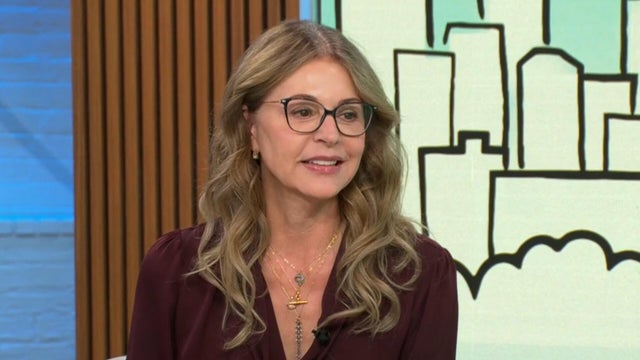
Captain Laura Einsetler, a pilot with more than 30 years of experience, tells CBS News 24/7 Mornings that the circumstances around the deadly LaGuardia Airport collision are "very unusual." CBS News' Tom Hanson also has an update.
Mar 23 (08:01)

TRANSCRIPT FOR: “PILOT BREAKS DOWN "VERY UNUSUAL" CIRCUMSTANCES IN DEADLY LAGUARDIA COLLISION”

VLADIMIR DUTHIERS:
00:01:39

All right. Tom Hanson, thank you very much. Let's bring in CBS News contributor Captain Laura Einsetler. She is a veteran commercial airline pilot with 30 years of experience piloting airplanes. Captain, give us a sense of what pilots would be doing moments before this crash. In other words, we know the plane had landed. We know it was going at about according to our transportation correspondent Kris Van Cleave, about 24 miles an hour. So perhaps you can tell us, Captain, at what speeds an aircraft like that would touch down at and where they would be in the roll down the runway at 24 miles an hour before seeing that truck on the runway? Yes well, normally some of the speeds that we're actually touching down at, depending on the type of aircraft, is could be as much as 250 miles an hour. And this was an Embraer RJ. So they're going to be significantly slower than that as they're landing. But when we're on the runway, we're focused on runway alignment, runway conditions, and decelerating the aircraft with thrust reversers and brakes. So at that speed, we would be thinking at this point that it would be where what runway or what taxiway turn off are we going to take and which location is best for turning off depending on the type of taxiway.

ADRIANA DIAZ:
00:03:07

And, Captain, when a plane lands and they are on the tarmac, are they still relying exclusively on air traffic control directions or can they take over in terms of using their visual cues about where to go? And then how much control do they really have over the aircraft? I imagine it's hard to maneuver when you're landing a plane like that. Well, when we're landing, we have the priority of that runway until we have turned off the runway. We are in complete command of the aircraft, taking all the entire time takeoff and landing. So it's just a really unfortunate circumstance in this case. What they'll be looking at things like what was the breakdown in communications. Sometimes air traffic controllers might be talking on a different frequency to emergency crews and speaking with us on a different frequency, especially if they're working multiple frequencies at the same time.

VLADIMIR DUTHIERS:
00:04:08

Yeah. You had one point. Do you hear in the audio of the air traffic controller, he's talking to another pilot, and he says that he made a mistake in sending that vehicle out onto the runway. So then, of course, then, Captain, the question is, is there anything-- well, let me ask you this, Captain. Is it possible that air traffic controller was all by himself at one of the nation's busiest airports in the middle of the night? Well, that's something that the NTSB will be looking to investigate, to see what was happening in that type of situation. It's in the middle of the night. Timing like that, we're going to have reduced staffing because there's reduced air traffic. So they'll be looking at those various factors. But the controllers, they take turns, having breaks every now and again. But as we've seen in this past history, there's a lot of distractions in the world right now. It's very critical that we pay close attention to everything and always be situationally aware for public safety. So does it feel then that this is-- and I know we say this often because we spend a lot of time covering tragedies and mishaps in the air and on the ground when it comes to air travel. But does it feel like we're in a moment now, Captain, or in other words, a moment where we're seeing an increasing frequency of mishaps like this, both on the air and on the ground? Or is it just because we're more hyper aware and we're more connected than we've ever been in terms of the media access that people have, whether it's through social media or obviously, through national broadcasts like this one? I would say, in my opinion, it's a bit of both. Absolutely, post-pandemic, we've tried to meet the travel demand that came after that so that we could bring everyone to where they want to be going. And at the same time, with everything that we see, everyone with a smartphone, we now see actually so much from around the world in the world of aviation.

ADRIANA DIAZ:
00:06:19

Captain, the plane is pitched up. Its nose is in the air. We heard that might be because the passengers deplaning maybe shifted the weight of the plane. Do you have any idea why that might be. Well, for center of gravity purposes, there are some aircraft that are built that way. If everyone is going out the back and the cargo and luggage are in the back of that aircraft, that could definitely be what we're seeing here.

VLADIMIR DUTHIERS:
00:06:48

Yeah, and the front of the plane, the nose of the plane has been completely shredded, including, I'm guessing, that front landing gear, which would provide some counterweight, Captain. Yeah, that's very difficult to see, of course, these visuals. And no, our hearts and prayers are with all the families that's been involved in this accident.

VLADIMIR DUTHIERS:
00:07:14

Especially those two officers, the two pilots. Because it could have been much, much worse. But I can only imagine what it's like. You're a pilot. You just succeeded in bringing all those souls to safety on the ground. And all of a sudden, this truck appears in your path, and there's very little you can do, I'm guessing, Captain, in that moment, you're traveling at 25 miles an hour. You can't maneuver the plane. It's not like a race car. Absolutely. And we have such the weight of the aircraft and the forward thrust that we have. And it could have been a lot worse had they been at a higher speed, even. So we're thinking of those pilots and their families. Yes. Captain Lauren Einsetler, thank you so much. Thank you.

View CBS News In
CBS News App Open
Chrome Safari Continue