ELIZABETH COOK:
00:00:08
Well, that may look and sound just like OpenAI CEO Sam Altman, but it's actually a video generated completely by AI using the company's new app Sora 2. OpenAI says it allows people to create and share AI-generated video clips featuring themselves and their friends. Now, the clips posted by the company online show how unrealistic scenarios can look hyper-realistic using this tool.
ANNOUNCER:
00:00:39
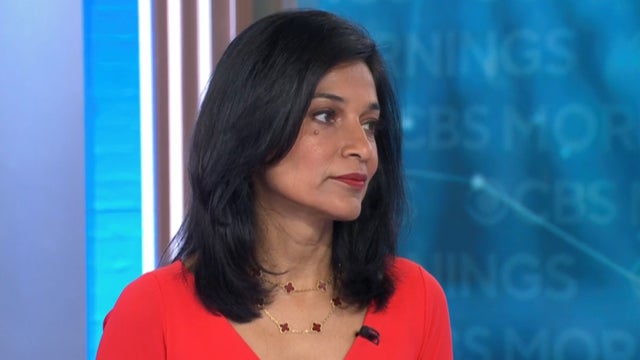
Ladies and gentlemen-- with a cap balanced-- All right, I've got to bring in Zoe Schiffer, the director of business and industry at Wiredmagazine. Zoe, these videos are incredible. Tell us a little bit more about this AI tool and what people can do with it. Yeah, so OpenAI first released Sora, their video-generation model, about a year ago. And since then, a lot of other companies have jumped into the space, and the technology has been moving really, really fast. During this time, OpenAI CEO Sam Altman basically directed the team to start working on an app, and the thinking was that, just like ChatGPT allowed people to realize the potential of generated text, creating kind of a TikTok-style app to watch and create AI-generated videos would be like a huge unlock to make people realize the potential for video generation.
ELIZABETH COOK:
00:01:38
Yeah, you've got to wonder what some of these Hollywood directors are thinking about some of these videos because they look so realistic. It looks you can put yourself in Avataror some of these big blockbuster films. It's amazing to see what they're able to do. Are they approaching, though, the safety concerns as this technology becomes more and more advanced? I mean, there's some scary stuff that can come out of this too. Yeah, absolutely. And far be it from me to act as an OpenAI spokesperson, but as someone who's reported on this company pretty deeply, I will say that I actually do think they're taking these concerns extremely seriously. Earlier this week, the company rolled out parental controls to help parents have a little more oversight into the accounts of their children and, specifically, their teenagers. When the Sora app rolled out, they kind of baked in some of those parental controls specifically to allow parents to stop their kids from doom scrolling. So I think that they're trying to be proactive and get ahead of at least some of the major concerns. And to be clear, this is an app that you can use, anybody can use on their phone or tablet or computer, correct? Yeah, exactly. So you can download it now in the App Store. I think, at least today, you need a code from someone that's using it, but it's already kind of taken off. There's a lot of people jumping in. There are some restrictions, like if you try and generate a video of, say, Taylor Swift or even like Darth Vader, it'll stop you. It'll say that there are copyright restrictions that are baked in, and it won't allow you to do that. It would be fascinating to see some of these videos that are going to come out of this. All right, I want to talk about something that a lot of people are chatting about today, AI-generated actress named Tilly Norwood. She's drawing a lot of big feelings from Hollywood, as you can imagine. Tell us more about this debate over these AI actors, and what goes into actually creating somebody like Tilly Norwood? Yeah, it's such a good question, and I think we need to take a step back and just look at kind of Hollywood overall because we're in this moment where fewer and fewer films are actually getting made because the cost of filmmaking is just so exponentially high right now. And so you have people at the studio and executive level who are pretty enthusiastic and curious about AI tools, and, basically, their argument is that AI could lower the cost of filmmaking and make it so that more films are getting made. On the other side, you have actors and other creatives who are very wary and saying that AI-generated characters and actors are taking jobs from human actors, potentially trying to replace them. And, also, there's this kind of deeper argument that this isn't really why we watch films. We watch it to connect with the human experience, and part of that is watching human actors and human scriptwriters and directors. But I wonder if there's an argument to be made that these AI-created images, these AI actors are just like something that would be animated that, say, Pixar would do? I think that that's a really smart point. I guess I would push back a little bit and say if you have a film-- if you could imagine a film that has kind of human and animated characters in it, the point of that scene is the interaction between the human and the animated character, so it doesn't feel, in that instance, like the animated character is taking a job away from a human actor. Versus in a lot of the instances when we could imagine an AI-generated character being used, that does feel like the point-- the lack of humanity isn't the point of that scene, and so you could imagine a human actor having that job instead. Zoe Schiffer, thank you so much. Thank you for having me.