Watch CBS News

Marine Corps veteran on war in Iran

J.D. Simkins, editor-in-chief of the Military Times and Defense News and Marine Corps veteran of the Iraq war, joins CBS News to discuss the war in Iran.
Mar 5 (08:14)

TRANSCRIPT FOR: “NO "CLEARLY DEFINED OBJECTIVE" IN IRAN "WORRIES A LOT OF PEOPLE LIKE MYSELF," IRAQ WAR VET SAYS”

REPORTER:
00:03:05

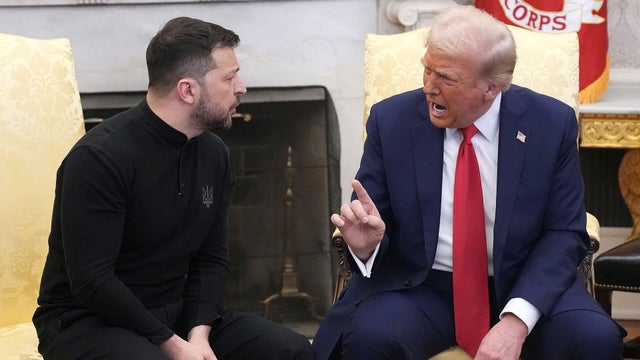
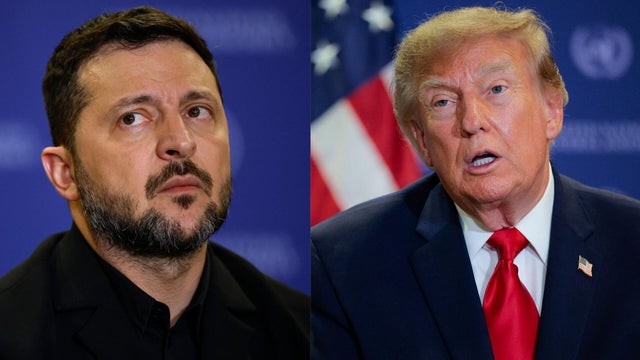
Interesting to see the strategy with this war and also the other people who are-- the other countries who have been impacted, namely Kuwait, Dubai. There's thousands of Americans that are trying to get out of that region. What do you make of how this war is expanded? I think the expansion seemed inevitable. And that might be one area where people are beginning to point out a little bit of a miscalculation, is just the level of support that Iran warrants in the region and the amount of funding that they have done over the years for terror groups and groups that have their ultimate objective is claiming American lives. I think that is rearing its head a little bit already. And you're seeing that spread out all over the region with unrest. And that's where Iran thrives, is fomenting unrest and trying to achieve those objectives. I'm curious what you said about munitions and where this is a different strategy by using these drones that we spoke of before. How much munitions do we have? How long could they last? Is it unlimited? We know they're much less expensive, about $35,000 per unit. But how many do we have? I personally don't know the inventory amount. But I think the concern is more so the level or the inventory that Iran has and their allies within the region, what they have. And I think that's the concern right now, is just the cost discrepancy. When you look at the math of what a Patriot missile costs, for example, to intercept a Shahed drone, you're spending $3 to $4 million on something that costs $35,000 to make. And that's about an 85 to 1 ratio of cost that you're incurring just to knock one out of the sky. And that doesn't even guarantee 100% success. So I think what you're seeing is the US, Qatar, Bahrain, all of these other allies, who are now going back to Ukraine and asking for help and asking for training and advice and assistance from-- President Volodymyr Zelenskyy mentioned today that the US has fired something like-- or the US and allies have fired something like 800 Patriot missiles so far, which exceeds the entire number of Patriot missiles that Ukraine has used over their four years against Russia. And what they've done now is take drone interceptor technology that can cost as little as a used car, and they're sending it up and having a remarkable success rate in terms of knocking Shahed drones out of the sky. That's really interesting. So we're seeing these other countries actually asking Ukraine for advice on how to operate these new types of drones and missile defense capabilities? We are. And that's where I would suggest there's a little bit of strategic malpractice involved, just going back to the early days of the Russian invasion of Ukraine, our experiences in the Red Sea, with the US Navy having to knock out Shahed drones using $1 and $2 million interceptor missiles, that we have the experience, and we have the timeline that has proven that this is not an efficient system. And yet, we're talking about-- everyone knows the picture of JD Vance and some of the others in the administration kind of chastising Volodymyr Zelenskyy in the Oval Office. And coincidentally, that was on February 28, 2025. So one year to the day is when we launched the attack on Iran. And the fact that we were not more forward thinking in terms of getting spun up on some of this training and acquisition is a little bit damning. I'm curious, we talked about US allies. What about its adversaries? Namely Russia and China, speaking of the war with Ukraine. Are you concerned that they are also allies with Iran, by the way? Are you concerned that they may get involved, even though China has said that they do not want any kind of fighting, that that doesn't lead to anything good? I don't know if Russia or China would get involved in the Iran conflict directly. I think Russia is obviously involved just in the munitions that they've provided because Iran has, in turn, provided Russia with thousands upon thousands of Shahed drones. So we're not seeing necessarily a direct involvement. But you are seeing industry at play throughout some of these conflicts. I think the concern from a geopolitical standpoint and global conflict standpoint that that a little alarming is, A, are we burning through munitions that are going to leave us a little more vulnerable or our allies vulnerable? And if we are, China has incessantly threatened Taiwan. Taiwan is a great ally. Are we leaving them out to dry a little bit because we're going to be a little preoccupied on our own end? JD Simkins, stay close, because I'd love to talk to you after we hear the remarks from Defense Secretary Pete Hegseth. So thank you so much for joining us. And we'll check back in with you.

Videos
View CBS News In
CBS News App Open
Chrome Safari Continue