Watch CBS News

Marco Rubio on Dubai drone strike

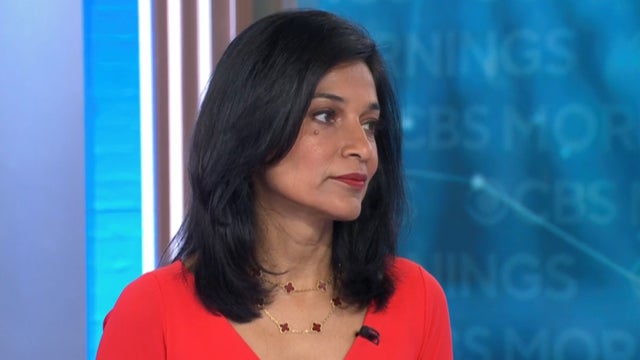
Secretary of State Marco Rubio said Tuesday that a drone hit a U.S. consulate in Dubai, but that no one was hurt. Semafor Gulf editor Mohammed Sergie joins CBS News to discuss.
Mar 4 (07:44)

TRANSCRIPT FOR: “MARCO RUBIO ON DRONE STRIKE HITTING U.S. CONSULATE IN DUBAI”

REPORTER:
00:01:49

I can imagine. And can you give our viewers just sort of an idea of where the consulate is, in terms of downtown Dubai? I know it's very popular, a city for tourists, a lot of industry people there. A lot of expats live in Dubai. Can you give us an idea of where that consulate is in comparison to some of the major landmarks?

MOHAMMED SERGIE:
00:02:09

Yeah. So this is an area that many people don't necessarily visit. There's an old souk nearby. It's on-- they call it the creek there. So this is the old harbor of Dubai, where it's not as flashy as the rest. And the neighborhood itself is mostly consulates. So the US one is actually quite secure. But then right across from it, you have Pakistan, Syria, Iraq, so on. And that's where people come in to do their paperwork. It's not heavily trafficked during the nighttime, especially like around-- I think the hit was after 11:00, 11:00 PM. So there's no traffic there or anything like that.

REPORTER:
00:02:48

I think what people are looking at right now, Mohammed, is the Gulf states, no longer bystanders in this war. What does this mean for the conflict and for Dubai as a city as a whole?

MOHAMMED SERGIE:
00:03:00

This really changes the dynamic in the Gulf. So the Gulf states have been urging de-escalation for a while now and trying to have some sort of negotiation with the Islamic Republic, not out of love or too much empathy for them, but because they know that they would bear the brunt of the cost because they are closest for both the shorter range and midrange missiles and the drone swarms. It takes, I think, hours for drones to get from Iran to Israel. It's a much shorter flight to get to the Gulf, and they're much more difficult to deal with. And then they have the, obviously, incredible amounts of oil wealth and gas infrastructure all around there. Those are soft targets. Qatar stopped producing LNG. Saudi Arabia is considering shifting how it's going to export the oil. And the Strait of Hormuz is closed. So they've already lost billions and probably tens of billions of dollars, both in defense and lost revenue from a variety of sources-- exports of oil, aviation, tourism. You name it.

REPORTER:
00:04:08

Yeah. Many businesses have their hubs in Dubai from all over the world, including the United States. It's also home to the world's biggest airport, which is really a thoroughfare for much of the Middle East, of course, and Asia as well. I'm curious. You are an American citizen. Are you planning to get out? We're seriously considering it. Honestly, I don't feel unsafe myself, but I have young kids. I covered the war in Syria, where we were hit with Russian and Iranian airstrikes with no air cover whatsoever. So there, the buildings would crumble, and we would have to dig people out from the rubble. This is not the case here. But if critical infrastructure is hit, if there's a really mass exodus of people, then it becomes very, very difficult. And I've seen that before in my life. I don't want to experience that with two toddlers, to be honest.

REPORTER:
00:04:57

Absolutely. I can definitely understand that. The secretary of state, Marco Rubio, put up that one of the media outlets-- I want to put up that full screen, if we can one more time, with the number to call, as well as a website for folks that are in that area, hoping to get out. There it is right now. You can see a number there as well as a website to go. And you can let the State Department know your location. Because we've been hearing, Mohammed, that a lot of folks are scared because there's not really a lot of options to get out. A lot of folks are having to drive many hours to another city to try to get out. But there's no guarantees that those cities in the UAE are safe. Are you hearing from some of your friends that are struggling to figure out ways to get out?

MOHAMMED SERGIE:
00:05:37

Yeah, for sure. Well, the easiest route, you have to go to another country. So you have to go to Oman or drive to Saudi Arabia. Oman is five hours away by car. To Saudi, probably 12 to get to the nearest airport. The UAE has started repatriation flights, and I think they're going to do about 40 a day. They're taking a safe route, which they've carved out in their airspace. And there have been flights coming in and out. But those are limited in a sense. I think 27,000 people have left in the last day. Usually, they handle about 300,000 people a day, right from each airport. So it's a fraction of a 10%. Are you and your family sheltering in place? Is that what a lot of folks are doing right now because of the uncertainty of what's next to come? Yeah. We try to stay close. I think I defied the order today. I went to Abu Dhabi, which is 100 miles away, to go cover something there. But yeah, generally people are trying to stay close to their homes. And I've seen people as well, they have slept in the parking lots if they're in high rises. We live in a different type of neighborhood. And we try to stay away from the windows. Although, I'm taking a risk right now next to this window. I don't think it's a big risk. Are you hearing rockets? What does it sound like outside? Yeah. So you hear fighter jets coming through. And those are like to go for intercepts. You hear rockets from time to time. In a way, it punctuates the day. And most of the action's happening in the air. So you might see a burst of smoke, which is the remnant. And then I haven't seen the actual missiles or debris from it. But I got to see it today at-- the government organized a press briefing, and they showed the carcasses of missiles, cruise missiles and drones. And yeah, these are pretty large munitions. So they can do a lot of damage. Yet, they're catching them in the air, and they're just coming down as empty kind of shells, which is incredible. Mohammed Sergie, thank you so much for joining us. And stay safe to you and your family.

View CBS News In
CBS News App Open
Chrome Safari Continue