CHARLIE D'AGATA:
00:00:33
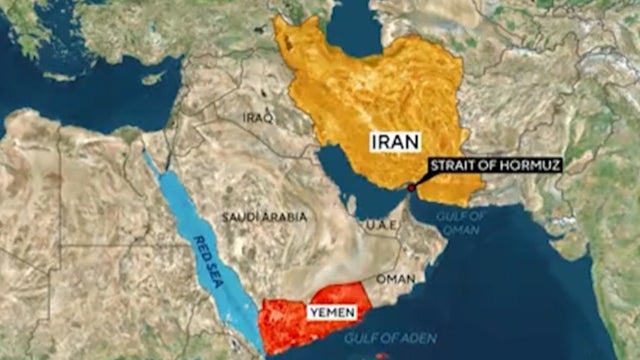
Well, good evening. We head into another volatile week in this region, Jericka. At stake, the US-Iran ceasefire about to expire, possible peace talks on the horizon. A fragile ceasefire here between Israel and Lebanon. What that means for Iran's hold on the Strait of Hormuz. However this plays out, we're told more US troops are on the way. New video released by the US military shows forces warning the crew of an Iranian-flagged cargo vessel.
OFFICER:
00:01:02
Motor vessel Touska, motor vessel Touska, vacate your engine room. Vacate your engine room. We're prepared to subject you to disabling fire.
CHARLIE D'AGATA:
00:01:12
Then the sound of several rounds fired from the US destroyer, saying US Marines later boarded the vessel, the first to be taken into US custody. The US military blockade south of the strait has turned back more than two dozen ships, too, Tonight, officials tell CBS News The USS Gerald R. Ford aircraft carrier has rejoined the fight, transiting the Suez Canal to the Red Sea and surpassing the record for the longest carrier deployment since the Vietnam War. More than 50,000 US troops remain in this region, and thousands more are on the way. The USS Abraham Lincoln aircraft carrier is the centerpiece of the blockade. And a third carrier, the George H.W. Bush, is expected to arrive by the end of the month. Israel and Lebanon entered into a temporary pause in fighting this week, a tentative end to hostilities that left more than 2,200 dead in Lebanon and around a million displaced. More than 30 Israelis were also killed in the latest round of fighting. Here in Israel, they're taking advantage of the relative calm, all too aware that it may not last. Is there hope that the ceasefire will last? To tell the truth, I don't know. I think so.
CHARLIE D'AGATA:
00:02:39
Noam and Moore Barubko are parents to two young boys, now back at school after a six-week shutdown. We are really happy. Kids are back. They started to learn again. With the clock ticking on the two-week ceasefire between the US and Iran, regime officials say that both sides are far from a final peace agreement. But tonight, Jericka, the chief negotiator said on state television that Iran is hoping for lasting peace.
JERICKA DUNCAN:
00:03:09
Charlie D'Agata, thank you. Tonight, Iran's state media is denying the country will send negotiators to Pakistan. President Trump has said US negotiators will be there on Monday. CBS's Olivia Rinaldi is at the White House with some new information. Olivia. Good evening, Jericka. The vice president is expected to lead those talks, but the White House has not said when he will leave. We're talking to them, and we're taking a tough stand.
OLIVIA RINALDI:
00:03:37
With just days until a ceasefire with Iran is scheduled to end, President Trump told multiple news outlets on Sunday morning that JD Vance would not be going. But shortly after, the White House said Vance would, in fact, lead the talks, along with the president's son-in-law, Jared Kushner, and Special Envoy Steve Witkoff. The vice president leading shows that, look, the level of engagement from the Us side, that we are absolutely serious.
OLIVIA RINALDI:
00:04:03
On Face the Nation, UN Ambassador Mike Waltz said the US will present the same deal that led to negotiations collapsing last week. Democrat Tim Kaine said Vance's presence adds weight to the negotiation. Using Witkoff and Kushner doesn't really make sense. Vance or Rubio or Waltz is a different matter. They are the kinds of folks who should be doing this.
OLIVIA RINALDI:
00:04:25
But questions remain about who from the Iranian side is authorized to make a deal. Who's in charge? Well, look again, the Iranian regime, we've put them in chaos. Any deal that comes out of this will have to absolutely be verifiable and be enforceable. Jericka, the bottom line is these two countries do not trust each other and haven't for decades. The first marathon round of talks lasted for 21 hours, and no deal was reached, signaling there may be many more hours of negotiations ahead to establish a lasting peace deal.
JERICKA DUNCAN:
00:05:02
Olivia Rinaldi at the White House. Thank you so much. Today, Energy Secretary Chris Wright said gas prices pumped up by the war may not drop below $3 per gallon until next year. Right now, a gallon of regular gas is $4.05. Diesel prices have surged, now averaging $5.61 a gallon. CBS's Lana Zak is in Davenport, Iowa, with more on the fallout over those fuel prices. Lana. Good evening, Jericka. Farmers and truck drivers here in Iowa and across the country are making tough decisions as this war drags on. And they tell me that the high price of diesel is pushing them to their limit. Dory Martin is hauling rocks for a construction project in Barlow, Iowa. She owns her own truck. Her business runs on diesel, now up about 50% since the war began. It's a big thing for the bottom line, obviously.
LANA ZAK:
00:06:00
She now spends $150 a day to fill up. What was it before the war? Closer to $100.
LANA ZAK:
00:06:06
Joe Dierickx spent $18,000 in December filling his 10,000-gallon fuel barrel with diesel. At today's price, he says that would cost him $40,000. He's one of the millions of farmers in the US who rely on diesel to power their equipment. How does it feel when you're filling that up and realizing how much it costs? Well, we don't want to waste any. I'll tell you that.
LANA ZAK:
00:06:31
Especially farming around 5,000 acres. Dierickx gave us a tour of his corn and soybean farm. You can't lose money year after year after year and keep the business going. And that's the scary part right now.
LANA ZAK:
00:06:47
Energy experts forecast fuel will remain high as long as the flow of oil shipped through the Strait of Hormuz is disrupted. The longer these high prices last, the more difficult it is, and farmers are going to have to absorb that full price.
LANA ZAK:
00:07:02
This uncertainty adding fuel to the fire that already has these Americans under pressure. So I have to be a little more cautious about where all my money goes? Well, if farmers break, well, then there's less food for everybody in the world. Experts warn even if this war ends immediately, that the high prices are likely going to affect farmers into next year's growing season and keep those transportation prices elevated for weeks to come. Jericka.
JERICKA DUNCAN:
00:07:29
Gotta have lots of patience. Lana Zak, thank you.