MEG OLIVER:
00:01:24
At least 17 people were injured, 14 of whom are children. 2 students were killed, 8 and 10 years old, and multiple are in critical condition. The gunman was reportedly found dead from a self-inflicted gunshot wound. CBS News Senior Coordinating Producer for Crime and Public Safety Anna Schecter joins me now. The details coming out of this are just absolutely heartbreaking. An 8 and 10-year-old didn't make it. You've been following the very latest. What else do we know? Well, we know that 10, or at least 10, children are in critical condition at this time. And we are awaiting news for more children to be released from the hospital. When it comes to the shooter, the gunman, we understand that the shooter's name was legally changed back in 2020 from Robert to Robin Westman, and it appears that the shooter's mother had worked at the school in previous years. So we're piecing together a connection. Law enforcement tell us that the shooter appears to have had a grievance related to the school. But those details are very vague right now. We're still waiting to pin that down. There are social media videos that have been posted that appear to have been posted by the government prior to this attack, and our CBS News Confirmed team is reviewing all of that. So this is very fluid right now in terms of all the information that's coming in. As you try to piece that connection together, any idea whether he was targeting the church or the school? Or do we not know that yet? We don't have that pinned down, but certainly the messages were of a suicidal nature, showing signs of mental health struggles and really grievances, not necessarily just towards the school, but towards different populations. So we are still working through-- there's quite a bit of material online that we're going through right now. And what happens next in this investigation? Well, of course, the shooter's laptop, cell phones, any electronic device that was used will be looked through, will be recorded. Any interaction that this person had with others-- did other people know about this, and did other people aid this attack? We're also waiting to hear on where those weapons were obtained. This person was armed with three weapons, including a semi-automatic rifle, which the shooter used in this attack. But the shooter also used two other weapons. So this was absolutely premeditated. And the police you heard there say this was premeditated and--
MEG OLIVER:
00:04:07
Targeted. --a targeted attack. Yeah, absolutely devastating. Anna Schechter, as always, thank you so much. We want to bring in CBS News correspondent Nidia Cavazos, who is in Minneapolis at the scene. She joins us on the phone. Nidia, can you paint a picture for us? What are you hearing? What are you seeing there? NIDIA CAVAZOS (ON PHONE): Meg, we were just a couple of blocks away from where the shooting took place at the church. And what we are witnessing at this moment is still a very, very heavy presence of police officers. We are seeing FBI agents, HSI. We see state troopers. And it's just rows and rows of blocks that these officers are at at this moment. Now, earlier this morning when we arrived to the scene, we were witnessing as some of the parents were carrying their children out of the area where the school and the church is located. Their tiny arms were wrapped around their parents. And the look on their faces, the expressions of these kids, paint the picture of what exactly occurred. Some of these children were in tears, and their parents were immediately taking them out and walking them through the streets and the sidewalks of these neighborhoods. Now, earlier today, we also spoke to one of the neighbors whose house is just right next to the school, and he said he heard the shots and ran toward this church and immediately started trying to help out the children. But he describes what he first saw. He said there was a really quiet scene, and this is because the children were barricaded within the church. Police officers did arrive, and he had to step away from the scene. But there are so many neighbors here who, again, it's the look on their faces that was very shocking and really paints a picture of what's going on here at this moment.
MEG OLIVER:
00:05:49
Nidia, with all those details and seeing all those people leaving school and all those parents holding their kids a little tighter today. Thank you. For more, I want to bring in Tim Gallagher. He is a former FBI Special agent and chief security officer for Nardello and Company. Tim, I just want to start with, when you're looking at these types of investigations, how does it differ when the suspect is dead versus being alive and under arrest? Well, good afternoon. Thank you for having me. Yes. Law enforcement, the FBI working side by side with their colleagues in local law enforcement. There's still the same sense of urgency, right? Even though the shooter is deceased, you are still looking to put together the pieces of the puzzle. What happened? Who are they in touch with? What have they written? What did they write and then take down? Where were they in the days and hours leading up to the event? So there is still the same sense of urgency, and law enforcement is going to put the case together to paint the full picture. It just will not result-- probably not result in criminal charges. However, the full picture needs to be painted. Any difficulty when multiple law enforcement agencies are all working together? No, there's no difficulty at all. It just-- it makes everything that much better. You see the concept in terrorism cases with the Joint Terrorism Task Force, where agencies work together side by side. When I ran the FBI office in Newark, New Jersey, there were literally 50 or 60 different agencies working under our roof on any given day, whether that be working terrorism or working crimes against children. It's all one team working on these types of matters to keep the public safe.
MEG OLIVER:
00:07:29
Tim, when you saw the first reports of this, what was going through your mind with your former expertise of covering several different things like this in the past? Sure. You're looking at the reaction that was done immediately inside the church, which we will-- appears to have saved lives with children taking cover, children hiding, which follows the run, hide, fight training that is given, and then just the reaction. Law enforcement was there in minutes. Sometimes they arrive in minutes to have to interact with the killer and take the killer down. Here, the fact that law enforcement was there so quickly undoubtedly save lives through rendering first aid and stopping the bleed for those who'd been wounded.
MEG OLIVER:
00:08:22
We heard from one of the witnesses who told our local affiliate there that they plan and they train for these types of incidents at the school every month, but they've never done that kind of training at the church. How disorienting must that have been for these kids? And do you think they still knew where to go? Because we know that they were hiding all over. Sure. So it is a fact that active shooter training is necessary, and it has to be done in a way that it doesn't scare the children into thinking that, hey, we could be next, but they have muscle memory. Like, if this happens, what can we do? That training is adaptive to no matter where you are, whether it's in school, a house of worship, or public transportation, or in a movie theater. The atmosphere where you're going to be will be different as far as where the exits are. But the training itself and what you need to do to take cover and to hide or to get out of there, those basic concepts do transfer.
MEG OLIVER:
00:09:24
All right. Tim Gallagher, thank you so much. Thank you for having me.
MEG OLIVER:
00:09:28
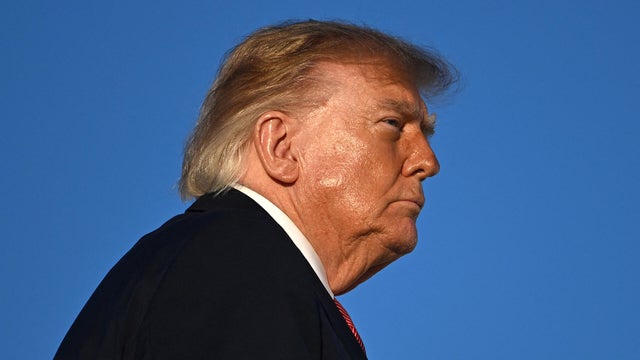
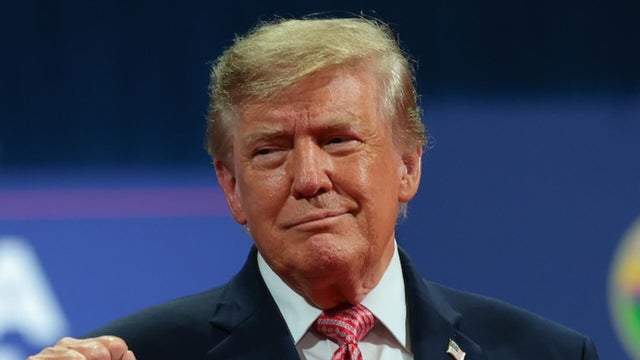
Joining us now is CBS News Chief White House correspondent Nancy Cordes. Nancy, thanks for being here. How is the White House responding to the shooting? Well, Meg, we just watched a few minutes ago as the flags here on the White House grounds were lowered to half staff, and the president issued a proclamation ordering all government buildings to lower their flags through the remainder of the week to half staff. He also issued this proclamation honoring the victims of this tragic shooting, and we know that he has spoken to the governor of Minneapolis and he's spoken to the FBI, but notable that he has had a conversation with Governor Walz, the governor of Minnesota, rather, because the two of them haven't spoken much over the past few months. As you recall, Governor Walz was on the Democratic ticket that ran against Trump in the most recent election, and they didn't speak after a politically motivated shooting in Minnesota earlier this summer. But they have connected today. And President Trump says he is going to continue to monitor the situation and is asking folks to keep the people of Minneapolis in their prayers. Nancy, as the country mourns this latest school shooting, we know President Trump is hosting a meeting at the White House today regarding the conflict in Gaza. What more can you tell us about those talks? What's the specific focus? There are two main focuses of this meeting, Meg. One is to work with the president to envision what a post-war Gaza might look like, post-war Israel, after some kind of end to the war is negotiated. And so he's meeting not only with top White House officials, but also his son-in-law, Jared Kushner, who was really a point person on the creation of the Abraham Accords and on US policy towards Israel more broadly in the president's first term. He has been here at the White House, and some of our reporting partners have confirmed that Tony Blair, the former prime minister of the UK, was going to be involved in these conversations as well. So that was one focus of the meeting. The other focus is on how to deal with the growing humanitarian crisis in Gaza, now that a famine has been declared by multiple international agencies. More than a quarter of Gaza residents are said to be starving. And the president has urged Benjamin Netanyahu, the leader of Israel, many times over the past few months, to increase access to humanitarian aid, to food aid in Gaza. But now he is meeting with top officials to try to figure out what more the US can do to ensure that food is getting to people who don't have enough of it in Gaza. All right, Nancy Cordes for us at the White House, thank you. You're welcome.