REPORTER:
00:00:07
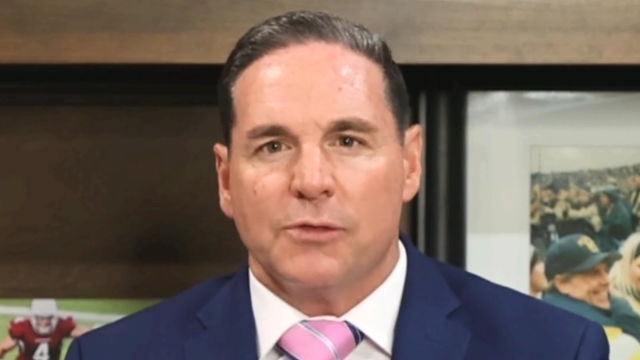
The head of Instagram today announcing new restrictions for teens, so users with a teen account will now only see content on their feed similar to what they might see while watching a PG-13 movie. The new guidelines will be the default settings for teen accounts, and changing them requires a parent's permission. So let's bring in Kurt Wagner, a senior reporter for Bloomberg News, to walk us through these updates and how they're going to change the app for teens. Thanks for joining us. Yeah, my pleasure. Thank you. So let's talk about this. Walk us through the changes. The biggest one, as you mentioned, is this idea that all teen users, so anybody under the age of 18, is going to be automatically sort of see their content filtered by this PG-13 criteria. And so if you are a teen, you will no longer see things that might not be in a PG-13 movie. That includes certain stunts, like aggressive stunts. That includes things like marijuana paraphernalia, certain language. There were already a bunch of things that were blocked for that age group, but they are essentially trying to strengthen that and also give people a sense of what that feels like. I think a lot of us know sort of what a PG-13 movie is supposed to feel like, and so they're sort of adopting this framing so that it makes sense to people on Instagram as well. Yeah, I like these road blocks, so to speak. But let's talk about how teens who might try to kind of wiggle their way or maybe lie about their age might try to get through these restrictions. Yeah. So you can imagine that if you're a teen and you don't want to feel like you're being blocked from seeing things that you either care about or you just don't think that you should have any blocks at all, you might try and create another account. You might try and change your birth date on your account to make it seem like you're older. Meta has told us-- and we had a story about this late last year-- that they're going to use AI to try and detect when people are lying about their age. And so some of it is obvious, right? If you've created an account with a birthday and then all of a sudden change your birthday to make yourself four years older, that's a red flag to the company. They're probably going to boot you back into that teen experience. But they're also going to use AI to try and look for other types of behavior that teenagers tend to demonstrate, which is who they're connected with, who they're interacting with, what their-- types of things they're watching, and use that to try and push people into these accounts, even if they are claiming to be older than 18 years old. And Kurt, you recently sat down with the head of Instagram to talk about how AI is changing social media. So here's what he had to say about what the technology means for creators on Bloomberg screen time. I think it will mean that today's creators, if they lean into the tools, or the ones who do, will be able to create more or even better content. But I think it also means that there are going to be people who couldn't be creators before, who can now actually produce content of a certain quality or at a certain scale. But it also means there are going to be bad actors who try to leverage these technologies for nefarious purposes, as well. So let's talk about bad actors. Interestingly, he specifically mentions the threat of these bad actors. Platforms like Instagram, they're under this-- a lot of pressure to adopt AI fast. So what are the potential risks? And do you expect to see more companies really tightening their restrictions? Well, I mean, the potential risks are sort of numerous at this point, because you can imagine, if all it takes is to dream up an idea and now you can type it into a box and say, hey, create a video that shows this, or create a photo that shows that, you can imagine all kinds of misinformation, misleading posts, harassment. We've already seen all kinds of things around sextortion or people taking famous people and recreating them in certain positions or acts. And so those types of things are going to be more and more possible now that AI is getting better. I think the challenge is that a lot of this stuff is getting very good. And so while it used to be somewhat obvious what was created with AI, it's no longer the case. And unless you, the creator, are labeling, hey, this is an AI post that I made, which a lot of people don't do, it's not always easy to tell what's real and what's not. So that's going to be the major challenge for not only Instagram, but all of these big tech companies, is sifting through and making sure that people know what they're looking at and that, you know, they are not being tricked or duped into thinking that something is real that was clearly artificial intelligence.