Watch CBS News

Moving Through Grief

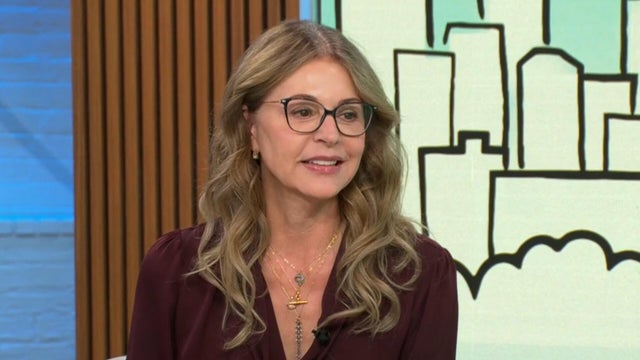
August is National Grief Awareness Month, and Kate Doerge wants to reimagine how we deal with grief. After the experience of losing her 16-year-old daughter, Kate decided it was time to reframe the feeling of sadness. We've all heard of the five stages of grief, but Kate suggests there are five actions to help you learn how to carry your grief. Plus, Norah talks about how she wants to be remembered, and Kate tells us how to show up for people who are grieving.

Aug 19 (39:16)

TRANSCRIPT FOR: “MOVING THROUGH GRIEF”

NORAH O'DONNELL:
00:00:08

I'm pleased to welcome my dear friend, Kate Doerge. You can hold grief and joy in the same space. You're never moving on. You're moving through. I want to celebrate this beautiful life that my daughter had. These are really, really hard things to work through. Really hard. It doesn't have to be so dark. It doesn't have to be what we've been told for such a long time. But shouldn't everyone be sent out on a rocket ship of love? [MUSIC PLAYING] Today, we are focusing on something we all go through in life, grief. And I'm pleased to welcome my dear friend Kate Doerge, who I have seen deal with grief with grace and purpose and determination to try and teach and help other people. And you have written this incredible book, Reimagining Grief,which I know will help so many people through the most difficult time in their life. And so let's talk about why you wrote this book and your dear, sweet Penny, who I had the pleasure of knowing, who passed away when she was 16. Yeah. Yeah. Norah, this is the book that I wanted when I lost my father to heart failure, my mother in a car crash five days before Christmas, and, of course, our beautiful 16-year-old daughter, Penny. Because when I was going through each one of those losses, the books people were sending me, I didn't want to be told I was going to be in denial and angry and that I didn't have any agency over how I could move through grief. So this is truly the book I wanted, and I hope to be able to help others recognize there's another way through grief. And you do that. It is such a beautiful book. And Penny was such a light. She was.

NORAH O'DONNELL:
00:02:02

Such a light.

KATE DOERGE:
00:02:03

She was.

NORAH O'DONNELL:
00:02:03

And she lives on to this day in what you are doing to help raise awareness about the disease she suffered with. And the incredible thing is I have known both of you for a very long time, and I did not know that Penny was suffering from neurofibromatosis. When did you first learn about her diagnosis? It was early. At age four months old, Penny rolled off our bed, and she fractured her tibia, and we raced up to Hospital for Special Surgery in New York City. And we were told not only is it a fracture but it's something called congenital pseudoarthrosis. It affects 1 out of 300,000 individuals. And because it's so rare, they typically only see it under the umbrella of something called neurofibromatosis, which affects one 1 of 2,000 individuals. So while it's rare, it actually is very common. It affects 150,000 people in the United States. So there we were at HSS, holding little Penny in my arms. And we had a choice on how we were going to play these cards we were dealt. And this comes from the advice of my father, who the night before our wedding had pulled Chad and I aside. And he said at the time, you've lived a charmed life. You have beautiful friends and beautiful family, but you will be challenged, and it's up to you how you play those cards you're dealt in life. And while it was a buzzkill for us the night before our wedding, my father was my greatest role model, and I knew he really meant this. And so there I was, four-month-old Penny in my arms. And we said, we have a choice. How are we going to play these cards? So we made sure Penny was never defined by this diagnosis. The brace she wore on her leg, as you know, her entire life, we bedazzled it, accessorized it to match all of her outfits. And she lived a big, beautiful life because she was not defined by the condition, and she moved through all 15 surgeries she had in her life with positivity, resilience, and a determination it wasn't going to define her life. I can remember us going for a walk and you telling me that Penny had developed these tumors and that you were taking her for radiation. And I guess it wasn't really until I read the book. I mean, how many different surgeries did she have when the tumors were in her brain? So at 14-- her whole life, we were just focused on her leg, and that's what we were focused on but not letting it define her life. And so it wasn't until the fall of 2020, and she was 14 years old. She developed a little bit of this wandering eye. And we took her to the ophthalmologist, and he said, you know what? We should get an MRI. So we went, and on my drive home-- they didn't tell us the results at the MRI, but on my drive home back to Long Island, I was pulling in the driveway. And they said, there's a tumor. You've got to turn around and come to the emergency room. We've got to get it out immediately. And so with that, we have a choice. We said to Penny, OK, let's go. We're going to get this out, and we're going to keep moving forward. And that was the first of the seven brain surgeries that she had. And through each one of those, she had chemoradiation, but she never let it define her. And in the book, one of my favorite parts is talking about the story about how Penny had this glam camp that she used to run in the summertimes for these little girls who loved her because Penny was a pied piper. She was so full of joy and love and light that these girls just wanted to be with her. And every day of that camp was different. It was like, come dressed as your favorite Barbie. Come dressed as your favorite Disney character. But little did they know she was going in every morning at 7:00 AM to get blasts of radiation to be back in time to set up and be there to greet those little girls. And that's just what she did until the last of the tumors that appeared that couldn't be removed, and that ended up spreading. What was that conversation like when the doctors told you about that the last tumor was inoperable? Again, we had a choice. There we were at Memorial Sloan Kettering, and we were given this news. And I was determined not to let this impact the rest of our family and our friends and the rest of our extended family. And so we said, OK, we have a choice. We're going to bring Penny home, and we're going to fill our house with love and light and music and joy, and we're going to bring all of our friends in and all the people who love Penny and have the dogs on her bed. And I talk about creating this love cocoon for her. It's the most incredible thing I've ever heard in my life, a love cocoon-- I know. --and dealing with grief in a way, I think, of celebrating her life and opening instead of closing the doors with grief. You opened the doors of your house. Yeah, and it was so unusual, I think. People couldn't believe it. I mean, I talked to a friend recently, and she told me the story about how she looked back on that week, and she said, did I ever tell you that the minute we heard you were coming home with Penny, I went on Amazon, and I bought all of these battery-lit candles. Because we had this vision that we, as your friends and community, were going to surround your house with light while you and Penny were inside with Chad and the boys. And I said, what? You were going to surround our house? And she said, I know because when we arrived, you brought the light in. You filled the house with light and love. And my feeling is I can't imagine it any other way because imagine there's Penny. She's feeling this love, and she's feeling the connection and celebrating her life. And we sent her out on a rocket ship of love, and it was so beautiful that people couldn't believe it. My in-laws came in, and they are so used to the traditional way of how you handle grief and how you handle certainly the last stages of someone's life. They walked in, and they were like, what is going on? This is like a party, and we don't know what's happening. And we had friends pull them aside and said, just look around. Feel the love because you're going to see how important and what a difference this connection and this love and celebrating Penny's life is making for all of us, not just our family but Penny's girlfriends. I love that phrase, sending her off on a rocket ship of love. I know, but shouldn't everyone be sent out on a rocket ship of love, like the difference that makes? And so that's my hope is to be able to inspire others that it doesn't have to be so dark. It doesn't have to be what we've been told for such a long time. And I think when people were sending me those books, I had a visceral reaction because I was like-- you know I'm a mover and I'm a doer, and I take action. But I didn't want to sit in it. I didn't want to be told, you have to experience these stages of grief, and they're just going to wash over you. I mean, you talk about that specific book. It's Elizabeth Kubler-Ross's 1969's book On Death and Dying. What was it about those five stages that you had such a visceral response to? Because it didn't allow me to take control. It made me feel like I just have to sit and wait for this. Wait a second. I want to celebrate this beautiful life that my daughter had. Penny lived more in her 16 years than most people do in a hundred, and it was the same thing with my mom and my dad. In each of those losses, I didn't want to be told I'm going to be angry, in denial, depressed, bargaining. Bargaining for what, to bring them back? And then, finally, I'm going to accept they're gone. I felt like, I want to have agency over how I move through these losses, and I want to be in control during an otherwise uncontrollable time in our lives. And so for me, I think it just felt natural. You know my mom, similar to Penny, was the brightest light. Your mom was a belly dancer. She was-- [LAUGHTER] --and a Jazzercise instructor. Yes, and my husband has played golf with her and won tournament prizes. I played tennis with her. I mean, such an incredible-- such an incredible woman.

KATE DOERGE:
00:10:10

She was such a bright light. And so I think looking back on her loss-- when I got that phone call, I was driving home from work, and I had heard there was an accident. I talked to my mom in the morning. This is five days before Christmas. I pulled into our driveway, and they put me on hold when I called the hospital. And when they came back on the phone, they said, I'm so sorry to tell you she didn't make it. She'd been in a car accident. Car accident. And I had a moment where, OK, I have a choice. I have three kids in my house who are sitting waiting to celebrate Christmas. Am I going to stay in this car and never get out and be in a dark place, or am I going to go inside? I'm going to tell the kids what happened and say, you know what? We're going to honor her. We're going to celebrate her. We're going to do all the things Cassie would want us to do because she loved Christmas, and she was a belly dancer. So I talk about that in the book. She was like my dress rehearsal leading to Penny because her celebrations were so amazing. Yeah. I mean, the story, too, about Cassie's, your mom's sendoff, where she lived in Florida. And I know that you had gone in to talk to the Catholic priest about mass, and then you just decided to have fireworks and champagne. And some people may say that sounds weird, but explain the thinking behind this. Again, I felt like, what would my mom want? And we don't have to go through these traditional steps of what we think our loved ones would want. And no grief is the same. No loss is the same. And so why can't we customize it to our loved ones, to what they would want, what they would love, what they appreciated in life? And so, yeah, we walked into that church with the Catholic priests, and I looked at my brothers, and I was like, this doesn't feel right. Mom, she never wore Black. She didn't want to sing "Ave Maria" and say the same prayers as everyone. She was a belly dancer. She lived life to the fullest. And I love that in summer afterwards where she had a vacation home-- we were there, too. You had a parade where everyone was supposed to dress up as their favorite Cassie. Yes, and I wore her belly-dancing costume. What did you dress up as? I think I wore tennis clothes because I played tennis with her. That was my Cassie that I knew. But that was such a beautiful way to honor her and celebrate her. And I think people couldn't believe it because that's not what you're supposed to do. But in my mind, I just wanted to celebrate the person she was and keep her legacy alive, and that was such a great way of bringing everyone together to do all the things she loved. So I was in her belly-dancing costume. My boys were horrified. You were in tennis. People were wearing golf, dancing. And it was such a beautiful way to celebrate her. I didn't know your father, but, of course, I've heard lots about him. And I love the story in the book that you tell that he was swimming in the pool, and he would smoke a cigarette and then put the lit cigarette in his mouth and then swim the length of the pool. Yes, and then pop out, and it was still lit. So now you can see where she gets her this from. [LAUGHTER] Larger-than-life characters. And it was amazing because my father infused in us this physical strength. He was a Marine. He studied to be a priest, so he also had such tremendous faith. And my mother, with her positivity and her movement, she was the one who inspired us all. You've got to keep moving. Physical strength certainly leads to mental strength. So I think the foundation of the two of them with this physical strength, my father and faith and my mother with her positivity and her bright light, it just allowed me to move through my life that way. Now that so many people know your story and so inspired by Penny and all that you're doing now to bring attention to neurofibromatosis and Penny's fight, I think also in this book, too, you talk about the five actions of grief, and I think this is what would be really helpful. I know you and I talked about a friend I had, and you sent her a copy of the book who's dealing with some really difficult situations right now. So let's talk through because people are looking for, as you know better than anyone, the deepest, darkest moments of your life. The first one you say, connect with others. Don't try to do this alone. Why do you think that's the most important piece? Because I think we, as human beings, need each other. In order to move through life and loss, you need someone by your side. And there is scientific research that has showed that with connection-- and it doesn't have to be big, whether it's a grief group or it's a runners club or going to your exercise class. Connection reduces the amount of prolonged grief. It reduces the amount of PTSD, anxiety, and depression. And so I think that was the first step/action I took because I also recognize, grief is isolating. It can be really lonely. And for me, especially with Penny, she had her best friends, 16-year-olds who had never experienced loss. So it was critical to me to bring them in to make sure they felt supported and that we were going through this together because I can't imagine having them be by themselves going through this. I can remember when Sheryl Sandberg wrote a book about losing her husband. She said, one of the hardest things about grief is when no one says anything. That's how it becomes especially isolating because people don't know what to say, and sometimes I don't know what to say. Right, so you don't say anything. You don't say anything. And I remember Sheryl Sandberg saying that's one of the hardest things, when people don't say anything. It is one of the hardest things because what I have learned through all of this is how important it is when someone comes up to you and says, I remember the time your mother did this, or I loved playing tennis with your mother because of that. And that is so beautiful because that's a way that you're connecting. You're keeping their legacy alive versus, I'm so sorry, and you just leave. So that was interesting because I do think that's probably what most people say is I'm sorry. Of course. So why do you think there's a better way to-- Because you create a connection. By just taking that step to say, I remember a time, or tell me about your mom. What does she love? I want to know more about her. Not only are you keeping her legacy alive but you're creating a connection versus I'm so sorry just kind of puts you at bay. So even if you don't know what to say, just to say, I'm here with you. My arms are wrapping around you. I love you. That's better than not saying anything. Action two, you say, celebrate them, which you've talked about. For people who say that they're in the midst of so much sadness, how? It's hard to celebrate. I think it's the little things. I think it doesn't have to be the big fireworks, like we did. I think it's about remembering what your loved ones loved and doing something in their honor, wearing the color that they loved, serving the food that they loved, the little things of playing the music that they listened to all the time. What's ways you can connect with them? And, therefore, you're celebrating them. You're keeping their legacy alive by doing the things they loved. That's beautiful. Action three, be open to signs. Oh my gosh. We were all just having these discussion about signs. I mean, how has death changed your feelings about different kinds of-- I mean, you grew up Catholic, I know, but your thoughts about spirituality. I think it's faith. It's not a religious faith. It's a faith that sort of we're all on the path that we're meant to be on, and we're guided in the way we're meant to be. And I truly believe I'm living my life's purpose now, and Penny lived her life's purpose to leave this beautiful legacy behind to help others. And I didn't necessarily believe or not believe in the signs. I didn't really think of them as much. But with Penny, the signs came in immediately. I mean, she wore this little butterfly necklace, her life with Penny on it, And even in the last week of her life, November-- her last week was in November-- there was butterflies outside of the window. And I look back on pictures of her as a little girl, and she had butterflies everywhere. Her first brace at four months old or at 16 months, actually, after her first surgery was butterflies. Wow. So she, again, this idea of a butterfly represents an inextinguishable soul always drawn to the light, and that's so Penny. And every time I see a butterfly, I think of Penny. You think of Penny. I know. And how beautiful is it for us to open our eyes to the signs? Because especially, again, for my boys and for the girls who have never experienced loss, they'll walk into a room, and there's a Penny on the ground. They're like, hi, Pen. Or they'll be outside, and they'll be feeling a little bit down, and a butterfly will go by. And I'll think, hi, Pen. So it's just those moments of connection, again, but being open to the signs to feel like our loved ones are still with us, just in a different shape and form. And the butterfly, too, because as you have said that I think is so powerful that I used this in a commencement address-- I know. --at Georgetown is that it's not your lifespan. It's your wingspan, Wingspan, yeah. Because Penny-- Because picturing that in your head is so incredibly powerful. Because, again, look at Penny, 16 years old, but she lived more in her life than most do in a hundred. And so what kind of impact are you going to make in this big, beautiful life we're living now? And so it's not the years. It's what you're living in those years and how you're living it. You write in the book that you went to a psychic intuitive. Is that like a medium? Yeah, she was a medium, and it was before-- it was after my mom passed. It was before Penny passed. And she said-- she was like, you know you're living your life's purpose. And I did. I think, intuitively, I felt it, and I knew it. And she said, and you know your mom left in the way she did for a reason. And I said, I know. I feel it. I know that my mom never was meant to get old or sick, and she was such a legacy and such a role model to me that I knew she taught me how to live every day to the fullest with love and light and kindness. And now you look for the signs.

KATE DOERGE:
00:20:29

And now. And they keep showing up. They keep showing up. They're everywhere. [LAUGHTER] I feel, as I said, a little witchy because I walk into a restaurant, and there's a waitress with a butterfly tattoo. Or I just told you the story. My favorite mantra is faith over fear, and those were the Post-its we put all over our house when Penny was going through her surgeries, and it was faith over fear. No matter what happens, Penny's living her life's purpose. We're on this path, and it's all going to be OK, whatever that means. And then you were running one day and saw a car that's just like the car you had that actually had the license plate faith over fear. Faith over fear. I know. I looked around. I was like, am I getting punked right now? Like, is this really happening? Am I imagining this? Am in the middle of a dream? Yes, but little things like the morning Penny passed, Chad and I grabbed the boys, and we went with the dogs, and we went for a long walk. And when we got back into the car, we turned on the car, and "Walking on Sunshine" was playing on the radio. And that was Penny's favorite song and her mantra in life. And then we got back to the house, and I had a friend pull me aside. And she said, Kate, I have to show you this picture. I said, what? And we had two friends who had been walking outside of our house while we all were inside, and she showed me the picture. And there was light shining into Penny's room where she had passed. And I said, that's so beautiful. And I said, oh my gosh. That's the exact timestamp of when Penny passed because I had sent to Chad the time. And she said, yes, but not only that, look in the driveway, and there in the driveway is the reflection of an angel pointing to Penny's room. And then, all of a sudden, the signs started coming in. People were seeing dog tags in the side of the road with the name Penny. There was a car that was driving around our town with a butterfly. We all were open to the signs. That was it. Gives me the chills when you tell that story. I know. I love it. Action number four, you say get moving. Get moving, yes. The power of physical movement to get over emotional loss. You have to. So an oncologist recently did a study of the gray matter of your brain and how grief, you are stuck in neutral. And if you don't physically move, you are not shifting that gear into drive. And so the next time you experience grief because you've shifted that gear, your body is automatically more attuned to moving forward. And I always say this. Like when people say, I can't imagine losing a child, I'll say, imagine if you did. Imagine instead of staying in bed with the covers over your head, not wanting to get out of bed, what would your child want you to do? They would want you to get up, one foot in front of the other. Just get yourself outside. Imagine that difference because then if you show yourself you can do that, then you can keep going. You're showing others you're moving forward. So it is critical to move that energy, to move that anxiety through your body. You have this great chart in the book where you talk about exercise and if you're feeling a specific emotion. So you say if you're feeling angry or frustrated, maybe do boxing, running, or martial arts. If you're feeling sad or heavy, gentle stretching, restorative yoga. If you're yearning or missing your loved ones, walking familiar paths and mindful movements. All really, I think, helpful things to just say, identify how you're feeling and answers or ways to reimagine grief, as you write in your book. And that made all the difference for me. I didn't even know what I needed. I just knew I needed to move my body. So for me, I went to this exercise class, and it was not easy. I wasn't there for the exercise. I was there truly to move that energy through my body and connect with others, without even having to talk to them but just to move. And I cried through the whole class, but I knew that I needed that. A lot of people during grief and other emotional, challenging times use food or alcohol to deal with their grief. This is very common. Did you and your family have those challenges, too? We did. I mean, the boys talk about it. You write about it. Yeah, and Frankie, our youngest, he turned to food, and it was sort of that impulsive eating. And he woke up one morning, and he was like, I can't do this. This is not what Penny would want me doing. She would want me to keep moving forward, and so he took the initiative on his own. And at that time, I mean, Frankie was 13. And he had gained a lot of weight, and he was like, I can't do this. And similarly for Henry-- Henry, who was in college, he turned to drinking. And he had a little bit of a spell, and then he woke up and was like, I can't do this. This is going to destroy my life. And I think we all felt that way of just, what would Penny want us to be doing? Would she want us to fall apart, or would she want us to keep moving forward? Launch a foundation in her name. Raise millions of dollars to find a cure for the condition that took her life. I think those stories are so important because they're very relatable, that losing, in their case, too-- certainly losing a child but losing a sibling, too, these are really, really hard things to work through.

KATE DOERGE:
00:25:30

Really hard. Really hard. And that's why I go back. I can't imagine my boys being alone through it. That's where they needed community. They needed friends. They needed their sunshine people to lift them up. We all did. Yeah. You also write mental health is mental fitness, and that was a light-bulb moment when I read that in the book because mental resilience is something you practice through routine. You do. And I think that's one of the powerful parts of this book, too, mental fitness, mental resilience. That's something you have to keep training that. It's a muscle. You have to keep working that muscle every day. And it's not easy, but if you do it, you grow stronger and stronger. And I think I practiced that through every surgery, everything we went through. With Penny, I recognized in order to take care of Penny, I needed to take care of myself. So I carved out time where she would be in surgery, and Chat would be with her, and I'd go for a run, or I would go out and get that fresh air. And I have such routine because routine, for me, is my foundation for strength. If I don't have that, I'm not able to function, and if I can't function, then I can't take care of my family and certainly not Penny. Do you think part of that drove your focus on routine was just thinking, I have to take care of Penny? Yeah, I have to take care of Penny, so I need to take care of myself. I have to be strong in order to be strong for her. The final action of the five that you talk about in the book is turning pain into purpose, which you've done that quite successfully. Well, it's been such a beautiful gift to be able to do what we have done. And again, we didn't know what we were doing. When we chose that last week of Penny's life to fill the house with love and light and create this love cocoon, I think it was that last week that made all the difference because people recognized we were doing this in a different way. So even the celebration of Penny's life was filled with light and love, and no one wore black. And there was dancing and singing Penny's favorite songs. And people looked around and just wanted to support, and people kept reaching out. What can we do? We never knew Penny had gone through everything she did. So the day after Penny's life celebration, Chad and I woke up, and we're like, we've got to do something. We have to harness all the support and love that we have to find a cure for the condition that took her life. And we did not know what we were doing, but we leaned in heart first, and we've created Penny's Flight Foundation. And we're funding critical scientific research to find a cure for NF. And we have over 120 Penny's Flight chapters across grade schools and high schools and colleges. And educating people on a disease that I had never heard of which is more common than ALS. Yes, 150,000 people have NF. 30,000 people have ALS. And everyone knows of ALS because of the ice-bucket challenge and all the awareness, but no one knows about NF because no condition looks the same. So for Penny, she had the bowed tibia bone. She had a few cafe au lait spots, and then she had the inevitable tumor. But no condition looks the same. Some people have tumors all over their body that disfigure them. They can't leave their house. Others have tumors that lead them to go blind. Some have tumors lead them to go deaf. So for us, it was so important to raise awareness and raise the critical funds to find a cure. We have a section of our podcast called the Group Chat. [MUSIC PLAYING] Part of this podcast, of course, is opening up our audience to the world's best experts on health, wellness, fitness, issues that we all go through that are related to wellness and grief. So some of the questions that were asked by people are this. Karen, for instance, sent in a question. She said, "I know everyone grieves differently, but is there a point where there is too much grief? I have a friend whose husband died five years ago. She still goes to the cemetery every day." Everyone's grief is different. Everyone's path is different. And as you know, it goes up and down, and sometimes you're great, and other days you're terrible. And so I don't think there's ever-- you hold grief with you always. But what I would say to that is you can hold grief and joy in the same space. So I think sometimes people feel guilty for moving on. You're never moving on. You're moving through. And so I think to be able to infuse a little bit that opportunity of reach for the joy. What are the things that bring you joy? You can go to the cemetery, but what are the flowers he loved? Wear his favorite color. So you're still moving through it, and you're moving forward. I really like that idea. You're not moving on. You're moving through it. You're moving through it. Sean wrote in. He's hoping for some advice on coping during the holiday season, which is hard when you're grieving. Yeah, and that was the season we lost my mom. And every anniversary is December 18. But what would my mom want? How would she want to celebrate the holidays? I keep all of her Christmas ornaments. I have all of the decorations she loved around me so I can feel connected to her. And yeah, moments can be sad. But again, I go back to like, what would my mom want me to be doing? She'd want me to have the kids celebrating and feeling like they're connected to her still. Nadine writes, "I would like to how do you truly know when your child is experiencing grief? What are some signs I can look out for?" Isolation. I think that it goes back to connection, making sure you're supporting your child, doing the things with them, making sure they have people around them to support them. Because that's the signs of grief is when someone wants to stay by themselves. Because, again, it goes back to, we cannot do this alone. Michelle asks, "How does a person let go of regret after death? Things we regret saying and things left unsaid." Yeah, I think you can still say those things because, as we talk about, they're still with us, just in a different shape and form. So I talk to my mom. I talk to my dad. I talk to Penny all the time. When you're out walking or-- Yeah, all the time. Again, when I see a pen, hi, Pen. When I'm driving down the road and I-- it's funny because I feel my dad more than I see the signs. He was such a strong force. Like, I'll have my hands on the steering wheel, and all of a sudden, I'll feel the squeeze. And I'm like, hi, Dad. So I think the unresolved issues, you can talk about them. Why not? I'm sorry for what I did. I want to connect with you now, and you can. So I think there shouldn't be any guilt on that because you've lived that life, but you still have this connection with them. And people are saying, how does Kate know all of this? Like, how did you learn all of this? You did take some classes, right? I did, yeah. Yeah, I became certified as a grief coach. But I have to say, this was in my heart, and this goes back to I just was moving forward in a way that felt natural to me. So going back to those five stages. I was like, this doesn't feel natural to me. What feels natural is celebrating Penny. Ruth asks, "How do I support others when they are suffering from loss?" I think this is a good question that Ruth asks. I must say sometimes, too, I'm like, should I send a card? Should I be calling them every week? What should I do? I think the noise of-- I'd never call it a funeral anymore. I call it a life celebration. But after the life celebration when the texts slowed down and the food isn't being delivered, they still need support. So that's really when you want to be reaching out. Just, let's go for a walk. I'm here for you. I'm thinking about you. Even if it's a simple text, just that connection and knowing that they are supported means so much. Those letters and just reaching out, texts, whatever they are. Reaching out, texts. Let's go for a walk. I'm here for you. And you know what? The reality is it may take time, but just keep showing them you're there for them and you love them and you're supporting them. Three Simple Things.

NARRATOR:
00:33:45

three Simple things is sponsored by UnitedHealth Group, working to close the women's health gap. Kate, your strength is really admirable. It really is. So for someone who's going through the loss of a loved one, what are three simple things you can do to try and find joy again? It's the little things. It doesn't have to be big. Again, it's turning on music you love, driving down the road, and what song do you want to hear? What's going to bring you joy? Getting outside with your dogs or with a friend, putting your face in the sunshine. A great cup of coffee. It doesn't have to be a lot. What do you put in your coffee in the morning, some kind of collagen or something? The kick acid. Yes, yes, put that in. But just a quiet moment in the sunshine to feel that calm and feel the joy. One of my favorite stories is in April, I was doing taxes, and it was a rainy day, and I was feeling just down and grumpy. And so I got up, and I went to the grocery store. And I was shopping, and I got to the counter, and there was this bucket of purple tulips-- purple. And I saw them, and I was like, you know what? That's going to make me feel better. So I grabbed the tulips, and as I was paying, I heard this clattering next to me, and I knocked over a bowl, and there was pennies rolling across the ground. And I thought, there she is. She's telling me, keep going. Keep reaching for the joy. Keep reaching for something that brings you that joy. And so I think it doesn't have to be big but just those little moments. We are at the point in this podcast where we turn the tables. [MUSIC PLAYING] [LAUGHTER] I love this I get nervous on these times. I don't know if I can say anything as profound as what you've just talked about and so much of what you're doing to help people. OK, so I get to ask the question. So how do you want to be honored? Wow. I do think people should think about that. That's the hope. What does that look like to you? I mean, I hope that I'm remembered as a good friend-- Always. --a good mom, and a good wife, for acts of kindness. I haven't thought yet what I want my life celebration to be. I know. That's what I want to know. Where do you want it to be? Well, hopefully you'll plan it. Yes, of course I will. [LAUGHTER] I think I'd like to be near my summer home. I thought so. Yeah, yeah, near the beach and-- The golf course. Yes and with loved ones, certainly, surrounded and definitely all my hydrangeas. You know I love hydrangeas. Like, I'm kind of-- Hydrangea obsessed. I'm hydrangea maxing, I guess is what-- [LAUGHTER] I'm hydrangea maxing. I'll put those on my Instagram. So lots of hydrangeas, certainly. Yes, but isn't that beautiful to ask that question? Because that's how we change the narrative around loss and grief is having conversations. What would you want? What's the food you want served? What's the music you want played? Yeah, and I like how you said, how do you want to be honored or how do you want to be-- how do you want your life to be celebrated? This is the discussion that people have had, and why do we wait until someone's funeral in a church or a place to then say all these incredible things about them? We shouldn't. Live life now. There's so many recent articles about people who have life celebrations while they're living. Yes, and that's been controversial. People are like, that's weird or unusual. Well, why not? They're celebrating their life while they're alive, and then keep celebrating when they've passed. I believe in the power, too, of at dinner with your families and friends to get up-- we do this a lot around the holidays where we get up and say what we're grateful for but also to say things about, what's the best thing that happened this year? What's the best-- we did Rose-- I have a younger niece and nephew, and we did rose, bud, thorn at the Sunday night dinner. Oh, so good. --which is so great. Talk it out about what you loved about your day, what you're looking forward to. What was the worst thing? And that's a mindset. So when I talk about my routine, I start every day with three things I'm grateful for-- not at the end of the day, first thing in the morning. Like when you open your eyes, or do you get the cup of coffee first? When I open my eyes, I do my liter of water. I go to the bathroom. I do my five moves, moving the energy through my body. And then I sit down, and I do my gratitude and set intentions. And it's been such a beautiful practice. Do you write it down, or do you just-- I write it down in my five-minute journal. Really? And it's the first thing, and it sets sort of the intention for the day because I have learned you cannot hold anxiety and gratitude in the same thought bubble. Gratitude always wins. Kate, we are grateful for you. I'm grateful for you. I'm grateful for you as a friend. I'm grateful that I knew your mother and got to have joy with her and play with her. I'm so grateful I got to know Penny and have joy with her and still learn from her-- We all are. --and teach through her-- We are. --her spirit. So thank you for writing this. You will help so many people. That's my hope. Thank you, Norah. Thank you. Love you. Love you. [MUSIC PLAYING]

View CBS News In
CBS News App Open
Chrome Safari Continue