Watch CBS News

U.S. health officials give hantavirus update

Health officials in Nevada spoke to reporters on Monday after American passengers from the hantavirus-stricken cruise ship arrived at the state's quarantine unit. CBS News medical correspondent Dr. Céline Gounder joins to discuss after the news conference.

May 11 (25:03)

TRANSCRIPT FOR: “HEALTH OFFICIALS DISCUSS QUARANTINE FOR AMERICANS FROM HANTAVIRUS-HIT CRUISE SHIP”

SHANELLE KAUL:
00:00:00

We begin this hour with breaking news. Health officials in Nebraska are holding a news conference right now to discuss their strategy for the American cruise passengers who arrived from Spain. They were all on the ship where the hantavirus broke out. Let's listen in live. It's gone incredibly smoothly. It's due to outstanding communication and coordination of everyone involved. And I simply want to acknowledge and be grateful for their incredible hard work. The passengers who are here at UNMC are going to receive nothing but world-class care. It's a guarantee, you can take it to the bank. This is not the first time Nebraska has been called upon to provide the facilities and care that's required when critical medical situations like this arise. As Governor of the extraordinary state of Nebraska, makes me proud to know that these capabilities exist in our state, and that we can provide the assistance when it's needed, and I know all of my fellow Nebraskans are as well. As I can speak directly to the passengers who are now calling Nebraska and UNMC home for the coming days, we're glad that you're here, and we're going to ensure that you have the best world-class care possible. We know it's been very difficult for you and an arduous journey, one that will keep you away from your friends and your loved ones a little while longer, but you can be assured, the medical staff at UNMC are highly trained and compassionate, extraordinarily compassionate caregivers. And whatever they are-- and we can do to make your stay as comfortable as possible, we will do. We have walked hand in hand with our federal partners, from the White House, to Secretary Kennedy, to the CDC and all of their great teams. I am satisfied, and Nebraskans can be, that the rest of America can be satisfied that there is a strong plan in place to ensure the folks are secure for their initial assessment, and we are working diligently to ensure no one leaves this security in an unsecured way at an inappropriate time. No one who poses a risk to public health is walking out the front door of the streets of Omaha or beyond. Again, I simply want to say thank you again, Dr. Gold, to you and your team and all of our federal partners and state and local agencies that have all had a hand in facilitating and making an impact on getting Americans back home. Thank you. Thank you, Governor. And it is now a pleasure to provide some more information specifically on the operations and the condition of the passengers. I'd like to introduce Admiral Brian Christine. Admiral Christine is the Assistant Secretary for Health of the United States Department of Health and Human Services. Admiral? Well, good morning, and thank you all for being here. Thank you especially to our partners at the Administration for Strategic Preparedness and Response. Thank you to Nebraska Medicine. And thank you to the University of Nebraska Medical Center. Thank you all for your leadership and your readiness in this response. At the Department of Health and Human Services, our approach is grounded in science, it's grounded in coordination, and it's grounded in transparency. This is a whole-of-government effort across federal, state, and local partners who are all working together to ensure the safety of the American people. And let me be clear, let me be crystal clear. The risk of hantavirus to the general public remains very, very low. The Andes variant of this virus does not spread easily, and it requires prolonged, close contact with someone who is already symptomatic. Even so, we have taken this situation very seriously from the very start. We've taken it seriously across HHS, and particularly through the Centers for Disease Control and Prevention. And I'm proud to see many of my US public health service officers have been actively engaged in the response. The CDC rapidly activated its emergency operations center. It deployed medical teams to assess passengers and coordinated closely with international partners. They have notified state health departments, they have initiated monitoring of potentially exposed individuals, and they have issued clinical guidance through the Health Alert Network. And they have also brought together national partners through coordination calls, they have developed tools and resources to support public health decision-making, and they have ensured that both clinicians and the public have clear, timely information. Transparency has been and is the order of the day. And now, with the safe arrival of these US citizens here in Nebraska, CDC teams are working side by side with ASPR, with UNMC, and with state and local officials to conduct assessments and provide ongoing monitoring and care. This is what strong public health system looks like. Experienced professionals, seamless coordination, and a shared commitment to protecting the American people. We will continue to follow the science, we will stay vigilant, and we will keep the public informed every step of the way. As I said, transparency is the order of the day. Thank you, thank you for being here. God bless you, God bless the state of Nebraska, and God bless our republic. Thank you. Thank you so much for those words. And now, it is my pleasure to introduce Mr. John Knox, who's the Principal Deputy Assistant Secretary, Administration for Strategic Preparedness and Response in the US Department of Health and Human Services, and he will give us an update on planning as we move forward. Thank you, Dr. Gold, and thank you, everyone, for being here today. As mentioned, I'm John Knox. I'm the Principal Deputy Assistant Secretary for the Administration for Strategic Preparedness and Response. I'll start by noting that what you're all seeing here today is a true partnership and a demonstration between public and private partnerships. As all of you are aware, last night, with the coordination of multiple federal agencies, and in partnership with state officials, HHS supported the Department of State in a safe repatriation of 18 US citizens from the MV Hondius. This is a coordinated whole-of-government effort to safely return Americans home while protecting public health. Passengers were transported via Department of State plane from the Canary Islands to Nebraska with appropriate medical capabilities on board. HHS has worked with the State Department from the start for a seamless transfer back into the United States. Upon arrival, they were transferred here to the University of Nebraska Medical Center. UNMC was selected as the US entry point due to its extensive expertise in handling special pathogens, and it's the only national quarantine unit in the country. It is one of ASPR's 13 Regional Emerging Special Pathogen Centers, also known as RESPCs, that are within the National Special Pathogens System. ASPR's established this system over the years to prepare for high-consequence infectious disease outbreaks with trained personnel ready to safely manage situations like this. ASPR's mission is to protect the health security of Americans, and this response reflects the strength of the National Preparedness System. As mentioned by others here this morning, over the next several days, passengers will undergo an initial health assessment and receive guidance on next steps from the CDC experts and other partners. This event reflects our ability to coordinate across federal, state, and local partners when the health of any American is on the line. So at this point, I'm going to turn it back to Dr. Gold to continue. Thank you.

JEFFREY GOLD:
00:08:35

Thank you, sir. Well, thank you, Secretary Knox. We have several people here, as, of course, you can see. Just to introduce them quickly, we have Brendan Jackson. Dr. Jackson is from the Centers of Disease Control and Acting Director of the Division of High-Consequence Pathogens and Pathology. We have Captain Michael Gardner, also from ASPR, is the Regional Administrator, Region 7, of the Mission Field Operations. We have Matthew Ferreira, who's a DVM and is a HHS counselor. We have Dr. Michael Wadman here from the University of Medical Center and Nebraska Medicine, and is the Director of the National Quarantine Unit. We have Dr. Angela Hewitt, who's the Medical Director of the Nebraska Biocontainment Unit. We have Dr. Dele Davies, who's the Interim Chancellor of the University of Nebraska Medical Center. Dr. Michael Ash, who's the Chief Executive Officer of Nebraska Medicine. And by the way, thank you for hosting us. And we have Dr. Ashley Neumeyer, the Director of Public Health for the state of Nebraska. And before I take your questions, I just want to say that UNMC and Nebraska Medicine are very honored to have this responsibility to repatriate these American citizens. There is no place in the country that they could be better cared for more safely and more effectively. As the Governor said, it is the people of the state of Nebraska, and indeed, here in this microcosm, it is the people of UNMC and of Nebraska Medicine that really make a difference to truly lead the world, and today, as you're all gathered here, there is no other place in the country where they could be more safely and more humanistically cared for. We have a very simple rule here, and having served as the Chancellor of the Med Center for more than a decade of my life, if we treat our patients the way we would treat family members and loved ones, we're going to be OK, and that's the rule. So with that, we're very willing to take your questions. There are microphones that we will pass around. If you do have a question, I will recognize you, and there are some folks who are carrying the microphones just to be sure that everybody can hear your question. And if there's a specific individual that you want to address it to, that's fine, or we can just have volunteers.

WAVERLE MONROE:
00:11:08

Thank you. Hi, Waverly Monroe with KETV. Just wanted to talk a little bit about-- AP Confirmed overnight that there was a person who was experiencing symptoms, but may have not been tested positive for hantavirus. Can you talk a little bit more about that? And is that person at the National Quarantine Unit or is that person at the Nebraska Biocontainment Unit? Yeah. That's right. And so part of the decision was to make sure that they preserve space within the Biocontainment Unit here to make sure there's adequate care for anyone who might need it among the other passengers. Other patients were-- I'm sorry, passengers were flown to Atlanta for further assessment and care there.

WAVERLE MONROE:
00:11:53

So that person is not here? Correct.

WAVERLE MONROE:
00:11:55

OK. Thank you. So again, just to be very clear on that point, we want to maintain optimal space in our biocontainment facilities on the small chance that it becomes necessary to use that space given the individuals who are transported. If you don't mind, I'd just like to add, that we're going to expect to see people have symptoms. That's just-- if you think in any given week or month, how many times do you experience some level of nasal congestion or upset stomach or something, we're being very, very liberal in how we're framing symptoms and monitoring for symptoms here. And so that's how the system is working. It doesn't necessarily mean just because someone has symptoms, that they're going to end up having this illness. Yeah?

REPORTER:
00:12:41

Go ahead since you have the mic. Hi, Dianne Gallagher, CNN. Could you clarify first, then, how many of the patients-- the passengers who were on the plane from the cruise are here? And how many have been moved to another facility in the country? Yeah, go ahead. I can just address that briefly. So of the 18, 16 passengers are here and two are in Atlanta.

DIANNE GALLAGHER:
00:13:05

And the Biocontainment Unit, we have the one who had the mildly positive PCR test, can you explain a little bit more about mildly positive? I initially thought that we were not testing people who were not symptomatic. I know they said this person was not symptomatic. Can you go into a little bit more about what it means to be mildly positive? Sure. And I'd welcome my colleagues from the University of Nebraska to weigh in on as well, but I'll note that-- so this passenger-- this test was not collected in the United States. The specimen was collected back, I believe, in one of the islands-- it was taken on the ship. There were two specimens. One was positive and the other one was negative. With these PCR tests, it's not necessarily-- even though there's a sort of exact cutoff, there's a range in where they can fall. And so for that reason, we just want to make sure there's further testing to evaluate that at this point more.

DIANNE GALLAGHER:
00:14:00

And are the two individuals who stayed here, one of whom is in the Biocontainment Unit, did they have prolonged contact with each other and that's why they're both here? Or what was, I guess, the idea behind moving the 16 to other parts of the country? Sorry so 16 people are here, and that's for all the reasons that was mentioned. Can you repeat again what your question was related to that?

DIANNE GALLAGHER:
00:14:26

I guess, then, the two who were moved. What was the reasoning behind moving them? Was it just space or were they traveling together? Or are we keeping people together since this is a prolonged contact transmission? Got it. It may be helpful for you all to explain the difference between the sections within University of Nebraska Medical Center as well. Sure. I'm Mike Wadman, I'm an emergency physician and the Medical Director of the Quarantine Unit. We welcomed 15 passengers to the quarantine unit early this morning. One passenger did go to the biocontainment unit. Know that Dr. Hewitt addressed that patient. The 15 that were welcomed here were in good shape, they were in good spirits. They definitely were tired and needed some rest. We did a quick assessment. We brought him into the unit. Very smooth and successful, safe transfer. A lot of coordination between our teams here, and I'd like to thank our nurses and techs in the Biocontainment Unit, as well as all the administrative support that we have for this. And also, our federal, state, and local partners. It's definitely a well-coordinated activity and really proud to be a part of that team. Once they're in the unit, we've been doing symptom monitoring, as well as temperature checks. Everyone here is asymptomatic, and afebrile, and do not have a temperature at this time. They're all resting now, and we'll do further assessments later in the day once they've had a chance to sleep, but that's where we're at with it now. But all asymptomatic, all very grateful to be here, and we're just waiting for them to rest up, and then we'll do the further assessment. But to be clear, as far as Nebraska Medicine, we have 15 patients in quarantine, and we've got one patient in a biocontainment unit.

MICHAEL GARDNER:
00:16:12

Do you want to just explain the difference between the two a bit more, if that's helpful? Sure. So in the-- I'm Angela Hewitt, I'm an infectious disease physician, and I'm the Medical Director of the Nebraska Biocontainment Unit. And so with our two facilities, our quarantine unit is designed for well individuals who need to be monitored. It is not a patient care space. It is much more like a hotel than a patient care space. We don't have the typical things that you'd see in a hospital room. It's a much more comfortable environment, actually, with some things to help keep people comfortable, like exercise equipment. And it's a larger space, TVs and things like that. The Biocontainment Unit is a patient care space, and that's our unit, which is also located on this campus, and that's where we provide hospital-based care to people who need it. And those patients could range from being relatively well and stable to critically ill, requiring multiple procedures and multiple interventions. And so we do have one individual who, as you know, was taken to the biocontainment unit early this morning, and I'm happy to report that we assessed that individual, they are doing well. Actually, they currently do not have any symptoms and have a good appetite, although they're very tired, understandably, but it's been a really long journey for these folks. And so, again, everything appears to be going very smoothly. I'm really proud of how our team responded and how we all kind of came together to execute this very complicated transfer of multiple different individuals into these different units.

MICHAEL GARDNER:
00:17:52

So I might just that it's a contingency plan--

SHANELLE KAUL:
00:17:55

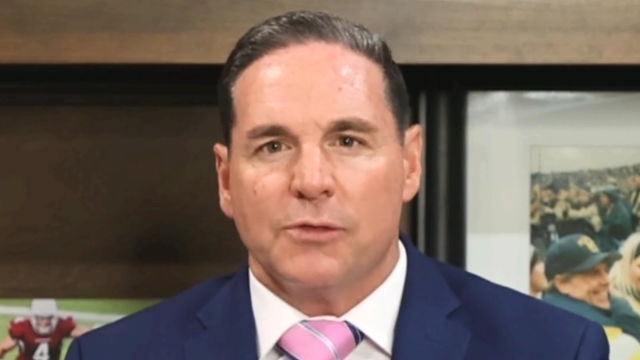
All right, we've been watching health officials there discussing the passengers from the hantavirus cruise. I want to bring in CBS News Medical Correspondent Dr. Celine Gounder. She is also the Editor-at-Large for Public Health at KFF Health News. So we've been watching this together. I want to talk about, first of all, the treatment here, the treatment process and the quarantine process here in its 42 days. So what's the plan for that 42-day time span? So when all of these 17 Americans arrived in Nebraska, the first step is to stratify their risk. So were they high-risk or low-risk? So high-risk, having essentially intimate contact, sleeping in the same bed, sharing maybe drinks or food, sharing towels. There's a whole list of things that they defined as intimate contact. People who had close, prolonged contact like that. And then they slightly widened, broadened the definition of high-risk to say, if you were within 6 feet for 15 minutes or more in an enclosed space, that also counts at high-risk. So they first triage them into high-risk versus low-risk. The low-risk people will be sent back home to quarantine at home with the supervision of a local health department, or if there's a facility locally where they would like to be quarantined. High-risk people will either quarantine in Nebraska or at home or at a local facility. And then during that period of time for the 42 days-- minimum of 42 days, that may change, they will be monitored for their temperatures, their symptoms. And I do think it's important to-- as part of the discussion they were just having there, the difference between quarantine and isolation. So the Biocontainment Unit is isolation. It means somebody has symptoms and is being treated and likely has hantavirus-- or may have hantavirus. Whereas quarantine, you have the exposure, but you don't necessarily have hantavirus. We're just keeping you apart from other people so that you do not transmit it if you were to develop hantavirus.

SHANELLE KAUL:
00:19:57

It's a precaution? It's a precaution.

VLADIMIR DUTHIERS:
00:19:58

So it's so great to have you here because you are an infectious disease expert. So people have PTSD from COVID, and people absorb the news. There's so much doomscrolling going on and people hear snippets. And so they hear "contagious," they hear "quarantine," and their mind immediately reverts back to the COVID pandemic. What would you say to people who are worried about something like that? I would compare this a bit to wildfire. So if you're a fire chief and you see a dry forest, no rain in days, 40-mile-per-hour winds, and a small fire that's going to turn into a wildfire. If you see a wet log and a stone fireplace, that's going to smolder a little bit, and then it's going to die out. And it's sort of a similar thing. Infectious disease specialists, kind of like the fire chief, have seen these things before. Based on what the science has been, are able to make predictions. Now what happened during COVID was you had a brand-new virus where we were all learning in real time. Hantavirus is different in that we have decades of experience with this. This is not infectious in the way COVID was or is. The incubation periods are different, and that's actually helpful for us in containing it. You have a head start before you start to see people become infectious and spread onto others, so we had the opportunity to contain this. And it's a virus that infects deep inside the lungs, not the upper respiratory tract. So it's much harder to cough or breathe out enough virus into the air for it to be airborne, for it to be transmissible easily to people that way. OK, that's really fascinating and, I think, important information for people to know. What's your assessment, Dr. Gounder, of how the CDC and how the NIH is handling this? I think we've gotten very lucky with the biology of hantavirus. This is not the next COVID, but it has been concerning to see how slow the response has been. We have what are called Health Alert Network notifications that get sent out. I'm on that email list. We did not get those until Friday afternoon, so well after this whole situation had started. And I think clinicians want information in advance so they can start to prepare. I am told by sources at the CDC that they were not even given permission to really start a response until late Wednesday night. They were waiting for permission from HHS to talk to the WHO. Remember, we've pulled out of WHO. We have yet to hear publicly from Secretary Kennedy, who has said we need to put an eight-year brake on infectious diseases. He's been a known vaccine skeptic, so I'm not sure how much his words would be comforting to the American public in this moment. We do not have a CDC Director. You have Dr. Jay Bhattacharya, who's the NIH Director, who's also wearing the CDC Director hat as an acting person. We are hearing that the FDA Commissioner may have been fired. You have vacancies across the top of the CDC. This is a moment of-- leadership vacuum matters. Public health is a lot like the military. It's a lot about the chain of command, and operations and logistics, and when you don't have people to lead that chain of command, that's what frightens me. And we have failed--

VLADIMIR DUTHIERS:
00:23:11

That's why you're saying "we're lucky." We're lucky.

VLADIMIR DUTHIERS:
00:23:14

Because-- We're lucky.

VLADIMIR DUTHIERS:
00:23:15

--with this vacuum, things are still proceeding the way that we hoped they would. Right. The frontline public health people, the clinicians, like you're seeing in Nebraska, they're doing what they need to be doing, and we're getting lucky. But if there were a COVID virus, would we respond in the right way in time to contain it? I don't know. And we have a huge multinational event coming up in the US, the World Cup. This is a huge event, millions of people, multiple cities. What if something happens during that period of time? Will we be prepared? I don't know.

VLADIMIR DUTHIERS:
00:23:50

Really quickly before we go, the people-- some people have died who were exposed with the hantavirus, but we didn't hear much about what their conditions, if they were old. I mean, so if you're a healthy person, does that mitigate the risk of dying? Or-- I'm just not sure how people die from this and why people are dying.

CELINE GOUNDER:
00:24:11

Yeah. Well, certainly if you're older, your risk is going to be higher.

VLADIMIR DUTHIERS:
00:24:15

But I'm older. So this is-- [LAUGHTER]

CELINE GOUNDER:
00:24:18

I mean, I used to not think that, but every time I'm like, OK, well, I'm in that category now. I may not look it, but you know. The way people die from hantavirus is heart failure and lung failure. And so actually, for those who are in quarantine or who've developed symptoms, have tested positive, being near a hospital that has ECMO, which is heart-lung bypass machines, that is critical because that-- when you get sick, you get sick really quickly, and you can die very quickly, and that is the only thing in those situations that can save you. And so that is part of the logistics here of making sure if people go home to quarantine, that they have that available to them there.

VLADIMIR DUTHIERS:
00:24:58

Wow. All right. Dr. Celine Gounder, always great to have you. Thank you, friend, appreciate it.

SHANELLE KAUL:
00:25:02

Thank you so much.

View CBS News In
CBS News App Open
Chrome Safari Continue