LINDSEY REISER:
00:01:04
Vice President JD Vance had been meeting with service members at Fort Campbell military base when the shooting happened. He had this message for the troops. It's a somber reminder that soldiers, whether they're active duty, reserve or National Guard, our soldiers are the sword and the shield of the United States of America. And as a person who goes into work every single day in that building and knows that there are a lot of people who wear the uniform of the United States Army, let me just say very personally-- thank them for what they're doing. We're grateful to them.
LINDSEY REISER:
00:01:41
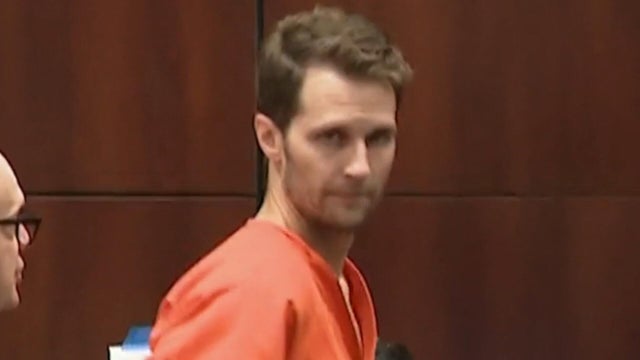
CBS News senior coordinating producer of crime and public safety Anna Schecter joins us now. Thank you for being here. What do we know about how the shooting played out? Do we have any details on the suspect? Well, the way it played out was the suspect opened fire when they were not expecting a threat. So I'm told this was a targeted, intentional attack designed to go after those federal law enforcement agents who have been on the streets of DC over the last couple of months. Now, the suspect is in the hospital, has been in custody in the hospital for several hours at this point. He has been questioned. Law enforcement sources tell me they believe they have pinned down his identification. So expect more in the coming minutes and hours on that. We do expect a presser tonight. Hopefully we will hear a little bit about motive at that presser because investigators have been pushing to pin that down, of course, in a horrific shooting like this. We still have not gotten confirmation on the condition of the two troops, but very grave. We heard 15 shots were fired thereabouts, initiated by the suspect. And then there was return fire. He was hit, was taken to the hospital. And that's still where we stand at this hour. How does this being an ambush-style attack impact the way law enforcement investigate? Well, it speaks to motive. If this individual was targeting law enforcement, what kind of ideology was influencing him? Was he influenced online by other people who were pushing him, egging him on to do that? That is going to affect how they might go about trying this case? Are there co-conspirators? There is a system that kicks in at this point, and they want to gather as much information and suck all that information up as quickly as possible so that they can build a case because the suspect survived and hopefully will survive. How will this impact security in DC? Well, DC is generally thought of as a very secure place, but we have to have this balance between personal liberty and security. And the reality is that a lone-wolf actor is virtually impossible to stop because a weapon can be concealed. There aren't metal detectors on every street corner. In fact, just in May, we saw a shooting across the street from the FBI Washington field office. Two Israeli Embassy employees were walking out of a Jewish Museum and were shot point blank. And so this can happen. That was six months ago. Here we have yet another one. And it's following this trend that my team has been tracking of law enforcement targeted in these attacks. Well, we also know that the Secretary of Defense Pete Hegseth has ordered 500 additional National Guard troops to Washington, DC, in the wake of this. Anna Schecter, thank you so much. CBS News chief White House correspondent Nancy Cordes joins us now. Nancy, you're in West Palm Beach, Florida, where the president is spending Thanksgiving. What are you hearing from the White House? Well, we know that it was the president who initially made that request of 500 additional National Guard members to begin patrolling the streets of DC. That request went through the secretary of defense, and it's now in the Army's hands to determine where these 500 Guard members will come from, which state, and how quickly they can get to the District of Columbia. They will join the roughly 2,200 to 2,500 members of the National Guard who are already deployed to Washington, DC, who have been there for four months now. They can't perform a traditional law enforcement role rule by law. And so while many of them are armed, they are there more as a show of force. You see them all around the city, particularly in the downtown and tourist areas. They'll be walking in groups of three or four. Sometimes they're picking up trash. And now the president says he wants to see more of them on the streets after this incident.
LINDSEY REISER:
00:05:41
Remind us why they're in the capital in the first place? Because the president said that DC was crime ridden and that he wanted to change that and that he thought he could by deploying members of the National Guard. That was this summer. DC was kind of a test case for something that he has now been looking to implement in other cities around the country like Chicago, like Memphis, like Charlotte. And DC was first. And the city has been pushing back on that ever since, arguing that their violent crime rate was already declining even before President Trump called up the Guard, arguing that he had taken this deployment too far. And just this week, Lindsey, a federal judge, agreed with DC that the administration probably had overstepped its bounds and ordered the administration to begin to remove those troops from the streets. Although, the judge did give the White House a grace period, knowing that they would likely appeal, which they have. And so that is the legal situation the administration is facing. And it creates this very unusual situation now where the president is trying to order up more National Guard troops, even as a federal judge is telling him that he has to send the ones that are already in Washington, DC, who come from more than half a dozen states home to where they came from.
LINDSEY REISER:
00:07:07
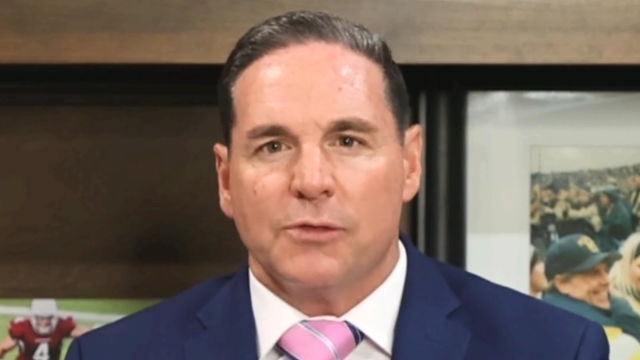
All right. Nancy Cordes, thank you. I want to bring in Kirk Burkhalter. He is a former NYPD detective and a criminal law professor at New York Law School. Thank you for being here. What is law enforcement doing to try and determine a motive? Well, the primary way to determine that would be, first of all, questioning the suspect. So there are certain issues here given the suspect is still alive and so forth, and they want to question him. Miranda kicks in, and the suspect has the right to remain silent, as we all now from watching television, and to have an attorney accompany him while he's being questioned. So it depends whether or not the suspect will waive those rights. The suspect additionally, like most of us nowadays, has an extensive social media footprint, an extensive web presence, and lives somewhere. And I guarantee that law enforcement will ascertain where he lives, and they will execute search warrants to search his home and all those other things, the aforementioned, to determine if he has any associations or belongs to any groups or has associated with anyone who in any way was involved with this incident. Or perhaps he's even just expressed this to other folks. So there's a lot of digging for law enforcement to do to determine the motivation for this particular act. I warn that we may not know this for a few days definitively. Anna alluded to this, but according to the National Fraternal Order of Police, there have been 58 ambush-style attacks on law enforcement officers this year. These attacks have resulted in 78 officers shot, 19 of whom were killed. What is the current threat level against law enforcement? Well, the threat level for these types of attacks, to be quite honest, is always rather high. When I was a police officer in New York, I worked in a precinct, and my father worked there 15 years prior to me. And he worked with two officers who were assassinated in the late '60s. We had two officers assassinated in that very precinct a couple of years ago. So this is always an issue. It's always fairly high. One can only imagine that this has to be connected somehow with the deployment of National Guard forces, generally speaking, around the country. But that's complete speculation. But broadly speaking, this is always a concern for law enforcement. Whether that threat level will extend to all police officers, we don't know, but certainly they will be put on alert nationally.
LINDSEY REISER:
00:09:38
Kirk Burkhalter, thank you.