DONALD TRUMP:
00:01:44
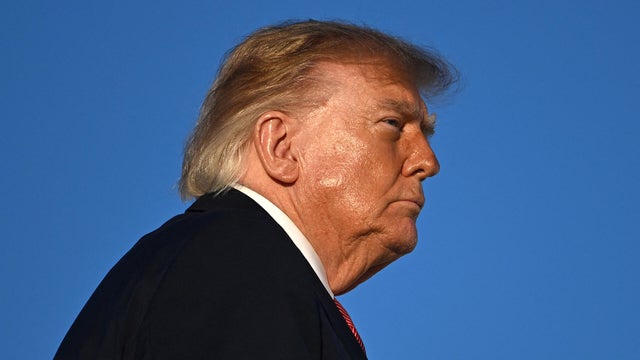
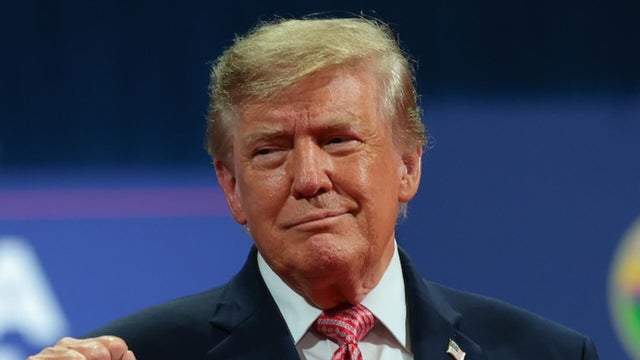
This partnership of Venezuela with the United States of America, a country that everybody wants to be involved with because of what we were able to do and accomplish, will make the people of Venezuela rich, independent, and safe. And it will also make the many, many people from Venezuela that are living in the United States extremely happy. They suffered. They suffered. So much was taken from them. They're not going to suffer anymore.
LINDSEY REISER:
00:02:16
We have team coverage for you. We begin with Ed O'Keefe and Margaret Brennan in our Washington Bureau. Ed, what else do we know about this operation, and how did the president justify these actions to the American people? Well, the president once again saying today that Maduro, given this 25-page indictment that was unsealed a little while ago by the Justice Department, is a dangerous drug dealer and someone who needed to be removed from power. You've heard the Trump administration today also make the point that there were elections held in Venezuela in recent years, and Maduro had, in essence, been flouting the results of them, which essentially voted 70% for the opposition to the Maduro regime. What's different, though, now, of course, is the fact that the president announced the US intends to occupy or, in essence, run Venezuela. He suggested at one point during his lengthy press conference it could be for up to a year, but he failed to provide any real concrete details on who exactly is running the country, how, under what authority, in consultation with which Venezuelans. What would a transition look like? Does the United States play a role in picking that leader, or will it be up to the Venezuelan people? And, in essence, unearthed a whole new suite of questions that will be asked by the American public, by lawmakers here in Washington about the extent of US involvement now in that country. What began this morning as a dramatic and unexpected capturing of Maduro, with plans to send him to New York to face federal charges, now becomes a much larger geopolitical issue for a president already managing a suite of challenges, whether it's the situation in the Middle East, the war in Ukraine, and now this fresh military action and apparent occupation of a country in the Western hemisphere.
LINDSEY REISER:
00:03:57
Margaret, what is your latest reporting and analysis on the operation?
MARGARET BRENNAN:
00:04:01
Well, Lindsey, I've been calling sources, and I have to tell you, there is just confusion as to what the president laid out there, because this is changing of a leader by military force, but it is not changing of a regime, because one of the things you heard President Trump say in that extraordinary press conference was that the United States would help run Venezuela-- he talked about for almost a year-- with the help of oil companies. But he said the person running the country would be Delcy Rodríguez, who was appointed and picked by Nicolas Maduro himself and that she would be sworn in to run the country. The United States also left in place someone who is in that indictment Ed held up for you, the interior minister, the Astato Cabello. There is actually a multimillion dollar price on his head. He is wanted in that Southern District of New York as well. Also, the defense minister left in place. So if this is regime change, it was only partially done. And you heard President Trump somewhat link to that in thought by saying there's a second wave of military action that could take place, but it wasn't needed today. It seems to be that he was indicating that they will let the Maduro regime stay without Maduro himself running it if they behave, whatever that means, for a period of time. Now, that also is a contradiction of the United States policy, which was to recognize the outcome of the last democratic election, which was won by the opposition party. And you may remember the name María Corina Machado. She just won the Nobel Peace Prize. She has been lauded by the Trump administration. She was one of the very first phone calls that Secretary of State Marco Rubio made when he was sworn into office. It is her party that won that last election, according to the United States and Western countries. And Donald Trump, the president of the United States, didn't say that today. He said Nicolas Maduro's number two is running the joint. So there is a contradiction here in terms of maybe a partial regime change up. We also are looking at perhaps a way that the president could de-escalate from this building military campaign that he has been carrying out over so many months. You heard him referred to all of the wealth in Venezuela. And, indeed, it is not just oil wealth, although Venezuela has the world's largest proven crude oil reserves. It also has tremendous mineral wealth, critical minerals. It has cobalt. It has other things. And the drug cartels have been involved in some of this trade. The administration in this country has great interest in some of these assets there. So Venezuela is of great interest to the United States, also to China, some of their top diplomats in the country just yesterday, and notably, Delcy Rodríguez, the woman who the president of the United States says was just sworn in as the next leader of Venezuela, was speaking to the Russians earlier today. So it is not yet clear in this chessboard where these pieces are moving around, if this is a finished operation or not. It could be that the Trump administration is hoping that that second wave comes not through US military force but through action on the streets. But the president of the United States seemed to throw the Venezuelan opposition leader under the bus when he said she does not currently have the support to lead the country. That is what he indicated in that press conference. Pretty extraordinary. And, Ed, the president did say that he felt as though Maduro and his wife were expecting something, even though this was a surprise in the dead of night, because they were trying to get into a safe space. There was a lot of opposition. What else? Can you take us into the details? And also, it was interesting that the president had said he had spoken to Maduro as recently as this week, essentially telling him to step down. Well, he confirmed that he spoke with him again this week. And, Margaret, I think you reported it was late November, right, was the last time that they had spoken. So there had been a handful of conversations between these two in the last several months. And we know there was engagement. And just as recently as Friday morning, Maduro was quoted as saying, I'd like to engage with the United States, but the secretary of state had said just before Christmas, sure, but we don't necessarily think anything would come of that, in essence, is what he suggested. We should point out now the president, at least through his Truth Social account, has begun posting a series of photos of himself and his top aides watching these operations last night. And there are several images of chairman of the Joint Chiefs of Staff, General Caine, in front of a laptop alongside the defense secretary, the CIA director, John Ratcliffe, Secretary of State Rubio. There's one of them. The president has been at Mar-a-Lago, his Florida home, since before Christmas and has been monitoring all of this from there. CBS News was first to report early this morning that he gave authority for this operation around Christmas time, and it could have happened that night had the US not instead engaged in an anti-ISIS operation in Nigeria. And for several days now, the military has been waiting for optimal weather conditions over Caracas to conduct this operation, where every night they were waiting for a go/no-go around 11:00 PM Eastern about whether or not to conduct this operation. And the go was finally given at some point late last evening, as the chairman and the president laid out. The reason now for optimal weather is understood because if it had been just airstrikes, well, you could have cut through clouds for that. But given the low flying required by several of the helicopters we've seen in video images from Caracas, it was obvious now that they needed better weather for it, and they appeared to have it last night. So several days of this, and with the president down there at Mar-a-Lago in recent days, meeting with the Israeli prime minister, meeting with the Ukrainian president. The vice president, however, arrived on Friday for meetings. There was a meeting with the US ambassador to China. So there were other things going on to cover for this. But in the background, the White House was always cognizant of the fact that the operation could happen at some point and obviously occurred overnight and, of course, coincidentally happens 36 years to the day since the US conducted a similar operation to extract Panama's Manuel Noriega to come to Miami and face similar drug-related charges in federal court. He was ultimately found guilty. He died a few years ago. And the argument about the legality of this, the constitutionality of it will continue already. And this is true. George HW Bush, when he conducted those operations, did not seek congressional authority and was able to carry it out. And eventually, Washington, in essence, moved on. We'll see if that's the case here, in part because he's been channeling plans for this for quite some Time. And the polling has shown amongst Democrats and Republicans nationwide grave opposition to this. Big questions not yet answered about why this was necessary. And I don't know, watching today, whether the president sufficiently answered those concerns of a skeptical American public and certainly of lawmakers of both parties.
MARGARET BRENNAN:
00:11:01
Well, he may have added to those-- sorry, if I can just jump in-- by using that phrase boots on the ground. He said, we're not afraid of boots on the ground. And, in fact, we had them there last night. And often, when we see in our polling, it's that question of, are there Americans at risk? That changes public perception of military action. And I just want to point out that there are Americans being held in captivity in Venezuelan prisons right now. The president did not address how they are doing. There are also Americans working there for oil giant Chevron. So there are Americans on the ground in Venezuela if things did turn the wrong way. I just want to point out here, Lindsey, as well, some context. The US military action here is being condemned by some of our allies, including France, other countries who are pointing out that this attack is essentially an act of war. It is in violation of international law. So there will be condemnation perhaps at the international level. This was a unilateral US action against a sovereign government, albeit a government that does have ties to cartels, albeit a government that is believed by most of the world to have stolen the last election. And so there will be scrutiny of what happens next and more questions to be raised. And you heard the president say he didn't tell Congress beforehand because he didn't think Congress would be able to keep it quiet. Right, afraid of leaks. All right, Margaret Brennan, Ed O'Keefe, we'll have to leave it there for now. Thank you.