Watch CBS News

Breaking down D.C. crime data

President Trump announced D.C. police will be placed under federal control and the National Guard will be deployed to crack down on crime. CBS News senior coordinating producer Anna Schecter breaks down what data shows about crime in Washington, D.C.

Aug 12, 2025 (05:29)

TRANSCRIPT FOR: “BREAKING DOWN D.C. CRIME DATA AMID TRUMP'S CRACKDOWN”

ANNA SCHECTER:
00:00:07

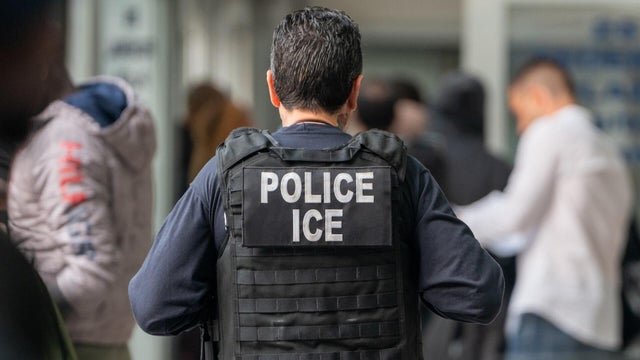
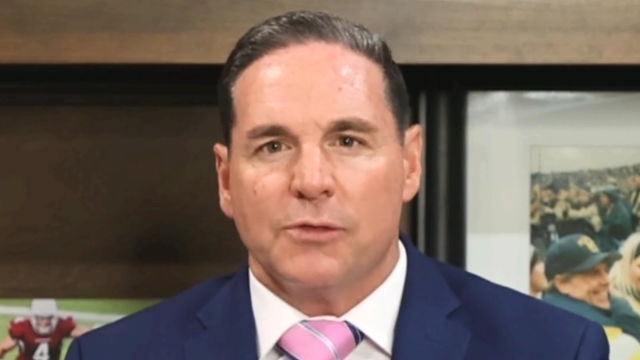
Good to be with you. Anna Schecter is here in Studio 55 to talk more about this. So on one hand, the president does have it within his authority to invoke this-- That's right. --rule, this law. On the other, what does the crime data show us? Well, it shows a sharp decline from 2023 in terms of violent crime. Even the carjackings that have plagued DC, those are coming down too. But what people supporting Trump and those people who were sort of standing behind him, what they're saying, what our sources are telling us is that 2023 was a real spike, so it's not really fair to just look at those numbers. They want to go back to prepandemic levels. But there is a lot of good news that we're seeing in this crime data, which is a falling of violent crime. Homicides are down. Even those juvenile arrests for carjackings, those are coming down, but that has been an issue that's plagued DC. But if we widen the aperture, even those really high numbers in 2023, if you look back to the early 1990s, violent crime was way higher. And so what Trump is saying is, well, you can't really look at just 2023. But if we really look at it, we saw a big spike and then a smaller spike in 2023, and everything's coming down. So sort of like a little bit of cognitive dissonance there. He described DC as a dystopia. I would say a lot of people that I've talked to who live there, that's not their experience of DC. But certainly for law enforcement, they tend to like this support to get out there and have the administration behind them doing their job. So it's really a mixed bag in terms of who I'm talking to. All right, so as you know, there have been hundreds of federal agents that have already been deployed to Washington, DC. Our Scott MacFarlane sat down with former Homeland Security official Tom Warrick, who says this move is kind of risky. I want to play it for you and our viewers, and then let's talk about it. Taking FBI agents off of organized-crime cases, terrorism, and other kinds of cases to do street patrols, that's not the best use of a highly trained FBI agent. You think this could be a distraction? It really looks as though a lot of this is performance. So that's the criticism, that there's some performative nature to all of this. But, importantly, the point that Mr. Warrick makes about federal agents, FBI, where there have already been cuts across all federal agencies taking their eye off the ball when it comes, for example, to antisemitic attacks, when it comes to tracking antisemitism in the United States, when it comes to just things that are critically important to keeping Americans across the country safe, like terrorism, that having these guys just on the street assisting law enforcement is not the best use of their time. I think he was spot on, both to call out the theatrical nature of the presser yesterday and also to raise an alarm bell that this could be diverting resources from those types of investigations that require a lot of painstaking work, and those federal agents have the training to do that. They don't necessarily have the training to do that day-to-day policing that they're now being asked to do, sort of walking the streets like a cop on the beat.

VLADIMIR DUTHIERS:
00:03:30

It's the Federal Bureau of Investigation. That's exactly right. They're not going into a CVS that's just been flash mobbed and stuff has been taken off the shelves. They're not going to know what to do in that situation. Exactly. But what I've seen Trump do is lean into this idea of having a presence on the street and that being a deterrent. So it kind of remains to be seen, is that actually going to work? What Mr. Warrick is saying is that's not really how it works, but let's see. I mean, we have 30 days now where Trump has authorized, essentially, to have the feds step in and lead the Metropolitan Police. So let's see what happens. I don't like to make predictions, but I don't know that violent crime or sort of organized criminal operations that do operate on the street every day, that just having federal agents out there is going to deter it. Maybe. I think we've got to wait and see. And it also sort of-- I heard the president yesterday during that press conference say that Pam Bondi is now in charge of all of this. You've got the attorney general of the United States of America who's responsible for prosecuting some of the biggest, most high-profile cases in the country now dealing directly with the commissioner of police in DC. Is that how it's going to work? In this heightened threat environment where we had issues-- we were bombing nuclear sites in Iran. So when we talk about those investigations you're talking about, there are very high-level investigations that are ongoing, that are very important, that require the attorney general to just spend time thinking about. It is sort of strange. We heard that the mayor of DC is going to try to meet with Pam Bondi, the attorney general of the United States. Let's see how this plays out. This looks a lot of resources from the federal government being diverted to a very small area. All right, Anna Schecter with some really good analysis for us this morning. Thank you, Anna. Appreciate it.

View CBS News In
CBS News App Open
Chrome Safari Continue