Trump says the U.S. will "run" Venezuela for now. What do we know about the plans?
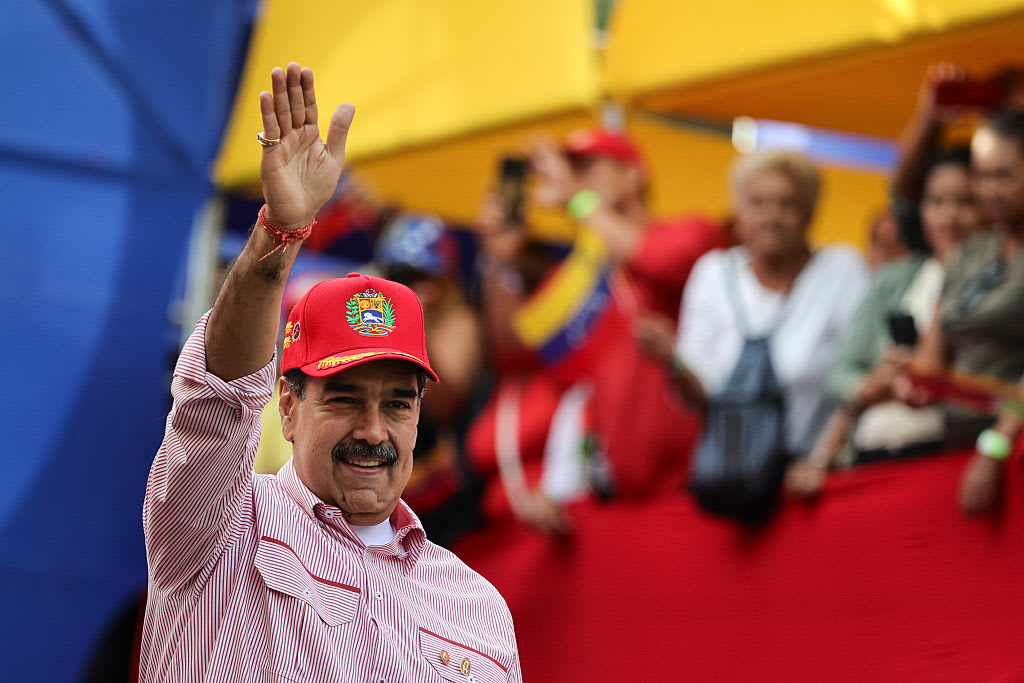
Washington — President Trump's announcement Saturday that the United States will "run" Venezuela after the U.S. captured Venezuelan President Nicolás Maduro and his wife is raising new questions about the extent of U.S. involvement in the South American country.
Mr. Trump did not offer many details about his administration's plans for the U.S. role in Venezuela as he spoke about the overnight mission from his South Florida estate, Mar-a-Lago. The president had announced on social media hours earlier that Maduro and his wife, Cilia Flores, were "captured and flown out of the country." Officials told CBS News that the operation was carried out by the U.S. Army's Delta Force, an elite special operations unit.
Maduro and his wife were brought to the U.S. to face criminal charges stemming from what prosecutors have alleged is their participation in a conspiracy to commit narco-terrorism and to import "thousands of tons" of cocaine to the U.S. Maduro and his wife arrived at Stewart Airport just north of New York City on Saturday afternoon, hours after their capture.
With Maduro's ouster, it's unclear who is in charge in Venezuela or could lead the nation in the future. Mr. Trump said it would be "very tough" for Venezuelan opposition leader María Corina Machado to take over because she "doesn't have the support within or the respect within the country."
The president said Secretary of State Marco Rubio also had a conversation with Venezuelan Vice President Delcy Rodríguez, who Mr. Trump said has been "sworn in" and is "essentially willing to do what we think is necessary to make Venezuela great again."
But in remarks on state television, Rodriguez said Maduro is the "only president of Venezuela" and demanded his release. She was later granted full presidential power by the Venezuelan supreme court on Saturday and recognized by the military as the country's acting leader on Sunday.
Venezuela held its last presidential election in July 2024, but election authorities did not provide detailed vote counts, and the U.S. and many European countries rejected Maduro's claim of victory. The U.S., under the Biden administration, recognized opposition candidate Edmundo González as the president-elect. González fled into exile in Spain in September 2024 after a warrant was issued for his arrest.
Trump says U.S. will "run it properly," but provides few details
Mr. Trump said the U.S. is "going to run the country" until there is a "safe, proper and judicious transition" in power in Venezuela.
"We can't take a chance that somebody else takes over Venezuela that doesn't have the good of the Venezuelan people in mind. We've had decades of that. We're not going to let that happen," the president said. "We're there now. And what people don't understand, but they understand as I say this, we're there now, but we're going to stay until such time as the proper transition can take place."
He did not provide any additional details about how the U.S. would oversee Venezuela, under what authority, or whether the U.S. would play a role in picking a new leader.
Mr. Trump did indicate that top administration officials — including Rubio and Defense Secretary Pete Hegseth, who appeared alongside Mr. Trump on Saturday — would work with a "team" working with the Venezuelan people. He did not, however, say who would be included in that group.
When asked about plans to run the country, Rubio on Sunday signaled on "Face the Nation with Margaret Brennan that the U.S. doesn't plan to directly govern Venezuela, but would influence its policy by, among other things, enforcing an "oil quarantine."
"That's the sort of control the president is pointing to when he says that," Rubio said. "We continue with that quarantine, and we expect to see that there will be changes, not just in the way the oil industry is run for the benefit of the people, but also so that they stop the drug trafficking, so that we no longer have these gang problems, so that they kick the FARC and the ELN out, and that they no longer cozy up to Hezbollah and Iran in our own hemisphere."
Rubio said people have an "obsession" over whether the U.S. will occupy Venezuela with "boots [on the ground] and this or that," adding Mr. Trump would not rule that out, "even though that's not what you're seeing right now. What you're seeing right now is an oil quarantine that allows us to exert tremendous leverage over what happens next."
In an interview Saturday evening, "CBS Evening News" anchor Tony Dokoupil asked Defense Secretary Pete Hegseth what the U.S. running Venezuela may look like.
"It means we set the terms. President Trump sets the terms. And ultimately, he'll decide what the iterations are of that," Hegseth said. "But, it means the drugs stop flowing, it means the oil that was taken from us is returned, ultimately, and that criminals are not sent to the United States."
Role of the oil industry
When asked about a timeframe for U.S. involvement, Mr. Trump said Venezuela's "whole infrastructure" has to be rebuilt. He focused in particular on the prospect of rebuilding the oil industry in a nation with one of the world's largest petroleum reserves.
"If we just left, it [Venezuela] has zero chance of ever coming back," he said. "We'll run it properly. We'll run it professionally. We'll have the greatest oil companies in the world going in and invest billions and billions of dollars and take out money, use that money in Venezuela, and the biggest beneficiary is going to be the people of Venezuela."
When asked about the blockade of sanctioned oil from Venezuela imposed by Mr. Trump last month, Hegseth said no oil is going in or out of the country, and the U.S. military is still poised in the Caribbean.
"[Mr. Trump] said it clearly at the podium today. We are going to get American companies in there. We are going to get investment in there. These oil depots have been operating at 20% capacity. That's going to change," Hegseth told CBS News.
Maduro regime figures remain in place
While the Trump administration has removed Maduro, top members of his government remain in place. Among them are Rodríguez, who Maduro selected as his vice president, as well as Defense Minister Vladimir Padrino and Interior Minister Diosdado Cabello.
Cabello is named as a defendant alongside Maduro and his wife in the superseding indictment returned by a federal grand jury in New York as allegedly part of the narco-terrorism conspiracy.
Seemingly in a warning to Venezuelan officials who remain in place, Mr. Trump said the U.S. is "ready to stage a second and much larger attack" in Venezuela if needed, and that his administration is "not afraid of boots on the ground."
Rubio expanded on the comment on Sunday on "Face the Nation with Margaret Brennan," saying that Mr. Trump "does not feel like he is going to publicly, you know, rule out options that are available for the United States, even though that's not what you're seeing right now."
Asked to clarify that there is no plan for U.S. occupation of Venezuela, Rubio said "the president always retains optionality on anything and on all of these matters."
When asked about other indicted members of Maduro's Cabinet, Rubio responded, "So you wanted us to land in five other military bases?"
"The number one person on the list was the guy who claimed to be the president of the country that he was not, and he was arrested along with his wife, who was also indicted," Rubio said, calling Maduro the "top target."
Asked whether the U.S. is working on a transition to install the leader, Rubio said, while he has "admiration for Edmundo" and opposition leader María Corina Machado, "There's the mission we are on right now."