Scientists Saving Rare Fish From Drought-Damaged River
STONEWALL COUNTY (CBS 11 NEWS) - In rural Stonewall County the summer's scorching heat has left its mark on the landscape.
"The drought right now is very severe," explained Kevin Mayes, an aquatic biologist with Texas Parks and Wildlife.
So severe, in fact, the upper Brazos River and its forks are drying up.
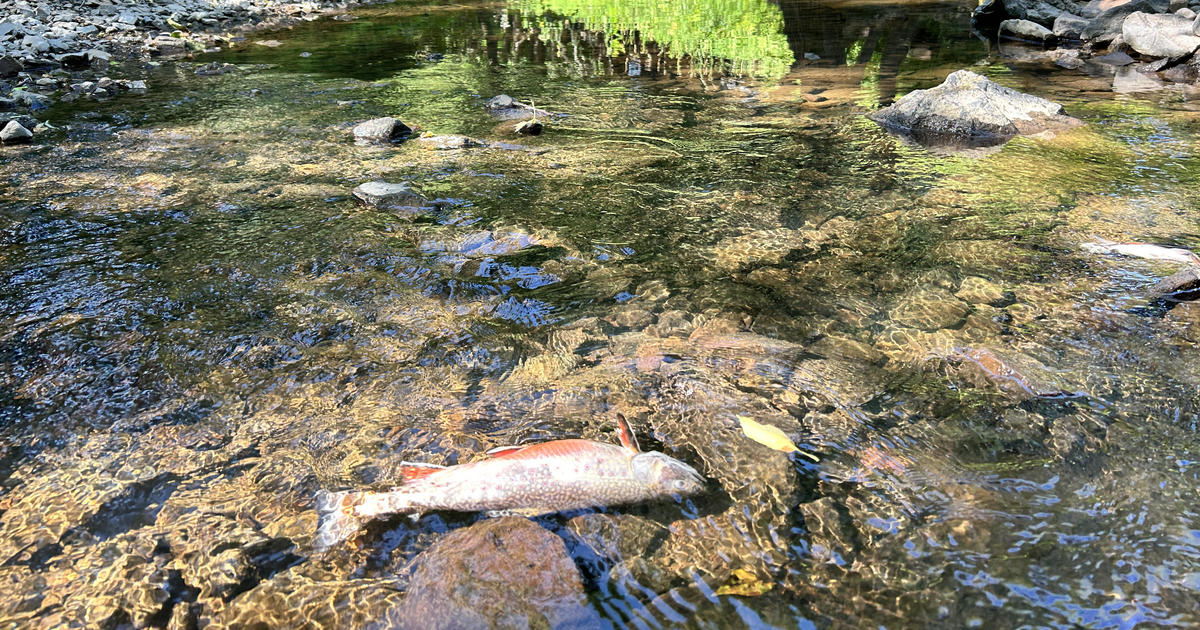
Only small pools of water remain.
In them are thousands of small fish found nowhere else in the world.
"They're a unique part of Texas' history, heritage; this is something Texas should be proud of," said Dr. Gene Wilde, a professor of fish ecology at Texas Tech. "They're small fish, about two inches in length, but they're pretty remarkable."
Dr. Wilde has spent years studying the two species of fish, the smalleye shiner and the sharpnose shiner.
"These fish live two years. They spawn from May to September, but this year because of the drought there's been no flowing water so they didn't spawn," he explained. "If there were no rain sufficient to wet the river next year they would likely die out."
He and his team of researchers are now trying to rescue the fish holed up in dwindling pools of the river.
"We're collecting fish out of these isolated pools on the river," he said. "If we weren't doing something like this, if this river goes dry or doesn't run next year, we lose a unique species of fish."
The group used a large net and buckets to capture the fish. They'll be kept at a fish hatchery near Possum Kingdom Lake where they can reproduce. Researchers hope to restock the river once the drought ends.
"This is the first time we've had to collect these shiners because of a drought condition," said Mayes. "Because of this drought, and no rain, and extreme heat, that's the primary reasons this part of the river is dry."
About 88 percent of Texas is in the worst stage of drought, according to the U.S. Drought Monitor map released Thursday. Texas just finished its driest 11 months on record and is in its worst single-year drought ever. It also had the hottest June through August on record in the U.S.
By saving these two species, researchers aren't just preventing their extinction, they're protecting the river as a whole.
"Even though we're out here trying to save them, they are the most abundant fish in this river," Wilde said. "They are the food base and essential to the ecosystem of this river."
The group will also transfer some of the fish to the lower Brazos River so the species will hopefully begin to flourish there as well.
(Copyright 2011 CBS Local Media. The Associated Press contributed to this report.)