Texas Supreme Court blocks order that resumed abortions
The Texas Supreme Court has blocked a lower court order that gave some abortion clinics confidence to resume performing abortions.
Watch CBS News
The Texas Supreme Court has blocked a lower court order that gave some abortion clinics confidence to resume performing abortions.
Pharmacies are seeing a surge in demand for "Plan B" pills after the recent Supreme Court ruling overturning Roe v. Wade. In response, some are limiting the number of pills that each customer can purchase. Sharon Terlep, a reporter for The Wall Street Journal, joins "CBS News Mornings" to explain.
Demand for abortion services in states that don't restrict access to the procedure has increased significantly. Illinois is expected to get as many as 30,000 additional patients this year, the CEO of Planned Parenthood of Illinois said. Adriana Diaz has more.
Judges in Louisiana and Utah temporarily blocked enforcement of trigger-law bans on abortion following the Supreme Courts' overturning of Roe v. Wade.
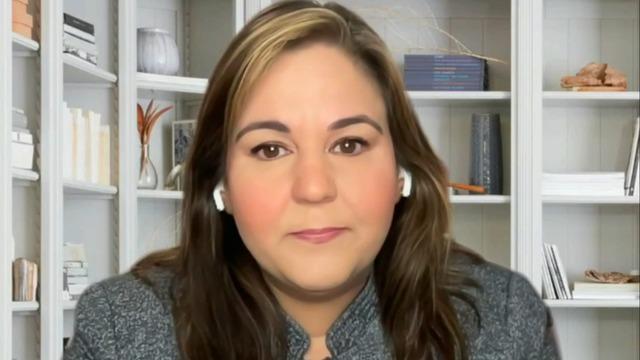
Yamelsie Rodriguez, president and CEO of Planned Parenthood of the St. Louis Region and Southwest Missouri, spoke with Vladimir Duthiers and Lana Zak on CBS News about how losing access to abortion in Missouri is affecting people and what people should do if their state no longer allows them to get an abortion.
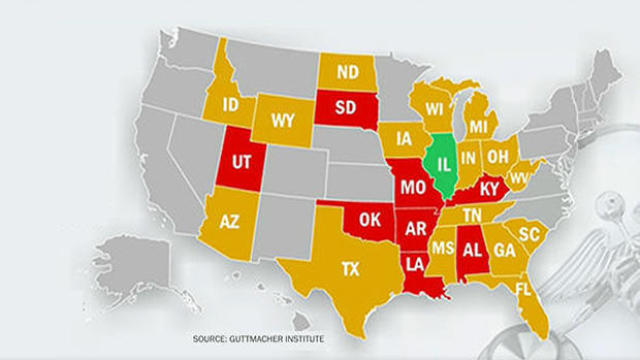
Illinois, which has strong abortion protections in place, is surrounded by states that have or could have restrictions on the procedure.
States where abortion is legal are expected to see a surge in abortions due to Roe v. Wade being struck down. Washington state is expecting a nearly 400% increase in abortion patients, with about 60% of those coming from border state Idaho. Jamie Yuccas shares more.
"CBS Evening News" host Norah O'Donnell sits down with Alexis McGill Johnson, president of Planned Parenthood, to discuss the overturning of Roe v. Wade and how it will affect those seeking abortions in states where it will become illegal.
Many across the U.S. are now preparing for abortion access being restricted — or banned altogether — in their states.