Massive emergency oil release fails to stem investor fears
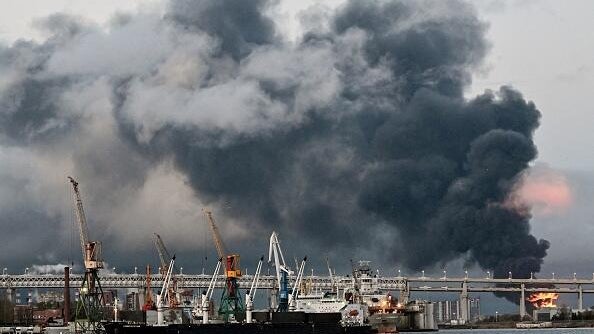
Attacks on shipping traffic and energy infrastructure in the Persian Gulf temporarily pushed oil back above $100 a barrel, stoking investor fears.
Watch CBS News
Attacks on shipping traffic and energy infrastructure in the Persian Gulf temporarily pushed oil back above $100 a barrel, stoking investor fears.
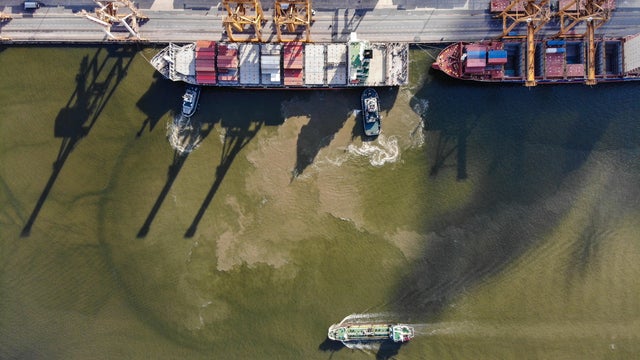
Energy prices won't ease up until the Strait of Hormuz is secure, experts say. Here's what it will take to get the oil flowing again.

White House press secretary Karoline Leavitt says President Trump has been briefed about the attack at a Michigan synagogue. CBS News White House reporter Willie James Inman has more.

Security staff killed an attacker who drove a car into a Detroit-area synagogue on Thursday, Michigan authorities said. Officials say one member of the security staff was injured, but no other victims were hurt. CBS News Detroit reports.

Michigan law enforcement members responded Thursday to reports of an active shooter at Temple Israel in West Bloomfield, a suburb of Detroit. Lindsey Reiser anchors CBS News' coverage.

The Oakland County Sheriff's Office says authorities responded Thursday to an "active shooter situation" at Temple Israel in West Bloomfield, Michigan. Tony Dokoupil anchors CBS News' special report.

Iran's new supreme leader, Ayatollah Mojtaba Khamenei, released his first public statement through Iranian state media on Thursday. CBS News' Anna Schecter, Aaron Navarro and Charlie D'Agata have the latest on the statement and the war in Iran.

More details are emerging about the dozens of U.S. service members injured during an Iranian attack at a Kuwait tactical operations center. CBS News' Eleanor Watson reports.

President Trump is addressing concerns among investors and Americans over the rising prices of oil and gas. This comes as Iran's new supreme leader, Mojtaba Khamenei, issues his first public statement since taking over the regime. CBS News' Weijia Jiang reports.

Dr. Majed Al Ansari, an adviser to the Qatari prime minister and spokesperson for the country's Ministry of Foreign Affairs, warned that unchecked escalation will lead to "catastrophic results for the region and beyond" as Iran strikes its Gulf neighbors. Ansari told CBS News' Imtiaz Tyab that Qatar is a peaceful country, but "if we have attacks coming into our country, we will defend ourselves."

Iranian state media say the country's new Supreme Leader Mojtaba Khamenei, in his first public statement, has called for the Strait of Hormuz to remain shut.

CBS News journalists offer international perspectives from leaders and citizens in a number of countries as the Iran war nears the two-week mark.

Iran's new Supreme Leader Mojtaba Khamenei issued a statement and demanded that all U.S. bases in the region be closed immediately. Khamenei also threatened to continue operations to keep the Strait of Hormuz closed. CBS News' Ramy Inocencio reports.

An FBI memo that emerged warning of potential Iranian attacks in California is adding to the rising tensions over the war in the Middle East. CBS News' Nicole Sganga reports.

Hackers with ties to Iran have claimed responsibility for a cyberattack at Stryker, a medical device company based in the U.S. Stryker says the attack disrupted global Microsoft networks, but it believes the situation is "contained." CBS News contributor Chris Krebs explains what the attack could mean about escalation in the Iran war and how the partial government shutdown is making an impact.

The strike appears to have come without warning, and shows that Iran and its proxies can target ships even without mining the Strait of Hormuz.

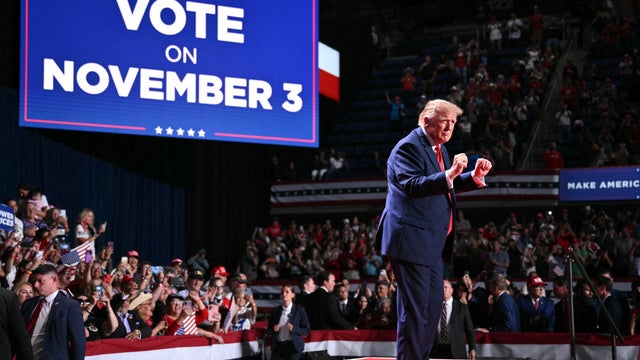
Rising gas prices and concerns about the war in Iran are complicating President Trump's economic message as he rallies Americans ahead of the 2026 midterm elections. CBS News' Weijia Jiang reports.

Officials are downplaying an FBI memo warning about potential Iranian attacks on California. CBS News' Nicole Sganga has more.

Iran has attacked multiple tankers near its territory and is striking oil facilities in nearby countries. Meanwhile, U.S. and Israeli warplanes and missiles are continuing to hit targets across Iran. In its first week alone, the Iran war has cost more than $11 billion, according to lawmakers briefed by the Pentagon. Charlie D'Agata has the latest.

Reports of Iran bombarding Dubai, Kuwait, Oman and Saudi Arabia emerged on Day 13 of the war. The regime also targeted ships and alarmed investors around the world who remain concerned about soaring oil prices. CBS News' Charlie D'Agata reports.

President Trump on Wednesday made stops in Ohio and Kentucky to promote his economic agenda ahead of this year's midterm elections. He also addressed the Iran war and rising gas prices. The cost of oil has already had an impact on some businesses. Weijia Jiang reports.

The FBI sent a bulletin to local police in California suggesting Iran may try to attack the U.S. Law enforcement and security officials say there is no immediate threat. Nicole Sganga reports.

Iran attacked several Persian Gulf states overnight as the war entered Day 13. This comes as the price of oil continues to rise despite the U.S. announcing measures to tap into its reserves. Also, more details are emerging about the American forces injured in Kuwait and Israel's mission against Iran. CBS News' Natalie Brand and Ramy Inocencio report, and Daniel Shapiro, the former U.S. ambassador to Israel, joins with more insight.

The U.S. and the International Energy Agency are releasing oil from their reserves as the average price of a gallon of gas in the U.S. has jumped 15% since the Iran war began. Kelly O'Grady explains if the moves will have any impact on the cost of gas.

Whether the Iran war-linked leap in the price of gas will give a shot in the arm to EV sales will depend on a variety of factors, experts say, so the answer isn't clear-cut.