Fossil overlooked for 100 years ID'd as new dinosaur species
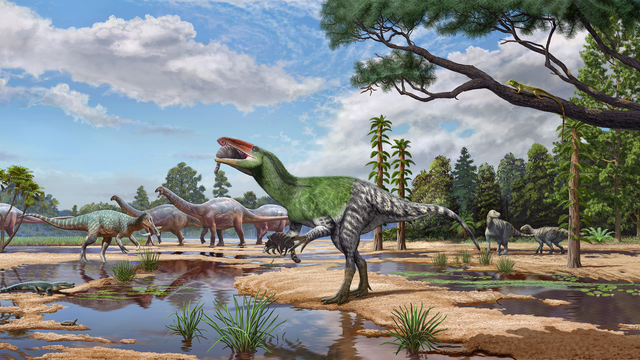
A fossil discovered 100 years ago in the U.K. has been identified as a previously unknown cousin of the T. rex, and it "definitely would have chased us."
Watch CBS News
A fossil discovered 100 years ago in the U.K. has been identified as a previously unknown cousin of the T. rex, and it "definitely would have chased us."
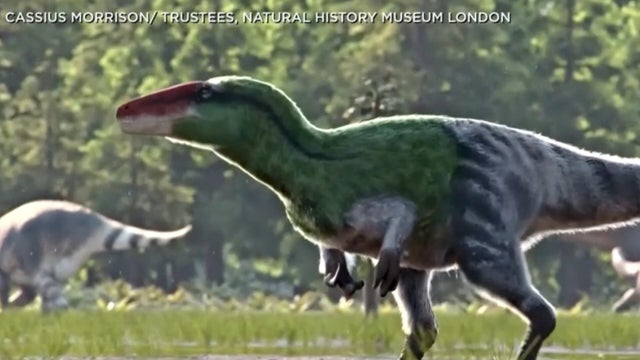
Scientists in the U.K. have discovered a new dinosaur species, the Invictibellatrix amberina, a two-legged carnivore that was a cousin of the Tyrannosaurus rex. The fossil that led to the discovery sat in a drawer at the Natural History Museum in London for nearly 100 years, having first been obtained by the vaunted institution in 1924.
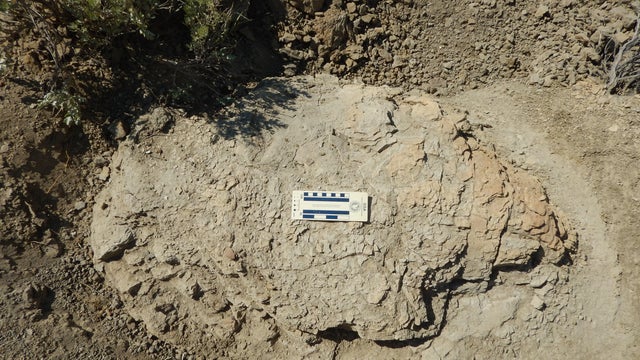
Paleontologists have identified the first known trackway made by a full-grown Tyrannosaurus rex, and the discovery was made in the North Dakota badlands.

The T. rex, nicknamed Gus, is a towering figure, standing at 12.5 feet fall and roughly 38 feet long.
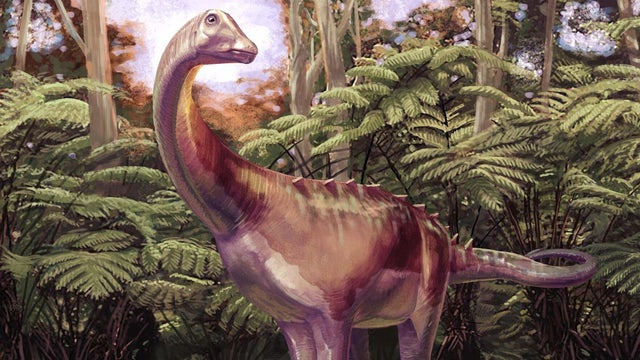
Dinosaur fossils are rare to find in Antarctica because of the unforgiving ice caps. But millions of years ago, the region was populated by lush forests.
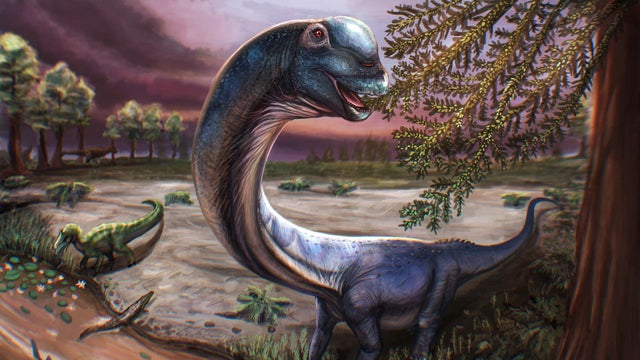
The long-necked herbivore is the largest ever found in Southeast Asia, researchers said.

Scientists in the Netherlands unveiled a new type of leather handbag derived from dinosaur DNA as a way to demonstrate the value of lab-grown leather.
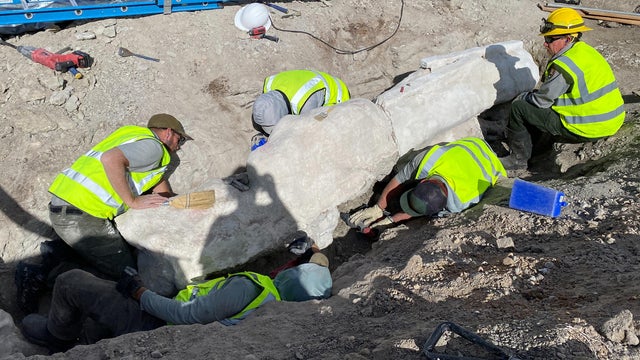
The Dinosaur National Monument, which is located on the border between Colorado and Utah, was last excavated in 1924.

Most of the footprints are elongated and made by bipeds. The best-preserved ones bear traces of at least four toes.

Paleontologists have discovered and documented 16,600 footprints left by theropods, the dinosaur group that includes the Tyrannosaurus rex.

The discovery "rewrites decades of research on Earth's most famous predator," the study's co-author said.
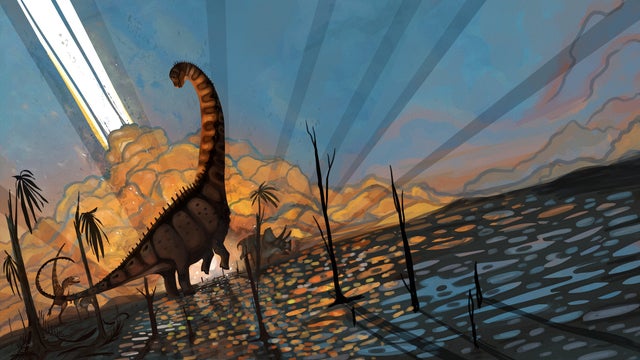
Scientists have long debated whether dinosaurs were in decline before an asteroid smacked the Earth 66 million years ago, causing mass extinction.
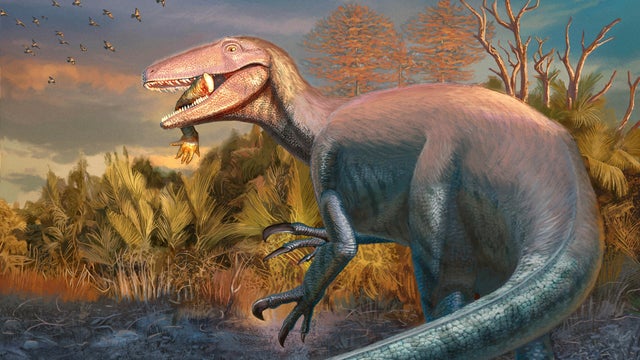
The new find was possibly 23 feet long and hailed from a mysterious group of dinosaurs called megaraptorans.
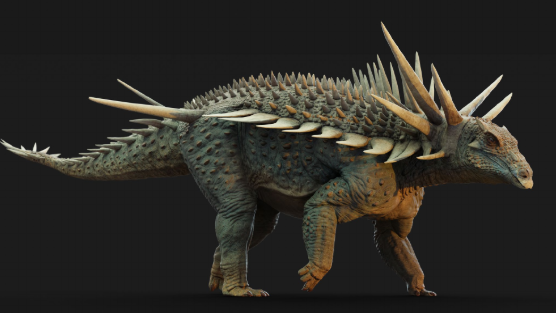
"Spicomellus is one of the strangest dinosaurs that we've ever discovered," the project's leader said.

Apex predators, like the Tyrannosaurus rex, eventually arose from smaller-bodied tyrannosauroid dinosaurs called Khankhuuluu mongoliensis, the study's researchers said.

Scientists at a Dallas-based biotech company has unveiled a genetically engineered woolly mouse that they hope is a step toward eventually bringing back the wooly mammoth. The results haven't yet been published or vetted by independent scientists.

A paleontologist hailed the discovery as "truly an unusual find," adding it helped explain the relationships in the prehistoric food chain.

It is hoped the discovery will provide clues about how dinosaurs interacted, as well as their size and the speeds at which they moved.

Footprints dating back 120 million years show where dinosaurs were able to cross between land that's now part of two different continents.

The buyer intends to keep the fossil in the U.S., and is exploring making it available for public display.

The dinosaur fossil of a Stegosaurus nicknamed Apex fetched 10 times its estimate at a Sotheby's auction on Wednesday.
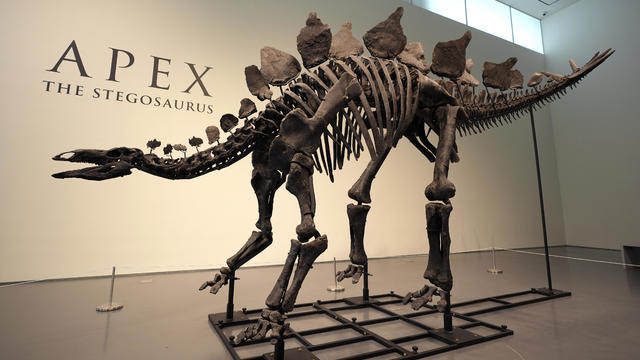
The largest stegosaurus skeleton ever found is expected to fetch millions of dollars at auction in New York next week, likely fueling objections from paleontologists.

A 150 million-year-old dinosaur skeleton found in Wyoming is on display in Denmark – after briefly being lost in transit.