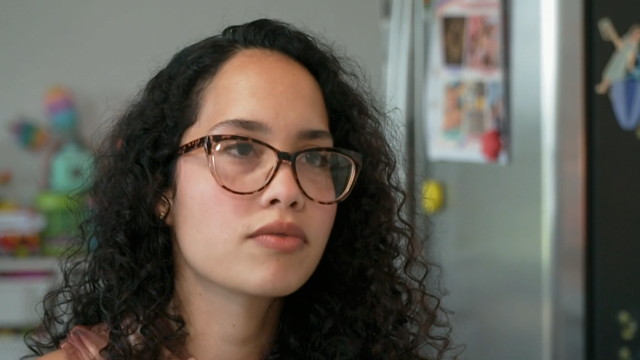
ChatGPT introduces new parental controls amid concerns over teen safety
ChatGPT has rolled out a series of new parental controls that can limit how teenagers interact with the chatbot, OpenAI announced Monday.
Watch CBS News
ChatGPT has rolled out a series of new parental controls that can limit how teenagers interact with the chatbot, OpenAI announced Monday.

Parents can now connect their ChatGPT accounts to their children's and get notifications when sensitive issues are raised. Jo Ling Kent has more from Los Angeles.

Chipmaker Nvidia said it would invest up to $100 billion in OpenAI, the developer of ChatGPT, as part of a strategic partnership. CBS MoneyWatch correspondent Kelly O'Grady has more details.

Beginning this year, all Ohio State University freshmen are required to take a course in generative AI and multiple workshops aimed at real-world applications to help them master the technology. Meg Oliver reports.
The families of teens who died by suicide spoke at a Senate hearing on the harms posed by AI chatbots.
Court documents allege ChatGPT encouraged a 16-year-old boy to plan a "beautiful suicide" and keep it a secret from his loved ones.

As the number of energy-intensive data centers needed to power Big Tech rises in the U.S., so are Americans' electricity bills. Ari Peskoe, director of the Electricity Law Initiative at Harvard Law School, joins "The Takeout" to discuss.

From a new version of ChatGPT to a behind-the-scenes look at a massive Stargate project in Texas, these are the biggest headlines in the tech and AI world this week.

OpenAI executives say GPT‑5 is more accurate than its predecessor and excels at coding.

OpenAI on Thursday launched GPT-5, the latest generation of the artificial intelligence technology that powers ChatGPT. OpenAI said the new model is faster and smarter than ever before. Technology journalist Jacob Ward joins CBS News to discuss the release.

OpenAI has released its newest version of ChatGPT, GPT-5, which it calls its "smartest, fastest and most useful model yet." CBS News senior business and technology correspondent Jo Ling Kent has more.

A new study says ChatGPT told researchers posing as teenagers how to get alcohol and drugs, suggested ways to hide eating disorders and more after initially providing warnings. The researchers were pretending to be 13 years old. CBS News senior business and technology correspondent Jo Ling Kent explains.

Humans beat AI programs made by Google and OpenAI at an international mathematics competition, but the technology shows some "very exciting" progress.
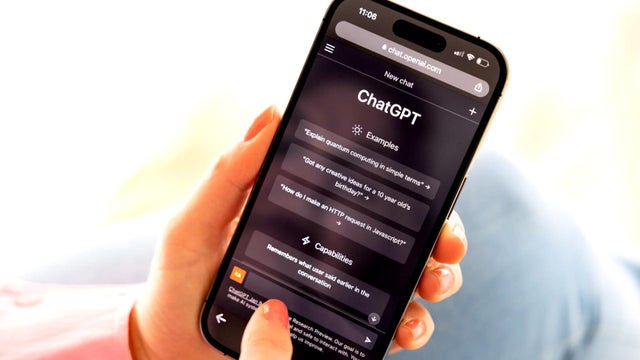
A 30-year-old man on the autism spectrum was hospitalized after ChatGPT appeared to validate his delusions, according to a new Wall Street Journal report. OpenAI says it's working to reduce unintentional harm. For more, "CBS Mornings Plus" is joined by Nick Thompson, CEO of The Atlantic, which has a content-licensing partnership with OpenAI.

Karen Hao joins "CBS Evening News Plus" to discuss her new book, "Empire of AI," which delves into the rise of Sam Altman and OpenAI, the company behind ChatGPT.

A new MIT study finds that over-reliance on artificial intelligence can reduce brain activity and critical cognitive functions. Nataliya Kosmyna, lead author of the study, joins CBS News to break down the findings.

In a few short years, artificial intelligence has exploded into the mainstream, but it hasn't done so alone. AI companies use bots known as "AI crawlers" to comb through websites looking for data to train their AI models, usually without permission. Stephanie Cohen, chief strategy officer at Cloudflare, joins "The Daily Report" to discuss

Anthropic didn't violate U.S. copyright law when the AI company used millions of legally purchased books to train its chatbot, judge rules.

There is a slight catch to keep in mind: These new iOS26 features will be reserved for iPhone 11 and later models.

ChatGPT maker OpenAI suffered an outage that took its generative AI tools down on Tuesday.

We asked three experts what fresh college graduates can do to prepare as artificial intelligence changes how Americans work. Here's what they said.

A new study found artificial intelligence could out-argue humans by making its points feel personal. The AI didn't just know what to say -- it knew how to sound like it understood you. "CBS Evening News" co-anchor John Dickerson explains the significance.

As many students face criticism and punishment for using artificial intelligence tools like ChatGPT for assignments, new reporting shows that many instructors are increasingly using those same programs. New York Times technology reporter Kashmir Hill joins the "Daily Report" to discuss her piece on the topic.

A growing number of college students are reportedly turning to artificial intelligence for help with their coursework, but researchers are warning about the potential negative effects of relying on the technology. James Walsh, features writer for New York Magazine's Intelligencer, spoke with students and professors about the use of AI and joins CBS News to unpack his reporting.

The Icahn School of Medicine at Mount Sinai in New York City has become the first in the nation to incorporate AI into its doctor training program.