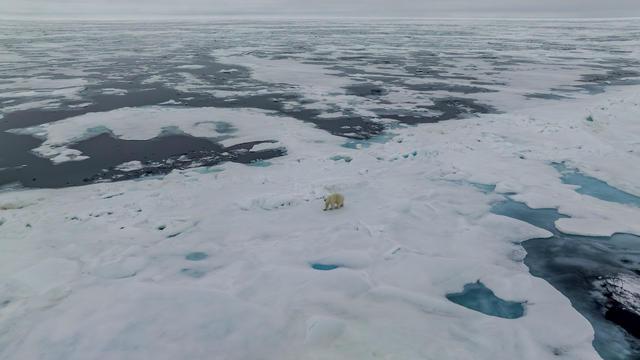
Could the Arctic be ice-free within a decade? What the latest science says
Researchers predict that the first ice-free day will take place sometime between the 2020s and 2030s.
Watch CBS News
Researchers predict that the first ice-free day will take place sometime between the 2020s and 2030s.

Several clinical trials are underway to see if semaglutide, the active ingredient in weight loss drugs like Wegovy and Ozempic, can also help treat alcohol addiction.

The tomb marks the area where an elite chief was buried along with possibly dozens of people who died to accompany him to the "beyond," officials said.

Emily Calandrelli, familiar to audiences from her TikToks, Netflix show "Emily's Wonder Lab" and collaborations with Bill Nye, introduces her new book "Stay Curious and Keep Exploring: Next Level."

One fresco depicts a scene from the Greek myth of Phrixus and his twin sister Helle, as they fled their stepmother on a magical ram with the Golden Fleece.

Katalin Karikó and Drew Weissman, whose research enabled the development of the Pfizer and Moderna COVID vaccines, were named Nobel Prize-winners; their breakthrough may reshape vaccine treatment for a host of diseases.

More than one million people died just in the U.S. as a result of the COVID-19 pandemic that broke out in 2020. But a scientific miracle – a vaccine released later that same year – saved countless lives. Last year Katalin Karikó and Drew Weissman, the two scientists whose research in messenger RNA (or mRNA) and immunology enabled the development of the Pfizer and Moderna COVID vaccines, were named Nobel Prize-winners. "Sunday Morning" contributor Kelefa Sanneh talks with Weissman and Karikó about their partnership, and the unusual trajectories of their lives that led to a breakthrough that may reshape vaccine treatment for a host of diseases.

Astronomers have discovered three small moons at the farthest planets of our solar system — two circling Neptune and one around Uranus.
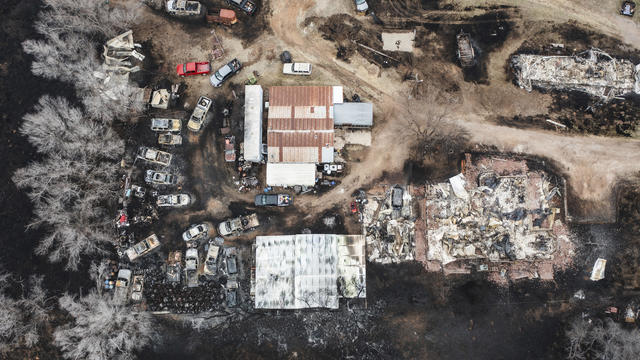
The state is battling its "largest and most destructive fire in Texas history," and the blaze is only 15% contained, officials said.

A researcher says sea animals used to get stuck in the maze of wharfs in Osaka Bay every few years, but as the sea warms, they're being led off track.