1,300-pound NASA satellite re-enters Earth's atmosphere after 14 years in space
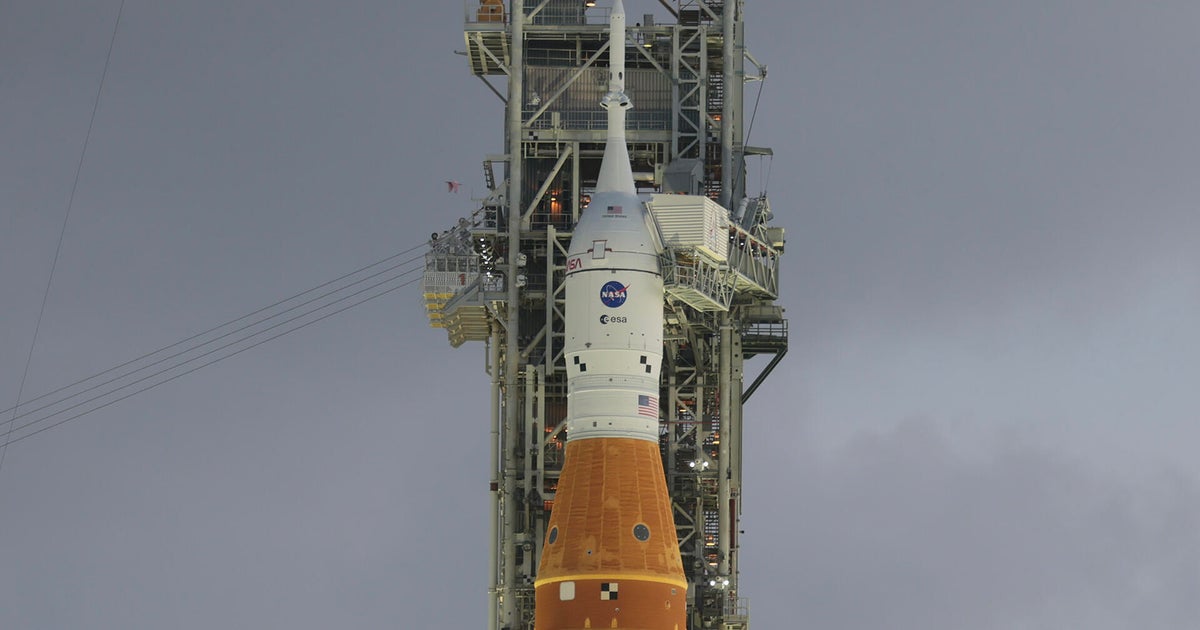
A 1,300-pound NASA probe re-entered Earth's atmosphere on Wednesday, nearly 14 years after it was launched.
The U.S. Space Force confirmed the Van Allen Probe A, which was launched in August 2012, re-entered the atmosphere at 6:37 a.m. ET on Wednesday over the eastern Pacific Ocean region, NASA said in a statement.
NASA had previously projected the probe to re-enter Earth's atmosphere around 7:45 p.m. ET on Tuesday, citing the U.S. Space Force, but noted there was a 24-hour margin of uncertainty.
Most of the probe was expected to burn up as it re-entered the atmosphere, NASA said, although some components were expected to survive re-entry. There was a 1 in 4,200 chance of anyone on Earth being harmed, NASA said, noting that the risk is low.
The probe and a twin spacecraft, Van Allen Probe B, were sent to explore Earth's permanent radiation belts and determine how particles within them are gained and lost. The zones, known as the Van Allen belts, are rings of charged particles trapped by Earth's magnetic field, according to NASA. They shield the planet from cosmic radiation, solar storms and solar wind.
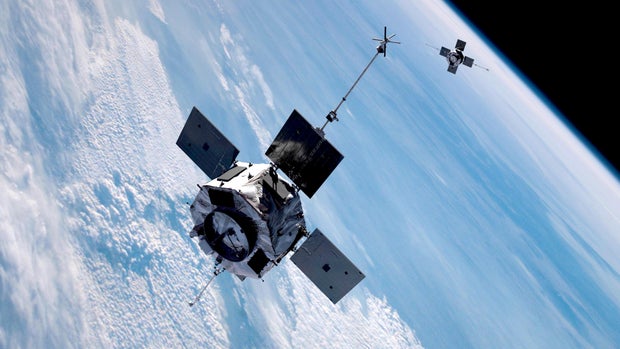
Their mission was supposed to last two years, but ended up going for nearly seven, NASA said. Most missions to the belts are short to minimize exposure to damaging radiation.
The mission ended in 2019, when the probes ran out of fuel and could no longer orient themselves toward the sun. An analysis by mission specialists found the probes would likely re-enter Earth's atmosphere in 2034, but the current active solar cycle has triggered intense space weather events and increased atmospheric drag on the spacecraft, pulling them in faster than expected.
The Van Allen probes were the first that were meant to spend a significant amount of time in the region, NASA said, and broke all records for spacecraft to function there.
The probes made a number of discoveries during their seven years in operation, NASA said. They collected the first data showing the existence of a third radiation belt that can form during times of intense solar activity, and their observations have been the subject of hundreds of publications, according to NASA.
Probe B is not expected to re-enter Earth's atmosphere until the 2030s.