Mortgage rates are nearing 7%. One house hunter says he's "despondent."
Thomas Louis and his wife have tried everything to clinch a deal to buy a home: offering above the asking price, waiving inspections, and considering properties that tick some, but not all, of their boxes. Three years and 15 offers later, they're still looking.
This year's sharp rise in mortgage rates, which are now approaching 7%, has only made their search more difficult. Louis, 34, told CBS News he feels "despondent" about the long struggle to find an affordable home.
"It still seems like we're trying to climb out of a hole somebody else is digging," said the Asbury Park, New Jersey, resident, who co-owns a graphic design studio with his wife.
The average 30-year fixed-rate mortgage rate reached 6.95% on Thursday, according to Freddie Mac, up from 6.76% the previous week and the highest since January 2025. Rates have climbed for 11 consecutive weeks as the Iran war fuels inflation, driving volatility in the bond market and influencing borrowing costs.
The spike in rates has put both sides of the market in a bind. Buyers must contend with higher costs, while sellers find fewer takers, forcing them to cut their asking price or take a home off the market.
Rising mortgage rates make it "harder for folks to be able to afford a house in an already challenging time," Matt Schulz, chief consumer finance analyst at LendingTree, told CBS News. "It's not a great thing for anybody."
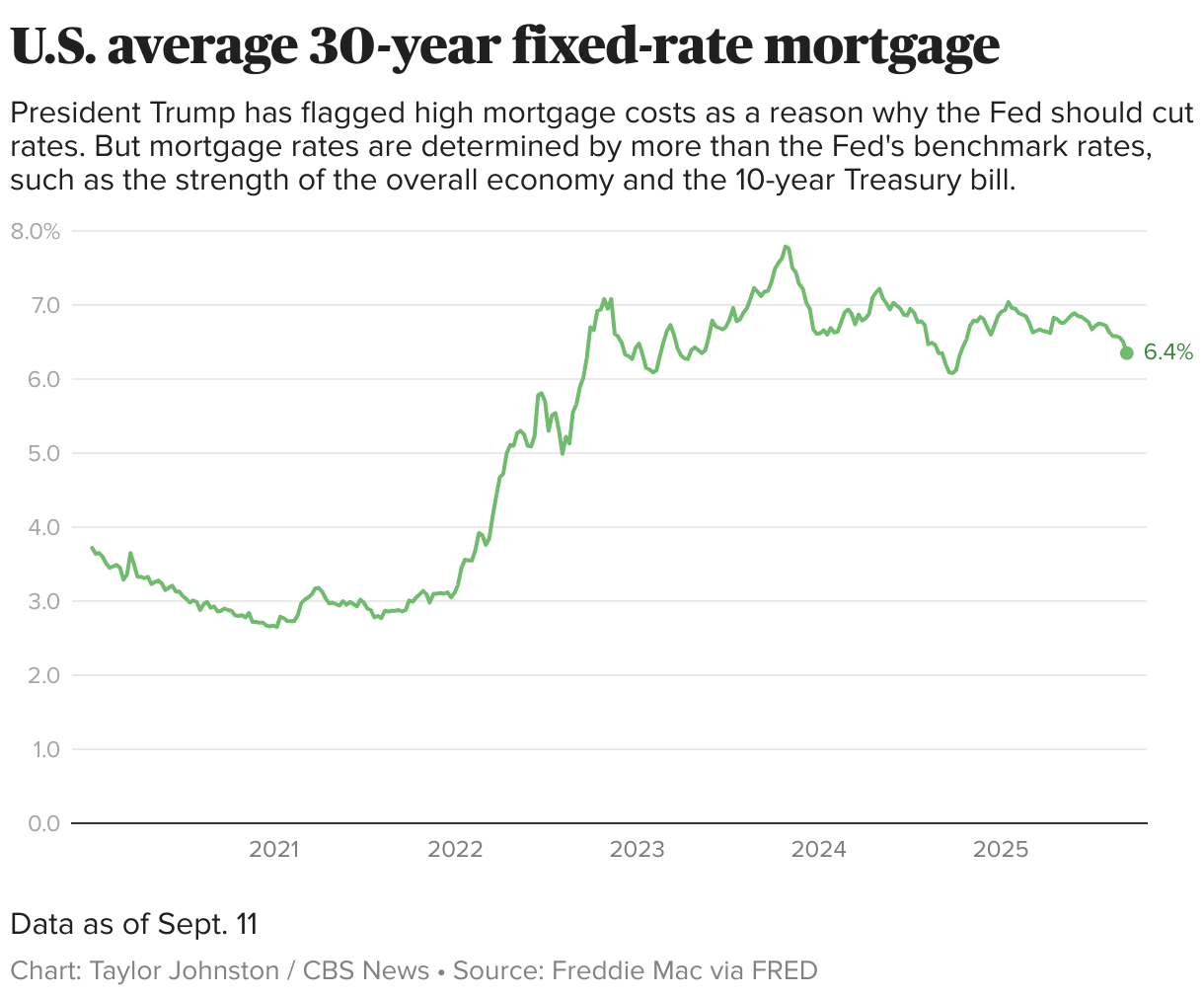
Mortgage rates are closely tied to the 10-year Treasury note, which earlier this week hit its highest level since 2007 amid growing investor concerns about inflation, heightened geopolitical tensions and soaring U.S. government debt.
According to Jake Krimmel, senior economist at Realtor.com, in recent years, about 80% of the weekly movement in the cost for a conventional 30-year loan has tracked changes in the 10-year Treasury yield. For most of 2026, the typical "spread" between the 10-year note and a 30-year mortgage has been 2%, he said.
"Mechanically, the Treasury yield is doing the lion's share of the work when it comes to changes in mortgage rates," Krimmel said in an email.
Mortgage rates rise as bond yields rip higher
Bond yields climbed ahead of the Federal Reserve's meeting on Wednesday, when the central bank raised interest rates by 0.25 percentage points for the first time in three years. Fed officials also signaled that they may raise rates again later this year, depending on inflation's path.
Some economists predict two additional quarter-point hikes this year at the Fed's scheduled policy meetings in October and December (no meeting is scheduled for November).
The Fed's benchmark rate — what banks charge each other for short-term loans — doesn't directly impact mortgage rates, but can still influence home loans by raising the cost of borrowing more broadly.
Krimmel said lenders were pricing in a Fed rate hike ahead of the meeting, which could have contributed to this week's spike in mortgage rates.
"On magnitude, I would estimate that of the [0.19%] jump in mortgage rates this week, a little less than half was probably due to changing expectations throughout the week on the Fed's rate hike, and a little more than half was due to other factors like oil prices going up and geopolitical uncertainty," he said.
Home sales slide
The housing market has been plagued for years by high prices and low supply, issues that lawmakers in Washington, D.C., have tried to tackle in part through bipartisan legislation passed earlier this year. But experts say even if new housing is built, it will take time for price pressures to ease.
According to an April Gallup poll, 25% of people without a home expect to purchase one in the next five years, down from nearly 50% in 2017.
As more people pull back, activity in the housing market has slowed. Data from the National Association of Realtors shows existing home sales have fallen for four consecutive months. In August, sales dipped 2% from the previous month to 3.98 million, the lowest since June 2025.
"Mortgage rates hovering around 7% continue to weigh on affordability and dampen borrower demand, particularly among prospective homebuyers," Bob Broeksmit, the president and CEO of the Mortgage Bankers Association, said in a statement.
The median price for a home in the U.S. was $374,819 in August, according to Zillow data, up 20% from 2021 and 80% from a decade ago.
"Almost untenable to stay"
Louis said he and his wife earn around $250,000 a year combined, more than double New Jersey's median household income of $103,556. They thought that would be enough to find a home in their price range of roughly $500,000. Prices in Monmouth and Ocean counties, the areas in the state they are focusing on, have eased slightly, he said.
Yet other obstacles also make it hard to find a home. Louis said lower prices have attracted more buyers to the market, fueling competition from people who can outbid them — sometimes with all-cash offers.
"It's actually almost getting worse because more people with more money are buying the houses cheaper because they're not worried about the rates," Louis said.
For now, Louis and his wife continue to focus their house hunting on New Jersey. But they have also considered leaving the state altogether, given how "crazy expensive" it is, he said.
"We both work as artists, and have some freedom and fun that way," Louis said. "But it's just becoming almost untenable to stay here."


