Elon Musk, a fierce Davos critic, tells World Economic Forum that robots will outnumber humans
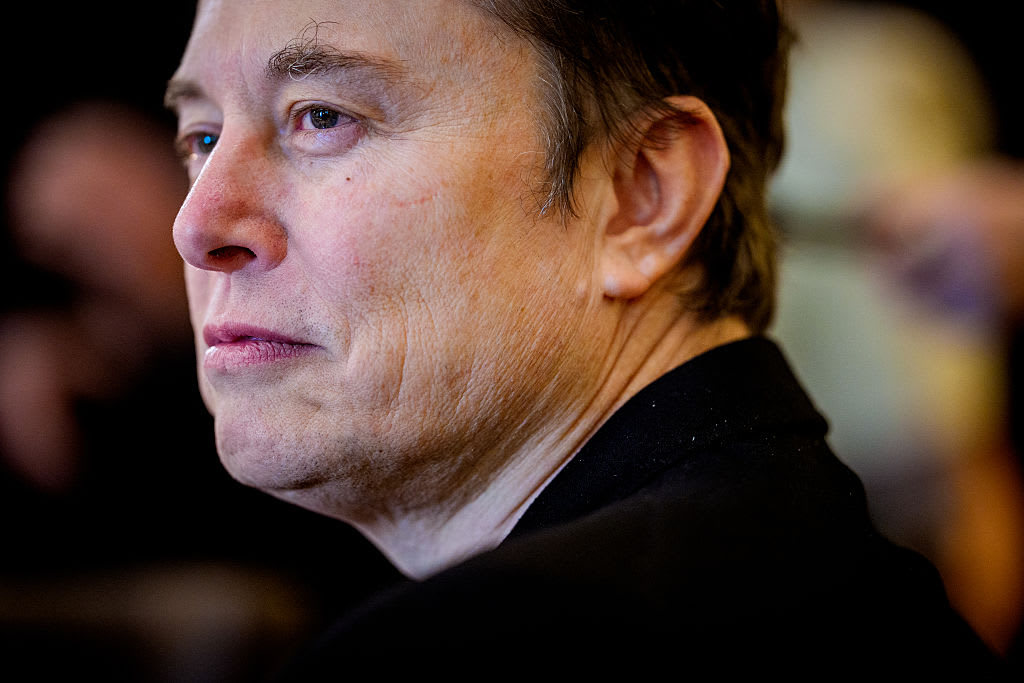
Elon Musk, a long-time critic of the World Economic Forum's annual event in Davos, Switzerland, appeared at the gathering for the first time on Thursday, where he predicted that robots will eventually outnumber humans.
Musk has previously dismissed the event, which this week is hosting multiple heads of state, business figures and others, including President Trump, President Emmanuel Macron of France and European Commission President Ursula von der Leyen.
In 2023, Musk criticized Davos as "increasingly becoming an unelected world government that the people never asked for and don't want." Musk, who last year led the Trump administration's Department of Government Efficiency, is the world's richest person, with a fortune valued at $677 billion, according to the Bloomberg Billionaires Index.
Asked about the goals of his companies, which include electric car maker Tesla and space exploration business SpaceX, Musk said that Tesla's mission now includes "sustainable abundance" through the development of robotics. Tesla is currently developing a humanoid robot, dubbed Optimus, as well as automated robotaxis.
"With robotics and AI, this is really the path to abundance for all," Musk told BlackRock CEO and WEF co-chair Larry Fink in a one-on-one interview. "People often talk about solving global poverty — how do we give everyone a very high standard of living? The only way to do this is AI and robotics."
Musk added that he envisions a day when robotics are "ubiquitous," which he said would unleash "an explosion in the global economy."
"My prediction is there will be more robots than people," he said, adding that humanoid robots could help provide elder care in a world where there aren't enough young people to take care of older citizens.
Optimus may hit the market in 2027
Asked by Fink how quickly robots might be more widely available, Musk said that Tesla's Optimus robots are currently performing "simple tasks in the factory."
"By the end of this year, I think they will be doing more complex tasks, and probably by the end of next year, I think we'd be selling humanoid robots to the public," Musk added. "That's when we are confident it'll have very high reliability — you can basically ask it to do anything you like."
The market for humanoid robotics is today valued at between $2 billion and $3 billion, according to Barclays analysts. But the investment bank expects the sector to expand to at least $40 billion by 2035, and perhaps by as much as $200 billion, as AI-powered robots enter labor-intensive sectors, such as manufacturing.
Musk also talked up the future of autonomous driving.
"I think self-driving cars is essentially a solved problem at this point. And Tesla has rolled out... robotaxis in a few cities and will be very widespread by the end of this year within the U.S.," he told Fink. "And then we hope to get supervised full self-driving approval in Europe, hopefully next month. And then, maybe a similar timing for China, hopefully."