Singapore held Alice Huang's passport for months, but got little help from U.S. on Nvidia chip probe, sources say

Singaporean authorities seized the passport of then-Megaspeed chief executive Alice Huang in June 2025 and held it for eight months, preventing her departure while trying to engage the U.S. government to support their investigation into advanced Nvidia chips possibly being shipped to China.
One source with knowledge of the matter told CBS News on Friday the Singaporean government received no meaningful help from Washington during the time she was in the Asian city-state. This source said officials in Washington were "not forthcoming" in response to Singapore's requests for help, and no substantive assistance has been provided to date.
Singapore's government confirmed in a statement this week that it reached out to both the U.S. Department of Justice and the FBI for assistance with its investigation.
Alice Huang is the suspected Chinese spy at the center of the extramarital affair scandal that toppled Nvidia founder Jensen Huang from the helm of the global tech giant he built over three decades.
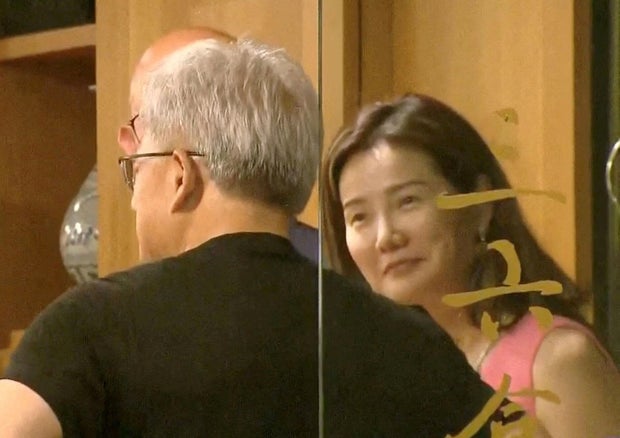
Since February 2025, Singaporean authorities have been investigating whether Alice Huang and Megaspeed worked with California-based Supermicro to ship the Silicon Valley firm's computer servers — equipped with advanced Nvidia chips — to China, the source told CBS News.
Alice Huang flew into Singapore in June 2025 for a voluntary interview with Singapore-based investigators from the U.S. Bureau of Industry and Security, according to the source.
The agency sits within the U.S. Department of Commerce and regulates the export of sensitive products on national security and economic grounds. The American authorities requested the interview, according to a Thursday statement by Singapore's Home Affairs Ministry, as part of a post-shipment verification check, a process used to determine whether imported products have reached their declared recipient.
Singaporean police also interviewed Huang on the same day as the U.S. officials, and made the decision to impound her passport.
The source said it was not known where Huang, a Chinese national, arrived in Singapore from in June 2025.
By February 2026, however, the Singapore Police Force had not charged Huang with any crime and had no option but to return her passport, the source told CBS News. She was barred from ever returning to Singapore, as authorities assessed that she had given "inaccurate information" to downplay her role at Megaspeed, as noted in the statement from the home ministry.
That statement was released four days after Jensen Huang admitted to having an affair with a woman who sources confirmed to CBS News was Alice Huang.
Singapore's investigation has focused on whether the then-Megaspeed CEO may have broken domestic law by lying about the details of purchases of computer servers from Supermicro, a San Jose-based technology company. The company's servers use Nvidia's advanced chips to run artificial intelligence software, data centers and cloud computing.
"The suspected domestic offenses pertained to potential false declarations in relation to the purchase of servers and other related offenses," Singapore's Home Affairs Ministry said in its statement this week.
Singaporean investigators have tried to determine the true ultimate destination of the Supermicro servers ordered by Megaspeed.
A second source familiar with the investigation told CBS News it is believed they may have been sent to Malaysia, but Singaporean investigators suspect "some or all" of them may then have been shipped onward to China. Megaspeed has denied any wrongdoing.
Singapore's home ministry attempted to contact Supermicro, but the U.S. company only "provided limited cooperation," according to the home ministry statement.
The New York Times reported Wednesday that Malaysia kept Nvidia's chips and installed them in its own data centers, but then rented use of those centers to China, rather than physically shipping any chips to China.
Malaysian Prime Minister Anwar Ibrahim said Friday that there was "no indication" any chips linked to the Nvidia-Megaspeed issue had been re-exported out of the country.
Beijing has dismissed the claims that Alice Huang is a Chinese spy as "groundless speculation" and "nothing more than an attempt to smear China." Asked Thursday about a Bloomberg report that she had returned to China, Foreign Ministry spokesperson Mao Ning told reporters: "I do not have information on what you mentioned."
Since 2022, the U.S. has restricted the export of Nvidia's most powerful chips to China over national security concerns as the world's two biggest economies race for dominance in the AI sector.
The Singapore police first raised the issue with U.S. authorities in July 2025 to try to secure Supermicro's cooperation in revealing where its servers were ultimately ending up, repeating requests "on several occasions to the U.S. Department of Justice and the Federal Bureau of Investigation," according to the Home Affairs Ministry's Thursday statement.
The second source confirmed to CBS News that Washington did not meaningfully engage with the requests for help on the investigation and said it "would be useful to know" what Supermicro declared about its exports to fulfill orders by Megaspeed, whether those products were registered as being bound for Malaysia, and whether some or all of those products were actually "bound for somewhere else," such as China.
The Singapore home ministry said in its statement that six other individuals linked to Megaspeed, in addition to Alice Huang, are wanted for questioning, but none have been in the country since the government launched its investigation in February 2025.
"One is a Singaporean citizen and the rest are foreigners," said the first person familiar with the case.
Singapore has charged five other people in a wider fraud conspiracy case related to the suspected transfer of Nvidia chips, including one Chinese man charged on Friday. The case was launched at the same time as the probe into Alice Huang and Megaspeed, the first source told CBS News, but it is separate.
"Singapore is committed to upholding our reputation as a trusted and reliable business hub. We will not allow companies or individuals to misuse Singapore's business environment to engage in fraud or dishonest practices," the home ministry said in its statement, adding that it would "conduct its own investigations independently, in accordance with our laws and based on the evidence available. We will cooperate with foreign authorities where appropriate, and take firm enforcement action wherever the evidence warrants it."


