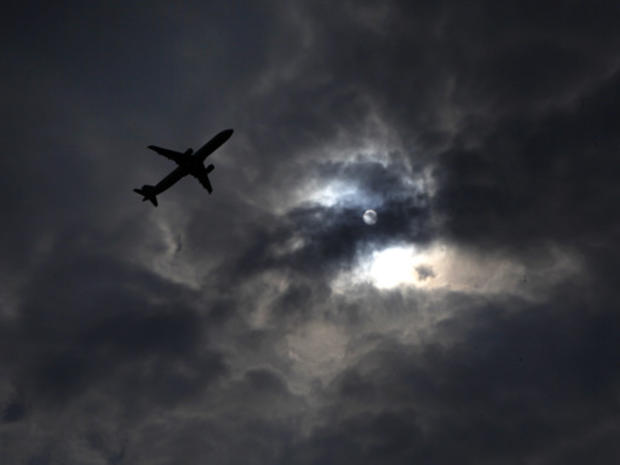
AP Photo/Michael Probst
An aircraft is seen after take off at the airport in Frankfurt, central Germany, Wednesday, April 21, 2010, when German air traffic control opened the airspace after it was closed for days due to the volcanic ash cloud that came from Iceland.
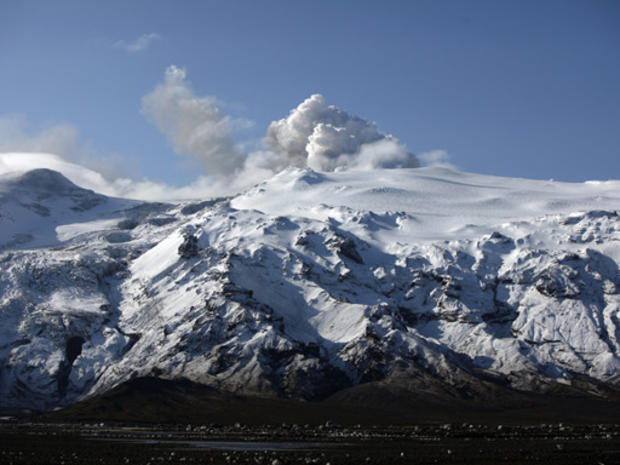
AP Photo/Carolyn Kaster
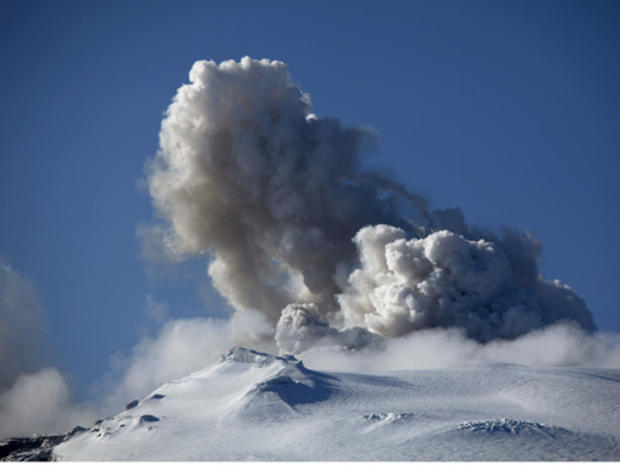
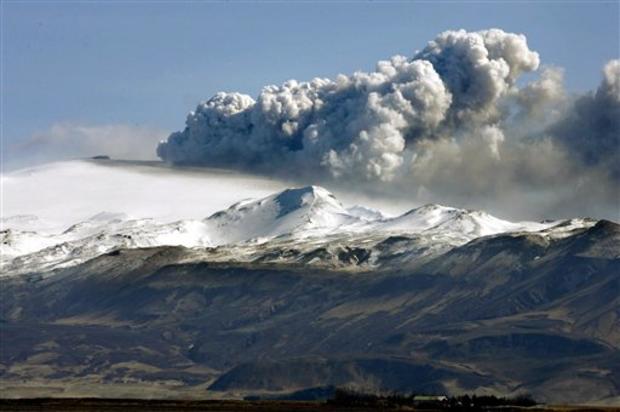
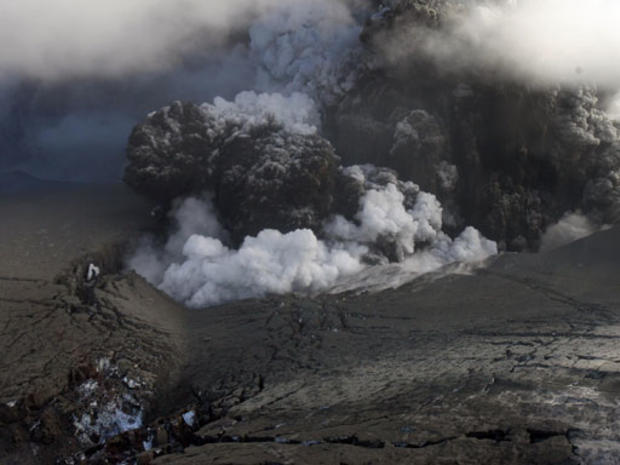
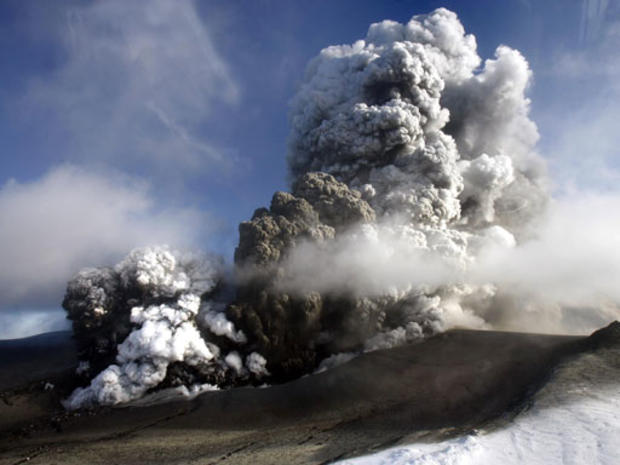
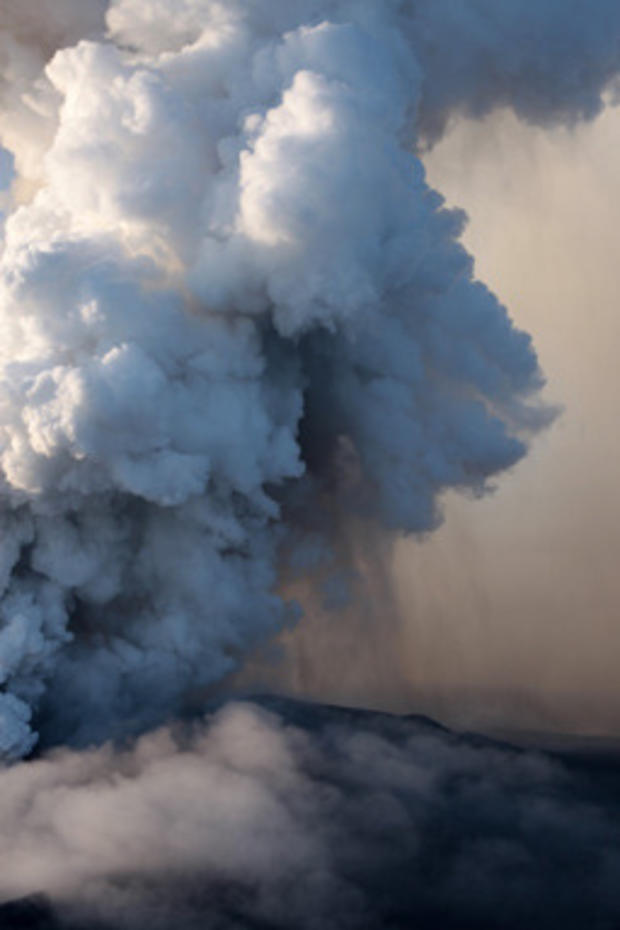
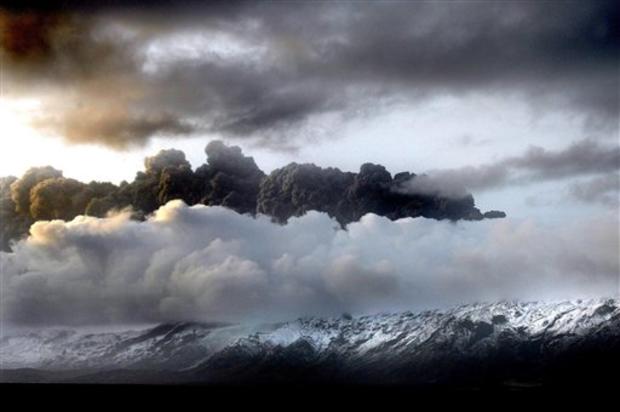
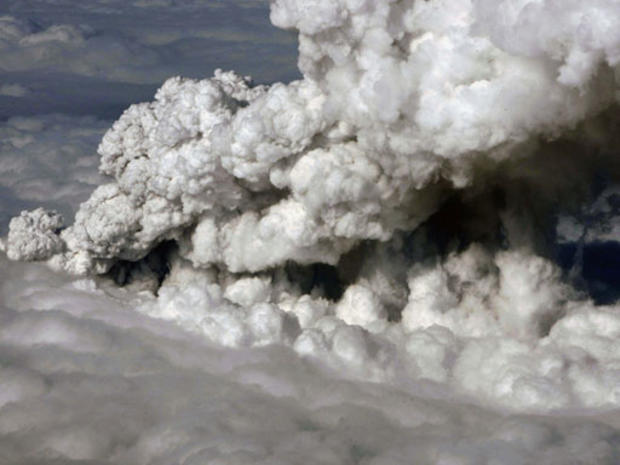
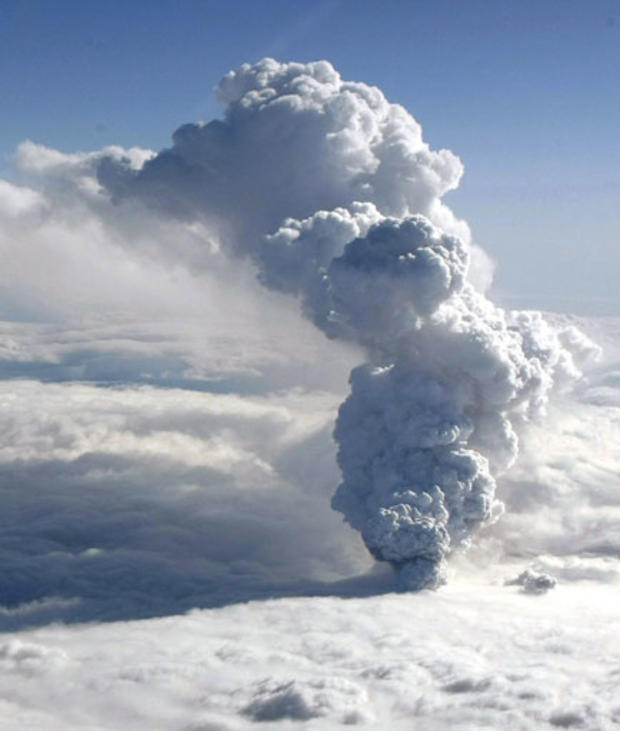
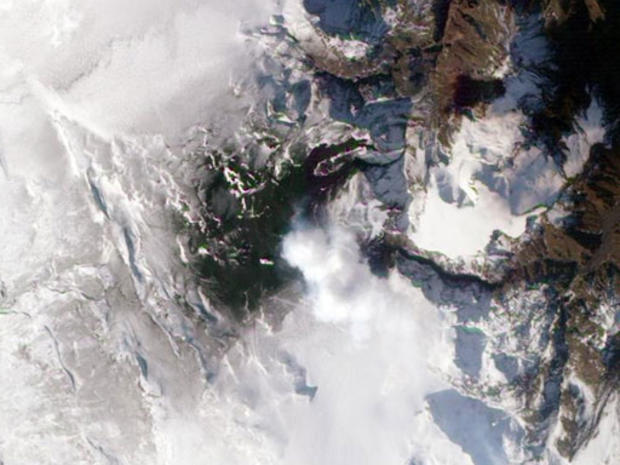
A plume of ash, dust and steam is seen coming from a volcano erupting beneath Iceland's Eyjafjallajokull glacier, Wednesday, April 21, 2010 in Eyjafjallajokull, Iceland.
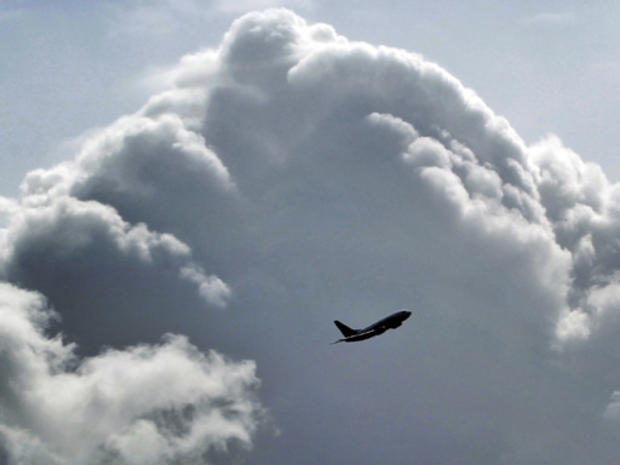
AP Photo/Frank Augstein
An airplane takes off at the Duesseldorf airport, western Germany, on Wednesday April 21,2010. Air traffic resumes after it was blocked in some parts of Europe due to the vulcano eruption in Iceland.
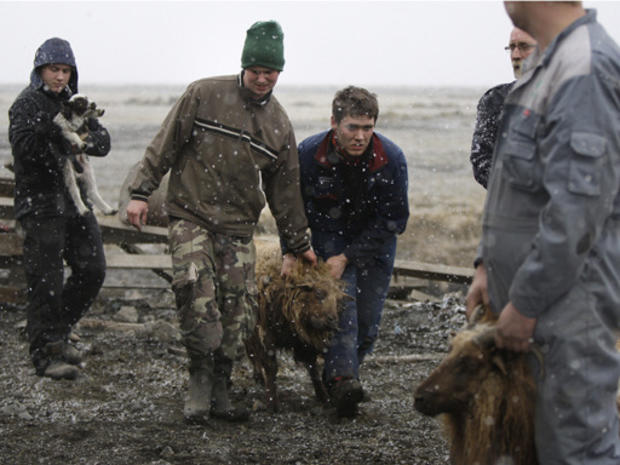
AP Photo/Carolyn Kaster
Jon Oscar Bjorgvinnossen, third from left, and others help gather stressed and stubborn sheep as the snow falls drags at the ash covered Berjanes farm near the town of Hvolsvollur Iceland, Tuesday, April 20, 2010.
The ash, from a volcano that erupted beneath Iceland's Eyjafjallajokull glacier, has contaminated the farm's grazing land making it necessary to evacuate all animals.
AP Photo/Carolyn Kaster
A plume of ash, dust and steam is seen coming from a volcano erupting beneath Iceland's Eyjafjallajokull glacier, Wednesday, April 21, 2010 in Eyjafjallajokull, Iceland.
AP Photo/Gero Breloer
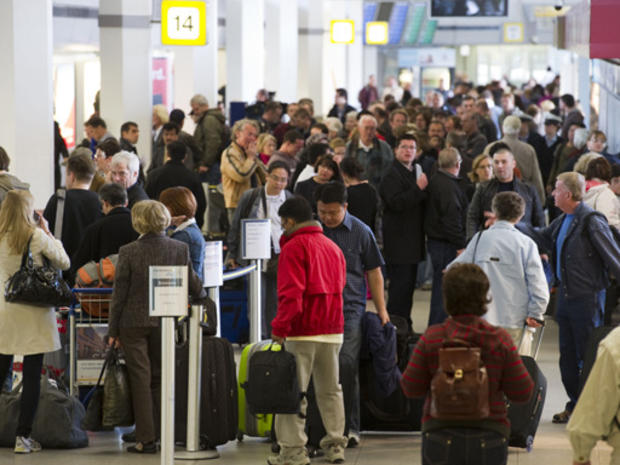
Passengers queue for check-in in front of a ticket counter at Tegel airport in Berlin, Wednesday, April 21, 2010.
Many airports in Europe reopened for air traffic days after airspace over large parts of Europe was shut down due to the ash cloud from a volcano in Iceland.
AP Photo/Gurinder Osan
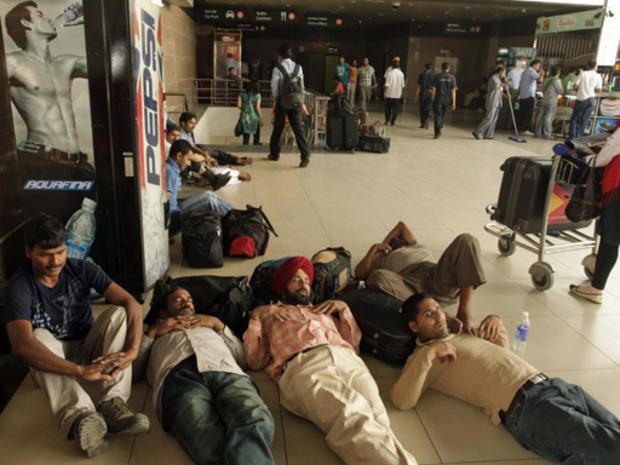
Passengers rest as they wait for their delayed flights at the Indira Gandhi International Airport in New Delhi, India, Wednesday, April 21, 2010.
The International Air Transport Association says disruptions to European air travel from the volcanic ash cloud have cost the industry at least $1.7 billion.
AP Photo/Alvaro Barrientos
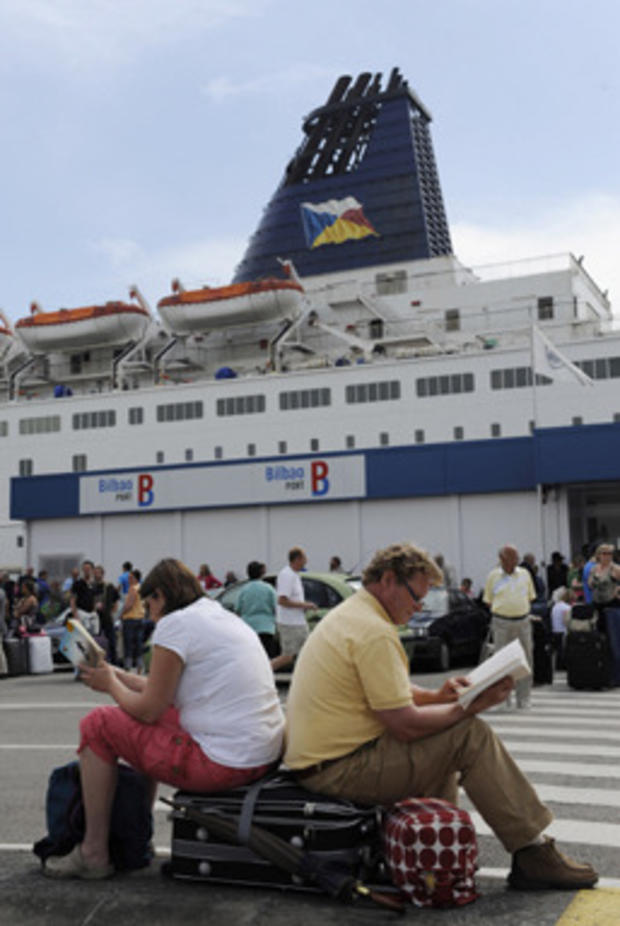
British citizens wait beside the Pride of Bilbao Ferry, seen in background, at Santurtzir's port, northern Spain, Wednesday April 21, 2010.
The Pride of Bilbao carries on board more than twelve hundred civilians stranded by the volcanic ash cloud, taking them back home to Britain.
AP Photo/Scott Heppell/PA
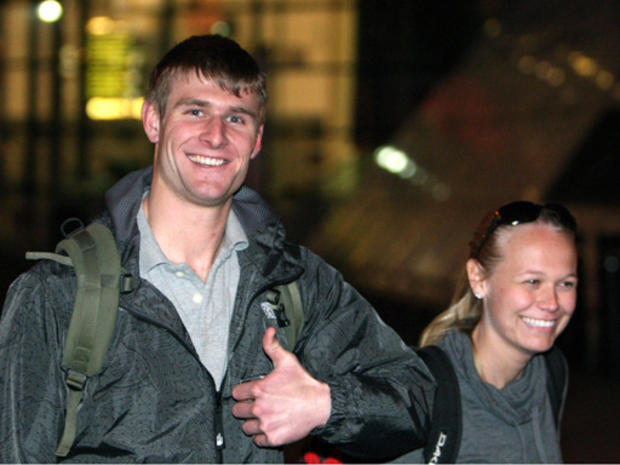
Unidentified passengers walk through the international arrivals area at Newcastle Airport in northern England after arriving from Canada on one of the first international flights to land back in Britain since a cloud of volcanic ash covered the skies of Europe, Tuesday April 20, 2010.
British Airways says it hopes to land as many as 25 flights _ bound from the United States, Africa and Asia, into London following the decision to reopen airports. But forecasters say more delays to flights bound for Europe are possible.
AP Photo/Lefteris Pitarakis
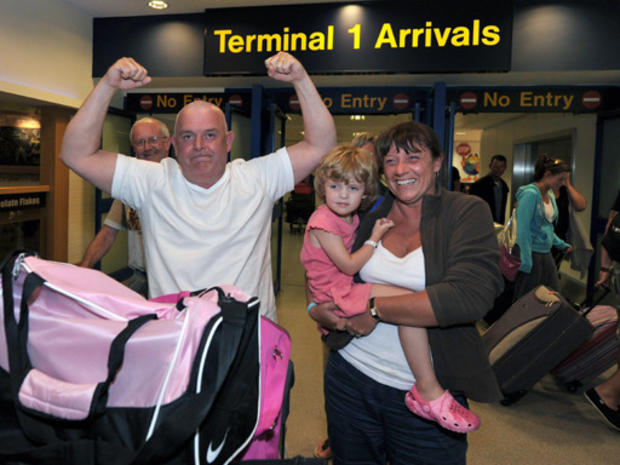
Passenger Chris, his wife Val and their daughter Mia, 4, no family name given, arrive back at Manchester Airport, England from their holiday in Cuba Wednesday April 21, 2010. Britain's Heathrow Airport _ Europe's busiest hub _ has seen the first flight land in London since airspace across the continent was closed by the giant plume of ash spewed during a volcanic eruption in Iceland. Many European flights took to the skies as airports slowly reopened, but the travel chaos was far from over: A massive flight backlog was growing and scientists feared history could repeat itself with yet another eruption. (AP Photo/Martin Rickett/PA Wire) ** UNITED KINGDOM OUT **
AP Photo/Lefteris Pitarakis
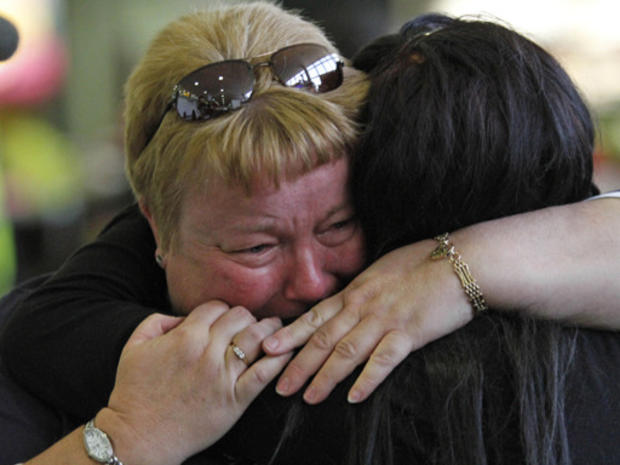
A woman, name not given, cries as she hugs her daughter, who flew from Costa Brava, Spain, and landed at Gatwick airport, near London, England, Wednesday, April 21, 2010.
Britain's Heathrow Airport _ Europe's busiest hub _ has seen the first flight land in London since airspace across the continent was closed by the giant plume of ash spewed during a volcanic eruption in Iceland.
Many European flights took to the skies as airports slowly reopened, but the travel chaos was far from over: A massive flight backlog was growing and scientists feared history could repeat itself with yet another eruption.
AP Photo/Brynjar Gauti
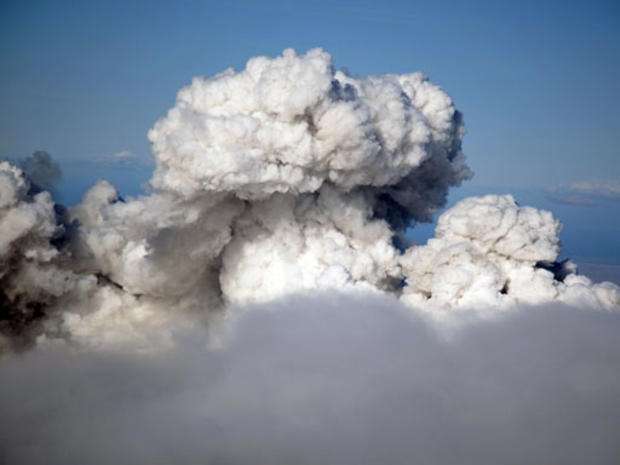
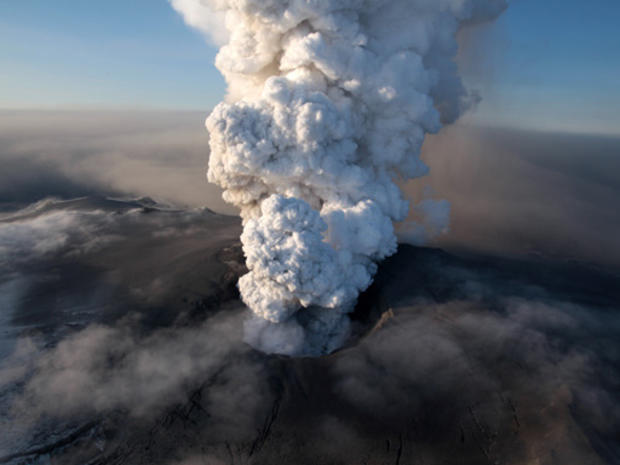
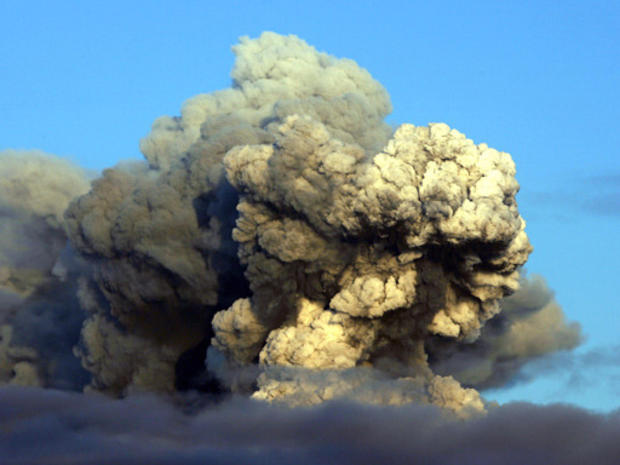
A plume of ash rises from the volcano in southern Iceland's Eyjafjallajokull glacier, Monday, April 19, 2010. Meteorologists in Iceland said eruptions from the volcano were weakening and the ash was no longer rising to a height where it would endanger large commercial aircraft.
AP Photo/ Jon Pall Vilhelmsson
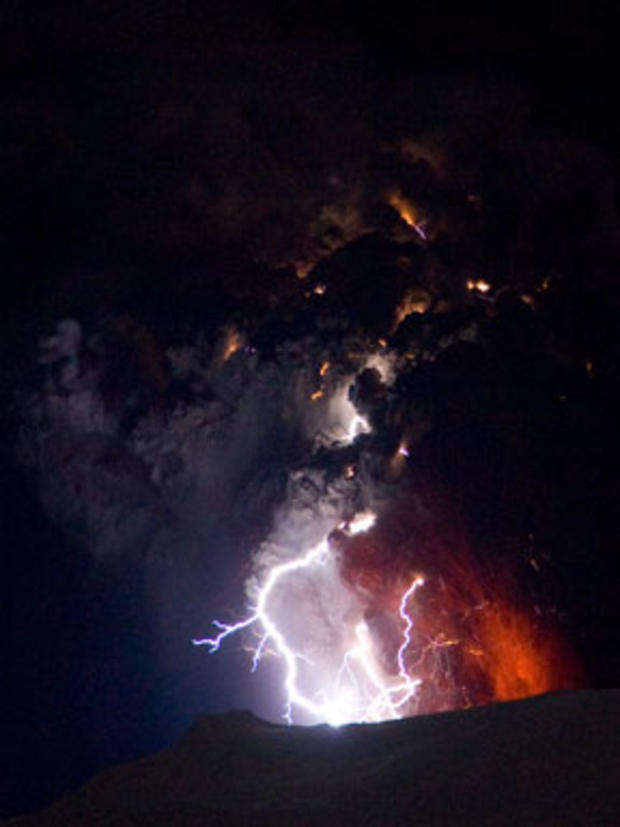
Lightning seen amid the lava and ash erupting from the vent of the Eyjafjallajokull volcano in central Iceland in the early morning of Sunday, April 18, 2010 as it continues to vent into the skies over Europe.
Low-energy lightning is sometimes active during eruptions, arcing between particles as they exit the volcanic vent. The dramatic volcanic eruption which has closed Europe's airspace for days has entered a new phase - producing less smoke but bubbling with lava and throwing up chunks of molten rock.
AP Photo/ Jon Pall Vilhelmsson
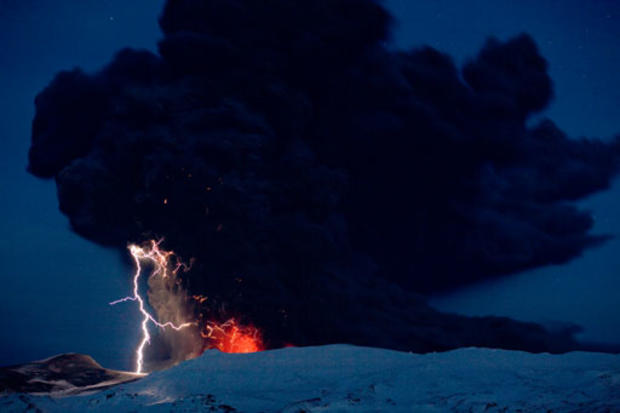
Lightning seen amid the lava and ash erupting from the vent of the Eyjafjallajokull volcano in central Iceland in the early morning of Sunday, April 18, 2010 as it continues to vent into the skies over Europe.
Low-energy lightning is sometimes active during eruptions, arcing between particles as they exit the volcanic vent. The dramatic volcanic eruption which has closed Europe's airspace for days has entered a new phase - producing less smoke but bubbling with lava and throwing up chunks of molten rock.
AP Photo/Brynjar Gauti
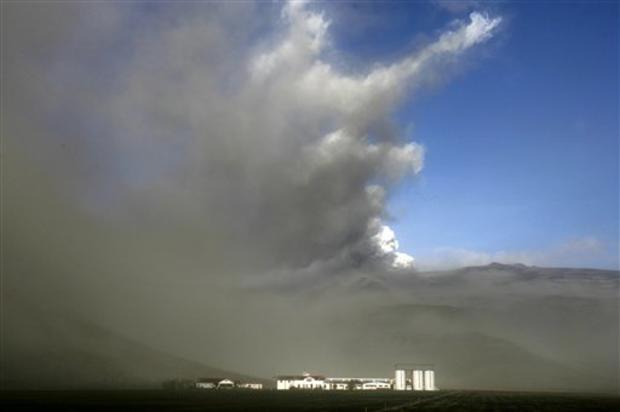
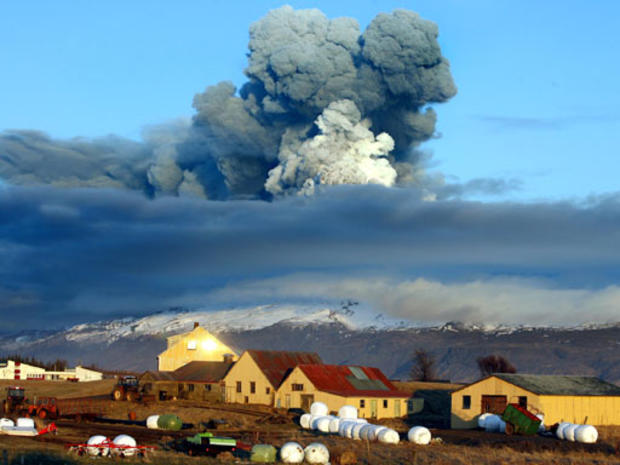
A plume of ash from the volcano under the Eyjafjallajokull glacier covers the farm of Pall Eggert Olafsson, in Thorvaldseyri, Iceland, Monday, April 19, 2010.
AP Photo/NEODAAS/University of Dundee
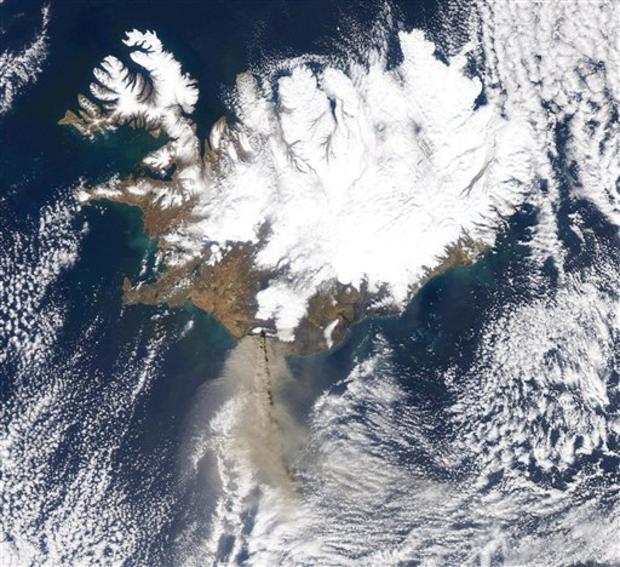
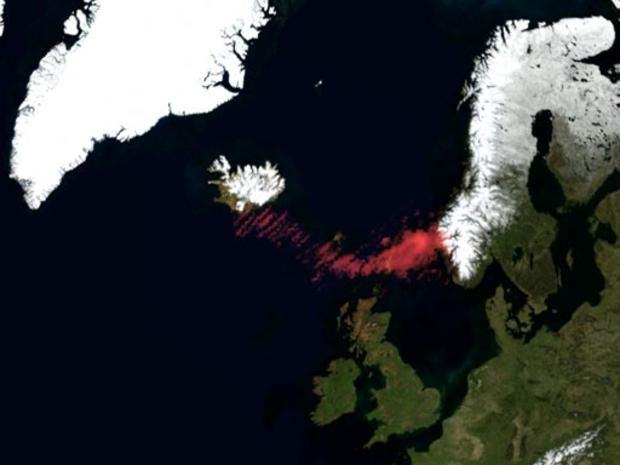
In this image made available by NEODASS/University of Dundee on Monday April 19, 2010 shows the volcanic ash plume, seen at bottom centre, from the volcano in southern Iceland's Eyjafjallajokull glacier taken by NASA's Terra Satellite on Saturday, April 17, 2010.
AP Photo/Jon Gustafsson
This aerial photo shows a plume of ash rising from the volcano in southern Iceland's Eyjafjallajokull glacier, Monday, April 19, 2010.
AP Photo/Jon Gustafsson
This aerial photo shows a plume of ash rising from the volcano in southern Iceland's Eyjafjallajokull glacier, Monday, April 19, 2010.
AP Photo/Brynjar Gauti
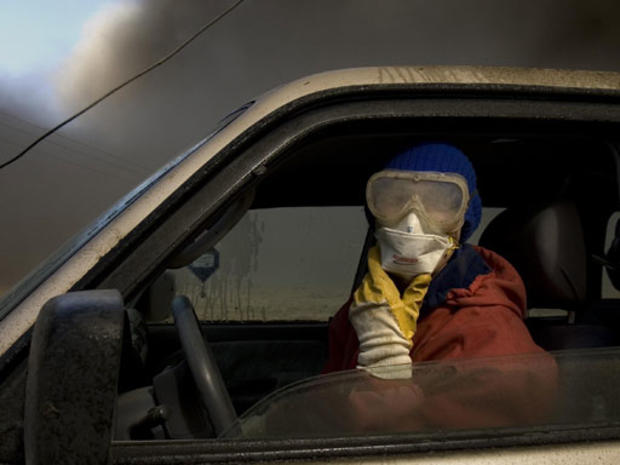
Wearing a mask and glasses against the smoke, dairy farmer Berglind Hilmarsdottir from Nupur, Iceland, looks for cattle lost in ash clouds, Saturday, April 17, 2010. The volcano in southern Iceland's Eyjafjallajokull glacier continued to send ash into the air Sunday.
AP Photo/Brynjar Gauti
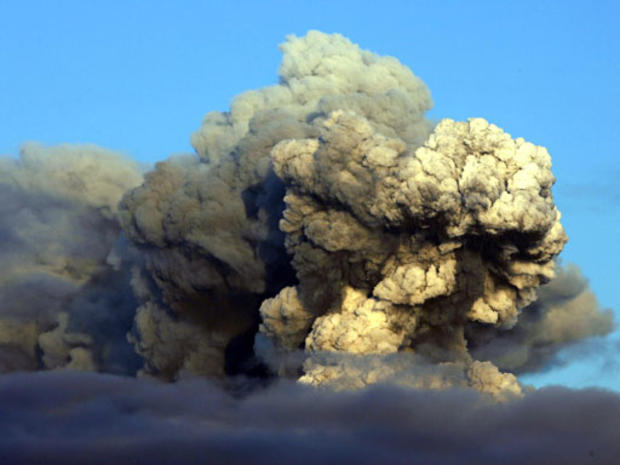
The volcano in southern Iceland's Eyjafjallajokull glacier sends ash into the air on Saturday, April 17, 2010.
AP Photo/Brynjar Gauti
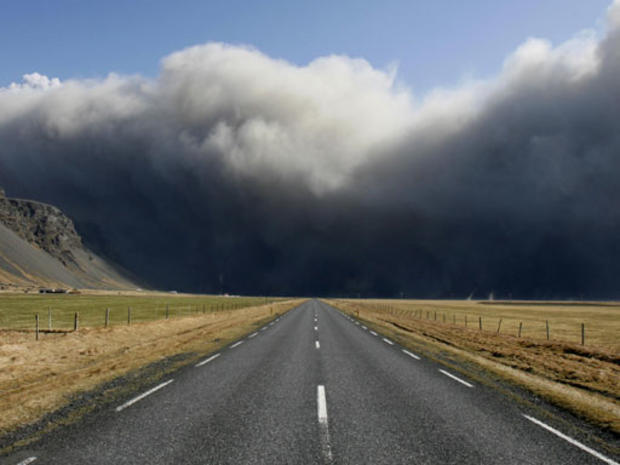
Volcanic ash seen over Iceland's main ring road near Skogar, east of the eruption as the volcano in southern Iceland's Eyjafjallajokull glacier sends ash into the air Saturday, April 17, 2010.
AP Photo/Brynjar Gauti
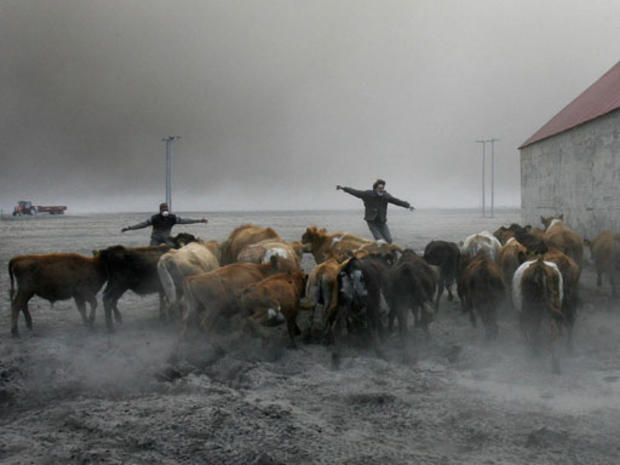
Farmers team up to rescue cattle from exposure to the toxic volcanic ash at a farm in Nupur, Iceland, as the volcano in southern Iceland's Eyjafjallajokull glacier sends ash into the air Saturday, April 17, 2010.
AP Photo/Brynjar Gauti
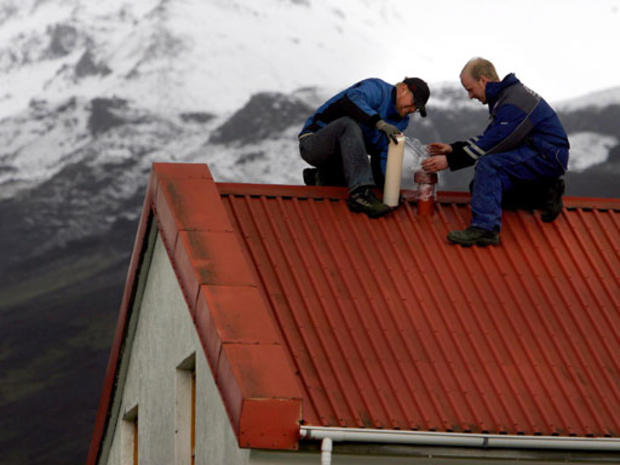
Men wrap a house vent in plastic film Friday, April 16, 2010, near Myrdalssandur, some 220km east of the capital Rejkavik, Iceland, to prevent the entry of airborne volcanic ash.
AP Photo/Brynjar Gauti
The volcano in southern Iceland's Eyjafjallajokull glacier sends ash into the air just prior to sunset, Friday, April 16, 2010. Thick drifts of volcanic ash blanketed parts of rural Iceland on Friday as a vast, invisible plume of grit drifted over Europe, emptying the skies of planes and sending hundreds of thousands in search of hotel rooms, train tickets or rental cars.
AP Photo/NOAA
This image provided by NOAA shows the volcanic plume, from Wednesday's eruption of a volcano beneath Iceland's Eyjafjallajokull glacier. Using sulfur dioxide concentration data from the NASA Aura/OMI satellite sensor, it shows smoke, ash, and other components that can cause aircraft jet engines to fail. The OMI sensor can distinguish the differences between cloud, smoke, dust, ozone and other aerosols, and is important in Earth observations for aviation safety.
AP Photo/Brynjar Gauti
The volcano in southern Iceland's Eyjafjallajokull glacier sends ash into the air just prior to sunset Friday, April 16, 2010. Thick drifts of volcanic ash blanketed parts of rural Iceland on Friday as a vast, invisible plume of grit drifted over Europe, emptying the skies of planes and sending hundreds of thousands in search of hotel rooms, train tickets or rental cars.
AP Photo/Brynjar Gauti
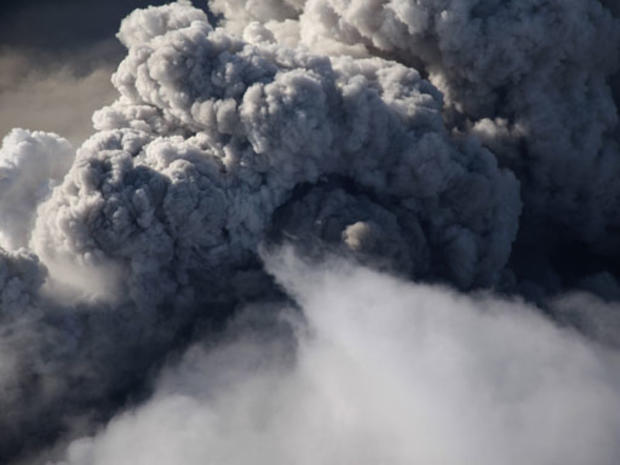
The volcano in southern Iceland's Eyjafjallajokull glacier sends ash into the air Saturday, April 17, 2010. The Icelandic volcano that has kept much of Europe land-bound is far from finished spitting out its grit, and offered up new mini-eruptions Saturday that raise concerns about longer-term damage to world air travel and trade.
AP Photo/Arnar Thorisson/Helicopter.is
Ash and grit are spewed from the volcano in southern Iceland's Eyjafjallajokull glacier Saturday, April 17, 2010. A lingering volcanic ash plume forced extended no-fly restrictions over much of Europe Saturday, as Icelandic scientists warned that volcanic activity had increased and showed no sign of abating.
AP Photo/Arnar Thorisson/Helicopter.is
An aerial view of the volcano on Saturday, April 17, 2010.
AP Photo/Brynjar Gauti
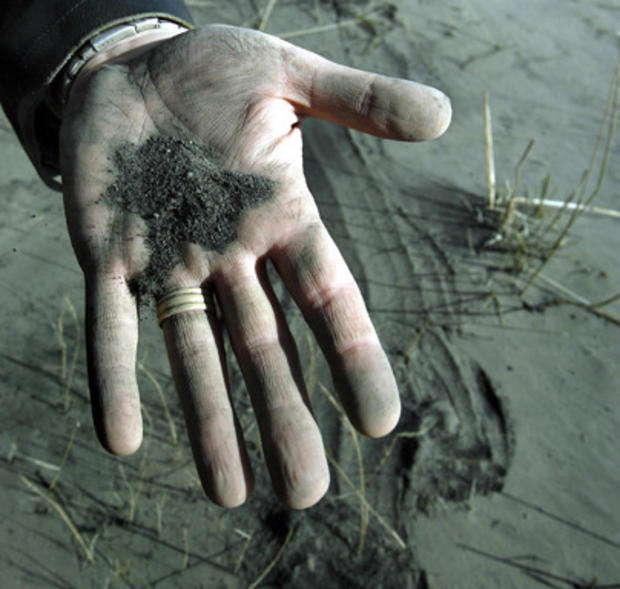
A man displays volcanic ash fallen to the ground on Friday, April 16, 2010, at Myrdalssandur, Iceland.
AP Photo/Brynjar Gauti
Thick drifts of volcanic ash blanketed parts of rural Iceland on Friday, April 16, 2010, as a vast plume of grit drifted over Europe.
AP Photo/Omar Oskarsson
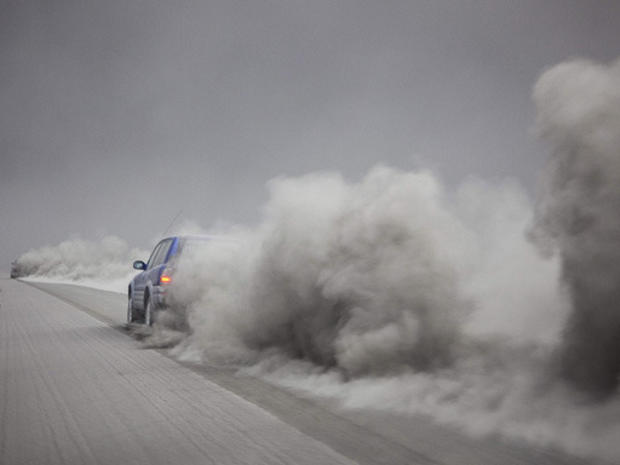
A car is seen driving through the ash from the volcano eruption under the Eyjafjallajokull glacier in Iceland, Friday, April 16, 2010. The volcano erupted for the second time in less than a month, melting ice and shooting smoke and steam into the air. Flights around the world have been canceled and passengers stranded as the ash cloud from the volcano affected operations at some of the world's busiest airports.
AP Photo/Brynjar Gauti
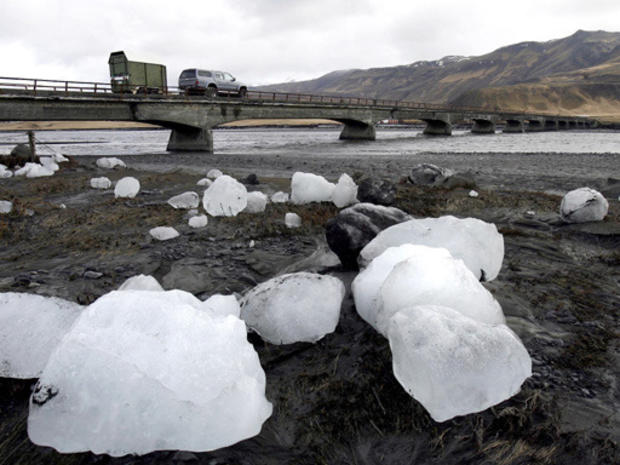
Ice chunks carried downstream by floodwaters caused by volcanic activity lie on the Markarfljot river bank Friday, April 16, 2010, some 120 km east of Iceland's capital, Rejkavik. The Eyjafjallajokull glacier volcano began erupting for the second time in a month on Wednesday, sending ash several miles (kilometers) into the air. Winds pushed the plume south and east across Britain, Ireland, Scandinavia and into the heart of Europe causing travel chaos.
AP Photo/Jon Gustafsson
Smoke and steam hangs over the volcano under the Eyjafjallajokull glacier in Iceland, Wednesday, April 14, 2010, which has erupted for the second time in less than a month, melting ice, shooting smoke and steam into the air and forcing hundreds of people to flee rising floodwaters. Volcanic ash drifting across the Atlantic forced the cancellation of flights in Britain and disrupted air traffic across northern Europe.
AP Photo/NEODAAS/University of Dundee
Volcanic ash plume from Iceland, top left, to the north of Britain at received by NASA's Terra Satellite at 11:39 GMT on Thursday, April 15, 2010. Ash from Iceland's spewing volcano halted air traffic across a wide swathe of Europe on Thursday, grounding planes on a scale not seen since the 9/11 terror attacks.
AP Photo/Brynjar Gaudi
Smoke and steam hangs over the volcano under the Eyjafjallajokull glacier in Iceland, early Thursday, April 15, 2010, which has erupted for the second time in less than a month, melting ice, shooting smoke and steam into the air and forcing hundreds of people to flee rising floodwaters.
AP Photo/Icelandic Coastguard
In this image made available by the Icelandic Coastguard taken Wednesday, April 14, 2010, flood waters rising after the volcano under the Eyjafjallajokull glacier in Iceland erupted for the second time in less than a month, melting ice, shooting smoke and steam into the air and forcing hundreds of people to flee rising floodwaters.
AP Photo/Icelandic Coastguard
Smoke and steam rises from the volcano under the Eyjafjallajokull glacier in Iceland, which erupted for the second time in less than a month, melting ice, shooting smoke and steam into the air and forcing hundreds of people to flee rising floodwaters, Wednesday April 14, 2010.
AP Photo/Icelandic Coastguard
Smoke and steam rises from the volcano under the Eyjafjallajokull glacier in Iceland, which erupted for the second time in less than a month, melting ice, shooting smoke and steam into the air and forcing hundreds of people to flee rising floodwaters, Wednesday, April 14, 2010.
AP Photo
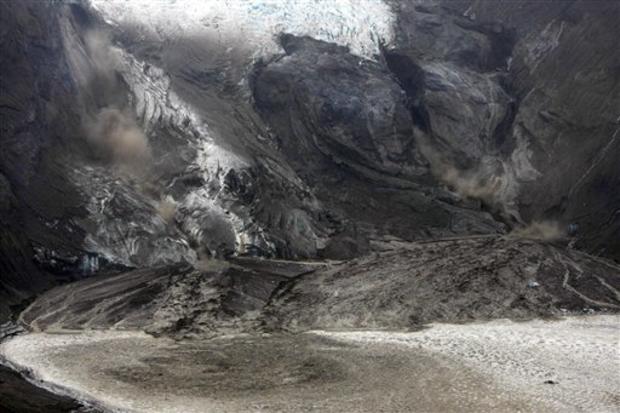
Water flows from the volcano under the Eyjafjallajokull glacier in Iceland, which erupted for the second time in less than a month, Wednesday, April 14, 2010.
AP Photo/Brynjar Gauti
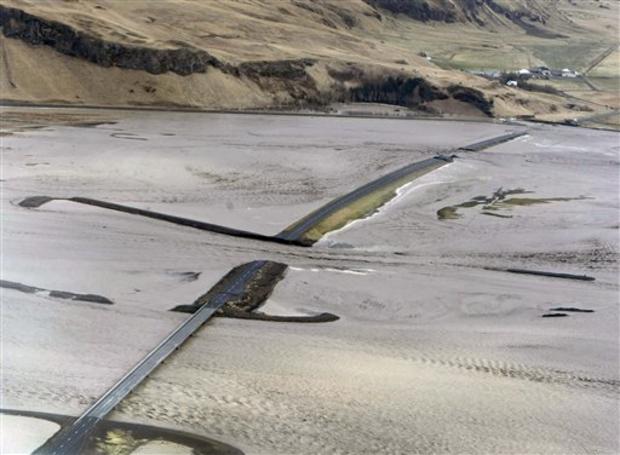
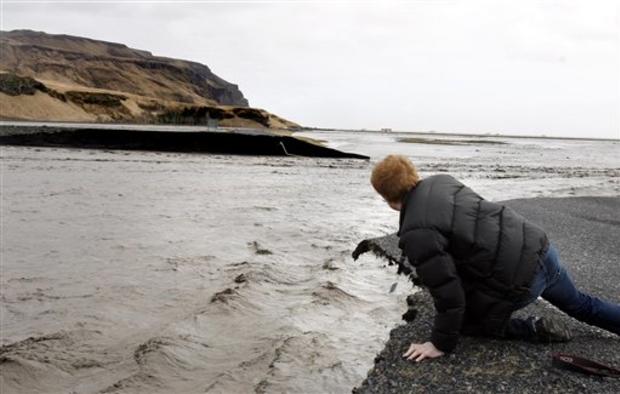
A man looks at a broken section of Iceland's main coastal ring road near Reykjavik Wednesday, April 14, 2010, after melt water from a volcanic eruption caused river levels to rise by up to 10 feet (3 meters).
AP Photo/Icelandic Coastguard
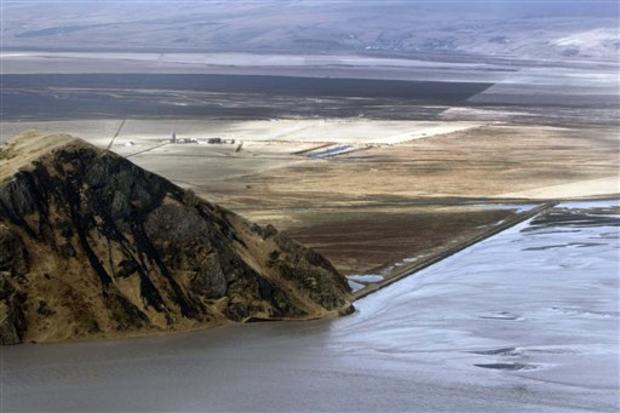
Floodwaters rising after the volcano under the Eyjafjallajokull glacier in Iceland erupted for the second time in less than a month, melting ice, shooting smoke and steam into the air and forcing hundreds of people to flee, Wednesday, April 14, 2010.
AP Photo/Ragnar Axelsson
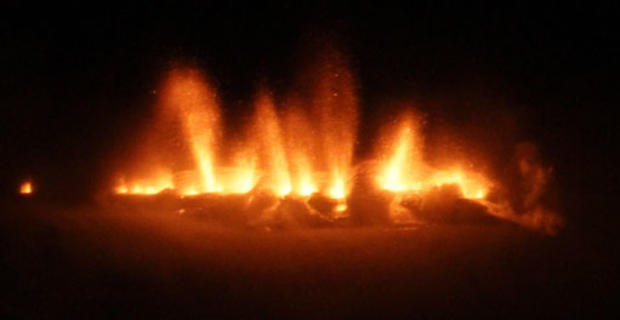
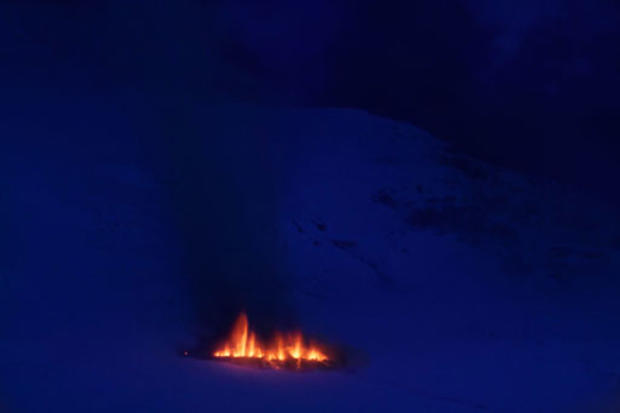
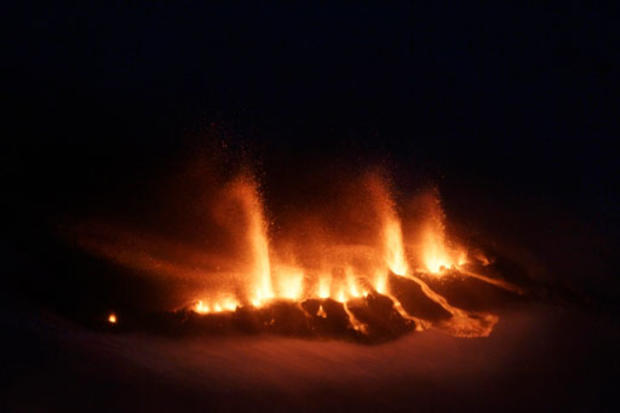
Molten lava vents from a rupture near the Eyjafjallajokull glacier in Iceland, as a volcano erupts early Sunday, March 21, 2010, seen in this aerial photo. Some hundreds of people have been evacuated from a small village in southern Iceland on Sunday after a volcanic eruption which shot ash and molten lava into the air, marking the first major eruption there in nearly 200 years.
AP Photo/Ragnar Axelsson
In this aerial photo, molten lava is seen as it vents from a rupture near the Eyjafjallajokull glacier in Iceland, as a volcano erupts early Sunday, March 21, 2010. Some hundreds of people have been evacuated from a small nearby village in southern Iceland on Sunday after a volcanic eruption which shot ash and molten lava into the air, marking the first major eruption there in nearly 200 years.
AP Photo/Ragnar Axelsson
In this aerial photo, molten lava is seen as it vents from a rupture near the Eyjafjallajokull glacier in Iceland, as a volcano erupts early Sunday, March 21, 2010. Some hundreds of people have been evacuated from a small village in southern Iceland on Sunday after a volcanic eruption which shot ash and molten lava into the air, marking the first major eruption there in nearly 200 years.