Hector Montano/INAH
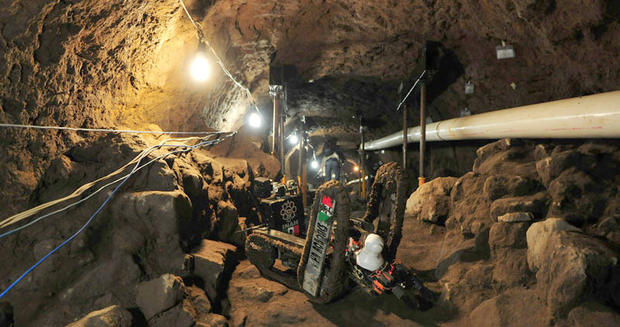
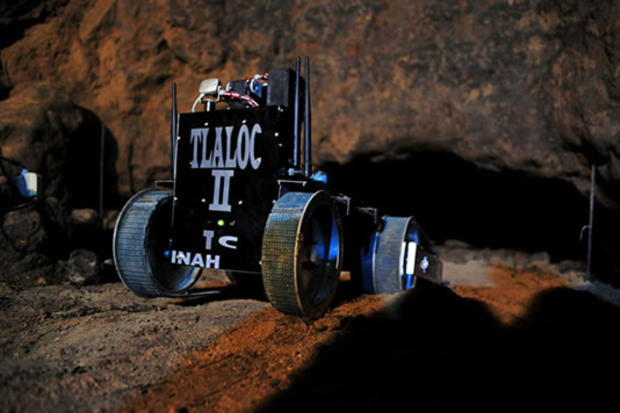
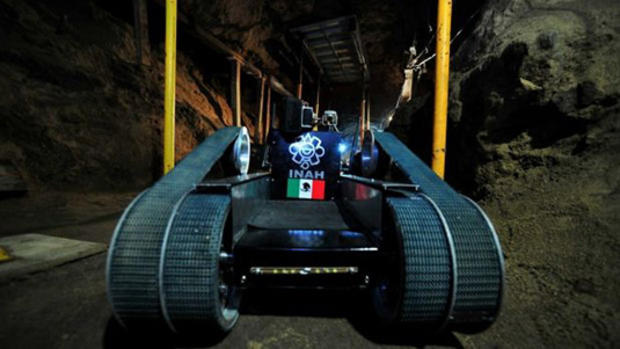
Tlalolc II-TC, the small robot seen here, has helped to make a big discovery inside the Temple of the Feathered Serpent at Quetzalcoatl in Mexico. Archaeologists from The National Institute of Anthropology and History (INAH) were expecting to find just one chamber at the end of a tunnel in the site, but the robot helped them to discover that there are actually three.
The mission, called "Project Tlalocan, Underground Road" will see the three-foot-long robot delve into the chambers using cameras and mechanical arms to make its way past obstacles. Researchers are hoping to make big discoveries in the 2000 year-old chambers where ceremonies including burials are suspected to have taken place.
INAH
Tlalolc II-TC, the small robot seen here, has helped to make a big discovery inside the Temple of the Feathered Serpent at Quetzalcoatl in Mexico.
Hector Montano/INAH
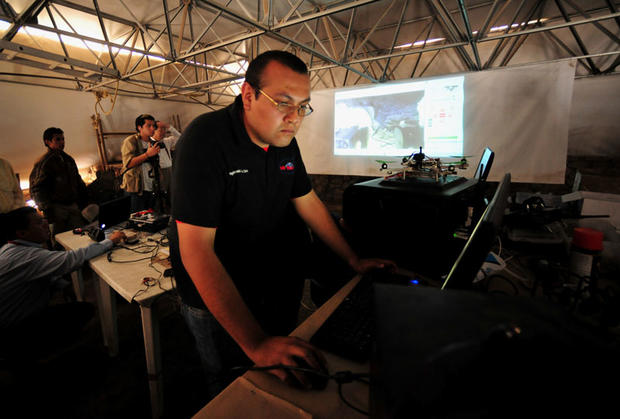
INAH specialists operate infra-red cameras mounted on Tlaloc II-TC, the archaeological robot.
Hector Montano/INAH
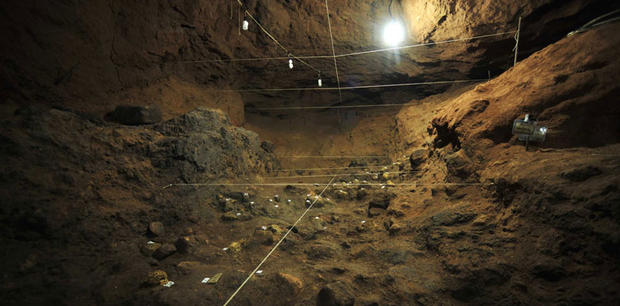
View of one of the two side chambers showing part of the adobe walls inside the Temple of Quetzalcoatl, also known as the Temple of the Feathered Serpent.
INAH
Tlalolc II-TC, the small robot seen here, has helped to make a big discovery inside the Temple of the Feathered Serpent at Quetzalcoatl in Mexico.
Hector Montano/INAH
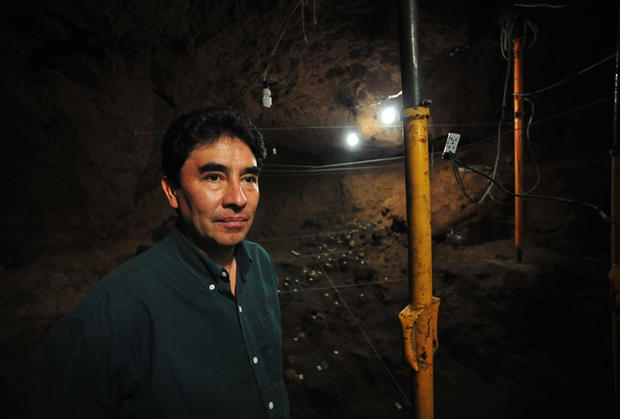
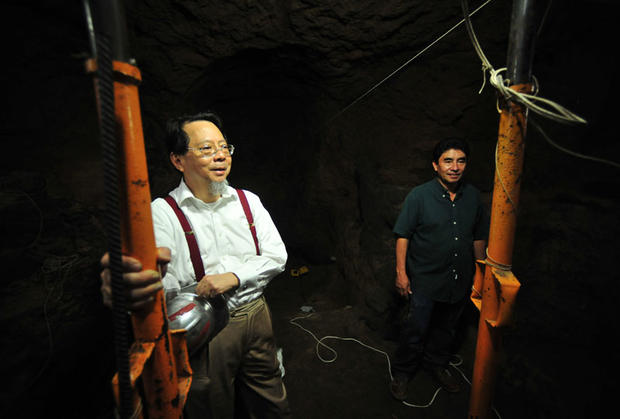
Dr. Ng Tze Chuen (left), creator of the Djedi robot, which explored the depths of the Great Pyramid of Cheops in Egypt in 2010, is part of this team. He is flanked by Sergio Gomez, project manager of "Project Tlalocan, Underground Road."
Hector Montano/INAH
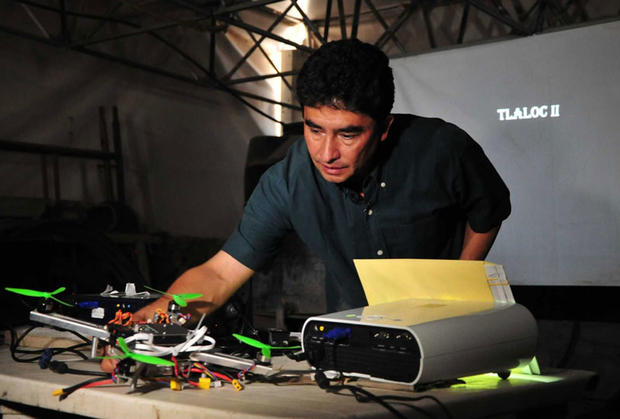
Seen here is another part of the robot suite, a flying drone of sorts that can take photos and video.
Hector Montano/INAH
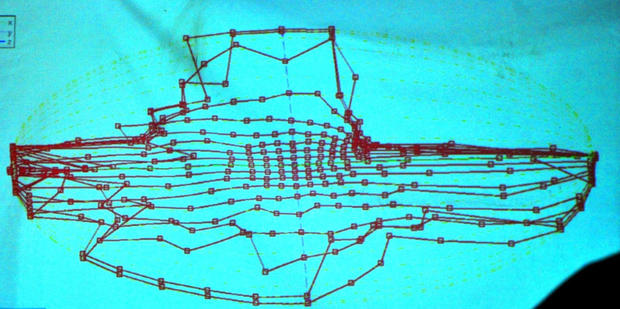
The points plotted by the scanner, revealing the underground chambers.