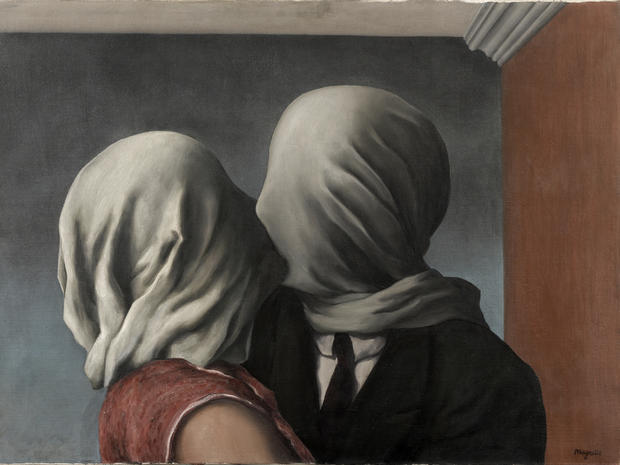
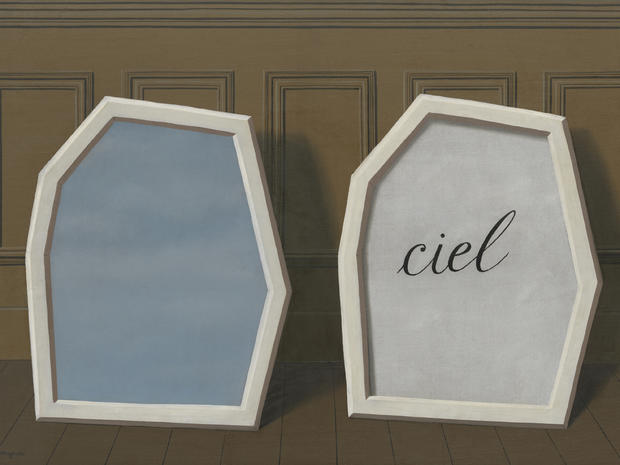
The Museum of Modern Art. Gift of Richard S. Zeisler. Copyright Charly Herscovici-ADAGP-ARS, 2013
When is a kiss not exactly a kiss? A landscape more than just a landscape? Or a portrait something ... well, surreal? In the world of Belgian painter Rene Magritte (1898-1967), nothing is what it seems.
Anne Umland, the curator of "The Mystery of the Ordinary," an exhibition of Magritte's work at New York's Museum of Modern Art, told CBS News the artist demands his audience to be "active" viewers.
"He's always saying, 'A picture is just a picture, and image is not the same as the thing itself. Question what you see.'"
Left: "Les Amants (The Lovers)," 1928, by Rene Magritte.
By CBSNews.com senior producer David Morgan
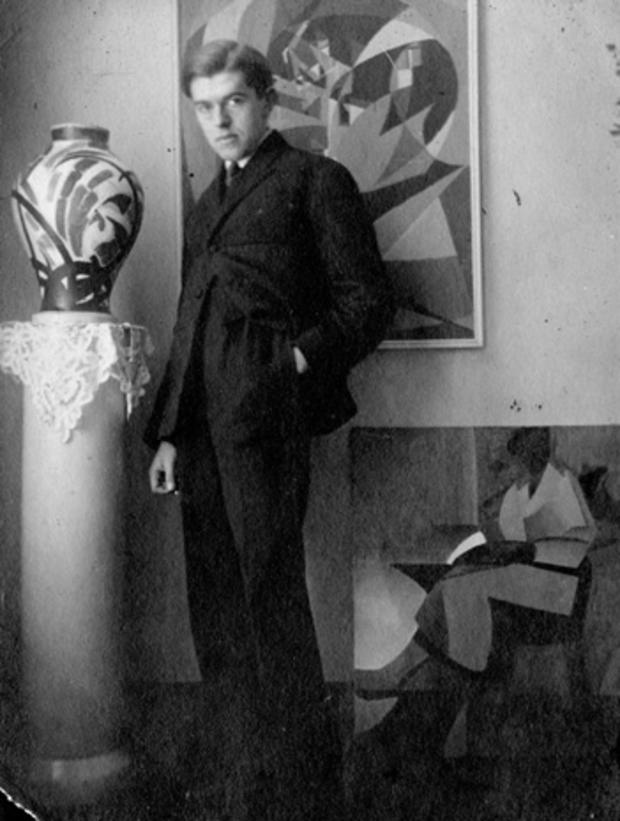
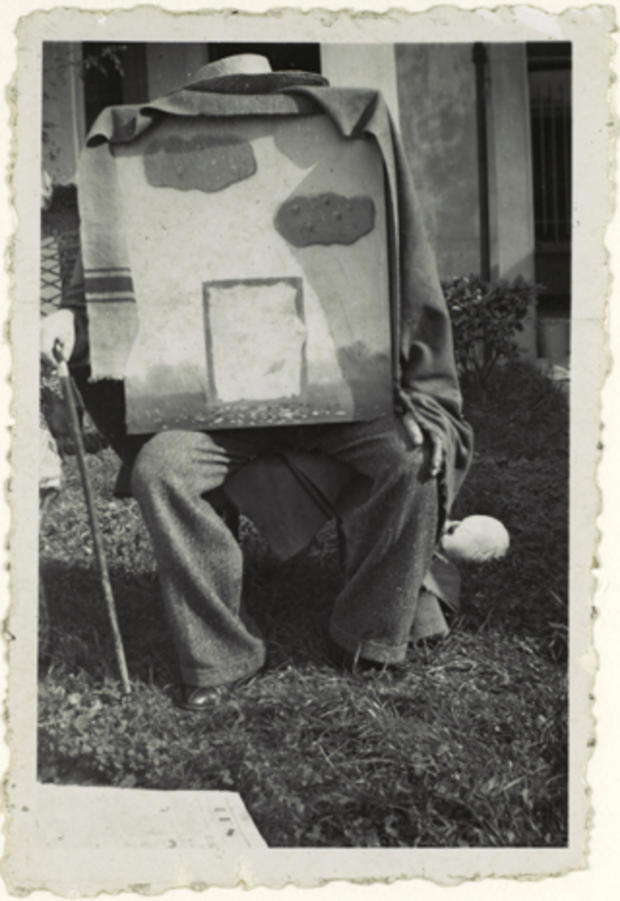
The Menil Archives, The Menil Collection, Houston. Copyright Charly Herscovici-ADAGP-ARS, 2013
Left: Rene Magritte at the family house in Brussels, 1920.
Magritte was born in Lessines, a small town in Belgium, in 1898. Not much is known about his childhood. His father was a textile merchant. And when Magritte was 13, his mother committed suicide.
Umland told CBS News' Serena Altschul that what probably had even greater impact on Magritte than his mother's death was being locked in a room with the depressed woman in the years prior. "Look at the type of spaces Magritte is depicting, and think about how claustrophobic they are," she said.
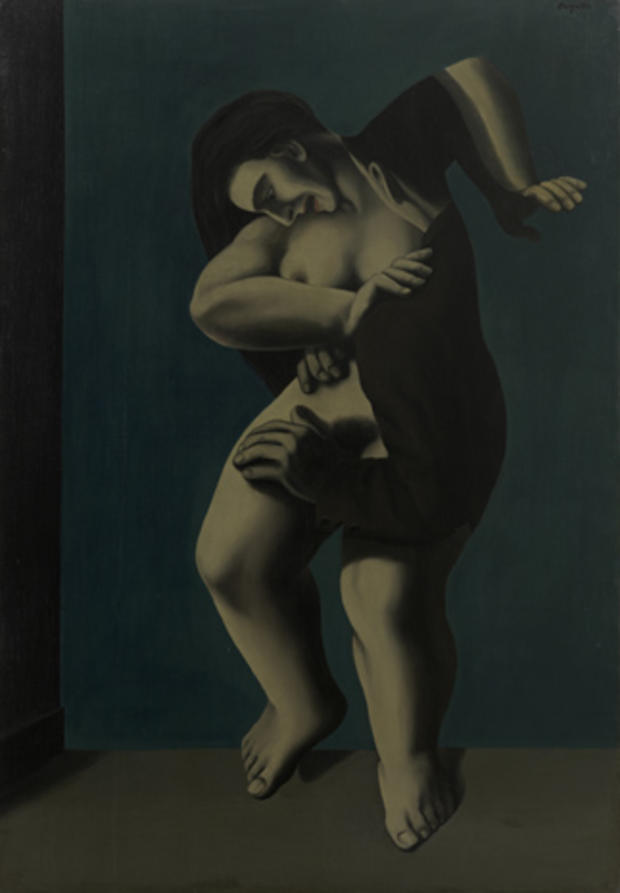
Kunstsammlung Nordrhein-Westfalen, Dusseldorf. Copyright Charly Herscovici-ADAGP-ARS, 2013
Left: "Les Jours gigantesque (The Titanic Days)," oil on canvas, by Rene Magritte (1928).
Magritte studied art from a young age, perhaps to escape the harsh reality around him. He was trained in both commercial and fine art. In 1929, like many artists at the time, he decided to move to Paris. Umland said he went there specifically to become part of the conversation emerging at that time among poets and painters, "particularly poets and painters brought together, united, under the banner of Surrealism."
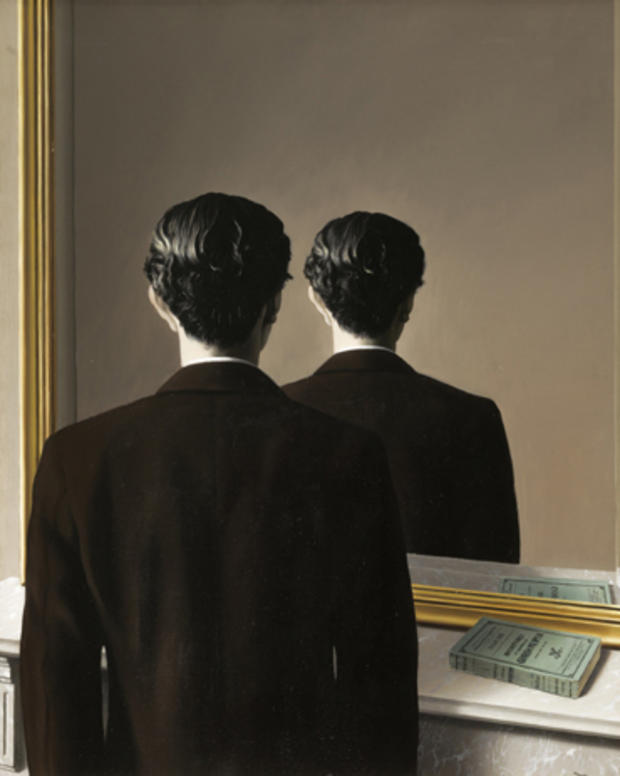
Museum Boijmans Van Beuningen, Rotterdam. Copyright Charly Herscovici-ADAGP-ARS, 2013
"La Reproduction interdite (Not to be Reproduced)," oil on canvas, by Rene Magritte, 1937.
Los Angeles County Museum of Art. Purchased with funds provided by the Mr. and Mrs. William Preston Harrison Collection. Copyright Charly Herscovici-ADAGP-ARS, 2013
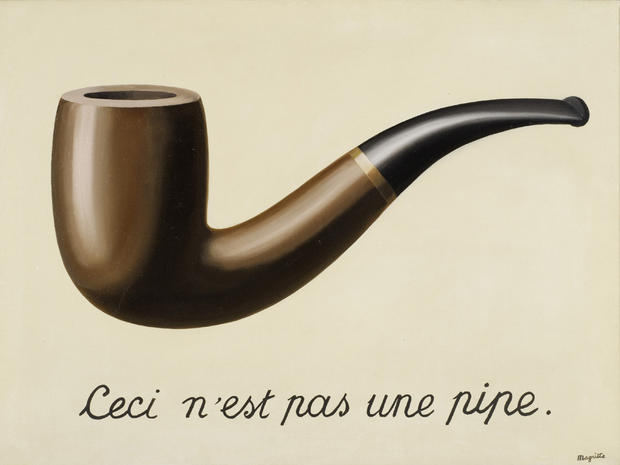
"La trahison des images (The Treachery of Images), 1929, by Rene Magritte. Below the image of the pipe are the words, "Ceci n'est pas une pipe." ("This is not a pipe.")
The Museum of Modern Art's exhibition, "The Mystery of the Ordinary," is the first major showing of Magritte's work in the U.S. in two decades, and covers works from 1926 to 1938, which curator Anne Umland says was a vital time for the artist.
"When you look at the works that he created in this moment, it's a time when he makes quantitatively and conceptually more works in more modes, more varieties than he ever had before," she told Altschul. "So it is this period when Magritte becomes Magritte."
Private Collection, London. Copyright Charly Herscovici-ADAGP-ARS, 2013
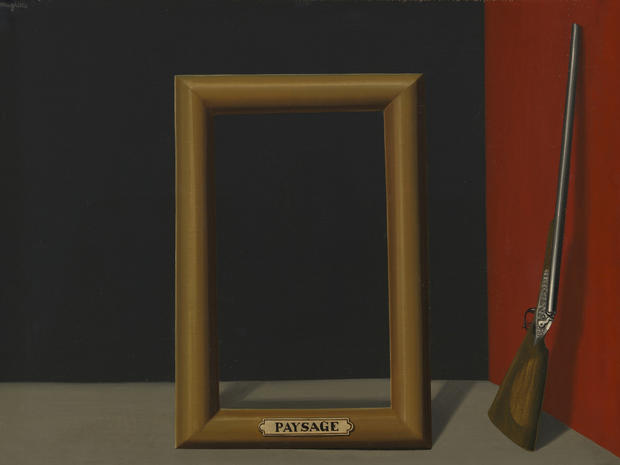
"Les Charmes du paysage (The Delights of Landscape)," oil on canvas, by Rene Magritte, 1928.
The Baltimore Museum of Art. Purchased with exchange funds from the Edward Joseph Gallagher III Memorial Collection and partial gift of George H. Dalsheimer, Baltimore (BMA.1988.440). Copyright Charly Herscovici-ADAGP-ARS, 2013
So who was Magritte? Umland said the artist purposely masked his persona, even adopting a bowler hat as a prop to convey the image of an Everyman artist. "He's kind of the 'un-celebrity,'" she said.
He was, like his paintings, a paradox. He was very much part of the Surrealists, but there was none of the artistic bohemia about him. He often painted in a suit, and was married to the same woman, Georgette, for 45 years.
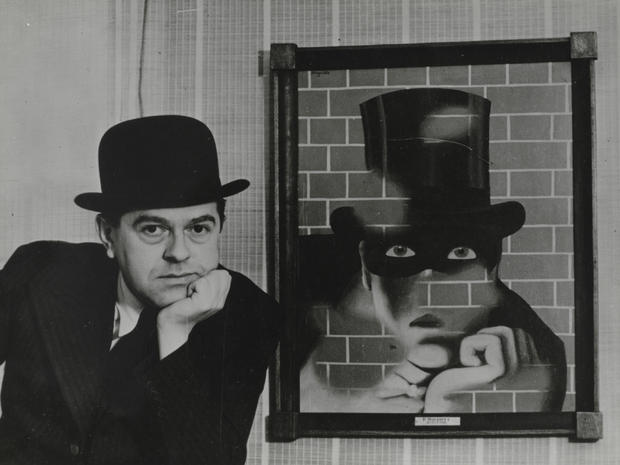
Left: Rene Magritte, photographed in London with "Le Barbare (The Barbarian)," 1938.
Staatsgalerie, Stuttgart. Copyright Charly Herscovici-ADAGP-ARS, 2013
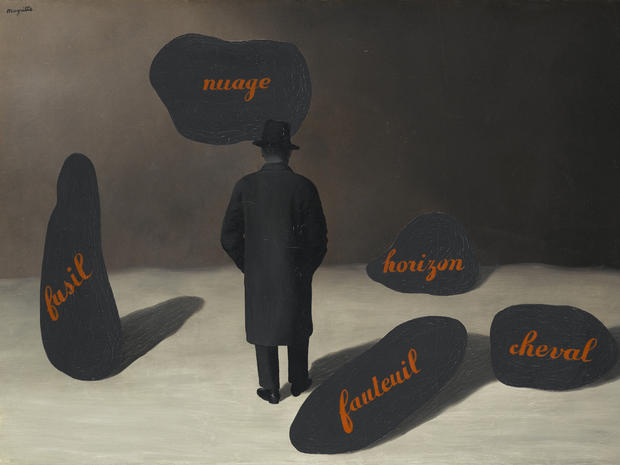
"L'apparition (The Apparition)," oil on canvas, 1928, by Rene Magritte.
Collection of Jasper Johns. Copyright Charly Herscovici-ADAGP-ARS, 2013
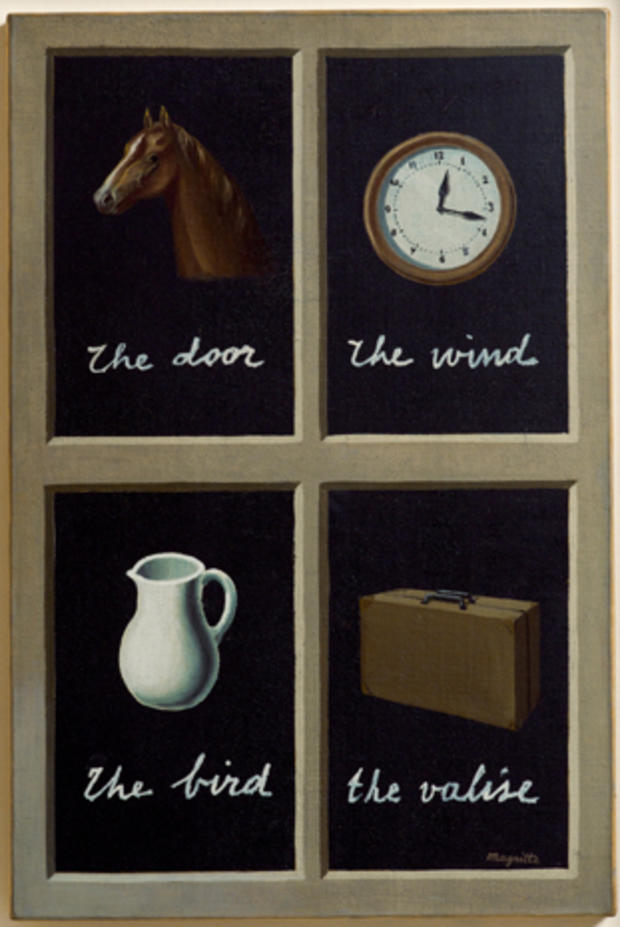
"La clef des songes (The interpretation of dreams)," 1935, oil on canvas, by Rene Magritte.
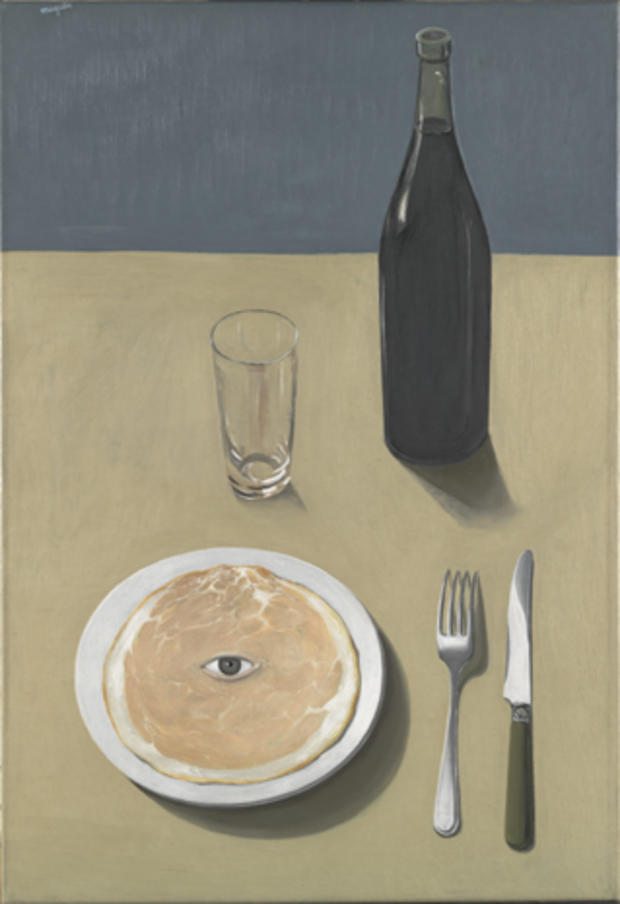
Museum of Modern Art. Gift of Kay Sage Tanguy. Copyright Charly Herscovici-ADAGP-ARS, 2013
"Le Portrait (The Portrait)" (1935), oil on canvas, by Rene Magritte.
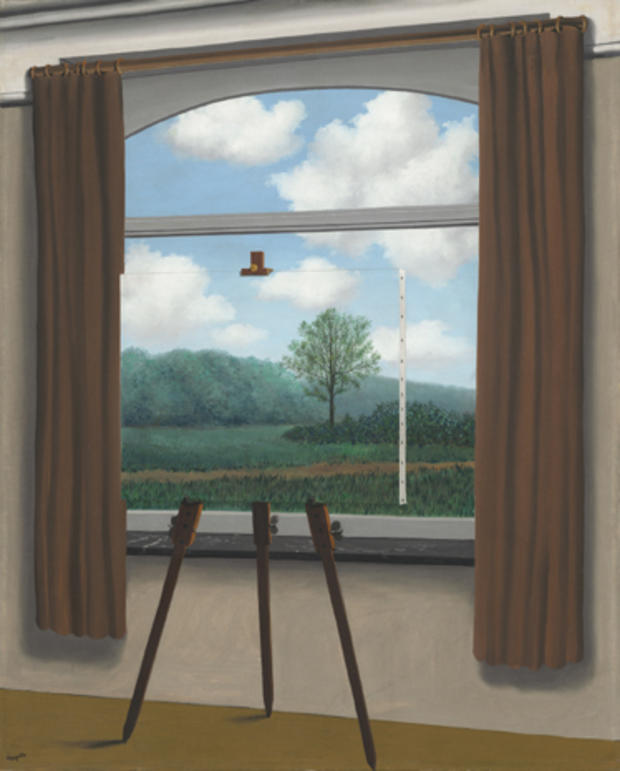
The National Gallery of Art, Washington, DC. Gift of the Collector’s Committee. Copyright Charly Herscovici-ADAGP-ARS, 2013
"La condition humaine (The Human Condition)," 1933, oil on canvas, by Rene Magritte.
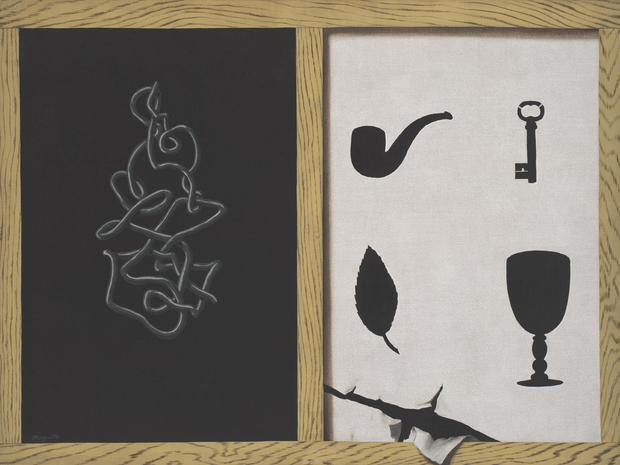
The Menil Collection, Houston. Copyright Charly Herscovici-ADAGP-ARS, 2013
"L'Alphabet des revelations (The Alphabet of Revelations)," oil on canvas, by Rene Magritte, 1929.
The Museum of Modern Art, New York. Sidney and Harriet Janis Collection. Copyright Charly Herscovici-ADAGP-ARS, 2013
"The Palace of Curtains, III," 1929, by Rene Magritte.
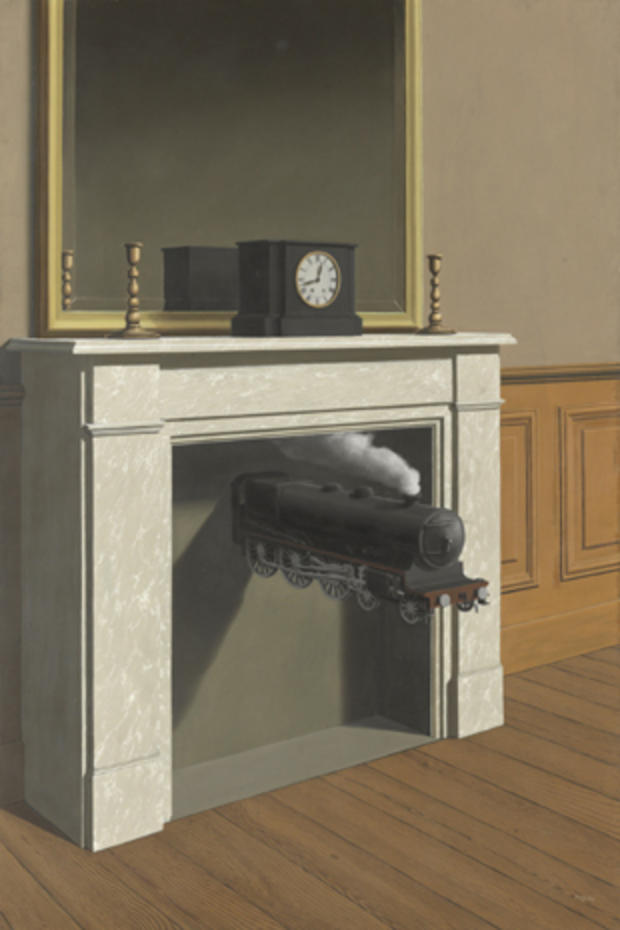
The Art Institute of Chicago, Joseph Winterbotham Collection. Copyright Charly Herscovici-ADAGP-ARS, 2013
"La Duree poignardee (Time Transfixed)," 1938, oil on canvas, by Rene Magritte.
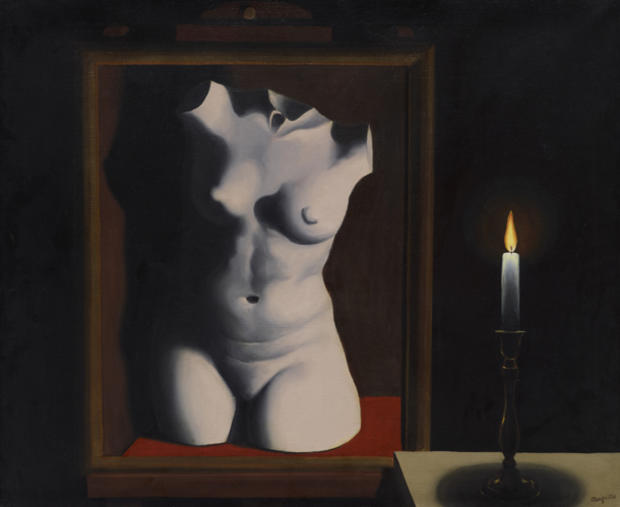
Dallas Museum of Art, Gift of Mr. and Mrs. Jake L. Hamon. Copyright Charly Herscovici-ADAGP-ARS, 2013
"La Lumiere des coincidences (The Light of Coincidences)," oil on canvas, by Rene Magritte, 1933.
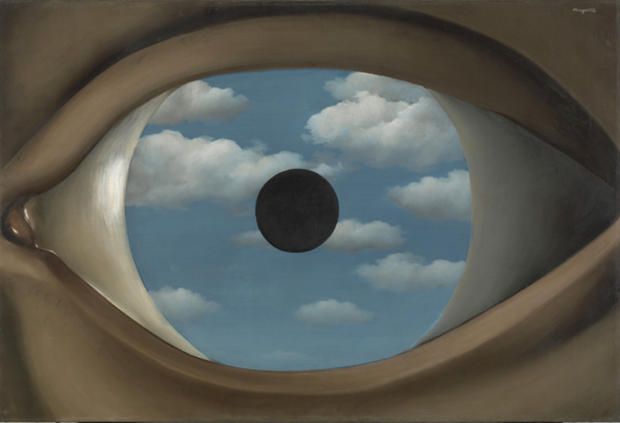
The Museum of Modern Art. Purchase. Copyright Charly Herscovici-ADAGP-ARS, 2013
"The False Mirror" (1928) by Rene Magritte.
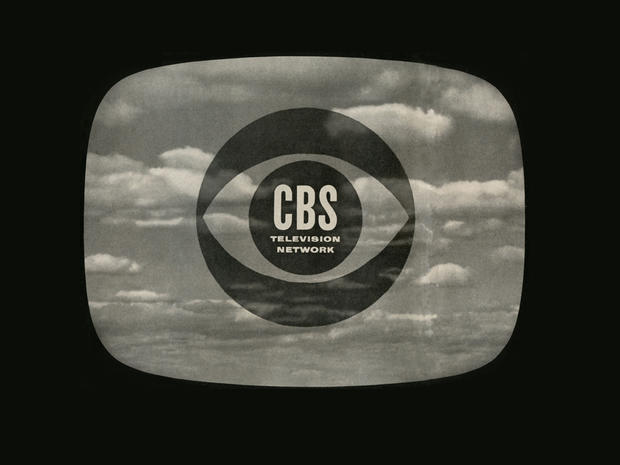
CBS
"Someone asked him late in life about what he thought about CBS appropriating his painting, 'The False Mirror,' the eye filled with sky, as their logo," Umland said. "And he sort of felt indifferent about it, because in fact, he thought what he did and what CBS did were so different that they were two different worlds, with two different objectives, and that what CBS ended up with was just a symbol on a background that was aiming to sell something or brand something. Whereas his painting had no purpose other than poetry."
Collection of Mr. and Mrs. Wilbur Ross. Copyright Charly Herscovici-ADAGP-ARS, 2013
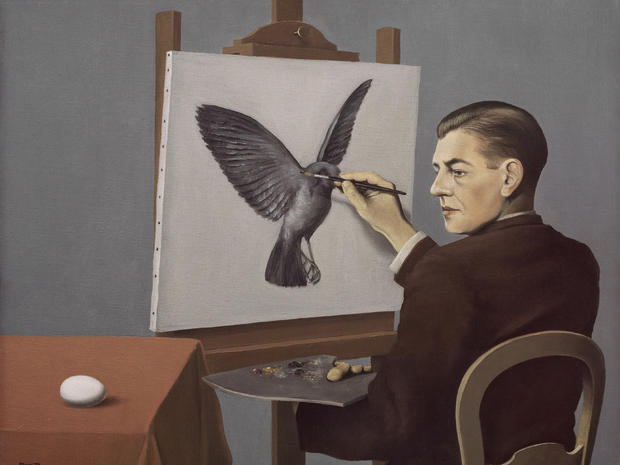
"La Clairvoyance (Clairvoyance)," 1936, by Rene Magritte. It is one of two Magritte paintings owned by billionaire and avid collector Wilbur Ross in the exhibition.
The Metropolitan Museum of Art, Ford Motor Company Collection. Gift of the Ford Motor Company and John C. Waddell. Copyright Charly Herscovici-ADAGP-ARS, 2013
"Dieu, le huitieme jour (God, the Eighth Day)" by Rene Magritte, 1937.
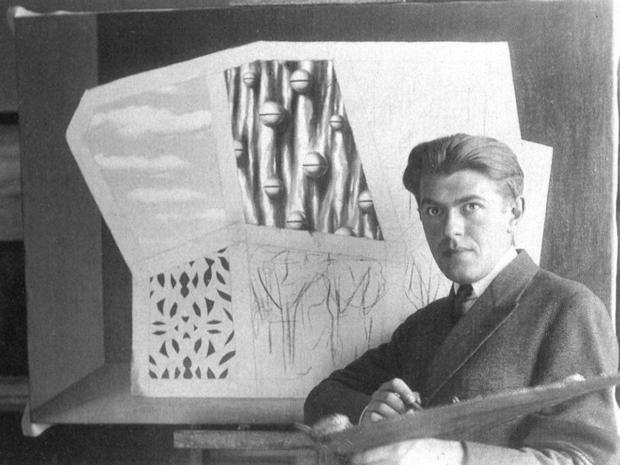
Private collection, Brussels. Copyright Charly Herscovici-ADAGP-ARS, 2013
Left: A 1928 photograph of Rene Magritte and "Le Masque Vide (The Empty Mask)."