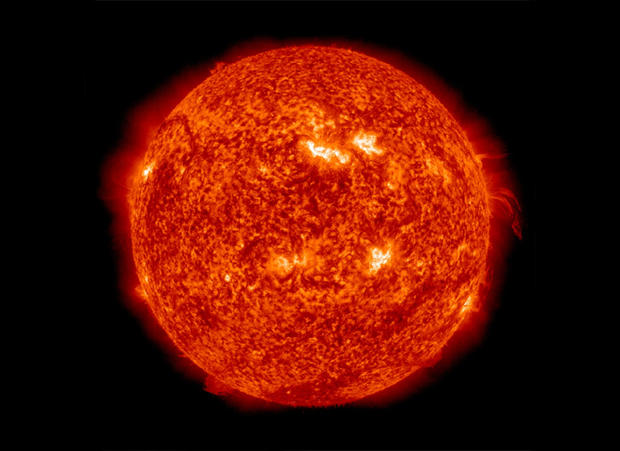
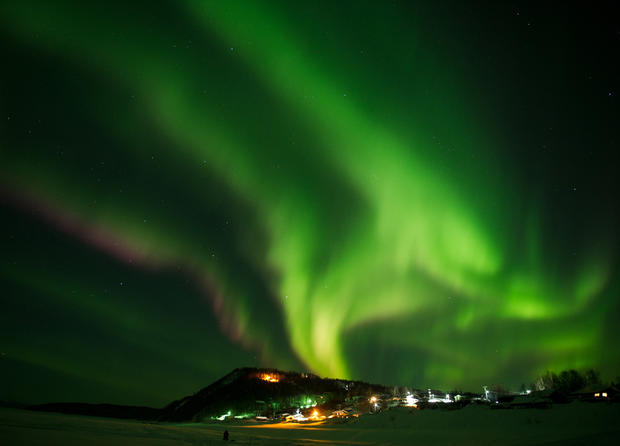
A solar storm shook the Earth's magnetic field early Friday, March 9, 2012.
The space weather center's website said they were not aware of any significant impact to electrical or technological systems, but said a storm rated as strong could force corrections to voltage systems and trigger false alarms on some protection devices, as well as increase drag on satellites and affect their orientation.
AP Photo/The Canadian Press, Bill Braden
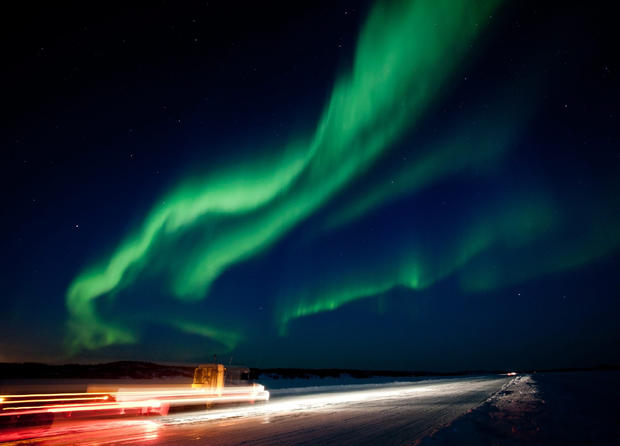
The largest solar storm in five years sent a huge wave of radiation into Earth's atmosphere creating a brilliant show of the Aurora Borealis near Yellowknife in Canada's North West Territories on Thursday, March 8, 2012. In this time-lapse image truckers are seen cruising down the ice road on Prosperous Lake.
NASA/Solar Dynamics Observatory
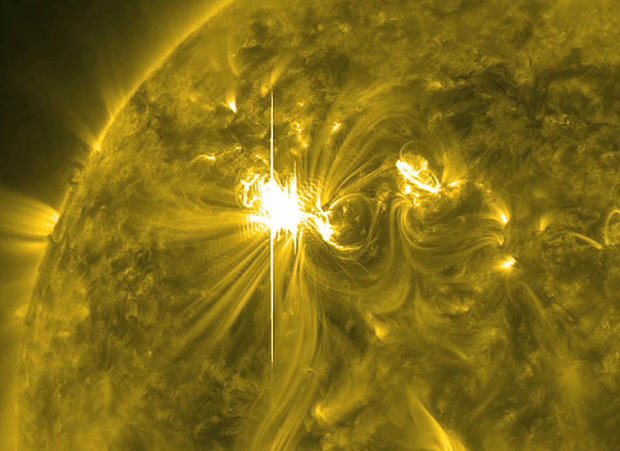
The sun erupted with one of its largest solar flares of this recent solar cycle on March 6. It was categorized as an X5.4, making it the second-largest flare since the Sun's period of relatively low activity (called solar minimum) began in early 2007.
NASA/Solar Dynamics Observatory
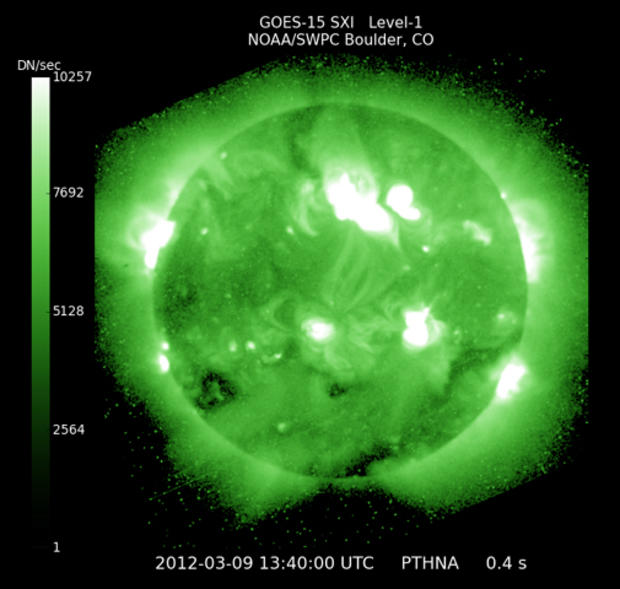
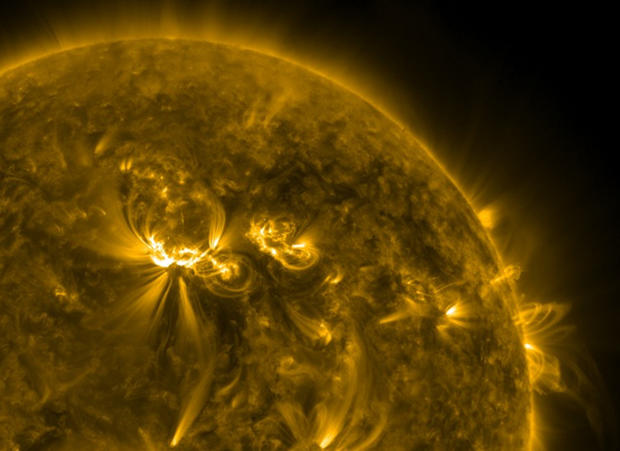
An X-ray image of the Sun on Friday, March 9, 2012.
The current increase in the number of X-class-sized flares is part of the Sun
NASA/Solar Dynamics Observatory
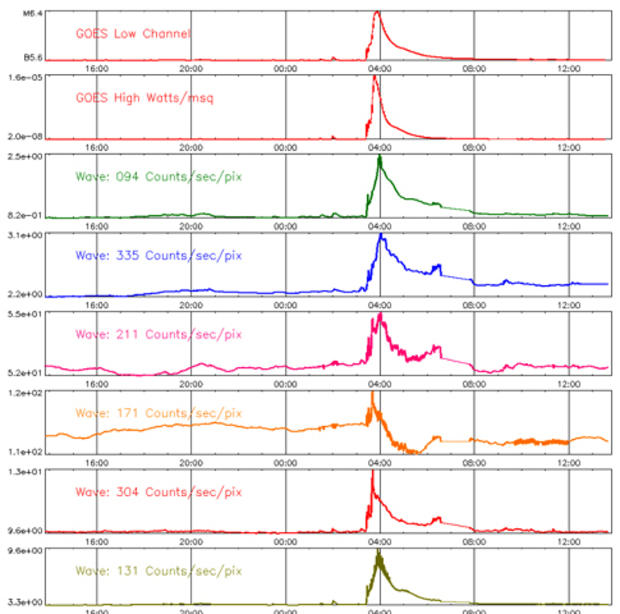
A spike in the emissions of various wavelengths of light, as recorded on March 8, 2012 by Atmospheric Imaging Assembly.
NASA/SDO
Solar flare activity on the Sun documented Friday, March 9, 2012.
NASA/Solar Dynamics Observatory
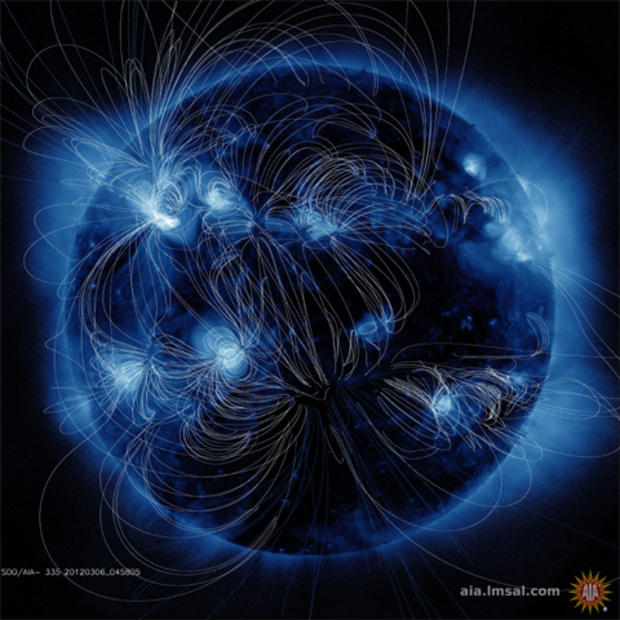
This image depicts a Potential Field Source Surface (PFSS) model showing the Sun's coronal magnetic field, March 9, 2012.
NASA/Solar Dynamics Observatory
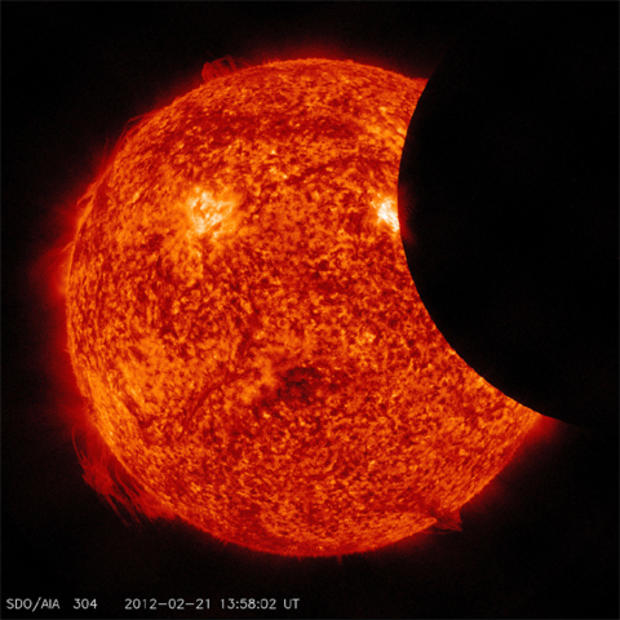
The Moon eclipses a view of the Sun as recorded by the SDO satellite (recorded here in extreme ultraviolet light). The rare lunar transit gives the SDO team an opportunity to adjust and fine-tune the satellite's imaging and data-collection instruments.
AP Photo/Peninsula Clarion, M. Scott Moon
The Northern Lights (or Aurora Borealis) fill the sky above Soldotna, Alaska, early March 7, 2012. Researchers at the University of Alaska Fairbanks are predicting an active aurora again for Alaska, much of Canada and some northern U.S. states.
AP Photo/The Canadian Press, Bill Braden
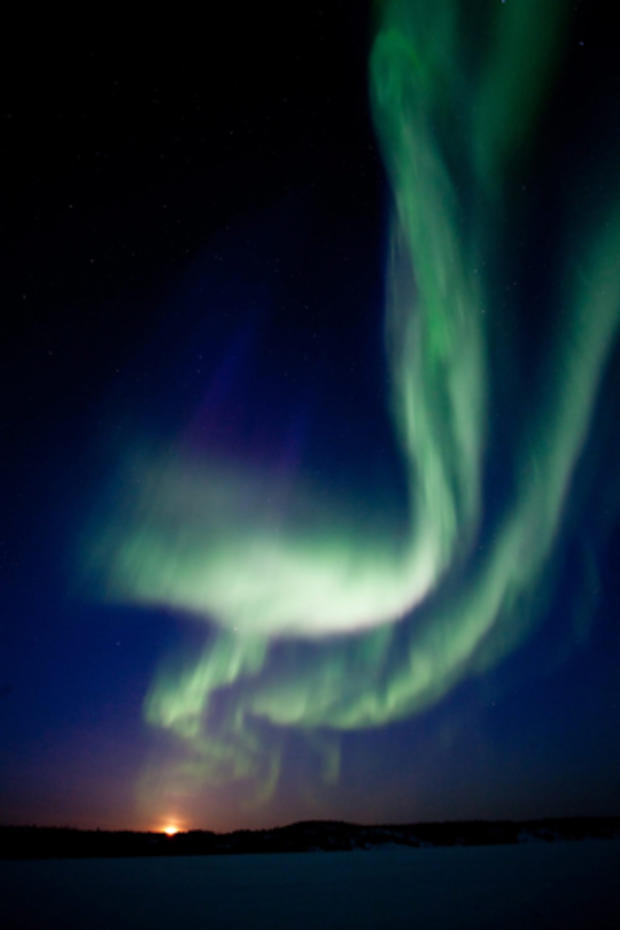
The largest solar storm in five years sent a huge wave of radiation into Earth's atmosphere creating a brilliant show of the Aurora Borealis near Yellowknife, North West Territories on Thursday, March 8, 2012.
AP Photo/The Canadian Press, Bill Braden
Northern Lights, as viewed in near Yellowknife, North West Territories on Thursday, March 8, 2012.
AP Photo/Peninsula Clarion, M. Scott Moon
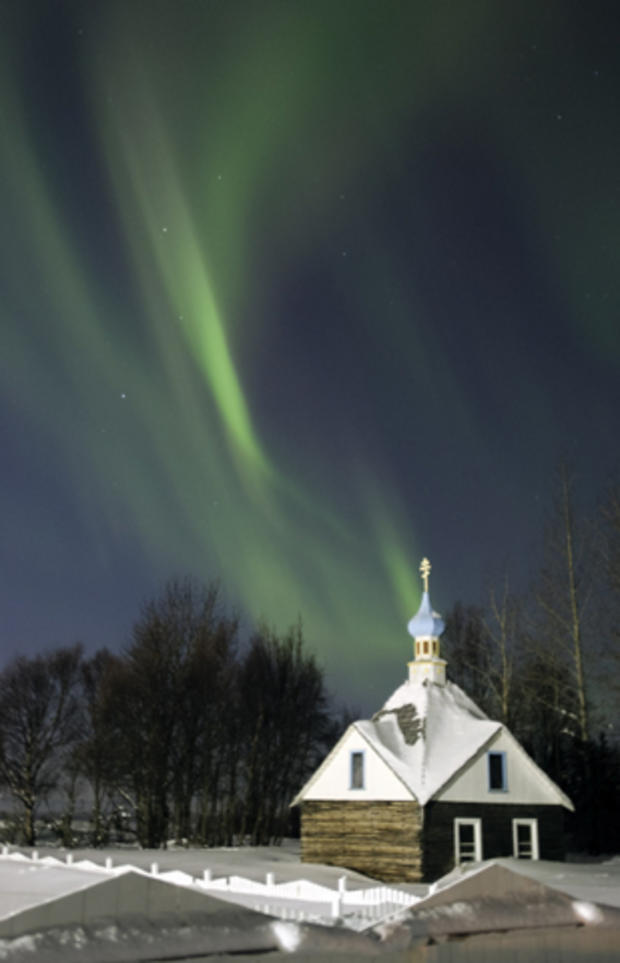
The Northern Lights fill the sky Friday, March 9, 2012, above the Russian Orthodox Saint Nicholas Memorial Chapel in Kenai, Alaska.
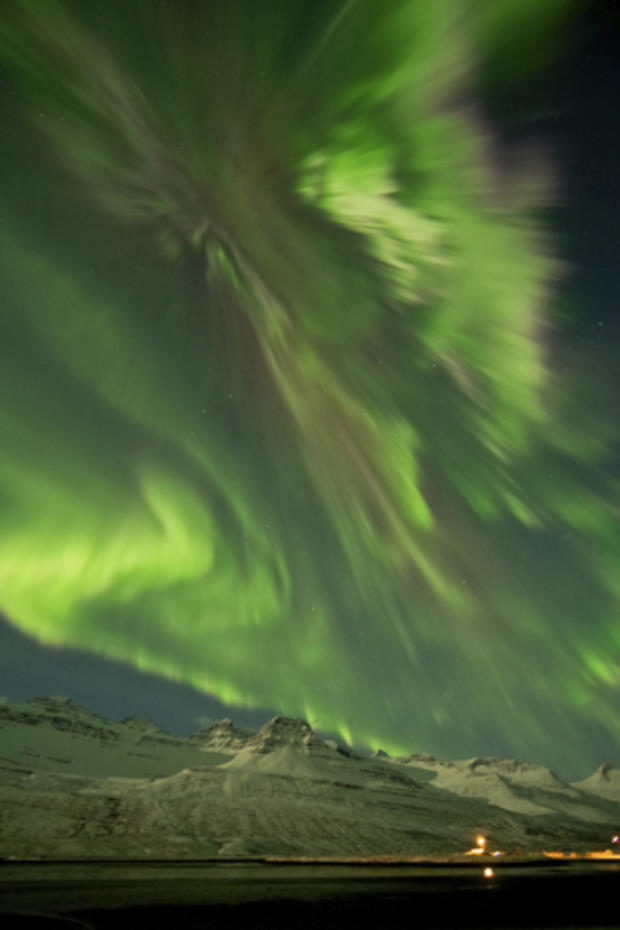
AP Photo/Jonina Oskardottir
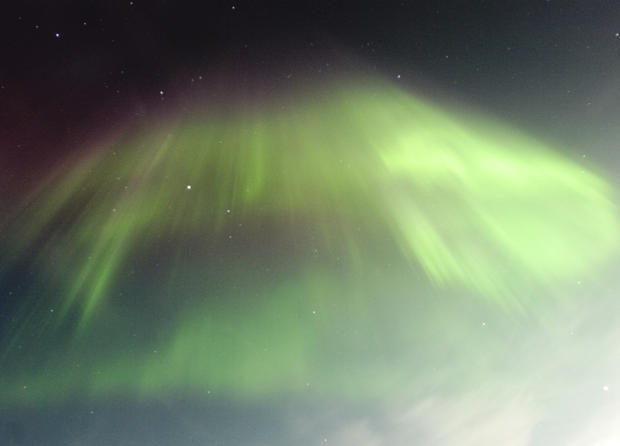
The Northern Lights are seen in the skies near Faskusfjordur on the east coast of Iceland Thursday, March 8, 2012. After reports Thursday of the storm fizzling out, a surge of activity prompted space weather forecasters to issue alerts about changes in the magnetic field.
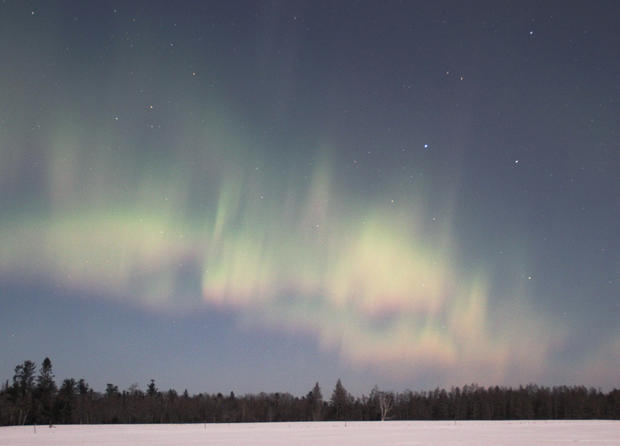
AP Photo/The Duluth News-Tribune, Andrew Krueger
The Northern Lights fill the sky above Gnesen Township, north of Duluth, Minn., early Friday, March 9, 2012. While a nearly full moon washed out some of the display, what the Northern Lights lacked in brightness they made up for in motion, with arcs and rays dancing across the sky.
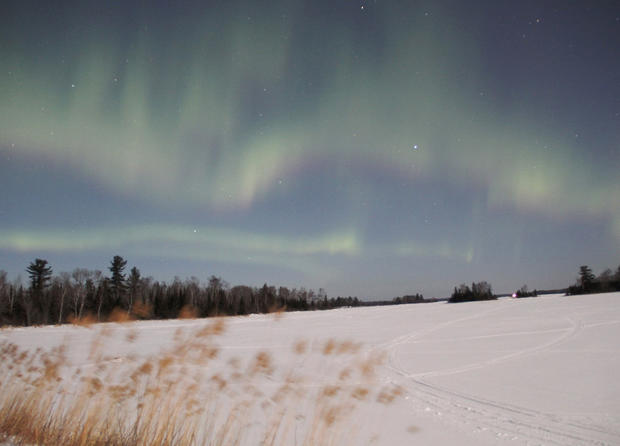
AP Photo/The Duluth News-Tribune, Andrew Krueger
The Northern Lights fill the sky over Boulder Lake, north of Duluth, Minn., early Friday, March 9, 2012. While a nearly full moon washed out some of the display, what the northern lights lacked in brightness they made up for in motion, with arcs and rays dancing across the sky.
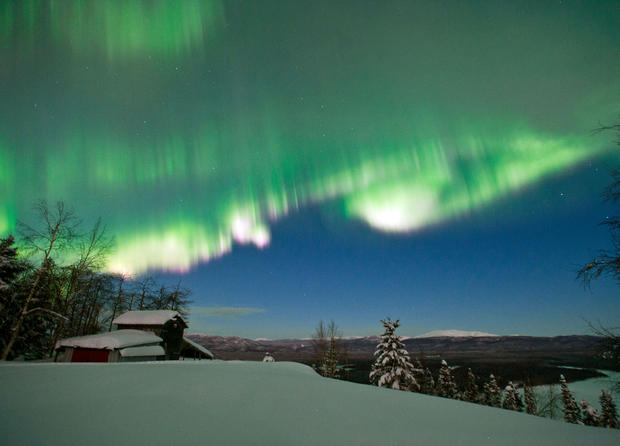
AP Photo/Anchorage Daily News, Marc Lester
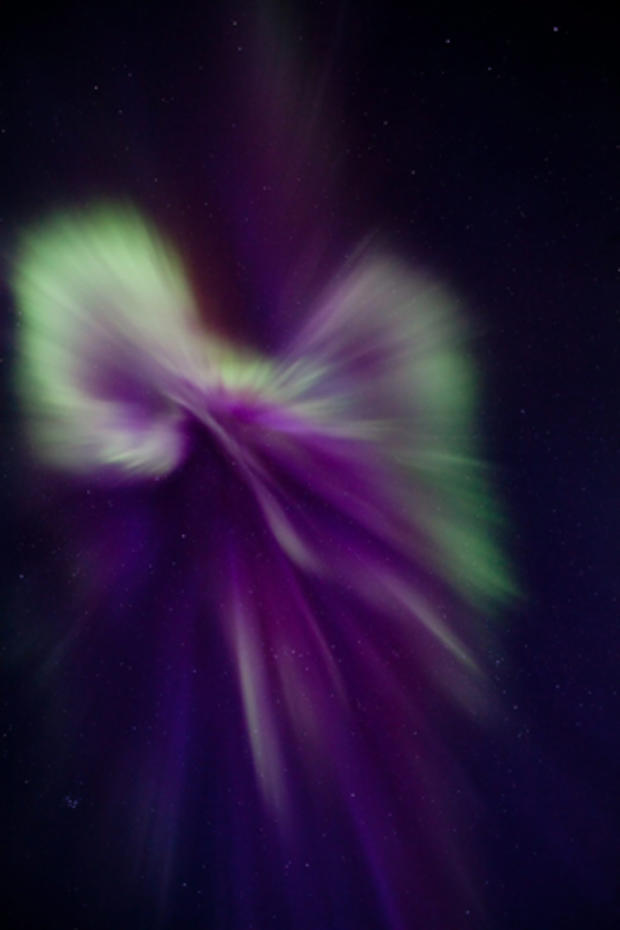
In this March 8, 2012 photo, the colorful Northern Lights are seen from Ruby, Alaska.
AP Photo/The Anchorage Daily News, Marc Lester
In this Friday, March 9, 2012 photo, an aurora borealis swirls in the sky over the Yukon River village of Ruby, Alaska, a checkpoint of the Iditarod Trail Sled Dog Race.