The sun as you've never seen it
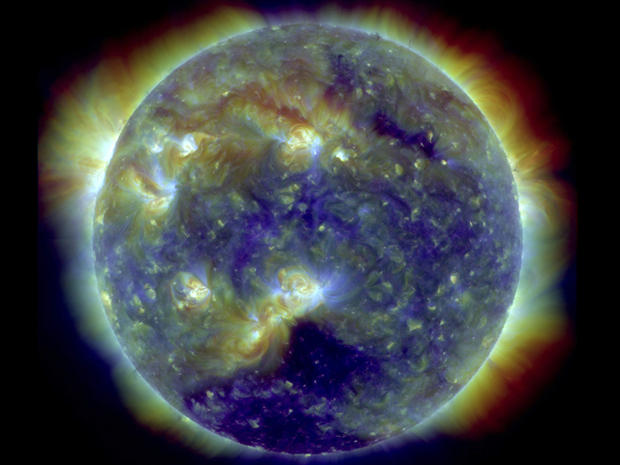
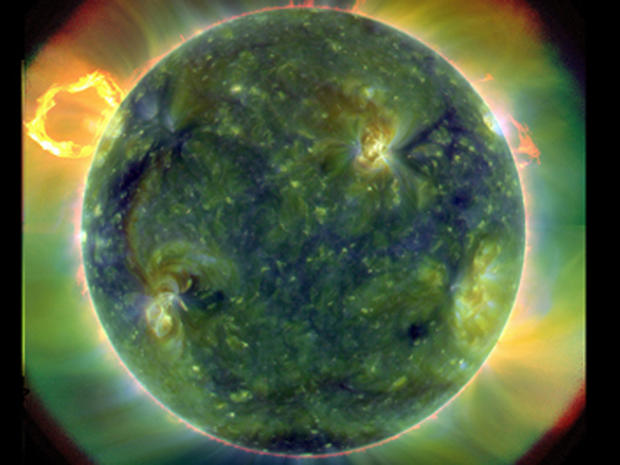
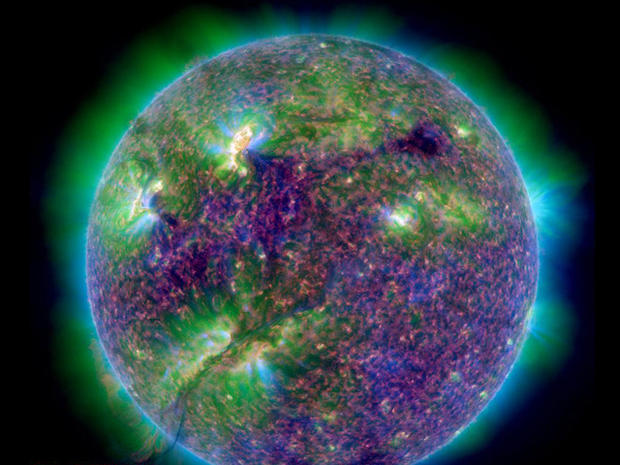
On February 11, 2010, NASA launched the Solar Dynamics Observatory, or SDO, into space. Since then, we Earthlings have been able to view millions of stunning images of the sun. This picture combines three wavelengths of extreme ultraviolet light.
Solar flares
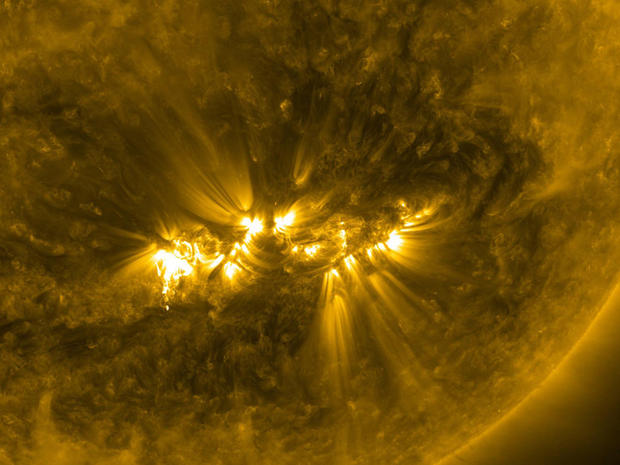
The sun
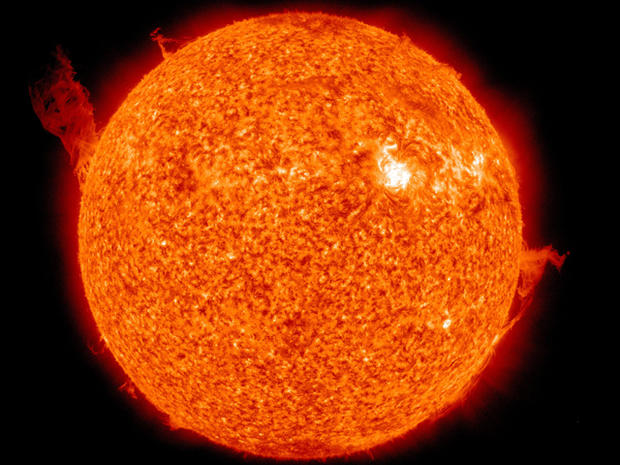
A mass of plasma was photographed spinning above the sun's surface for more than two days in October 2010. At around the same time, the SDO observed a shorter-lived eruption, which blew away into space near the upper left edge of the sun.
Magnetic fields
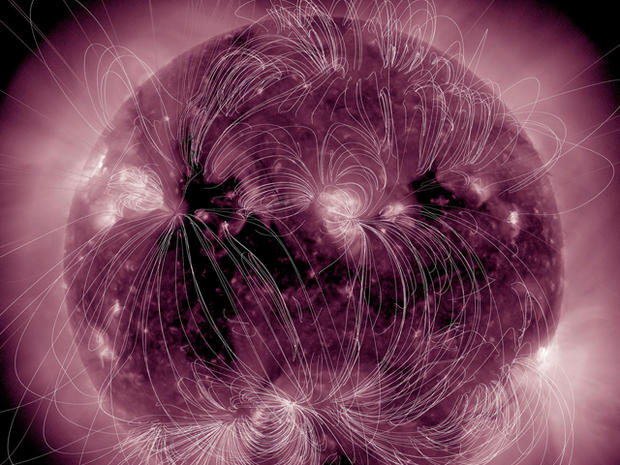
Magnetic field lines and their interactions superimposed on an extreme ultraviolet image. The field lines are most dense around active regions on the sun.
Sun and moon
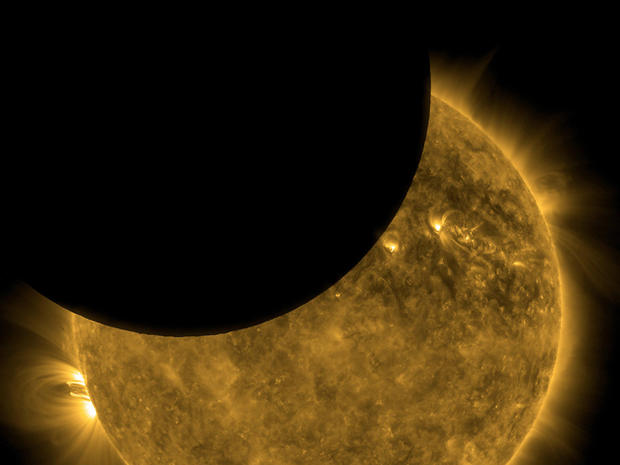
A new moon passes directly between the SDO and the sun. The result: the dark moon created a partial eclipse of the sun.
Plasma eruption
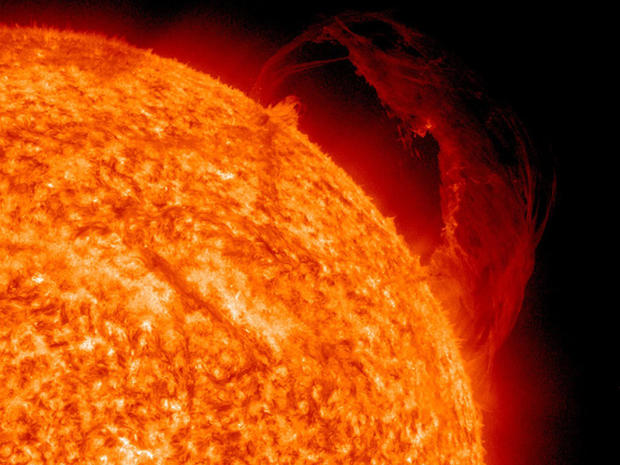
A common occurrence on the sun - but this one stands out for its clarity: Strands of plasma erupt and create so-called "prominences," formed of cooler clouds of gases suspended by often unstable magnetic forces. Their eruptions are fairly common, but this one was larger and clearer to see than most.
Plasma arc
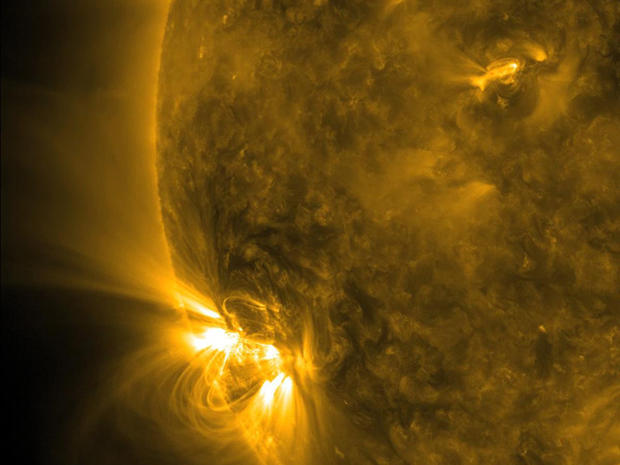
Looping arcs of plasma - actually, charged particles - in profile.
UV light
Solar wind
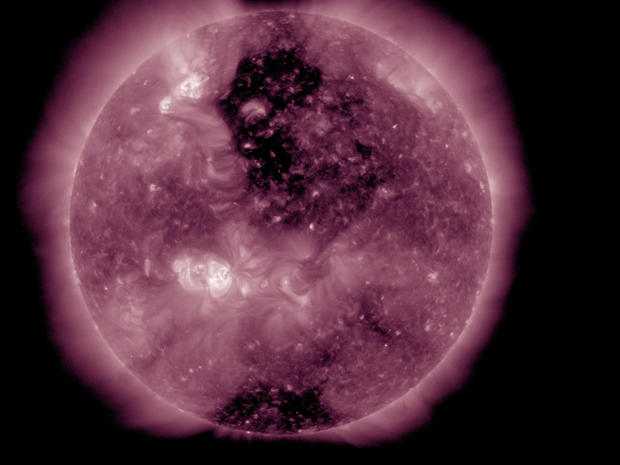
The sun is chockablock with magnetically open regions that stream high-speed solar wind into space. In this image, one of these coronal holes was photographed stretching across the top half of the sun.
Solar filament
Solar surface
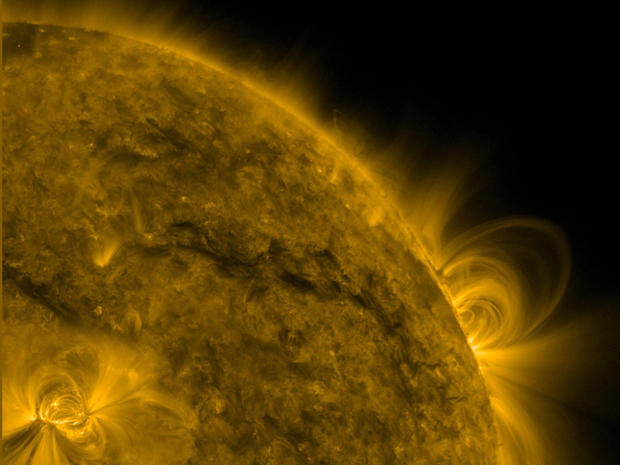
Further evidence of the magnetic collisions taking place on the sun, marked by arcing loops above an active region.
Solar surface
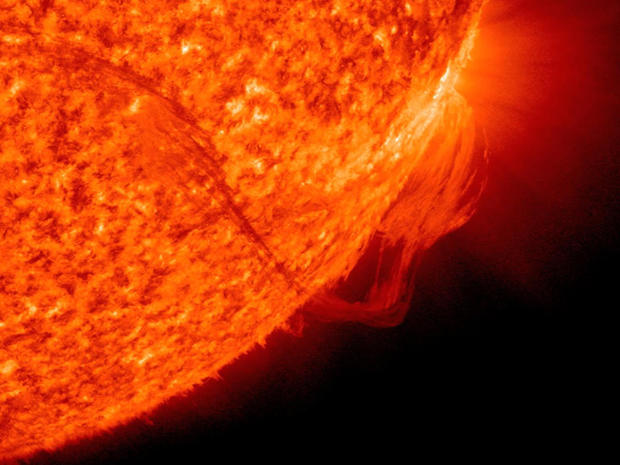
SDO has kept close watch on the relatively unstable clouds of cooler gases that are suspended above the sun by the star's magnetic forces. NASA notes that at times, these filaments erupt and burst into space - as in the accompanying image. Other times, they just fade away.
Solar Dynamics Observatory
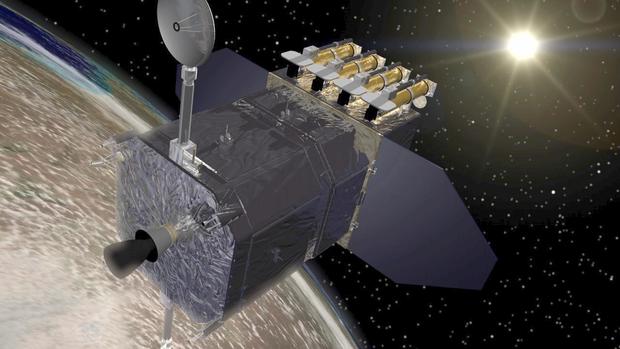
Artist's concept of the Solar Dynamics Observatory in space.