ABC
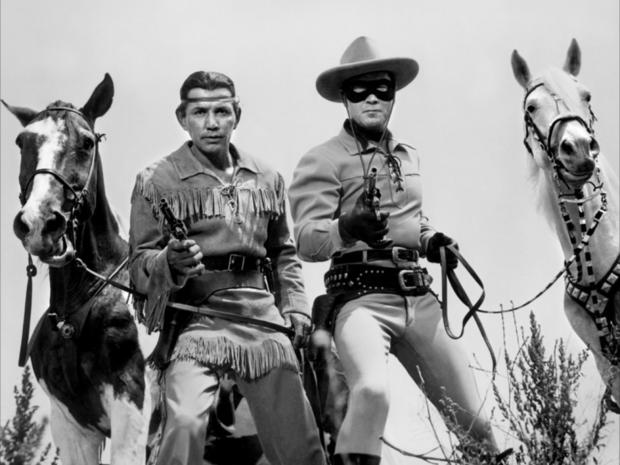
Clayton Moore as the Lone Ranger, and Jay Silverheels as his faithful companion Tonto, in the long-running TV series "The Lone Ranger."
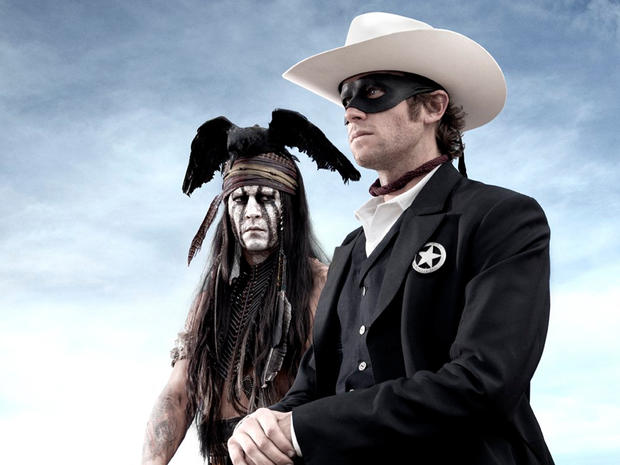
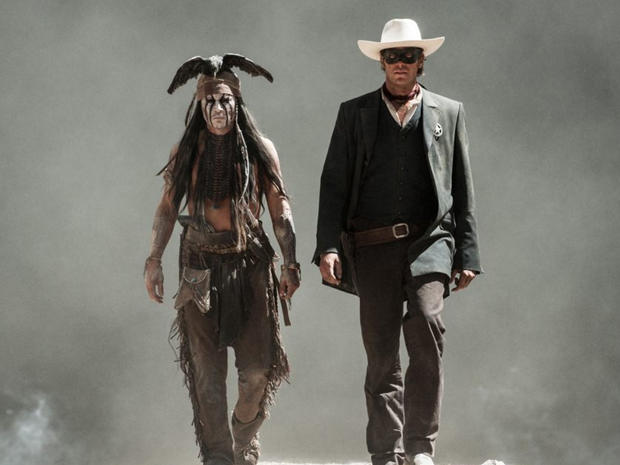
Originally created in 1933 when a Detroit radio station sought to air a Western, the iconic character - a Texas Ranger who avenges injustice in a wild West - became one of the most enduring pop culture characters, crossing over from radio, books and comics to TV and movies, including a new incarnation starring Armie Hammer and Johnny Depp.
By CBSNews.com senior producer David Morgan
Mutual Network
In 1933 Detroit station WXYZ debuted the Western serial, "The Lone Ranger," about a former Texas Ranger who fights injustice in the American West, aided by his faithful Indian companion, Tonto. The radio program was picked up nationally by the Mutual Network and, later, the precursor of ABC. It ran for an incredible two decades, with the last of nearly 3,000 new episodes airing in 1954.
Though the very first episodes only featured a "lone" Ranger, a companion was created in the form of Tonto, so that the title character would have someone to converse with - a vital trait for a radio character!
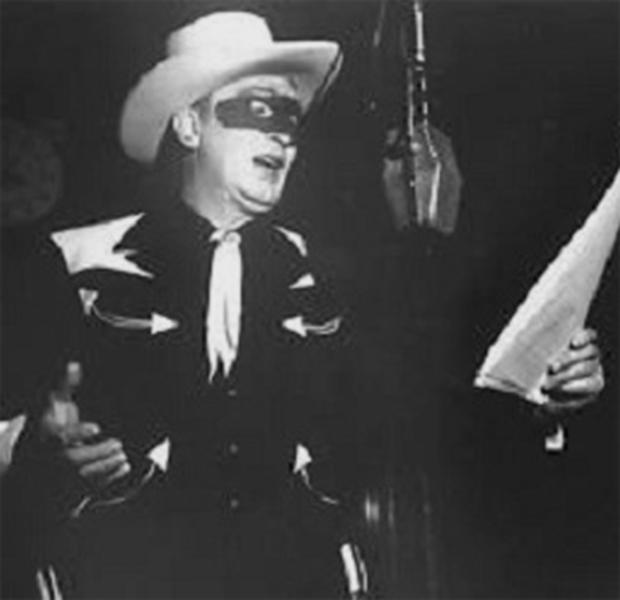
Left: Brace Beemer, an announcer for the program, was one of several actors to play the masked man on radio; he took on the role full-time beginning in 1941 and continued through the end of the series' run.
CBS News
The Lone Ranger character was created by WXYZ writer Fran Striker (who also created the Green Hornet and Sgt. Preston of the Yukon). However, Striker was pressured to sign over rights to the character to WXYZ's owner, George Trendle.
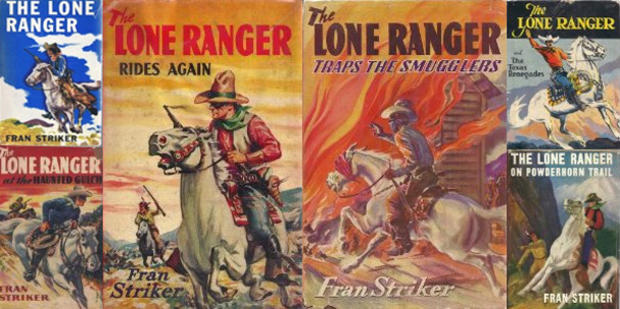
Left: Just a handful of the countless novels about the Lone Ranger's exploits, many of which were penned by Striker.
Republic Pictures
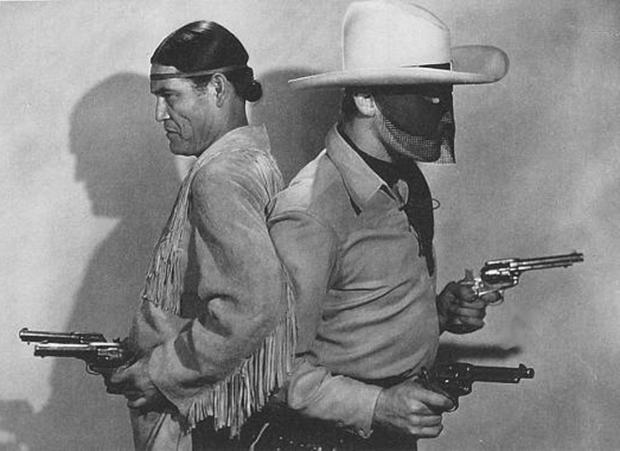
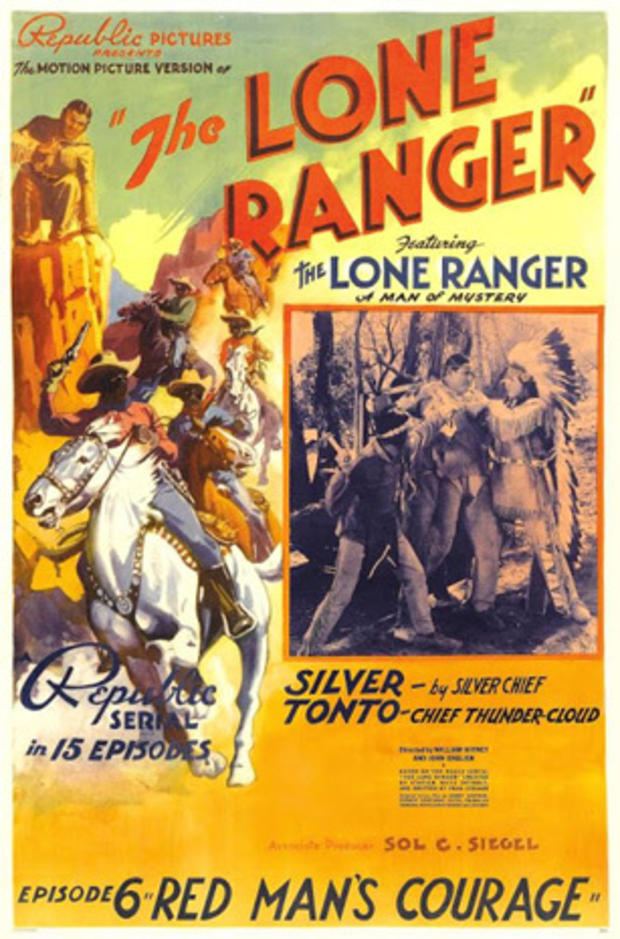
The first big-screen masked man was played by Lee Powell in the 1938 Republic serial, "The Lone Ranger." Chief Thunder Cloud co-starred as Tonto.
Republic Pictures
The identity of the Lone Ranger -- both the character and the actor playing him -- was actually kept secret until the serial's final chapter, when one of five Texas Rangers in the story was revealed behind the mask, making this first "Lone Ranger' movie adventure a cross between a Western and an Agatha Christie mystery.
CBS News
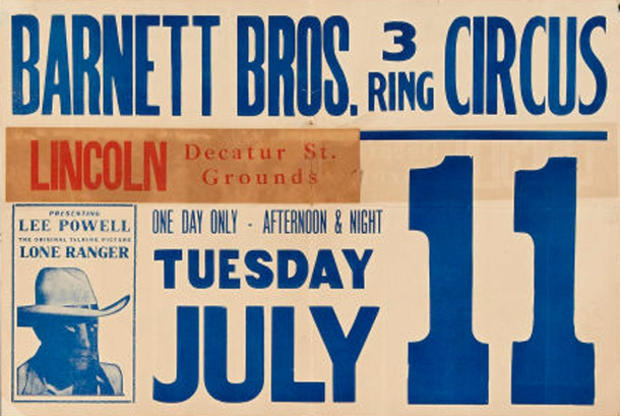
Although Lee Powell did not star in Republic's follow-up serial, he did appear in Lone Ranger-like garb during live performances with the Barnett Brothers Circus.
The owners of the Lone Ranger character sued, but in 1941 a court determined that Powell had the right to promote himself as "the Original Lone Ranger of Talking Picture Fame."
Republic Pictures
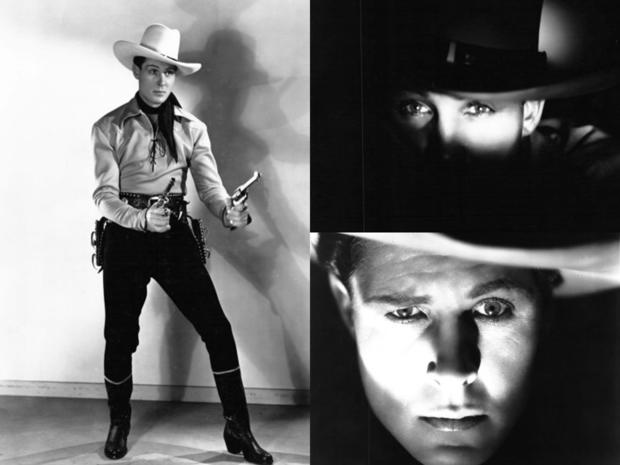
In Republic's second serial, "The Lone Ranger Rides Again" (1939), Bob Livingston (one of the studio's "3 Mesquiteers") was picked to portray the Lone Ranger. But unlike Lee Powell, Livingston spent most of his time on screen un-masked.
CBS News
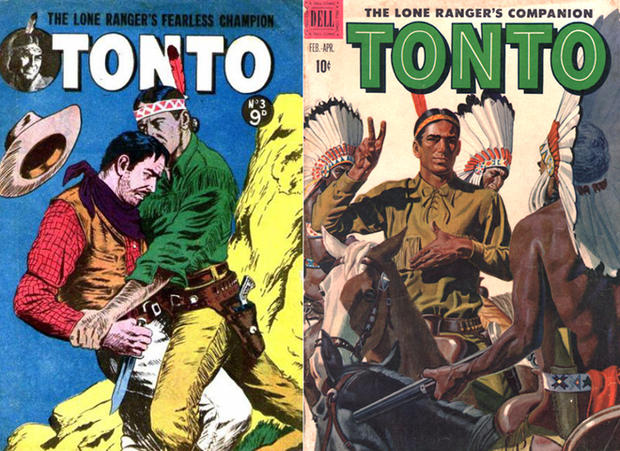
Tonto received top billing in several comic books.
Online USA/Getty Images
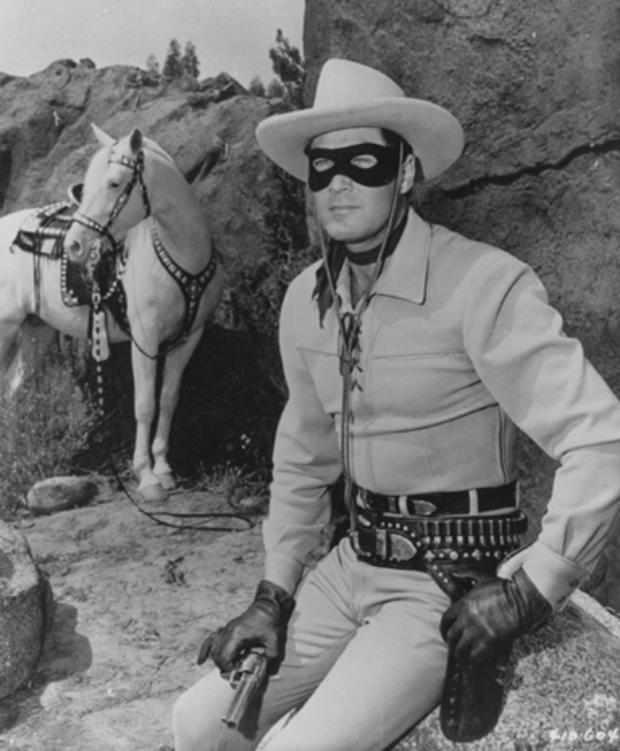
Beginning in 1949 Clayton Moore starred as the masked man in the highly-popular "Lone Ranger" TV series.
ABC
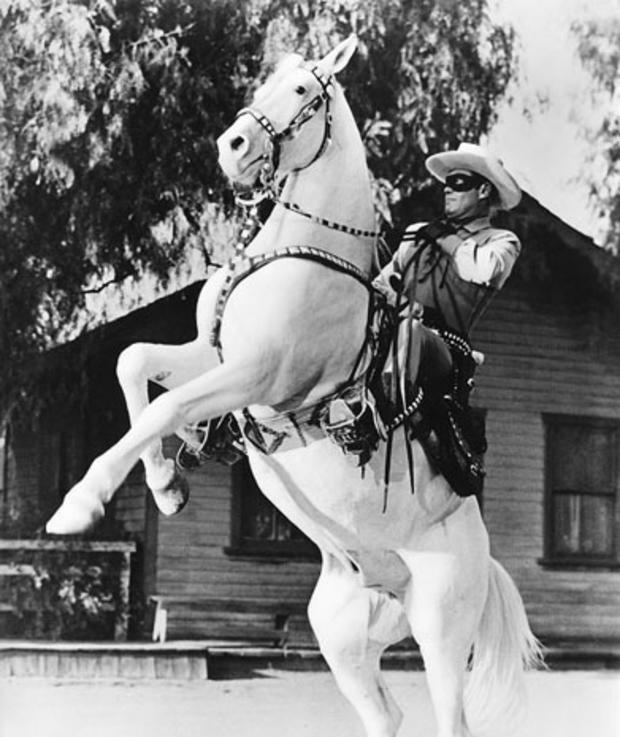
Clayton Moore as "The Lone Ranger," atop Silver, his trusty, white stallion.
Fran Striker penned "The Lone Ranger's Creed," which dictated the honor to which this vigilante for justice (and all who would follow in his footsteps) adhered to. Among his tenets: "In being prepared physically, mentally, and morally to fight when necessary for that which is right."
ABC
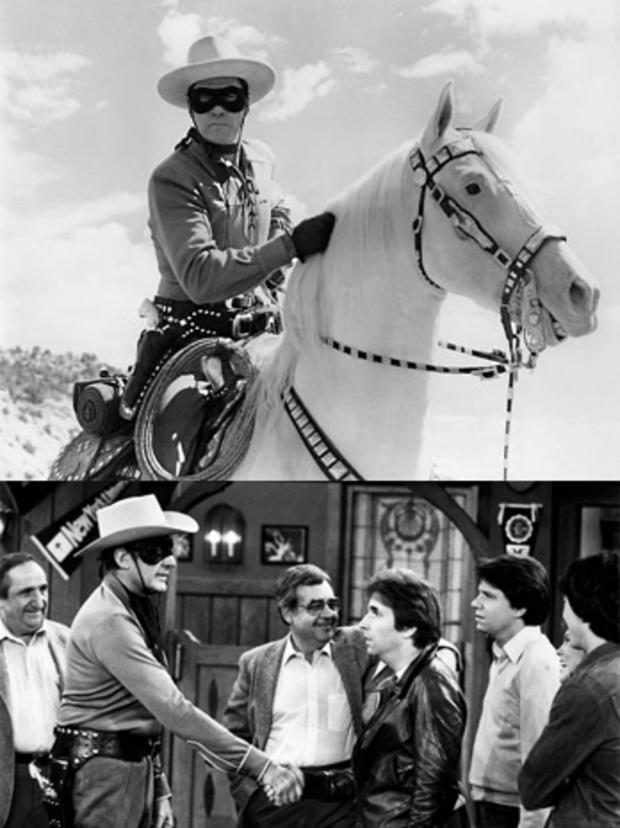
In 1952 Clayton Moore departed the "Lone Ranger" TV series (rumored to have been instigated by a contract dispute). The role was taken up by John Hart, who played the Lone Ranger for 52 episodes during Moore's two-year absence.
Hart also played a cameo as the Lone Ranger in a 1982 episode of "Happy Days," titled, "Hi Yo, Fonzie Away."
ABC
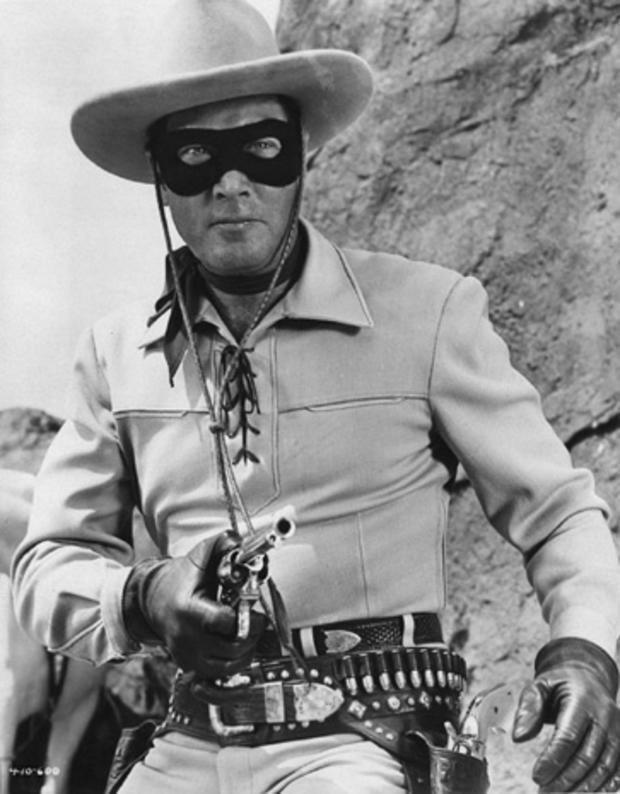
Clayton Moore as "The Lone Ranger."
Warner Brothers
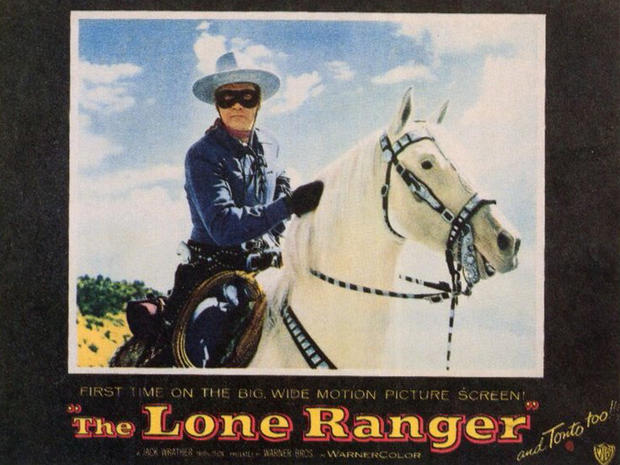
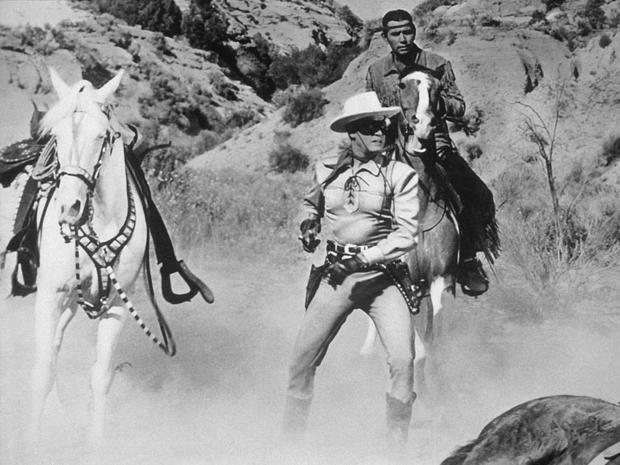
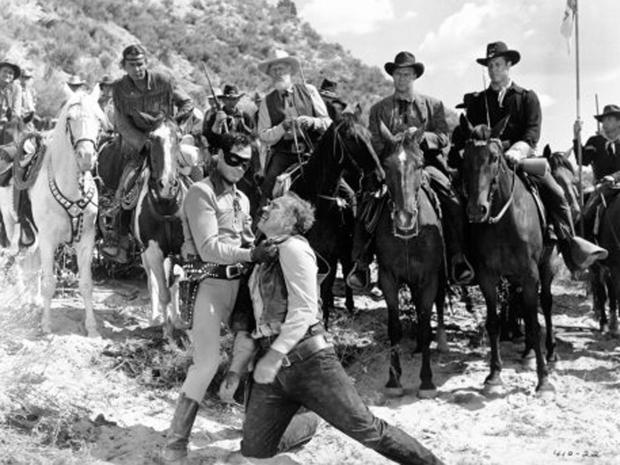
In 1956 Moore and Silverheels starred in a big-screen adventure, "The Lone Ranger."
Warner Brothers
Clayton Moore and Jay Silverheels as the Lone Ranger and Tonto.
Warner Brothers
In the 1956 film, the Lone Ranger comes up against a dastardly rancher who wants to steal a sacred Indian mountain he eyes for a possible silver mine.
Warner Brothers
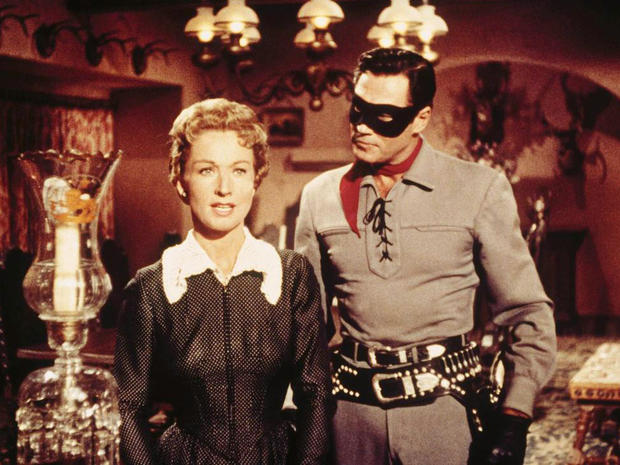
Bonita Granville and Clayton Moore in the 1956 movie, "The Lone Ranger."
The character of the Lone Ranger adhered to a strict moral code: He did not kill, drink, curse, or smoke; did not accept rewards for his efforts; and never revealed his un-masked identity to anyone other than Tonto.
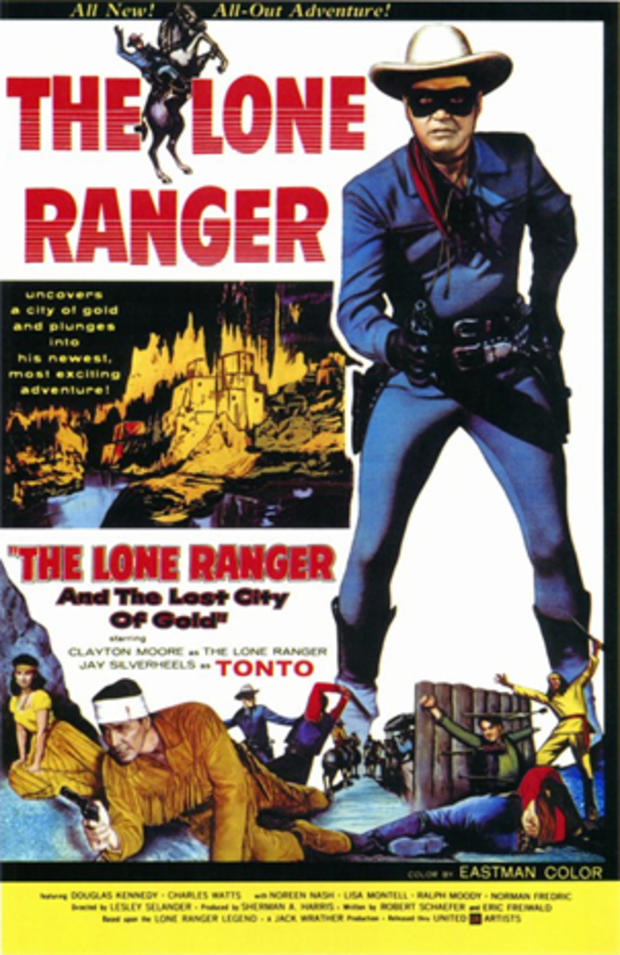
United Artists
The 1958 feature "The Lone Ranger and the Lost City of Gold" was Clayton Moore's last appearance as the masked man - officially, at least.
Moore would make a career of playing the part in public appearances, TV guest spots, and commercials.
In 1979, a court order was sought against Moore from making any more appearances as the character. Moore counter-sued and won, and continued to appear as the Lone Ranger almost until his death, in 1999.
Online USA/Getty Images
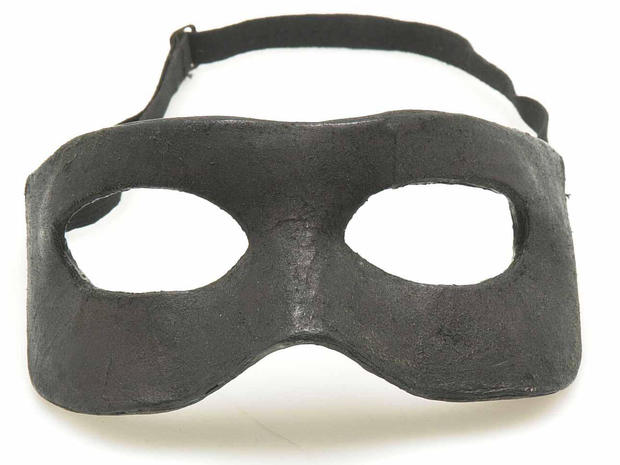
The Lone Ranger mask, from the collection of the estate of actor Clayton Moore, as placed for auction in 2000 at sothebys.amazon.com.
Filmation
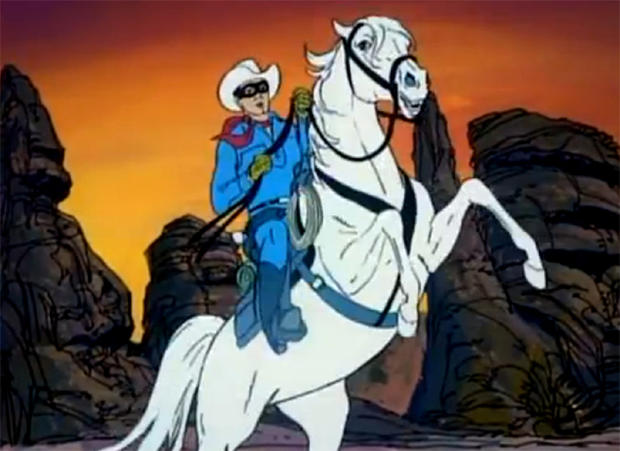
The Lone Ranger turned up as a Saturday morning cartoon staple, first in the 1960s, then in 1980 as part of "The Tarzan/Lone Ranger Adventure Hour" (which later became "The Tarzan/Lone Ranger/Zorro Adventure Hour."
Universal Pictures
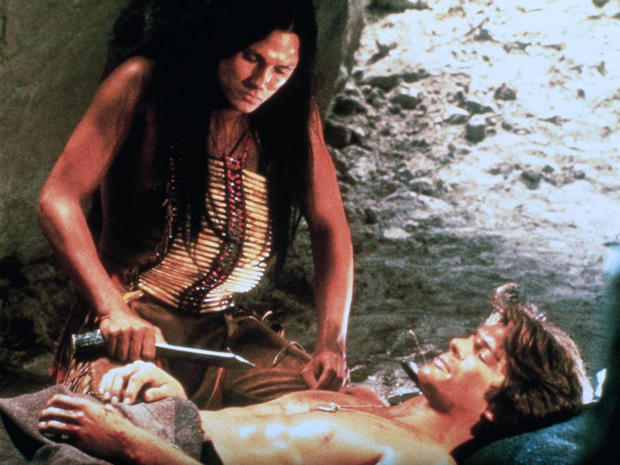
Klinton Spilsbury and Michael Horse starred in the 1981 feature film, "The Legend of the Lone Ranger," which was a flop at the box office.
All of Spilsbury's dialogue was dubbed by actor James Keach ("The Long Riders").
It proved to be Spilsbury's only film credit.
Universal Pictures
Tonto (Michael Horse) tends to John Reid (Klinton Silsbury) in "The Legend of the Lone Ranger" (1981).
WB
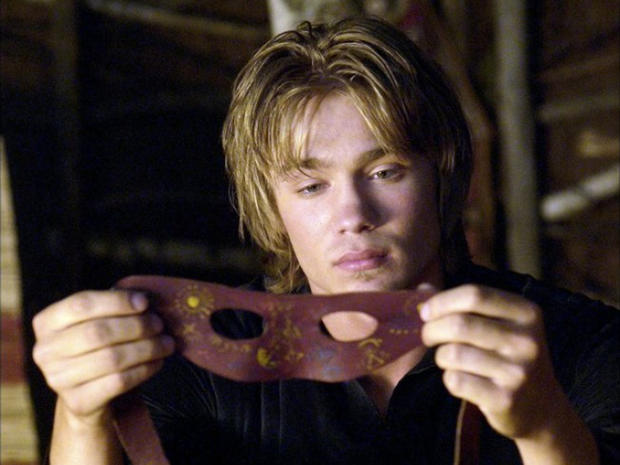
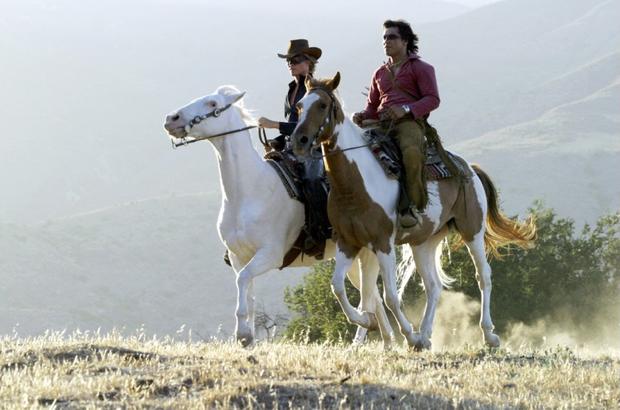
Chad Michael Murray played the young masked man in a 2003 TV movie, as a young law student who seeks to avenge the murder of his brother, a Texas Ranger.
WB
Chad Michael Murray as The Lone Ranger and Nathaniel Arcand as Tonto in the 2003 TV movie, "The Lone Ranger."
Dynamite Entertainment
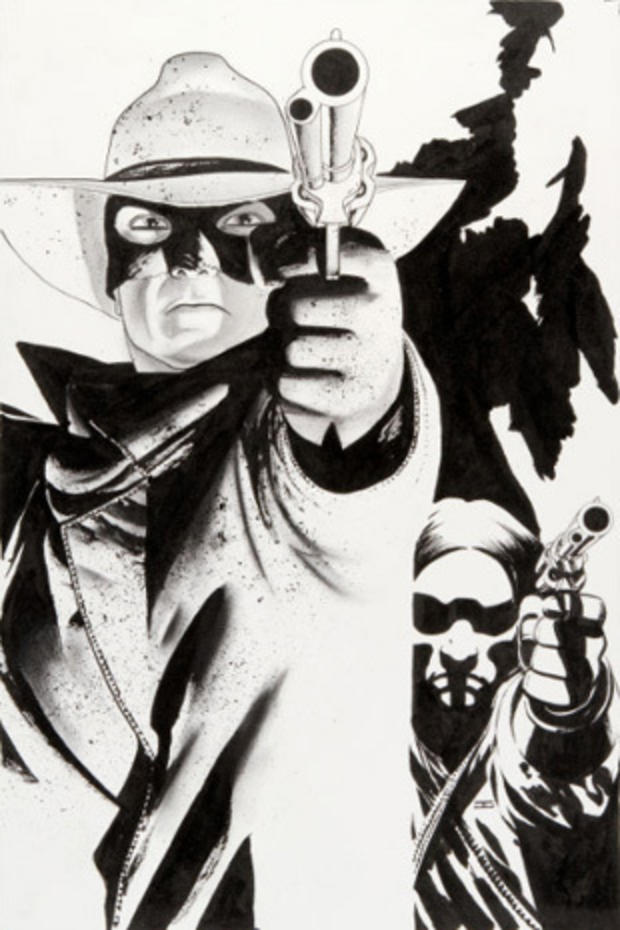
John Cassaday's cover art for the 2006 comic "The Lone Ranger, #3."
Walt Disney Pictures
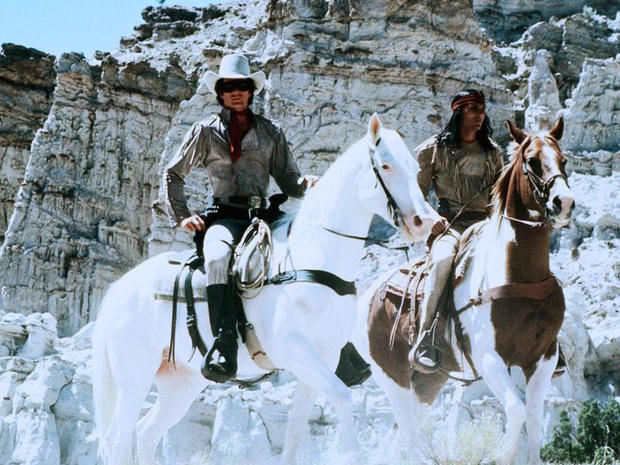
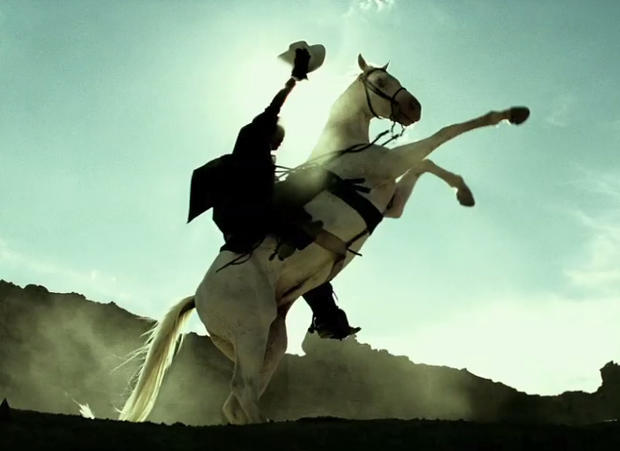
Armie Hammer ("The Social Network") saddled up for the 2013 big-budget film version of "The Lone Ranger."
Johnny Depp, re-teaming with his "Pirates of the Caribbean" director Gore Verbinski, plays Tonto as yet another character dancing on the precipice of danger.
"I think if you don't feel that, if you don't feel some kind of -- not fear necessarily, but, you know, the possibility of just falling flat on your face, I think you must challenge that," Depp said.
Walt Disney Pictures
Johnny Depp vowed to change the portrayal of the Native American sidekick from earlier incarnations.
"I was always very uncomfortable with the idea that Tonto was given sort of instructions and sent off," Depp told CBS News' Lee Cowan. "I mean, the Lone Ranger's a nice guy, but how come he's treating the other guy, like, lesser?"
Depp admits his portrayal is not free of all the stereotypes, but with a narrative seen through Tonto's eyes, the Lone Ranger is more Tonto's companion than the other way around.
Walt Disney Pictures
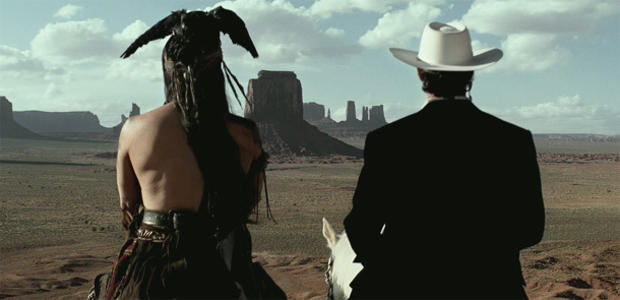
Much of the film was shot at Monument Valley, a favorite movie location for such master Western filmmakers as John Ford. "You'd wake up in the morning and kind of look outside and go, 'This looks computer-generated, like, this doesn't look real at all!' " said Hammer. "It's almost too beautiful to comprehend."
Walt Disney Pictures
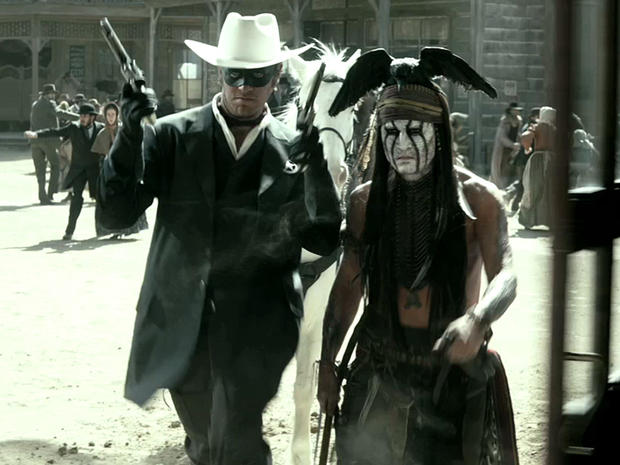
"We were very careful to stay very true to the original elements of the story," actor Armie Hammer told CBS News' Lee Cowan. "Silver, the mask, Tonto - all of the original elements from the show are here presented and accounted for in the movie. They've just been given sort of a modern face, a new spin, to reach the audiences who grew up [with] and had a sense of nostalgia towards the Lone Ranger, and also the audiences who don't know anything about it.
"I think more than anything, we took from the original show just his firm, moral compass and his unwavering sense of right and wrong."
Walt Disney Pictures
Hi-yo Silver! Armie Hammer in "The Lone Ranger."