CBS/Don Carpenter
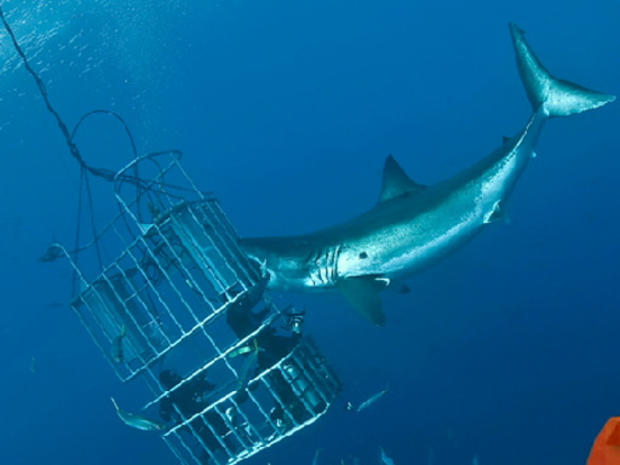
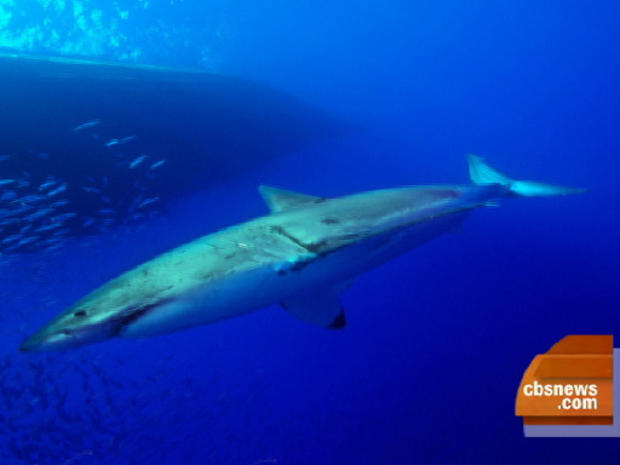
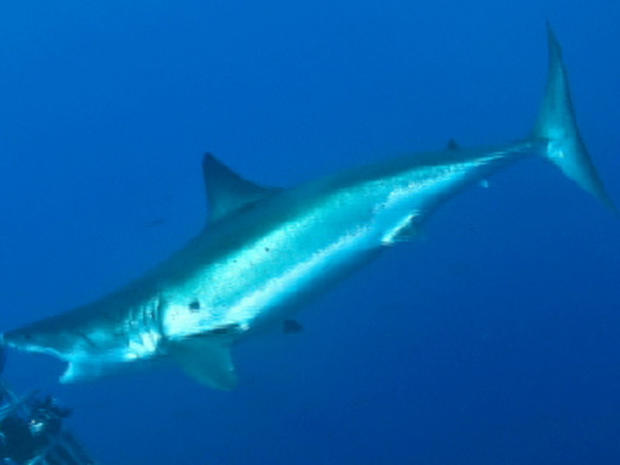
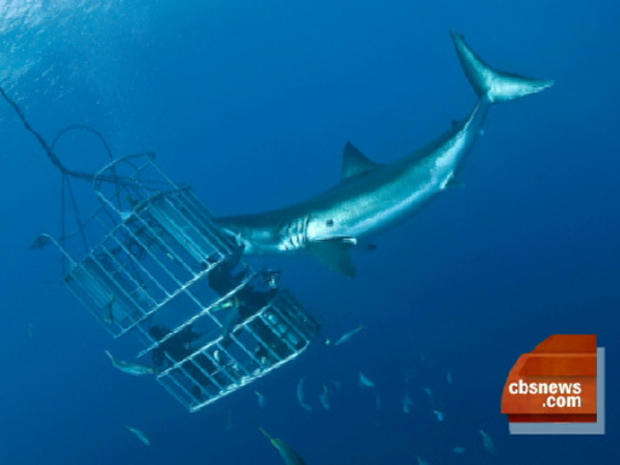
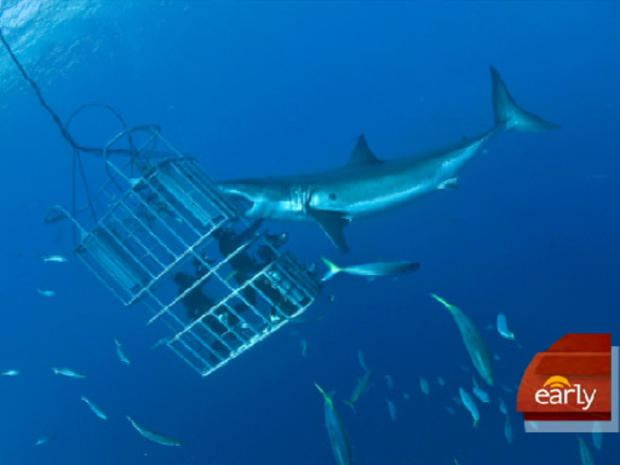
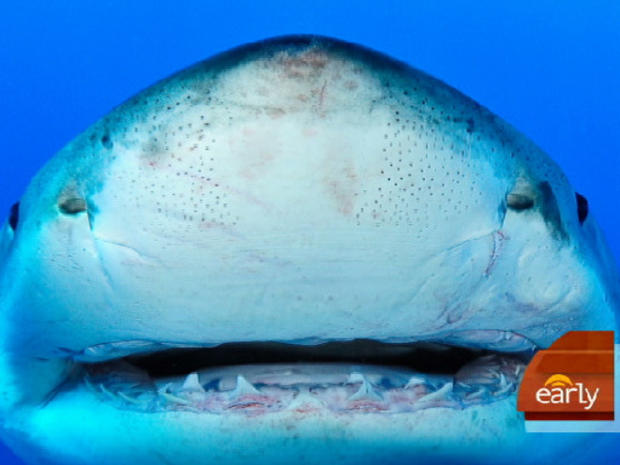
On "The Early Show," underwater photographer Don Carpenter explained this great white shark wasn't attacking the cage; it was being "wrangled" to help the photographer achieve the best photo angle.
CBS/Don Carpenter
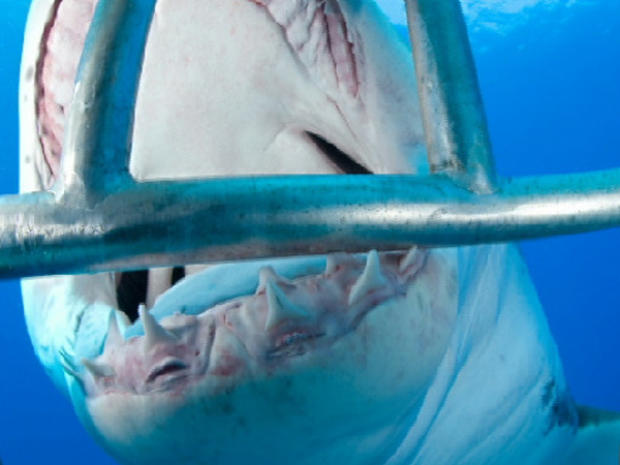
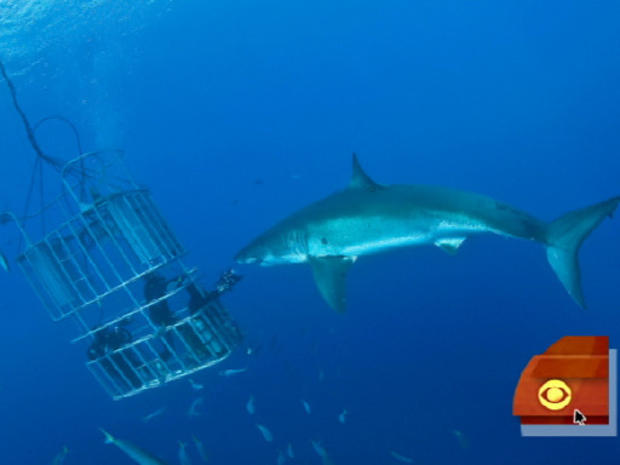
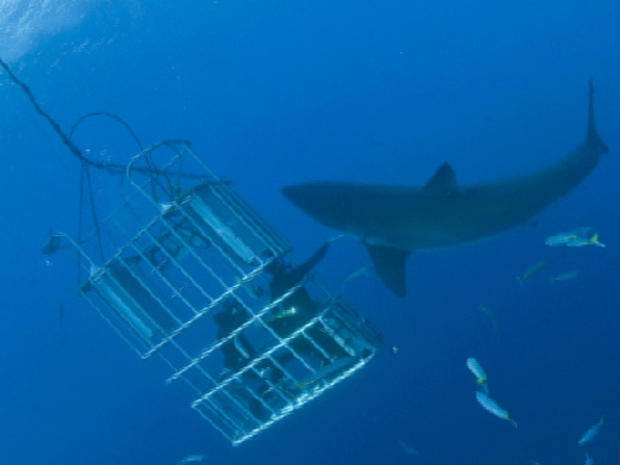
Photographer Don Carpenter said he was glad three-inch stainless-steel bars separated him from this shark. However, he added that the shark was "very docile" during most of the shoot.
CBS/Don Carpenter
Carpenter said on "The Early Show": "First rule of underwater photography is get close, and when you think you're close enough, you get closer."
CBS
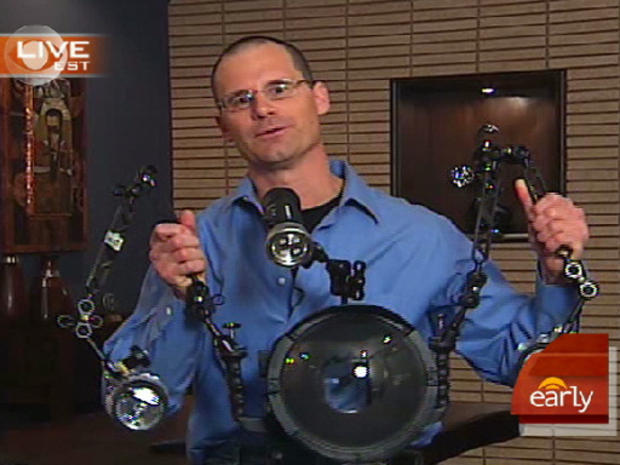
Underwater photographer Don Carpenter on "The Early Show" with his 25-pound Nikon camera that he uses to capture stunning shots of sharks and other marine wildlife.
CBS/Don Carpenter
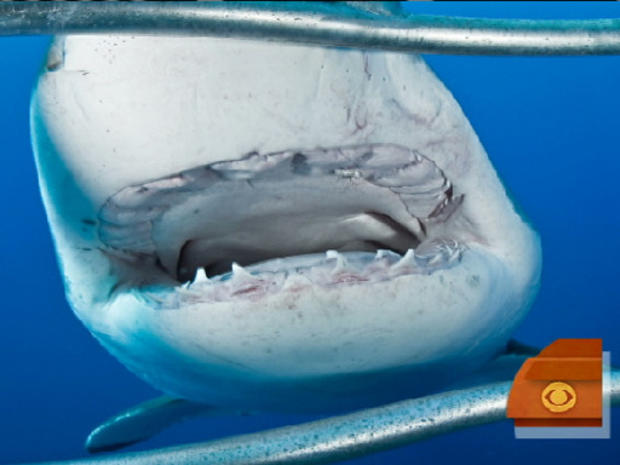
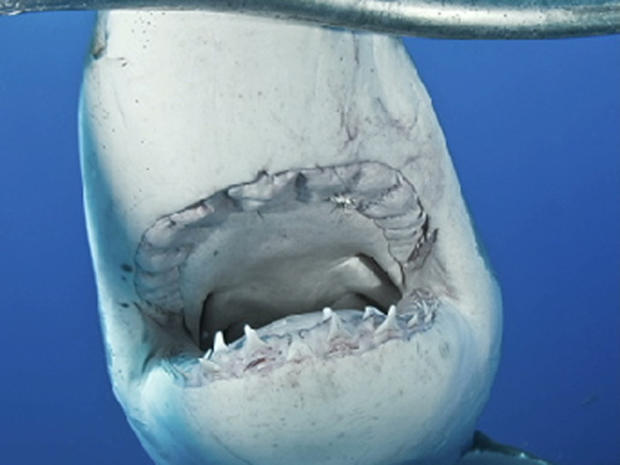
Carpenter said a "shark wrangler" attempts to get the shark to open up its mouth so the photographer can snap a close-up photo of its jaws.
CBS/Don Carpenter
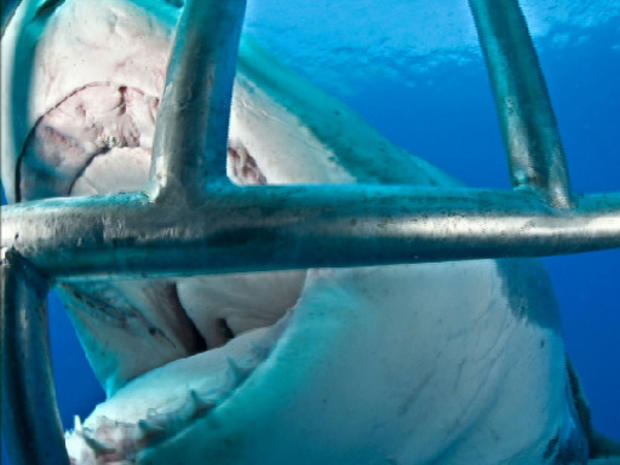
Carpenter said on "The Early Show": "I'm not going to kid you, I was very pleased that there were three-inch stainless steel bars between us, but for the most part, (the shark) was very docile. We were something odd to her and we probably had bizarre electrical signals because our hearts were beating out of our chests. So for two days, she hung out with us. And then on the second day of the trip is when she started getting a little more brave and she started mouthing the cages and coming up to them."
CBS/Don Carpenter
Carpenter said, "What you're seeing in like the big wide-angle shots where (the shark wrangler who) is actually pushing up on her nose and his happened comes down around her, what you're seeing there is shark coming in checking us out. And (the shark wrangler) is pushing on the nose, he's trying to give the underwater photographer just a few seconds to get back into the cage so he doesn't get hung up on her bottom jaw."
CBS/Don Carpenter
Carpenter said, "We (photograph sharks) for a living and we went here specifically to photograph and have experiences with these animals."