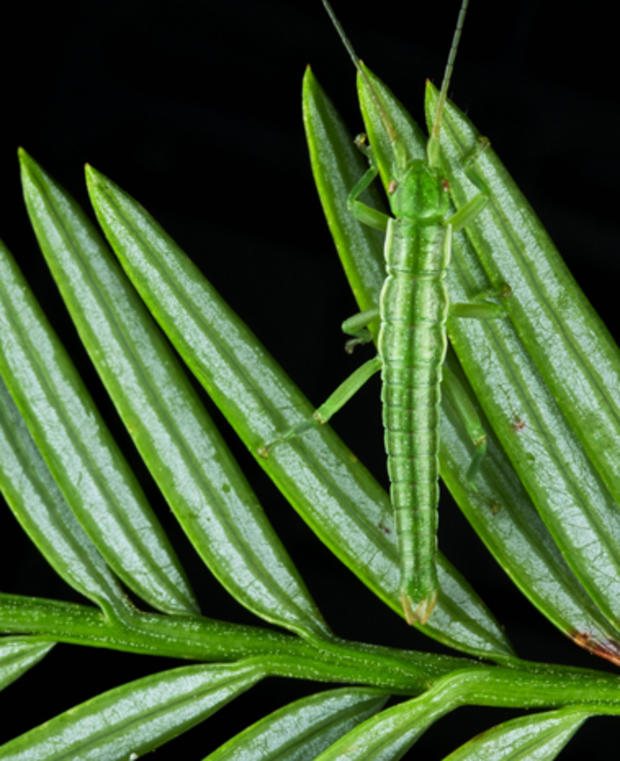
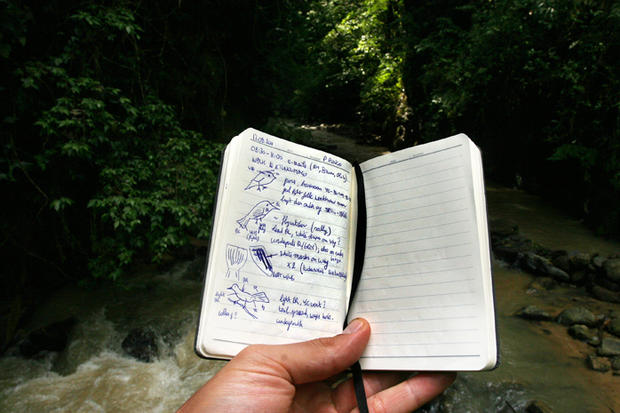
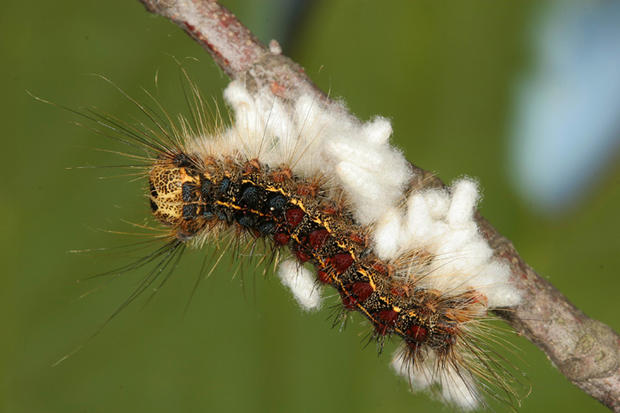
Moritz Muschick
For the first ever BMC Ecology Image Competition, open access Science, Technology and Medicine publisher BioMed Central put out a call for "striking visual interpretations of ecological processes." More than 200 international researches submitted photographs.
The overall winner, seen here, is an image of a Timema poppensis perfectly camouflaged on its host, Redwood Sequoia sempervirens, in California.
Read on to see more incredible images of nature from the contest and visit BMC's website to learn more.
Winner: Overall Runner-up
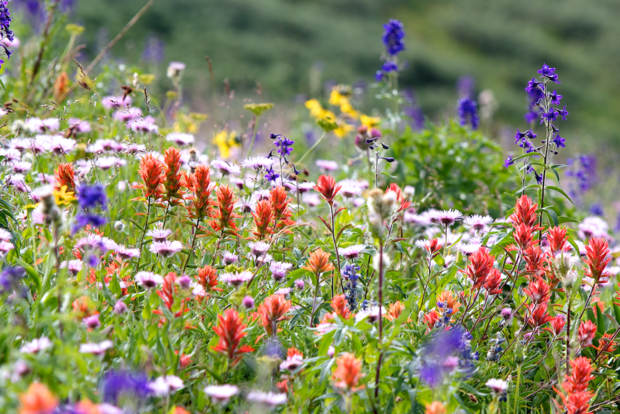
Benjamin Blonder
Multiple flower forms and phenologies visible in a subalpine meadow in Colorado.
Winner: Behavioural and Physiological Ecology
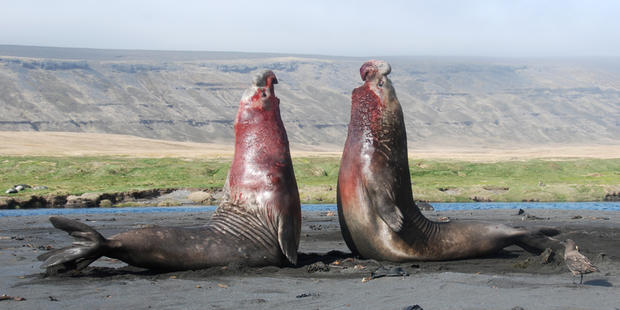
Laetitia Kernaleguen
"A harem of 127 females is a prize that has to be earned. Where female Southern Elephant Seals provide all the parental care, they will only reproduce in the territory of the biggest males, the biggest fathers for their offspring. Females average 400 to 900 kg, while males weigh up to 4 tons; Southern Elephant Seals show the largest sexual dimorphism among land breeding mammals. When a male challenges the head of a harem he needs to prove his strength at a great cost, resulting in a fascinating and captivating fight between the two giants."
Winner: Conservation Ecology and Biodiversity
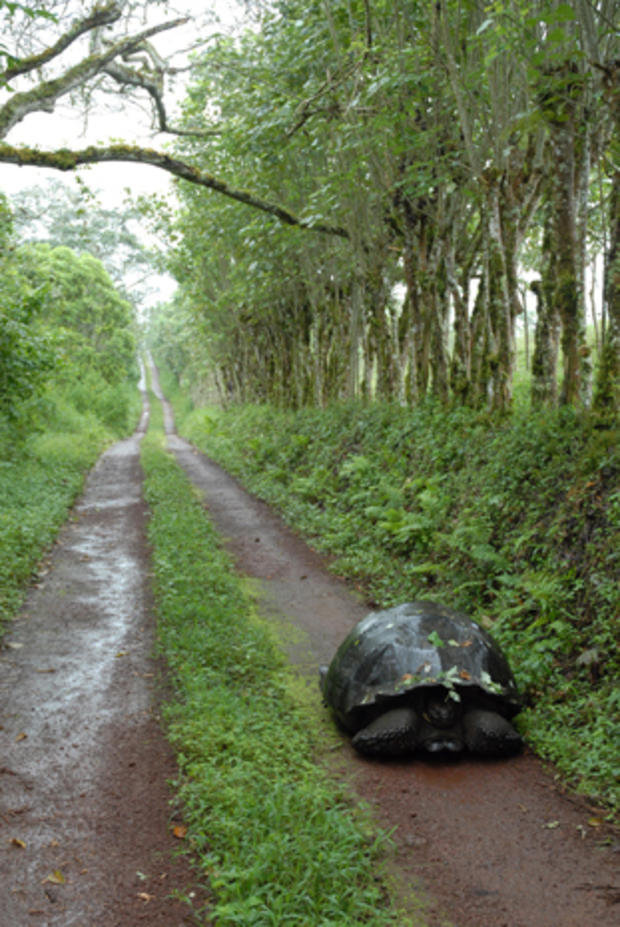
Hara Woltz
"A Galapagos tortoise utilizing a human road on Santa Cruz Island. I took this photograph while researching ecological interactions between species and landscapes in the Galapagos."
Winner: Editor's Pick
Raf Aerts
"Surveying old-growth secondary forest along the remote Rio Tunquimayo in the Puno province in southeast Peru to determine the impact of coffee cultivation on bird conservation."
Winner: Landscape Ecology and Ecosystems
Yulin Jia
Rice paddy in Yuanyang, China
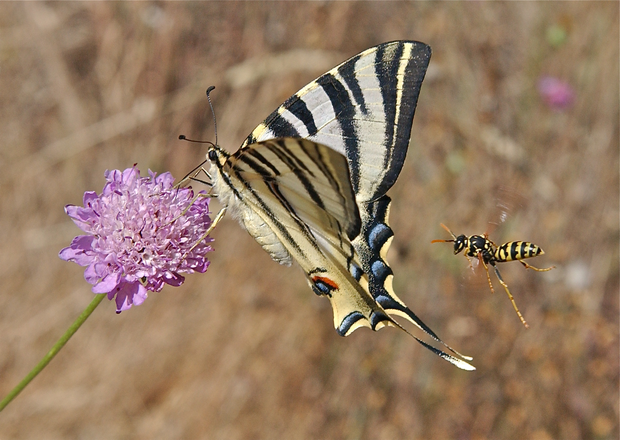
Winner: Community, Population and Macroecology
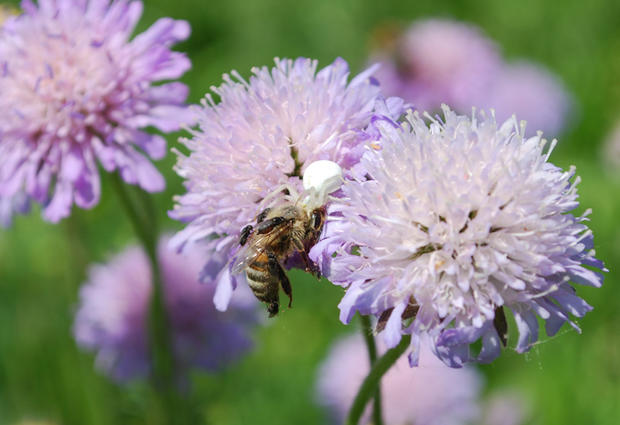
Michael Siva-Jothy
Scarce swallowtail, Scabius flower and Polistine wasp.
Runners-up
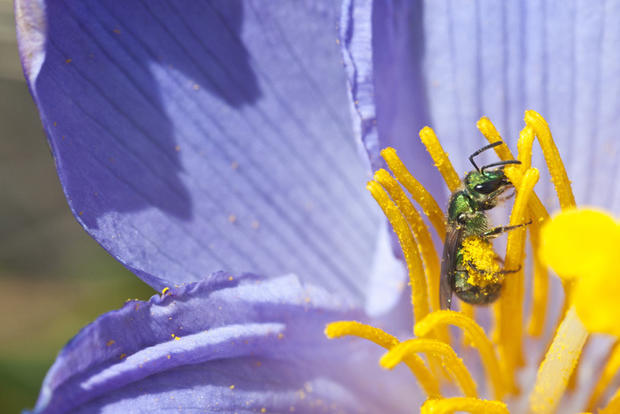
Daniel Wisbech Carstensen/Instituto de Biocie?ncias, Brazil
Collecting pollen from Vellozia, Serra do Cipo, Brazil
Runners-up
David W. Inouye
A male Broad-tailed Hummingbird visits a scarlet gilia flower at the Rocky Mountain Biological Laboratory, in Colorado. These migratory hummingbirds fly from Mexico to Colorado each summer to reproduce, and are the primary pollinators of scarlet gilia flowers.
Runners-up
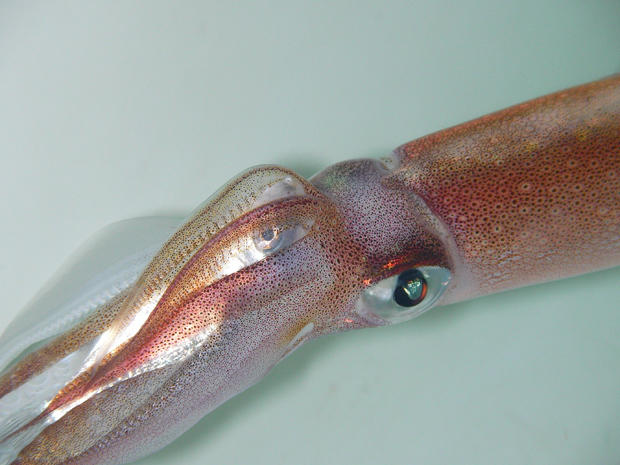
Miguel Cabanellas/Mediterranean Institute for Advanced Studies
"With a refined and tenacious tactic of predation, the European squid has captured a bream launching its tentacles and applying a lethal bite in the prey column. The image captures the moment when the squid seizes the prey with his arms."
Runners-up
Anne Ebeling/University of Jena
Multitrophic interactions in action
Runners-up
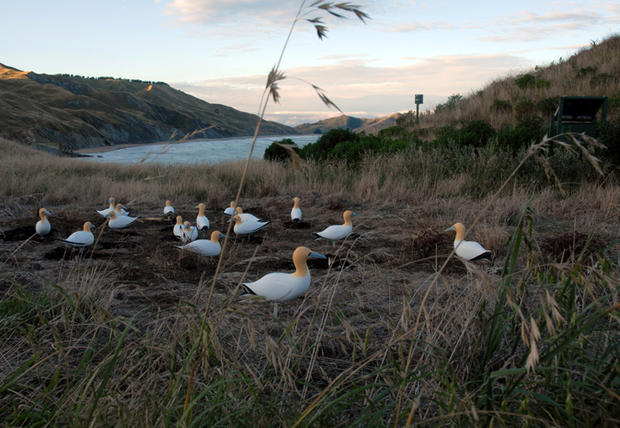
Hara Woltz/Columbia University
"This image is of a constructed colony of decoy Northern Gannets on the North Island of New Zealand. Calls are broadcast through solar powered speakers, and the decoys were set up to try to re-establish gannets on a preserved piece of land where Northern Gannets historically were found. I took this photograph while I was participating in a large scale ecological restoration project on this property."
Runners-up
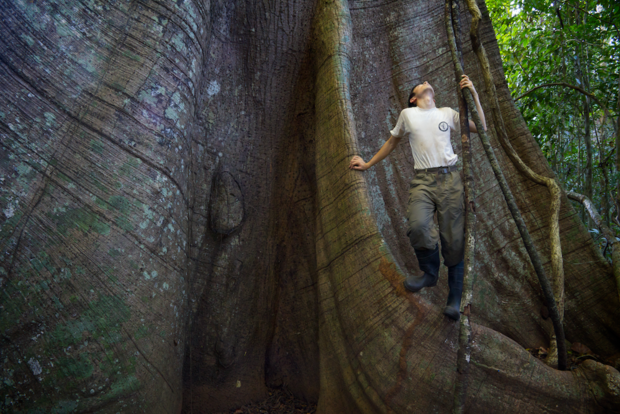
Benjamin Blonder/University of Arizona
A rare, large individual of Ceiba pentandra in lowland tropical forest.
Runners-up
Ong Poh Teck/Forest Research Institute Malaysia
"It
Runners-up
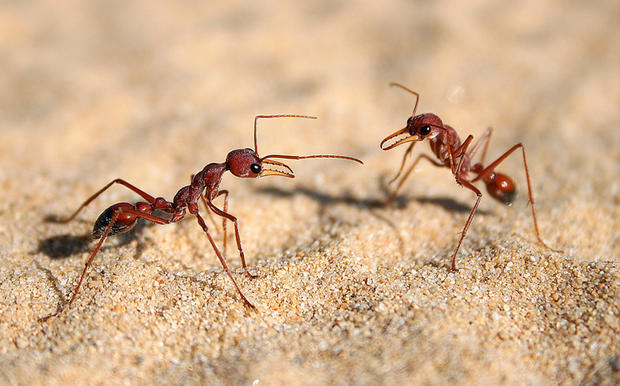
Sylvain Dubey/University of Lausanne
Communication in bulldog ants, Sydney, Australia
Runners-up
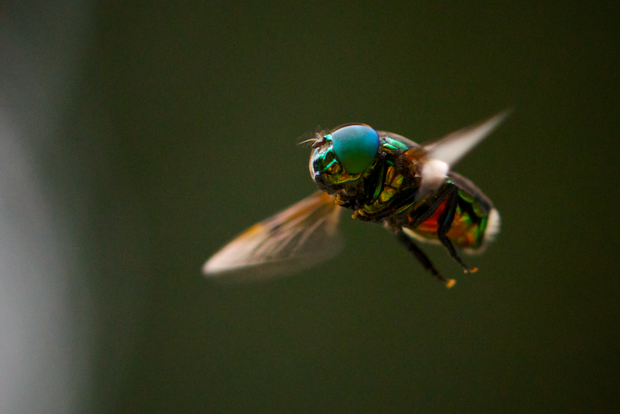
Benjamin Blonder/University of Arizona
"Hoverfly, hovering!", Puerto Rico
Runners-up
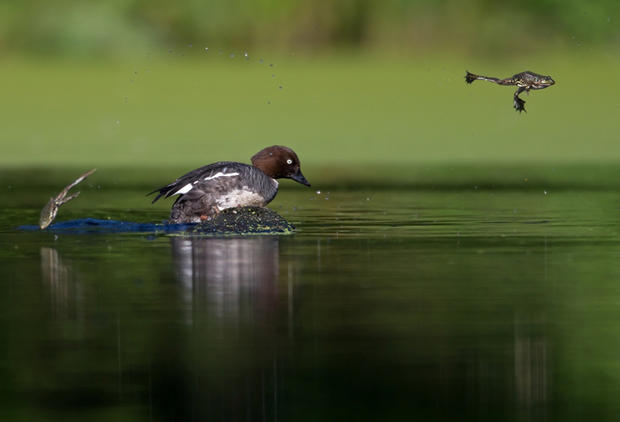
Thomas Jensen/Medical Prognosis Institute, Denmark
"Two frogs were enjoying the sun on the branch when the duck jumped up on the branch. The frogs jumped for their lives!"
Runners-up
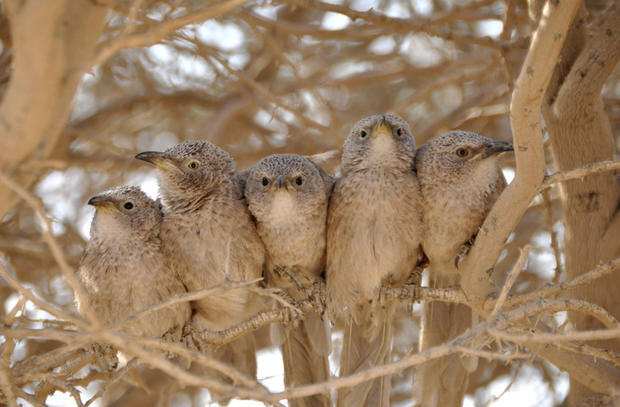
Yitzchak Ben Mocha/Tel Aviv University
A group of Arabian babblers preen in front of a neighboring group.
Runners-up
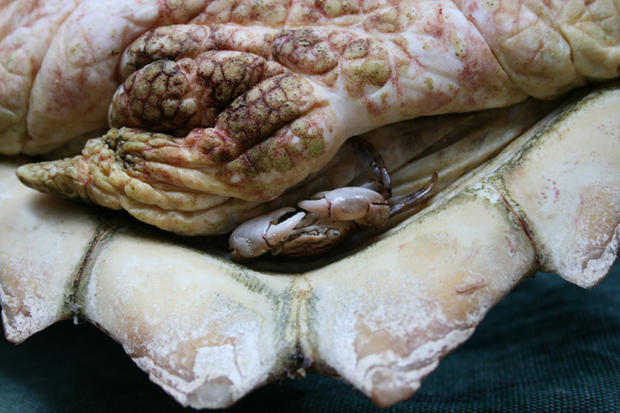
Maristella D'Addario/University of Rome
A small Columbus crab living on a Loggerhead Sea Turtle.
Runners-up
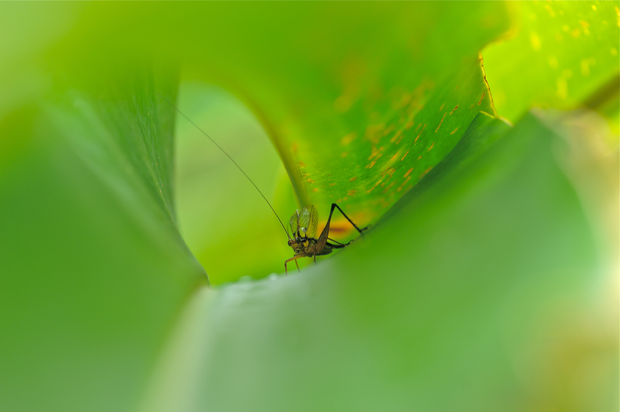
Michael Siva-Jothy/University of Sheffield
"This cricket was singing at dusk at the edge of a secondary forest in Borneo. He had crawled into the natural funnel of a ginger plant which was being used to amplify the sound of the song. I really liked the composition and decided I had to take it in natural light - this meant opening the aperture right up and slowing the shutter to 1/ 60. The effect was just what I wanted - a cricket with slightly blurred wings - capturing the movement - in a sea of blurred green with a strong sense of the funnel-nature of the plant. There are lots of pictures of singing crickets, but I know of none that capture this kind of behavior - which is well-known."