AP/Courtesy Catholic Diocese of Wichita
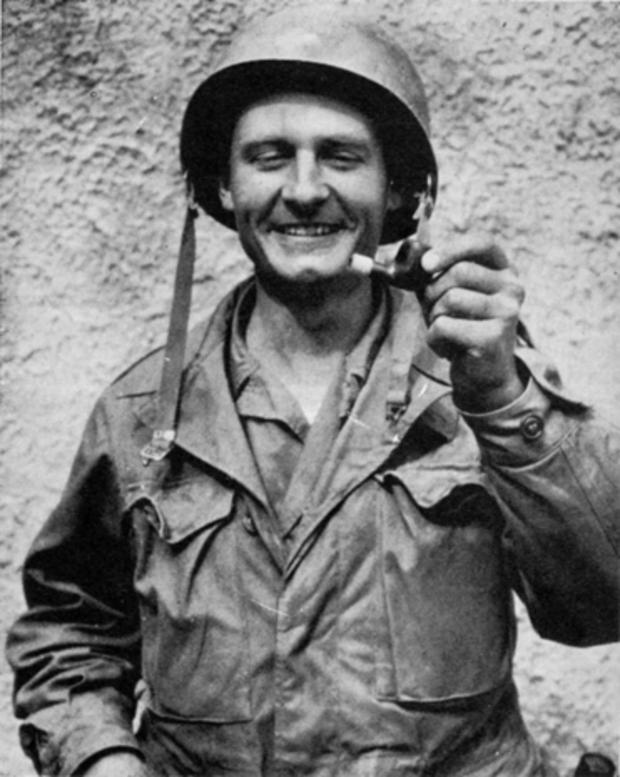
Father Emil Kapaun holds out a broken pipe.
The plain-spoken, pipe-smoking chaplain is receiving the Medal of Honor posthumously for his "extraordinary heroism" while serving as an Army chaplain during the Korean War. He died in captivity in 1951, about six months after being taken prisoner. His fellow POWs lobbied for decades to have him receive the prestigious military honor and some of them will be at the White House to see his relatives accept the medal on his behalf on April 11, 2013.
Carolyn Kaster/AP
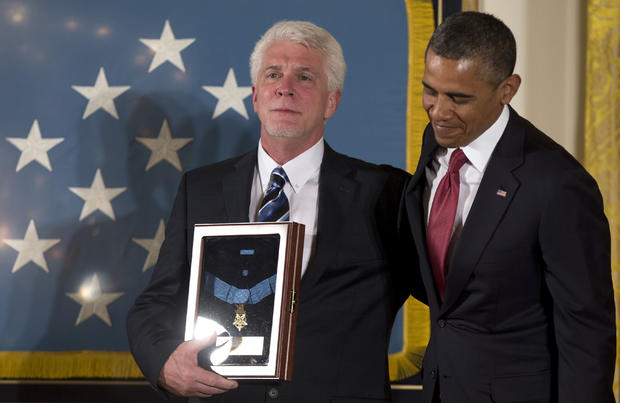
President Barack Obama stands with Ray Kapaun, nephew of Chaplain (Captain) Emil J. Kapaun, U.S. Army, as he awards the Medal of Honor posthumously to Chaplain Kapaun in the East Room of the White House in Washington, April 11, 2013.
Pablo Martinez Monsivais/AP
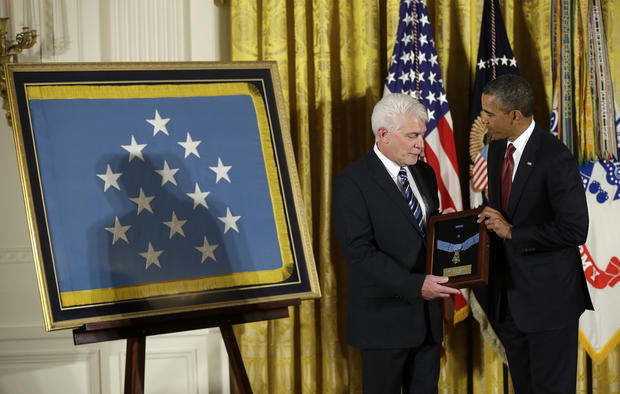
President Barack Obama stands with Ray Kapaun, nephew of Chaplain (Captain) Emil J. Kapaun, U.S. Army, as he awards the Medal of Honor posthumously to Chaplain Kapaun in the East Room of the White House in Washington, April 11, 2013.
Courtesy Kapaun family
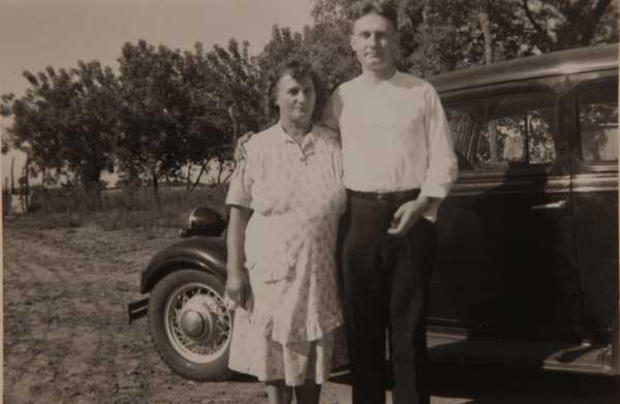
Emil Kapaun and his mother, Bessie, prior to his ordination to the priesthood, circa 1939.
Kapaun became a U.S. Army chaplain in 1943, serving in World War II, and later, the Korean War.
Courtesy Kapaun family
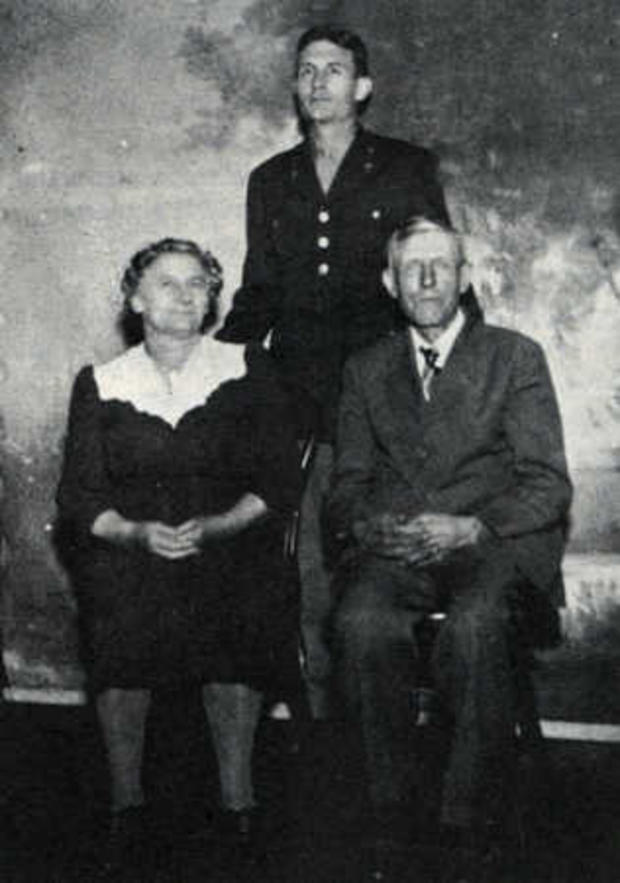
Chaplain Emil Kapaun with his parents Elizabeth (Bessie) and Enos sometime during World War II.
Enos Kapaun was born in 1880 in Czechoslovakia. His family immigrated to the United States when he was seven.
Courtesy Rev. John Hotze
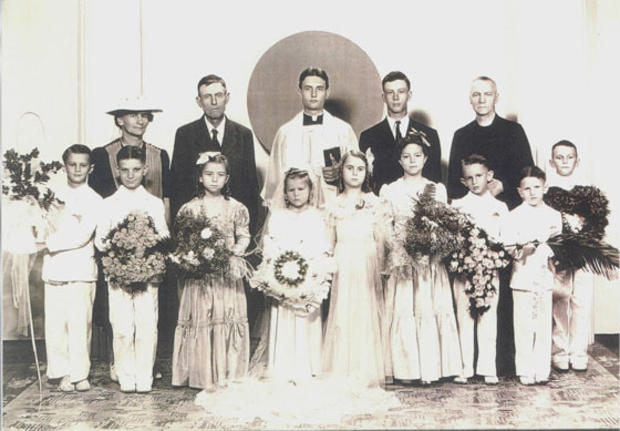
Father Emil Kapaun poses for a picture with members of his congregation after celebrating his first mass as a priest at St. John Nepomucene Church in Pilsen, Kansas, 1940.
Kapaun would go on to serve as a U.S. Army chaplain, both in World War II and the Korean War, where his selflessness and dedication would endear him to his fellow soldiers as a "soldier's chaplain."
Courtesy Rev. John Hotze
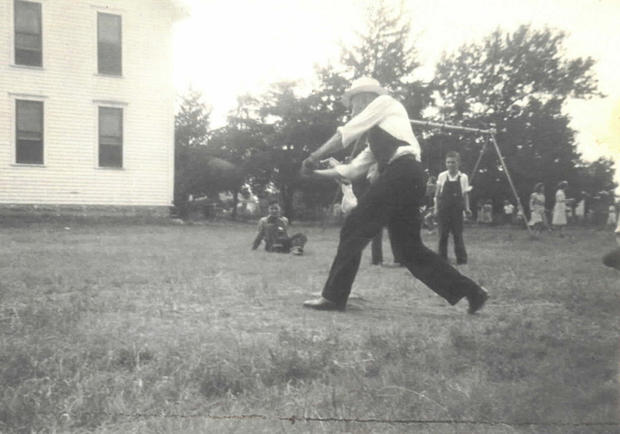
When Father Emil Kapaun was first assigned to St. John Nepomucene parish in his hometown of Pilsen, Kansas, he bought baseball and soccer equipment for the children to use at recess. He would teach them how to play and often joined their games. Kapaun's selflessness and dedication to those he served would extend to his role as a U.S. Army chaplain during World War II and the Korean War.
Courtesy Kapaun family
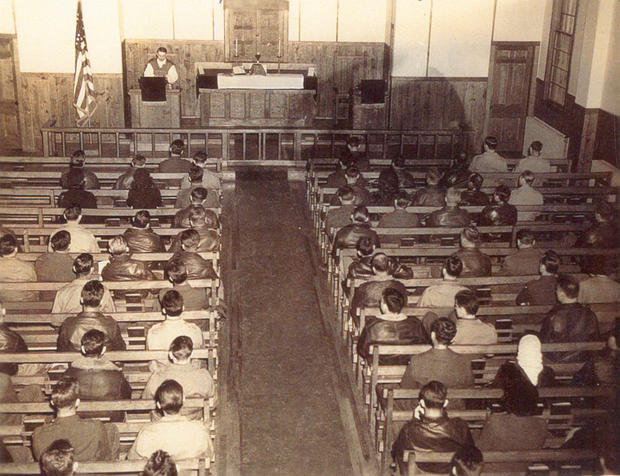
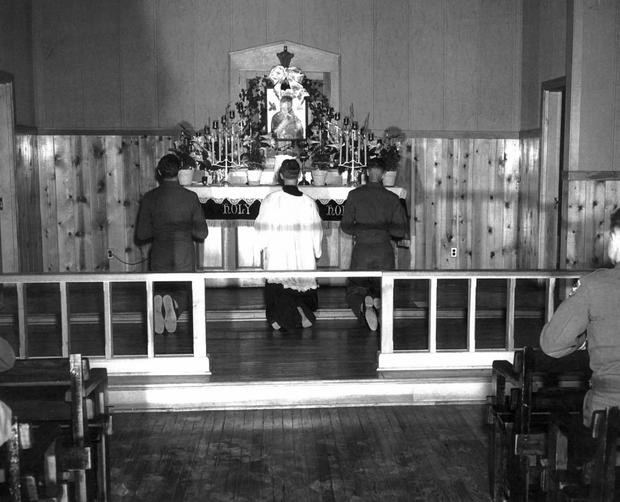
Emil Kapaun celebrates mass with soldiers at Herington Air Base, Kansas, ca. 1942. It was after Kapaun saw the need for military chaplains while serving at the base that he felt the call to the military chaplaincy.
AP/U.S. Army
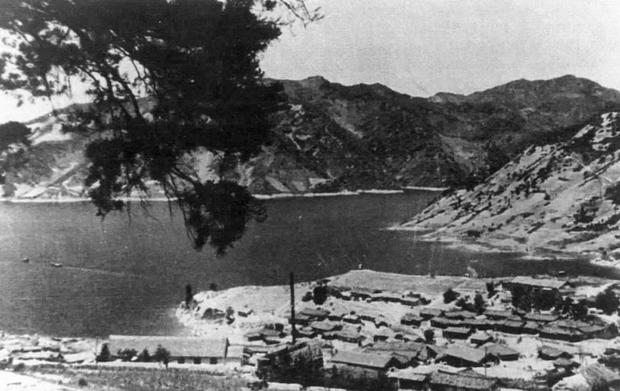
Prison Camp Number 5 in Pyoktong, North Korea, where the Rev. Emil Kapaun was held until he died on May 23, 1951.
It was there on Easter Sunday 1951 that Kapaun, defying his captors, conducted Mass with a makeshift crucifix on a brilliantly sunny day. Soldiers who knew him never forgot the plain-spoken chaplain who urged them to keep their spirits up.
AP
Chaplain Emil Kapaun, center, celebrates Mass for soldiers at Herrington Air Base, Kansas, 1942.
Kapaun went on to serve in the Korean War and died in a prisoner of war camp in North Korea on May 23, 1951.
AP/Col. Raymond A. Skeehan via the U.S. Army
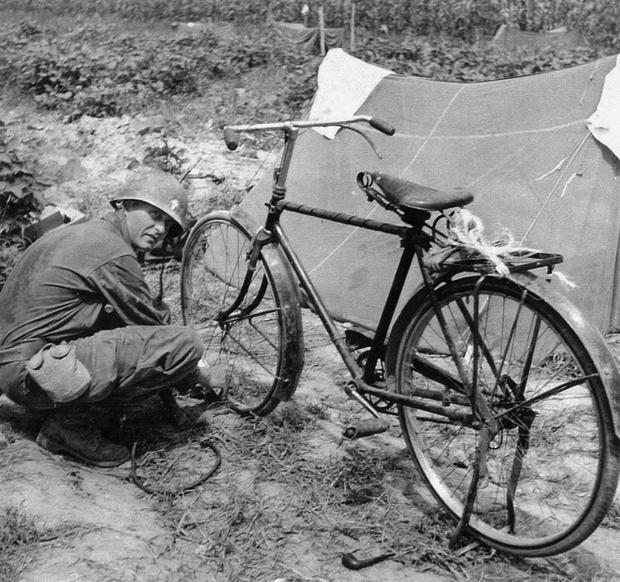
Rev. Emil Kapaun repairs his bicycle in Korea.
Kapaun died in a prisoner of war camp on May 23, 1951, his body wracked by pneumonia and dysentery. Soldiers who knew him never forgot the plain-spoken, pipe-smoking, bike-riding chaplain who urged them to keep their spirits up.
Courtesy U.S. Army
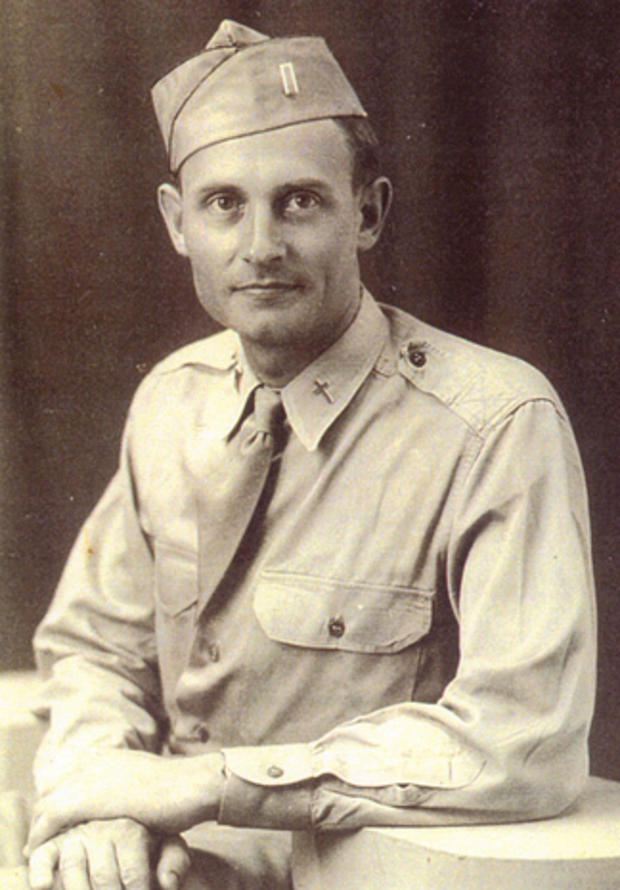
Then 2nd Lt. Emil J. Kapaun, U.S. Army chaplain, circa 1943.
The president is presenting the Medal of Honor to family members of Chaplain Kapaun in a White House ceremony on Apr. 11 in recognition of his valor during major combat operations
in the Korean war and as a prisoner of war.